
Nancy Farmer (1) (1941–)
Author of The House of the Scorpion
For other authors named Nancy Farmer, see the disambiguation page.
Series
Works by Nancy Farmer
Full-Blooded Fantasy: 8 Spellbinding Tales in Which Anything Is Possible (2005) — Contributor — 107 copies, 1 review
The Sea of Trolls Trilogy: The Sea of Trolls; The Land of the Silver Apples; The Islands of the Blessed (2016) 5 copies
Remember Me [Short Story] 2 copies
Origami Mountain [short story] 2 copies
Castle Othello [Short Story] 1 copy
The Mole Cure 1 copy
Associated Works
Firebirds: An Anthology of Original Fantasy and Science Fiction (2003) — Contributor — 850 copies, 24 reviews
The Wand in the Word: Conversations with Writers of Fantasy (2006) — Contributor — 253 copies, 9 reviews
Firebirds Soaring: An Anthology of Original Speculative Fiction (2009) — Contributor — 231 copies, 9 reviews
The Year's Best Fantasy and Horror: Sixth Annual Collection (1993) — Contributor — 220 copies, 1 review
Tagged
Common Knowledge
- Birthdate
- 1941-07-07
- Gender
- female
- Education
- Reed College (B.A.)
University of California, Berkeley - Occupations
- author
children's book author - Awards and honors
- National Book Award for Young People's Literature
Printz Honor
Buxtehuder Bulle
Newbery Honor (three times) - Nationality
- USA
- Birthplace
- Phoenix, Arizona, USA
- Places of residence
- Yuma, Arizona, USA
Berkeley, California, USA
Manipal, India
Pretoria, South Africa
Harare, Zimbabwe
Sydney, New South Wales, Australia (show all 7)
Menlo Park, California, USA - Associated Place (for map)
- USA
Members
Discussions
Found: Children's SciFi set in Africa in Name that Book (November 2023)
Reviews
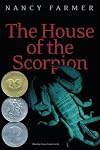
Sometimes it may be better not to read the synopsis or jacket blurb, but just to plunge right in to a book. I got stalled for a year or more on my Newbery project because I thought I didn't want to read this book, based on the information that it was about cloning and drug lords. Finally, it came up as a Kindle Daily Deal and I bought it. I was hooked from the first page of this suspenseful dystopian story. Farmer pulls no punches with either the "good guys" -- some of whom have horrendous show more pasts -- or the "bad guys" -- at least some of whom are more ambiguously "bad" than one might expect. Some adult situations as well as the general subject matter make this a book for the upper age range of the Newbery Awards' rules (say, 12-14 years old) and it can also be a great read for adults. There's a lot to think about in this story. Highly recommended. show less
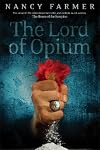
Lord of Opium is more "part 2" than sequel to Farmer's House of Scorpion. Like House, the book is surprisingly dark and morally ambiguous for a YA novel. Be prepared. Like House, the questions and themes that dominate most of the book are undercut by the final chapters that wrap things up patly and unconvincingly.
House followed the clone Matt's life from creation to his "harvesting" age of 14, with a perspective limited by a child's knowledge of the world. Lord takes place within a much show more shorter one-year timespan but a larger space. This is signalled by very helpful frontispiece maps of the geography of the Dope Confederacy that includes Opium and forms an impregnable border between a United States and Mexico that have largely collapsed due to their own failures. Matt is the new Lord of Opium. Two major implausibilities are necessary for the events of the novel. First, Matt is accepted in this role because a legalistic definition of human status for clones has become deeply ingrained in most people. Second, he is able to survive several attempts on his life because somehow the personality of El Patron, the drug lord from whom he was cloned, inhabits his mind and can take charge in an emergency. The story is no longer about his personal survival, though that is often at risk, nor does it focus on the plight of clones grown as organ banks. Instead, many threads of the story are concerned with eejits, i.e., humans microchipped into zombiehood, often used for slave labor, and housed in such horrible conditions that they have expiration dates tattooed on their feet.
As with House, the strengths of the book are the characters, and a repeated revelations of the mixed nature of human motives and the challenges to socio-political change. Everyone, even Matt, must do evil in a world where no non-evil choices remain.
Highly recommended, with the exception of resolution that is high adventure but inconsistent with that goes before it. show less
House followed the clone Matt's life from creation to his "harvesting" age of 14, with a perspective limited by a child's knowledge of the world. Lord takes place within a much show more shorter one-year timespan but a larger space. This is signalled by very helpful frontispiece maps of the geography of the Dope Confederacy that includes Opium and forms an impregnable border between a United States and Mexico that have largely collapsed due to their own failures. Matt is the new Lord of Opium. Two major implausibilities are necessary for the events of the novel. First, Matt is accepted in this role because a legalistic definition of human status for clones has become deeply ingrained in most people. Second, he is able to survive several attempts on his life because somehow the personality of El Patron, the drug lord from whom he was cloned, inhabits his mind and can take charge in an emergency. The story is no longer about his personal survival, though that is often at risk, nor does it focus on the plight of clones grown as organ banks. Instead, many threads of the story are concerned with eejits, i.e., humans microchipped into zombiehood, often used for slave labor, and housed in such horrible conditions that they have expiration dates tattooed on their feet.
As with House, the strengths of the book are the characters, and a repeated revelations of the mixed nature of human motives and the challenges to socio-political change. Everyone, even Matt, must do evil in a world where no non-evil choices remain.
Highly recommended, with the exception of resolution that is high adventure but inconsistent with that goes before it. show less
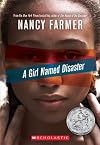
You know how [b:Hatchet|50|Hatchet (Brian's Saga, #1)|Gary Paulsen|https://i.gr-assets.com/images/S/compressed.photo.goodreads.com/books/1385297074l/50._SX50_.jpg|1158125] is about a boy who has to survive in the wilds of Canada? A Girl Named Disaster is kind of like that, except instead of a 13-year-old boy from NYC, it's about an approximately 13-year-old girl from Mozambique. While Brian is angsty because his parents are divorced and he has to spend the summer in Canada with his dad, show more Nhamo doesn't have parents, because her father took off before she was born and her mother was killed by a leopard when she was a toddler. Instead, she's been raised by her aunt, who always hated her mom and treats Nhamo like a slave. Only Nhamo's grandmother actually cares about her. When the family decides to marry Nhamo into a life of even more misery, her grandmother encourages her to run away to find her father's family.
My son is reading this book as part of his 7th grade language arts curriculum, along with a social studies unit on modern Africa. I've seen several comments that this is a "girl book," because the protagonist is female and there's mention of menstruation. (Deep breath.) This is a book that everyone can enjoy, that places the reader in the shoes (actually, Nhamo doesn't have shoes through most of the book) of someone from another part of the world, a completely different culture. Although it's set in 1981, after Mozambique won their independence from Portugal, Nhamo's family lives much the same way as their ancestors did a hundred years before that. It's both an immersive learning experience and an entertaining read.
Edit: Son #2 read this as an advanced 6th grader and also really enjoyed it, reinforcing my statement that this book is not. just. for. girls. show less
My son is reading this book as part of his 7th grade language arts curriculum, along with a social studies unit on modern Africa. I've seen several comments that this is a "girl book," because the protagonist is female and there's mention of menstruation. (Deep breath.) This is a book that everyone can enjoy, that places the reader in the shoes (actually, Nhamo doesn't have shoes through most of the book) of someone from another part of the world, a completely different culture. Although it's set in 1981, after Mozambique won their independence from Portugal, Nhamo's family lives much the same way as their ancestors did a hundred years before that. It's both an immersive learning experience and an entertaining read.
Edit: Son #2 read this as an advanced 6th grader and also really enjoyed it, reinforcing my statement that this book is not. just. for. girls. show less

Should be at least as well known as Part 1 of the series. I love that Farmer wrestles with the complexity of doing good in a corrupt system. This is a nuanced work that intelligent readers will appreciate. It's a YA novel, so adult readers may chafe at some of what goes unsaid. Yes, the ending is hopeful and ties up ends. I appreciate the worldview that believes we can make things better than we found them. The ending makes this series essential reading for lovers of dystopia. Don't just show more curse the darkness; light a candle. show less
Lists
storage (1)
Which house? (1)
Absolute Power (1)
Best Dystopias (1)
Latin America (1)
Awards


You May Also Like
Associated Authors
Statistics
- Works
- 23
- Also by
- 9
- Members
- 17,256
- Popularity
- #1,285
- Rating
- 4.0
- Reviews
- 461
- ISBNs
- 281
- Languages
- 18
- Favorited
- 1
