
Amy Knight (1) (1946–)
Author of Beria: Stalin's First Lieutenant
For other authors named Amy Knight, see the disambiguation page.
Works by Amy Knight
Associated Works
Tagged
Common Knowledge
- Other names
- Knight, Amy W.
- Birthdate
- 1946-07-10
- Gender
- female
- Education
- University of Michigan (BA)
London School of Economics and Political Science (PhD|Russian Politics) - Occupations
- historian
author - Organizations
- Library of Congress (specialist in Russian and Soviet affairs)
- Nationality
- USA
- Birthplace
- Chicago, Illinois, USA
- Associated Place (for map)
- Illinois, USA
Members
Reviews
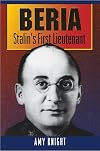
Amy Knight's biography of Beria, who Stalin referred to as his Himmler, was written at a transitional point in the historiography of the Soviet imperium between the Cold War history created out of guesswork and propaganda and the post-perestroika opening up of Russian archives.
It is an excellent book in that context. Beria the man is not very interesting. He is the type of the intelligent corporate psychopath who helps keep complex and otherwise chaotic systems in place but Beria as part of show more the construction of a unique form of totalitarian governance is fascinating.
The weakness of the book is that Knight still had to rely on a number of very unreliable 'testimonies' (whether Khrushchev's, Svetlana Alliluyeva's, Sergo Beria's and many others) for lack of data at key periods and still cannot entirely escape the preconceptions of 'her side' in the 'war'.
This can, however, be put to one side to a considerable degree because she was able to access important original research in the Soviet archives that added considerably to our picture of how the Soviet regime operated and the undoubted crimes perpetrated to ensure its survival.
She was perhaps one of the first to demonstrate that the Soviet regime could not be reduced to the tyranny of one man (Stalin), any more than you could explain national socialism by reference only to the Fuhrer. It was also a system with surprising stability of personnel between purges.
Similarly she argues cogently for Beria as an eventual reformer along the lines of Andropov when he was able to acquire serious power, arguing, though this is not quite demonstrated, that both men could see the flaws in the Soviet system precisely because of their intelligence role.
The first 'discovery' has tended to be confirmed as the years have gone by. Men like Kaganovitch or Malenkov were not mere cyphers but exercised, alongside others, a form of collective leadership centred on intermediation between party and state that operated independently of Stalin.
Stalin would, of course, have the last word, could trigger decisive policy change, could remove anyone at any time, demanded total loyalty as head of state and party and would play people off against each other but the system was run by a surprisingly stable collective after the 1930s.
Beria entered this collective as one of the 'new men' after the purges of the 1930s had destroyed the potential for a collective in which Stalin was only one member rather than ultimate arbiter. He was rapidly positioned as one of the top two or three - in charge of state security and so much else.
He entered as a loyal brute who had shown his mettle in handling purges in Transcaucasia (notably Georgia, Stalin's original homeland), first against Menshevik resistance to Bolshevik rule and then those designed to consolidate Stalin's power. He knew how to handle 'intellectuals'.
During these years he established what can only be described as a propensity towards 'evil', not merely doing the corporate psychopath's job of implementing what his boss wanted but exceeding instructions to (by all acounts) satisfy private Georgian vendetta claims and sexual desires.
The book is limited on the context for the criminality which is down to the necessity for authority to be not too choosy about the sort of men it would make use of in meeting political and ideological needs and then turning a blind eye to their methods. Success was what counted.
Beria was successful. Transcaucasia was turned from a potential centre of insurrection against central authority into a secure asset valuable as centre of the oil industry, barrier to Turkey geostrategically and, of course, as no threat to the reputation of the Georgian-origin Soviet leader.
The rest of the story is one of Beria's rise to power and dramatic fall in Moscow as he solved practical problems - including the creation and oversight of Russia's equivalent to the Manhattan Project - until he 'got too big for his boots'.
Whether he was instrumental or not in the curious story of Stalin's death by medical neglect or not, his shift from problem-solving under policy direction to becoming a policy-maker for six months alienated the 'collective' (or at least part of it) that succeeded Stalin.
For a brief period (the comic film 'The Death of Stalin' is, of course, a travesty of history even if it is very very funny) Beria pursued policies related to East Germany, Yugoslavia, the West and economic reform as well as the nationalities question that undermined 'collective' orthodoxy.
Knight seems to think that Beria redeemed himself somewhat (though not too much) by adopting policies that would have brought the Soviet Empire into more alignment with Western norms but that is the special pleading of an American academic.
The truth is that the Soviet Union still saw itself in an existential struggle for survival based on ideological positions for which huge amounts of blood had been spilled. Beria was beginning to threaten the consensus in a way that might create a 'split in the ruling order'.
Led by Khruschev, whose nerve at taking on the monster with his security state resources, must be regarded as courageous, a faction of the 'collective' persuaded the rest to collaborate in a 'coup' that would result in Beria's swift arrest and extra-judicial (to all intents and purposes) murder.
Khruschev had at his disposal a closer connection to the Party and brought the military into play as well as greater Russian feeling at the risks of letting loose the nationalities and weakening control of Eastern Europe in the middle of the Cold War.
The American view was and seems to be (if Knight can represent the post-Cold War present) that Beria got what he deserved but for the wrong reasons and that he should have been tried and shot for his murderous role in the transcaucasian and subsequent purges and the Gulag.
The list of crimes is tremendous - the deportation of peoples, purgation by quotas dictated by Stalin personally, the murders of the Polish elite (of which Katyn Wood is the one that we are all aware of), extra-judicial arrests and executions. To that extent, the 'Americans' are right.
The 'collective' post-Stalinist leadership were also no angels and were all complicit in the events of the 1930s and toleration of the Gulag slave labour system (very similar to Himmler's) so their list of crimes charged against Beria carefully avoided that era.
However, we can say that, although Beria should have been charged with all those crimes in any decent and stable society and that some of the charges against Beria invented by the Kruschev gang were absurd, the deeper substance of the charge against Beria was probably correct.
For Knight, the destruction of the Soviet system looked inevitable because of what happened in 1991. Therefore, the centrifugal tendencies of the empire looked equally inevitable because that is what happened in stages after the fall of Ceaucescu and the Berlin Wall.
But that is not how it looked in 1953 and it might have been reasonable to believe that centralised authority could deliver the economic goods under communism in peace time after the destruction of revolution, civil war, consolidation of power and invasion.
Beria's position on the nationalities question (especially given his own favouritism to his Mingrelian minority group and the ambiguity of his quasi-nationalist-communist approach to transcaucasia), then on East German reform, might have looked very threatening.
It might have suggested a major new policy turn. Much as Trotsky had promoted the export of revolution in one direction, Beria might have been suggesting in some eyes a complete abandonment of the revolution in favour of a collective of national communisms.
We have to remember the time scales here. The great purges took place only two decades after the revolution (that is, the time from now to the Millennium) and Stalin's rule ended only 36 years after it. In other words, people could still remember a time before communism.
Communism was extremely vulnerable to memory, especially nationalist memory carried through family or clan lines. Think of South Yorkshire communities still nursing grudges over pit closures today. The regime was not actually as secure as the totalitarian narrative likes to make us believe.
There is not enough information in this particular book to make a judgement here but it is fatal, in our view, to assume any inevitabilities in the trajectory of history because the final fall of the Soviet Empire was to be more complex than a simple failure to 'reform'.
Perhaps we should look more at an unintended consequence of the Khruschev coup - the introduction of the military into Soviet politics alongside party and executive. This shifted expenditures into a wasteful military-industrial complex and economic promises were not met.
Knight's book is already thirty years' old and a great deal of work has been done since but it remains an excellent starting point for an understanding of the Soviet system (almost certainly flawed and doomed from inception) through the biography of one of its leading figures.
The research into Beria's network within the Soviet security apparat. The close attention to its origins within Georgia is exemplary and builds a picture of a totalitarian security system that managed to be simultaneously oppressive and chaotic.
Overall, the biography continues to contain many of the unfortunate prejudices of American historiography but it remains an achievement in outlining the reality of the psychopathic exercise of 'corporate' power in the Soviet Union and something of the complexity of its ruling system.
The 'Soviet experiment' was a disaster but a disaster constructed out of the incompetence of the previous Tsarist regime and of the 'bourgeois' revolutionaries who succeeded it, compounded by the insistence of Western interests in interfering and creating a siege mentality.
It was a tragedy of epic proportions as a new ideological elite seemed to have no alternative for their survival than Chekist terror and the employment of ruthless 'new men' to enforce its will while trying to maintain the administrative capability to defend the country and feed the people.
Beria was a creature of this system - a ruthless and rather vile opportunist of undoubted natural intelligence, hard-working, socially skilled, manipulative and ambitious. He is a symbol of the moral degradation that inevitably follows from inherent system weakness.
For the point here is that all this terror and totalitarianism designed to show strength was actually a sign of an inherently weak regime that had no room for manouevre if it was to survive. The only existential alternative to its survival at all costs was its total destruction.
When it crashed in 1991, it crashed because of that inherent weakness and Beria's 'reforms' would simply have crashed it earlier. Maybe it would have been good if Beria had crashed it but only if you assume that what would have replaced it would have been preferable by then. That is unclear. show less
It is an excellent book in that context. Beria the man is not very interesting. He is the type of the intelligent corporate psychopath who helps keep complex and otherwise chaotic systems in place but Beria as part of show more the construction of a unique form of totalitarian governance is fascinating.
The weakness of the book is that Knight still had to rely on a number of very unreliable 'testimonies' (whether Khrushchev's, Svetlana Alliluyeva's, Sergo Beria's and many others) for lack of data at key periods and still cannot entirely escape the preconceptions of 'her side' in the 'war'.
This can, however, be put to one side to a considerable degree because she was able to access important original research in the Soviet archives that added considerably to our picture of how the Soviet regime operated and the undoubted crimes perpetrated to ensure its survival.
She was perhaps one of the first to demonstrate that the Soviet regime could not be reduced to the tyranny of one man (Stalin), any more than you could explain national socialism by reference only to the Fuhrer. It was also a system with surprising stability of personnel between purges.
Similarly she argues cogently for Beria as an eventual reformer along the lines of Andropov when he was able to acquire serious power, arguing, though this is not quite demonstrated, that both men could see the flaws in the Soviet system precisely because of their intelligence role.
The first 'discovery' has tended to be confirmed as the years have gone by. Men like Kaganovitch or Malenkov were not mere cyphers but exercised, alongside others, a form of collective leadership centred on intermediation between party and state that operated independently of Stalin.
Stalin would, of course, have the last word, could trigger decisive policy change, could remove anyone at any time, demanded total loyalty as head of state and party and would play people off against each other but the system was run by a surprisingly stable collective after the 1930s.
Beria entered this collective as one of the 'new men' after the purges of the 1930s had destroyed the potential for a collective in which Stalin was only one member rather than ultimate arbiter. He was rapidly positioned as one of the top two or three - in charge of state security and so much else.
He entered as a loyal brute who had shown his mettle in handling purges in Transcaucasia (notably Georgia, Stalin's original homeland), first against Menshevik resistance to Bolshevik rule and then those designed to consolidate Stalin's power. He knew how to handle 'intellectuals'.
During these years he established what can only be described as a propensity towards 'evil', not merely doing the corporate psychopath's job of implementing what his boss wanted but exceeding instructions to (by all acounts) satisfy private Georgian vendetta claims and sexual desires.
The book is limited on the context for the criminality which is down to the necessity for authority to be not too choosy about the sort of men it would make use of in meeting political and ideological needs and then turning a blind eye to their methods. Success was what counted.
Beria was successful. Transcaucasia was turned from a potential centre of insurrection against central authority into a secure asset valuable as centre of the oil industry, barrier to Turkey geostrategically and, of course, as no threat to the reputation of the Georgian-origin Soviet leader.
The rest of the story is one of Beria's rise to power and dramatic fall in Moscow as he solved practical problems - including the creation and oversight of Russia's equivalent to the Manhattan Project - until he 'got too big for his boots'.
Whether he was instrumental or not in the curious story of Stalin's death by medical neglect or not, his shift from problem-solving under policy direction to becoming a policy-maker for six months alienated the 'collective' (or at least part of it) that succeeded Stalin.
For a brief period (the comic film 'The Death of Stalin' is, of course, a travesty of history even if it is very very funny) Beria pursued policies related to East Germany, Yugoslavia, the West and economic reform as well as the nationalities question that undermined 'collective' orthodoxy.
Knight seems to think that Beria redeemed himself somewhat (though not too much) by adopting policies that would have brought the Soviet Empire into more alignment with Western norms but that is the special pleading of an American academic.
The truth is that the Soviet Union still saw itself in an existential struggle for survival based on ideological positions for which huge amounts of blood had been spilled. Beria was beginning to threaten the consensus in a way that might create a 'split in the ruling order'.
Led by Khruschev, whose nerve at taking on the monster with his security state resources, must be regarded as courageous, a faction of the 'collective' persuaded the rest to collaborate in a 'coup' that would result in Beria's swift arrest and extra-judicial (to all intents and purposes) murder.
Khruschev had at his disposal a closer connection to the Party and brought the military into play as well as greater Russian feeling at the risks of letting loose the nationalities and weakening control of Eastern Europe in the middle of the Cold War.
The American view was and seems to be (if Knight can represent the post-Cold War present) that Beria got what he deserved but for the wrong reasons and that he should have been tried and shot for his murderous role in the transcaucasian and subsequent purges and the Gulag.
The list of crimes is tremendous - the deportation of peoples, purgation by quotas dictated by Stalin personally, the murders of the Polish elite (of which Katyn Wood is the one that we are all aware of), extra-judicial arrests and executions. To that extent, the 'Americans' are right.
The 'collective' post-Stalinist leadership were also no angels and were all complicit in the events of the 1930s and toleration of the Gulag slave labour system (very similar to Himmler's) so their list of crimes charged against Beria carefully avoided that era.
However, we can say that, although Beria should have been charged with all those crimes in any decent and stable society and that some of the charges against Beria invented by the Kruschev gang were absurd, the deeper substance of the charge against Beria was probably correct.
For Knight, the destruction of the Soviet system looked inevitable because of what happened in 1991. Therefore, the centrifugal tendencies of the empire looked equally inevitable because that is what happened in stages after the fall of Ceaucescu and the Berlin Wall.
But that is not how it looked in 1953 and it might have been reasonable to believe that centralised authority could deliver the economic goods under communism in peace time after the destruction of revolution, civil war, consolidation of power and invasion.
Beria's position on the nationalities question (especially given his own favouritism to his Mingrelian minority group and the ambiguity of his quasi-nationalist-communist approach to transcaucasia), then on East German reform, might have looked very threatening.
It might have suggested a major new policy turn. Much as Trotsky had promoted the export of revolution in one direction, Beria might have been suggesting in some eyes a complete abandonment of the revolution in favour of a collective of national communisms.
We have to remember the time scales here. The great purges took place only two decades after the revolution (that is, the time from now to the Millennium) and Stalin's rule ended only 36 years after it. In other words, people could still remember a time before communism.
Communism was extremely vulnerable to memory, especially nationalist memory carried through family or clan lines. Think of South Yorkshire communities still nursing grudges over pit closures today. The regime was not actually as secure as the totalitarian narrative likes to make us believe.
There is not enough information in this particular book to make a judgement here but it is fatal, in our view, to assume any inevitabilities in the trajectory of history because the final fall of the Soviet Empire was to be more complex than a simple failure to 'reform'.
Perhaps we should look more at an unintended consequence of the Khruschev coup - the introduction of the military into Soviet politics alongside party and executive. This shifted expenditures into a wasteful military-industrial complex and economic promises were not met.
Knight's book is already thirty years' old and a great deal of work has been done since but it remains an excellent starting point for an understanding of the Soviet system (almost certainly flawed and doomed from inception) through the biography of one of its leading figures.
The research into Beria's network within the Soviet security apparat. The close attention to its origins within Georgia is exemplary and builds a picture of a totalitarian security system that managed to be simultaneously oppressive and chaotic.
Overall, the biography continues to contain many of the unfortunate prejudices of American historiography but it remains an achievement in outlining the reality of the psychopathic exercise of 'corporate' power in the Soviet Union and something of the complexity of its ruling system.
The 'Soviet experiment' was a disaster but a disaster constructed out of the incompetence of the previous Tsarist regime and of the 'bourgeois' revolutionaries who succeeded it, compounded by the insistence of Western interests in interfering and creating a siege mentality.
It was a tragedy of epic proportions as a new ideological elite seemed to have no alternative for their survival than Chekist terror and the employment of ruthless 'new men' to enforce its will while trying to maintain the administrative capability to defend the country and feed the people.
Beria was a creature of this system - a ruthless and rather vile opportunist of undoubted natural intelligence, hard-working, socially skilled, manipulative and ambitious. He is a symbol of the moral degradation that inevitably follows from inherent system weakness.
For the point here is that all this terror and totalitarianism designed to show strength was actually a sign of an inherently weak regime that had no room for manouevre if it was to survive. The only existential alternative to its survival at all costs was its total destruction.
When it crashed in 1991, it crashed because of that inherent weakness and Beria's 'reforms' would simply have crashed it earlier. Maybe it would have been good if Beria had crashed it but only if you assume that what would have replaced it would have been preferable by then. That is unclear. show less
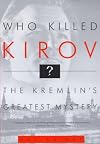
3838. Who Killed Kirov? The Kremlin's Greatest Mystery, by Amy Knight (read 25 Dec 2003) I read this book because the event (the murder in Leningrad of Kirov on Dec 1, 1934), was discussed in A Broken World (read 21 Dec 2003). The biographical account of Kirov, who became a Politburo member in 1926 and at the time of his death was considered by some as a possible successor to Stalin, was not too interesting, but the events leading up to the murder, and subsequent investigation are the stuff show more of high drama. The murder was used by Stalin to inaugurate the Great Purges of the mid 1930s, and the unresolved question is whether Stalin had Kirov murdered or merely took advantage of the event to kill everybody he thought might think of being against him. show less
sec, plictisitor, prost conceput: ignoră aspecte extrem de importante, precum gulagul sau războiul,tratează superficial personalitatea/viața sa personală și relația cu Stalin, exagerează cu tratatarea infinitelor intrigi și bizantinisme inerente multitudinii de potentați comuniști.
Nerecomandat.
Nerecomandat.

Per decenni la figura di Lavrentii Beria ha rappresentato l'impersonificazione del male: spietato capo della polizia di Stalin, luogotenente subdolo e crudele del dittatore, simbolo di un'era contrassegnata da oscuri e cruenti scontri di palazzo, stermini di massa, eccessi e miserie di ogni genere.
Lists
Awards


You May Also Like
Associated Authors
Statistics
- Works
- 9
- Also by
- 1
- Members
- 369
- Popularity
- #65,263
- Rating
- 3.5
- Reviews
- 5
- ISBNs
- 55
- Languages
- 5