
Maria McCann (1) (1956–)
Author of As Meat Loves Salt
For other authors named Maria McCann, see the disambiguation page.
Works by Maria McCann
Associated Works
Tagged
Common Knowledge
- Birthdate
- 1956
- Gender
- female
- Occupations
- University Lecturer, English
- Nationality
- UK
- Associated Place (for map)
- UK
Members
Reviews
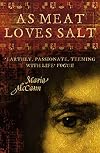
I read Maria McCann’s novel The Wilding several years ago, in just a couple of sittings (most of it was read on a flight to Italy so I had little else to distract me). I had quite enjoyed that book so expected much of the same of As Meat Loves Salt, which was McCann’s debut novel. However, apart from the genre of historical fiction, there was little similar about these books. I far preferred As Meat Loves Salt, which is easily the darker of the two novels.
Set in the early years of the show more English Civil War, the anti-hero and narrator is Jacob Cullen, a man who is in domestic service with his two brothers, although they were originally born into wealth. Having committed murder (don’t worry, this is revealed in the first few pages and is not a spoiler), Jacob flees with his new wife and one of his brothers, but when things go wrong he finds himself joining the New Model Army fighting in the ongoing war, and befriending the enigmatic fellow soldier Christopher Ferris.
After they leave the New Model Army, Ferris returns to his home in London and offers Jacob a home there. For fear of spoiling the story for anyone who wants to read this book, I’ll not reveal more, except to say that things get very dark very quickly. Emotions run extremely high and Jacob in particular has little success in controlling his feelings. To say he is quick to anger is an understatement. He is a large, strong man, capable of committing much physical harm, and almost a slave to his own violent tendencies. He always acts without thinking and no matter how much he regrets his outbursts later, he is seeming unable to control his rage when it bubbles up inside him.
For all that he is a man who one would wish to avoid, he’s not the only one in this book. Ferris is charming and well meaning, but mercurial and manipulative. I actually cared for him very little, but the relationship between him and Jacob was a fascinating one. (It has just occurred to me that the women in this book come across by and large far better than the men.)
The one thing I would have liked to have known more about was the fate of Zeb – without giving anything away, I did think he would feature more than he did, and that there was an interesting story. If Maria McCann ever feels like writing the story from his point of view, I would definitely be interested in reading it.
Overall I would definitely recommend this book. It’s not an easy read, and there are a few very violent scenes. But it’s well written with a not very likeable but always interesting narrator – if this is the kind of book that appeals to you, I would give this one a try. show less
Set in the early years of the show more English Civil War, the anti-hero and narrator is Jacob Cullen, a man who is in domestic service with his two brothers, although they were originally born into wealth. Having committed murder (don’t worry, this is revealed in the first few pages and is not a spoiler), Jacob flees with his new wife and one of his brothers, but when things go wrong he finds himself joining the New Model Army fighting in the ongoing war, and befriending the enigmatic fellow soldier Christopher Ferris.
After they leave the New Model Army, Ferris returns to his home in London and offers Jacob a home there. For fear of spoiling the story for anyone who wants to read this book, I’ll not reveal more, except to say that things get very dark very quickly. Emotions run extremely high and Jacob in particular has little success in controlling his feelings. To say he is quick to anger is an understatement. He is a large, strong man, capable of committing much physical harm, and almost a slave to his own violent tendencies. He always acts without thinking and no matter how much he regrets his outbursts later, he is seeming unable to control his rage when it bubbles up inside him.
For all that he is a man who one would wish to avoid, he’s not the only one in this book. Ferris is charming and well meaning, but mercurial and manipulative. I actually cared for him very little, but the relationship between him and Jacob was a fascinating one. (It has just occurred to me that the women in this book come across by and large far better than the men.)
The one thing I would have liked to have known more about was the fate of Zeb – without giving anything away, I did think he would feature more than he did, and that there was an interesting story. If Maria McCann ever feels like writing the story from his point of view, I would definitely be interested in reading it.
Overall I would definitely recommend this book. It’s not an easy read, and there are a few very violent scenes. But it’s well written with a not very likeable but always interesting narrator – if this is the kind of book that appeals to you, I would give this one a try. show less
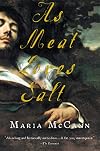
A remarkable novel, a homosexual love story set in the English Civil War and amongst the communist Diggers in 1649. Not only is it rich in historical detail, without being suffocated by the faux-archaic language other authors might use, it has a classic unreliable and deeply flawed narrator whose testimony gets very problematic towards the end. (Pedantic historical note: a scene with a printing press talks about point sizes of type, but the point system wasn't in use in England until well show more over a century later. At that time each type size had its own rather splendid name, such as Minion or Long Primer. End pedantry.) show less
Excellent character study of a morally disturbed man. Being in Jacob’s mind was a fascinating experience, if not exactly a pleasant one (because of his religious guilt). He was a very peculiar MC, ‘savage’ in both anger and love, impulsive and prone to obsession. I’m still not sure if he suffered from a mental disorder or if his ‘Voice’ was just the manifestation of his fear and shame… Definitely not a ‘good’ man, however you look at it, but his story still broke my show more heart.
The writing here was just stunning, very descriptive, and even if it was a little overlong in places after the 50% mark (mostly the colony-related bits), I skipped nothing. I give credit where credit’s due, and this debut deserves the highest rating. show less
The writing here was just stunning, very descriptive, and even if it was a little overlong in places after the 50% mark (mostly the colony-related bits), I skipped nothing. I give credit where credit’s due, and this debut deserves the highest rating. show less
It feels cruel to give such a monumental achievement fewer than five stars, but I can't go higher than four. It's just a little too long, and a little too filled with misery.
The book takes place during the English Civil War and focuses on themes of social mobility and belonging, utopianism, domination, and guilt/forgiveness. Jacob begins as a servant, then serves briefly as a soldier in the New Model Army, and ends up living in a commune of Diggers led by his lover Christopher Ferris. These show more two, who meet in the army, have a toxic relationship in which both are abusive to each other. Jacob's abuse is mostly physical/sexual, while Ferris's is emotional/gaslighting/withholding. The characters are well done, as we slowly come to see that Ferris is not all sweetness and light and that Jacob is, in fact, trying to be a better person.
But Jacob is so damaged and traumatized from coming to grips with and trying to hide his Queer identity, everything he does is motivated by a fear/guilt response. He does some horrible things throughout the book, most of which can be explained by confusion about his sexuality, fear of being found out, and self loathing/religious guilt (see: 17th century England). Unfortunately this makes it all very "tragic gay."
Jacob's "fight or flight" response is always "fight" (overreacting to minor slights and lashing out at people, often injuring them badly). This is sad, and it's successfully evoked, but it gets surprisingly boring after a while. There is no growth or redemption or much reflection. So at the end we are basically back where we started, which feels unsatisfying after spending nearly 600 pages in his head.
This is certainly an extremely accomplished historical novel and I am glad that I read it. But I admired it more than I enjoyed it. show less
The book takes place during the English Civil War and focuses on themes of social mobility and belonging, utopianism, domination, and guilt/forgiveness. Jacob begins as a servant, then serves briefly as a soldier in the New Model Army, and ends up living in a commune of Diggers led by his lover Christopher Ferris. These show more two, who meet in the army, have a toxic relationship in which both are abusive to each other. Jacob's abuse is mostly physical/sexual, while Ferris's is emotional/gaslighting/withholding. The characters are well done, as we slowly come to see that Ferris is not all sweetness and light and that Jacob is, in fact, trying to be a better person.
But Jacob is so damaged and traumatized from coming to grips with and trying to hide his Queer identity, everything he does is motivated by a fear/guilt response. He does some horrible things throughout the book, most of which can be explained by confusion about his sexuality, fear of being found out, and self loathing/religious guilt (see: 17th century England). Unfortunately this makes it all very "tragic gay."
Jacob's "fight or flight" response is always "fight" (overreacting to minor slights and lashing out at people, often injuring them badly). This is sad, and it's successfully evoked, but it gets surprisingly boring after a while. There is no growth or redemption or much reflection. So at the end we are basically back where we started, which feels unsatisfying after spending nearly 600 pages in his head.
This is certainly an extremely accomplished historical novel and I am glad that I read it. But I admired it more than I enjoyed it. show less
Lists
Awards


You May Also Like
Associated Authors
Statistics
- Works
- 3
- Also by
- 2
- Members
- 1,452
- Popularity
- #17,698
- Rating
- 3.9
- Reviews
- 84
- ISBNs
- 19
- Languages
- 2
