
Elizabeth McCracken (1) (1966–)
Author of The Giant's House
For other authors named Elizabeth McCracken, see the disambiguation page.
About the Author
Image credit: Elizabeth McCracken at the 2014 Texas Book Festival By Larry D. Moore, CC BY-SA 4.0, https://commons.wikimedia.org/w/index.php?curid=36754723
Works by Elizabeth McCracken
Associated Works
For the Love of Books: 115 Celebrated Writers on the Books They Love Most (1999) — Contributor — 478 copies, 4 reviews
The Workshop: Seven Decades of the Iowa Writers Workshop - 43 Stories, Recollections, & Essays on Iowa's Place in Twentieth-Century American Literature (1999) — Contributor — 197 copies, 1 review
The Ecco Anthology of Contemporary American Short Fiction (2008) — Contributor — 141 copies, 2 reviews
Death by Pad Thai and Other Unforgettable Meals (2015) — Author, some editions — 84 copies, 1 review
Cutting Edge: New Stories of Mystery and Crime by Women Writers (2019) — Contributor — 61 copies, 13 reviews
The O. Henry Prize Stories 2017 (The O. Henry Prize Collection) (2017) — Juror — 55 copies, 1 review
The Best American Short Stories 2025: An Anthology of Award-Winning Literary Fiction Handpicked by Celeste Ng, Showcasing the Art of Short Storytelling (2025) — Contributor — 47 copies, 1 review
Tagged
Common Knowledge
- Birthdate
- 1966
- Gender
- female
- Occupations
- librarian
novelist - Relationships
- Carey, Edward (husband)
McCracken, Harry (brother) - Nationality
- USA
- Birthplace
- Boston, Massachusetts, USA
- Places of residence
- Boston, Massachusetts, USA
Iowa City, Iowa, USA
Cambridge, Massachusetts, USA - Associated Place (for map)
- Massachusetts, USA
Members
Reviews
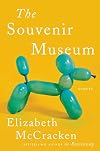
The stories in The Souvenir Museum are a delight. Elizabeth McCracken's cleverness had me laughing out loud, but her quirky characters also elicit emotional investment and deeper reflections on life and love. One paragraph, I would be laughing and quoting lines to my husband, and another paragraph feel my heart tugged.
McCracken's characters struggle with love, finding it or losing it, committing and running away.
A woman with a broken heart checks into a hotel and meets a well-known radio show more personalty who dealt out terrible advice. He suggests that she is young and that she must 'change her life, and to be kind, even when life is cruel.
A father takes his river-loving son rafting at a theme park, embarking on a fearful journey, imagining "The Raft of the Medusa at the Waterpark."
A boy runs away to study with a ventriloquist. The story gave me my 'Sunday Sentence' on Twitter:
His body hadn't changed yet, but his soul had: this year he had developed delusions of grandeur and a morbid nature and a willingness to die for love; next year, pubic hair and broad shoulders.~ from The Souvenir Museum by Elizabeth McCracken
A children's program actress imagines suicide, and on a cruise falls for a man who makes balloon animals.
What could be sadder in a marriage than incompatible feelings about bagpipes? Ought they still marry?~from The Souvenir Museum by Elizabeth McCracken
You can read one of the stories, Two Sad Clowns, published in O the Oprah Magazine here. It begins with the the marvelous sentence, "Even Punch and Judy were in love once." The story is the beginning of Jack and Sadie's love affair; the couple appear in four of the stories.
Who can predict the vicissitudes of life?~ from The Souvenir Museum by Elizabeth McCracken
Twenty years into their relationship, Jack convinces Sadie to marry and they honeymoon in Amsterdam. Discovering they are going the wrong way through a museum, the reluctant bride asks, Do you think we should start at the beginning? Her new husband answers, no; let's fight the current. Stick to your mistake."
Perhaps that is the best way to live. Own your mistakes. Own going against the current. Why question things we can not change? Love the unsuitable. Embrace our imperfect life.
Entertaining and thoughtful, these stories are wonderful.
I received a free galley from the publisher through NetGalley. My review is fair and unbiased. show less
McCracken's characters struggle with love, finding it or losing it, committing and running away.
A woman with a broken heart checks into a hotel and meets a well-known radio show more personalty who dealt out terrible advice. He suggests that she is young and that she must 'change her life, and to be kind, even when life is cruel.
A father takes his river-loving son rafting at a theme park, embarking on a fearful journey, imagining "The Raft of the Medusa at the Waterpark."
A boy runs away to study with a ventriloquist. The story gave me my 'Sunday Sentence' on Twitter:
His body hadn't changed yet, but his soul had: this year he had developed delusions of grandeur and a morbid nature and a willingness to die for love; next year, pubic hair and broad shoulders.~ from The Souvenir Museum by Elizabeth McCracken
A children's program actress imagines suicide, and on a cruise falls for a man who makes balloon animals.
What could be sadder in a marriage than incompatible feelings about bagpipes? Ought they still marry?~from The Souvenir Museum by Elizabeth McCracken
You can read one of the stories, Two Sad Clowns, published in O the Oprah Magazine here. It begins with the the marvelous sentence, "Even Punch and Judy were in love once." The story is the beginning of Jack and Sadie's love affair; the couple appear in four of the stories.
Who can predict the vicissitudes of life?~ from The Souvenir Museum by Elizabeth McCracken
Twenty years into their relationship, Jack convinces Sadie to marry and they honeymoon in Amsterdam. Discovering they are going the wrong way through a museum, the reluctant bride asks, Do you think we should start at the beginning? Her new husband answers, no; let's fight the current. Stick to your mistake."
Perhaps that is the best way to live. Own your mistakes. Own going against the current. Why question things we can not change? Love the unsuitable. Embrace our imperfect life.
Entertaining and thoughtful, these stories are wonderful.
I received a free galley from the publisher through NetGalley. My review is fair and unbiased. show less
Is The Hero of This Book a work of fiction, a memoir, or a treatise on writing? It doesn't matter because it is an engaging, heartfelt tribute to a mother from the daughter who loved, admired, and was bemused by her. McCracken’s narrator considers various literary styles, insisting she is not a memoirist, and is not even sure about the difference between fiction and memoir. “Permission to lie; permission to cast aside worries about plausibility.” To her “emotionally show more autobiographical” fiction, the narrator has lent her secrets, but never her identity, out of fear of being found. Now she claims to have perhaps lost her inhibitions. Or not. (She equivocates about various topics throughout the narrative.) Her mother hated graves and therapy, and viewed memoirs with contempt, especially those replete with complaints about parents. But was fun-loving, adventurous, and “loved to tell stories about herself.”
The fictional narrator remains anonymous throughout the book, but acknowledges that the “actual me is the author.” She describes how she wandered the streets of London during a return visit in August 2019, "the summer before the world stopped," feeling every bit the motherless child she became ten months earlier when her mother died. Yet she neither grieved nor mourned the mother whose name she also conceals until late in the story. She rejects the words "grief" and "mourning," finding both terms "melodramatic. . . . I just missed her. I hated to see her go." Back in Boston, her parents' belongings had been sold during an estate sale, and their house was being readied to be put on the market. "In London, I found I wanted to hoard my little portion of her" -- perhaps in the same way that her parents hoarded objects, although the narrator never uses that word in relationship to their living conditions or the monumental task of hauling their amassed belongings out of the house. Those belongings were curated to serve as “a bulwark to keep people away and out.” Rather, the trip was a means of escaping those mundane details of finalizing her mother's affairs. The house -- and, more specifically, the squalor in which her parents needlessly lived -- had haunted her for years. “At first the house was untidy, then messy, then dirty, then a shame, a shanda, then squalid. Actual squalor. . . . [I]t really was shameful, to be so educated, with such resources, and live in squalor.” She was happy to be away from it all and soon, hopefully, unburdened by it. "I was bereaved and haunted," she recalls.
As the narrator details walking around London, remembering her mother and the extraordinary life she lived, McCracken often employs a stream of consciousness style, permitting the narrator to veer off on tangents while relating a story. The technique makes the tale believable and authentic. Anyone who has experienced the grief of losing a loved one will recognize aspects of their own experience in the narrator’s recollections of family members and events, and her efforts to come to terms with who her parents were and their legacy. Ordinary objects, words, prictures or specific locations can trigger memories that flood one's consciousness in jagged, disjointed, seemingly random order, as they do the narrator's.
The narrator marvels at many aspects of her mother’s life and personality, as well as her physical characteristics. She remembers her mother saying she sustained a “birth injury” or “forceps injury,” but never a birth defect, and describes her mother’s refusal to let her body inhibit her lifestyle or accomplishments. She was formidable and personable, unique and memorable, and it is not until well into the story that the narrator names her mother’s condition – words she never heard her mother utter until she was fifty-eight years old and the narrator was twenty-six. Of course, to the narrator her “mother’s body was just her body,” and it surprised her when others noticed and/or commented about it, in part because of her mother’s personality. It was also just her body to her mother – never “something to overcome or accept any more than yours was.”
In some respects, her mother’s death came as a surprise. After all her mother had overcome and accomplished in her life, the narrator “was awaiting another resurrection.” When she had to accept that her mother would not survive, she and her brother had to make decisions about her mother’s last days and care. And they chose well, observing that both of her parents had “good deaths . . . from this angle especially, a quiet death in old age, people you love nearby: It feels like luck.” If the definition of being lucky includes being survived by a child who remembers the years spent with you lovingly, even in recognition of your flaws and missteps, the narrator's parents were indeed lucky. She “hated to see them go” and, through the process of losing and missing them, illustrates the various ways in which she knew and understood her parents, while acknowledging that there was much about them, their lives, and their relationship she did not know. And will likely never know. It's another aspect of the narrator’s feelings with which readers who have lost parents will identify. In her grief, the narrator realizes that she “only knew the stories my mother liked to tell, not the ones she’d prefer to forget,” which is, perhaps, a universal parental trait.
The Hero of This Book is an often hilarious and at times heartbreaking, beautifully crafted homage from an empathetic, bereaved daughter to her deceased mother (and, to a lesser degree, father, grandmother, and aunt). Thanks to McCracken's vivid and evocative prose, the narrator's parents and other family members spring back to life on the pages as McCracken details lives well-lived, along with personality quirks and eccentricities, and foibles. Her mother was ferociously private. The narrator wonders how her mother would react to the book, and ponders whether privacy outlives us. Ultimately, as with other weighty issues, she decides not to decide. Because concluding that the dead have no privacy might simply be a way to camouflage and justify her own self-centeredness. Besides, the narrator continues to keep many things secret and the book is her story -- a story she needs to tell -- even if her mother is the hero of it. And make no mistake: the narrator's brilliant, intellectual, stubborn, complicated, and unconventional mother is the undisputed hero of the book . . . and her daughter's life.
The narrator’s ruminations never hit a false or contrived note, revealing her particular worldview and sometimes cheeky philosophies about writing. “I hate novels with unnamed narrators. I didn’t mean to write one. Write enough books and these things will happen. I never meant to write a novel about a writer, either.” She believes that life is all about story: “Your family is the first novel that you know.” Adult readers who are, like the narrator, motherless or orphaned children, may find themselves fondly recalling and missing their own parents as they get to know McCracken's perhaps fictional ones. I certainly did.
Thenks to NetGalley for an Advance Reader's Copy of the book, and to Ecco Books & Bibliolifestyle for a paperback copy. show less
The fictional narrator remains anonymous throughout the book, but acknowledges that the “actual me is the author.” She describes how she wandered the streets of London during a return visit in August 2019, "the summer before the world stopped," feeling every bit the motherless child she became ten months earlier when her mother died. Yet she neither grieved nor mourned the mother whose name she also conceals until late in the story. She rejects the words "grief" and "mourning," finding both terms "melodramatic. . . . I just missed her. I hated to see her go." Back in Boston, her parents' belongings had been sold during an estate sale, and their house was being readied to be put on the market. "In London, I found I wanted to hoard my little portion of her" -- perhaps in the same way that her parents hoarded objects, although the narrator never uses that word in relationship to their living conditions or the monumental task of hauling their amassed belongings out of the house. Those belongings were curated to serve as “a bulwark to keep people away and out.” Rather, the trip was a means of escaping those mundane details of finalizing her mother's affairs. The house -- and, more specifically, the squalor in which her parents needlessly lived -- had haunted her for years. “At first the house was untidy, then messy, then dirty, then a shame, a shanda, then squalid. Actual squalor. . . . [I]t really was shameful, to be so educated, with such resources, and live in squalor.” She was happy to be away from it all and soon, hopefully, unburdened by it. "I was bereaved and haunted," she recalls.
As the narrator details walking around London, remembering her mother and the extraordinary life she lived, McCracken often employs a stream of consciousness style, permitting the narrator to veer off on tangents while relating a story. The technique makes the tale believable and authentic. Anyone who has experienced the grief of losing a loved one will recognize aspects of their own experience in the narrator’s recollections of family members and events, and her efforts to come to terms with who her parents were and their legacy. Ordinary objects, words, prictures or specific locations can trigger memories that flood one's consciousness in jagged, disjointed, seemingly random order, as they do the narrator's.
The narrator marvels at many aspects of her mother’s life and personality, as well as her physical characteristics. She remembers her mother saying she sustained a “birth injury” or “forceps injury,” but never a birth defect, and describes her mother’s refusal to let her body inhibit her lifestyle or accomplishments. She was formidable and personable, unique and memorable, and it is not until well into the story that the narrator names her mother’s condition – words she never heard her mother utter until she was fifty-eight years old and the narrator was twenty-six. Of course, to the narrator her “mother’s body was just her body,” and it surprised her when others noticed and/or commented about it, in part because of her mother’s personality. It was also just her body to her mother – never “something to overcome or accept any more than yours was.”
In some respects, her mother’s death came as a surprise. After all her mother had overcome and accomplished in her life, the narrator “was awaiting another resurrection.” When she had to accept that her mother would not survive, she and her brother had to make decisions about her mother’s last days and care. And they chose well, observing that both of her parents had “good deaths . . . from this angle especially, a quiet death in old age, people you love nearby: It feels like luck.” If the definition of being lucky includes being survived by a child who remembers the years spent with you lovingly, even in recognition of your flaws and missteps, the narrator's parents were indeed lucky. She “hated to see them go” and, through the process of losing and missing them, illustrates the various ways in which she knew and understood her parents, while acknowledging that there was much about them, their lives, and their relationship she did not know. And will likely never know. It's another aspect of the narrator’s feelings with which readers who have lost parents will identify. In her grief, the narrator realizes that she “only knew the stories my mother liked to tell, not the ones she’d prefer to forget,” which is, perhaps, a universal parental trait.
The Hero of This Book is an often hilarious and at times heartbreaking, beautifully crafted homage from an empathetic, bereaved daughter to her deceased mother (and, to a lesser degree, father, grandmother, and aunt). Thanks to McCracken's vivid and evocative prose, the narrator's parents and other family members spring back to life on the pages as McCracken details lives well-lived, along with personality quirks and eccentricities, and foibles. Her mother was ferociously private. The narrator wonders how her mother would react to the book, and ponders whether privacy outlives us. Ultimately, as with other weighty issues, she decides not to decide. Because concluding that the dead have no privacy might simply be a way to camouflage and justify her own self-centeredness. Besides, the narrator continues to keep many things secret and the book is her story -- a story she needs to tell -- even if her mother is the hero of it. And make no mistake: the narrator's brilliant, intellectual, stubborn, complicated, and unconventional mother is the undisputed hero of the book . . . and her daughter's life.
The narrator’s ruminations never hit a false or contrived note, revealing her particular worldview and sometimes cheeky philosophies about writing. “I hate novels with unnamed narrators. I didn’t mean to write one. Write enough books and these things will happen. I never meant to write a novel about a writer, either.” She believes that life is all about story: “Your family is the first novel that you know.” Adult readers who are, like the narrator, motherless or orphaned children, may find themselves fondly recalling and missing their own parents as they get to know McCracken's perhaps fictional ones. I certainly did.
Thenks to NetGalley for an Advance Reader's Copy of the book, and to Ecco Books & Bibliolifestyle for a paperback copy. show less
My grand time reading Bowlaway is over, but what a curious pleasure it was to read. It was a multi-generational story starting with a woman found lying in a cemetery with fifteen pounds of gold. The story travels around and through the members (near and distant) of her family, and those who worked in the heart of it all—the bowling alley. McCracken writes so well about these misfits. She gets the reader so attached to Bertha Truitt, that our author has to remove her from the novel with show more something massively unusual, a flood of molasses from a huge tank on the rooftop of the local distillery. That wall of sweetness buried cars, leveled buildings, and killed more than twenty people. In the search for Bertha, the first sign was her distinctive hat glued to a wall.
[The Great Boston Molasses Flood occurred on January 15, 1919, and I’ve always found it purely fascinating. They say it smelled like molasses in the North End for decades from those two million gallons of rampaging sweetness.]
If I actually wrote real reviews, there would be much more to this. But, personally, this is all it would take to spark my interest. show less
[The Great Boston Molasses Flood occurred on January 15, 1919, and I’ve always found it purely fascinating. They say it smelled like molasses in the North End for decades from those two million gallons of rampaging sweetness.]
If I actually wrote real reviews, there would be much more to this. But, personally, this is all it would take to spark my interest. show less

A quiet novella about a woman walking around London while remembering her parents, especially her mother, is not what one usually expects from Elizabeth McCracken whose books and short stories are all so delightfully weird and off-kilter. But, of course, the upbringing the narrator describes is both normal and very odd.
This book does an excellent job of describing what it means to live with a disability and what it's like to live with a disabled parent. As the narrator walks around London, show more she remembers a previous trip with her mother and every place she goes is assessed for whether her mother would be able to access it. McCracken, as usual, writes very, very well and if you're in the mood for something quieter, you could do far worse than pick up this slender gem. show less
This book does an excellent job of describing what it means to live with a disability and what it's like to live with a disabled parent. As the narrator walks around London, show more she remembers a previous trip with her mother and every place she goes is assessed for whether her mother would be able to access it. McCracken, as usual, writes very, very well and if you're in the mood for something quieter, you could do far worse than pick up this slender gem. show less
Lists
All Iowa Reads (1)
Awards


You May Also Like
Associated Authors
Statistics
- Works
- 15
- Also by
- 22
- Members
- 4,527
- Popularity
- #5,544
- Rating
- 3.7
- Reviews
- 193
- ISBNs
- 123
- Languages
- 7
- Favorited
- 1