
Gloria Emerson (1929–2004)
Author of Winners and Losers: Battles, Retreats, Gains, Losses, and Ruins from a Long War
About the Author
Works by Gloria Emerson
Associated Works
War No More: Three Centuries of American Antiwar and Peace Writing (2016) — Contributor — 111 copies, 3 reviews
War torn: stories of war from the women reporters who covered Vietnam (2002) — Introduction — 106 copies, 2 reviews
The Other Side of Heaven: Post-War Fiction by Vietnamese and American Writers (1995) — Epilogue — 43 copies
Tagged
Common Knowledge
- Birthdate
- 1929-05-19
- Date of death
- 2004-08-03
- Gender
- female
- Occupations
- journalist
war correspondent - Organizations
- The New York Times
- Awards and honors
- National Book Award (1978)
George Polk Award - Relationships
- Brofferio, Charles (husband, 1960-61)
- Nationality
- USA
- Birthplace
- Manhattan, New York, New York, USA
- Places of residence
- New York, New York, USA
Ho Chi Minh City, Vietnam
Princeton, New Jersey, USA - Place of death
- New York, New York, USA
- Associated Place (for map)
- New York, New York, USA
Members
Reviews
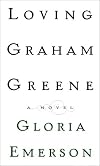
Molly Benson longs to be useful, and forges ahead by giving away sums of her own money in a rather messy manner. In Princeton, New Jersey, where she has always lived, Molly is viewed as eccentric by the upper-class world that her mother inhabits. Equally puzzling to people is Molly's passion for Graham Greene and his novels; she believes that their intermittent correspondence has afforded them a special bond. After the death of her brother, Molly loves Greene more than anyone, and it is he show more who inspires her to answer to conscience. It is in honor of the great novelist, a year after his death in 1991, that Molly leads a small delegation to Algiers, where a fierce civil war has just begun. Molly's plan is to give money to Algerian journalists and writers so that they will be able to protect themselves from the fundamentalists, who are killing the enemies of Islam. It does not occur to Molly that she is putting herself, her best friend, Bertie Einhorn, and a young, garrulous English historian, Toby Plunkett, in danger. Her courage and an inbred sense of self-entitlement--a characteristic of the small Princeton world she scorns--blind her to the possibilities of harm, and the odd little group marches to disaster. Comic and touching in turn, Loving Graham Greene is a splendid combination of American high hopes and obstinacy, of foolishness and betrayal, in the first novel of a gifted and witty writer. show less
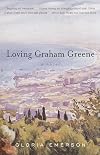
I must be a sucker for novels with the names of other authors in their titles. Just this week I bought a copy of "Cleaning Nabokov's House" by Leslie Daniels. A few weeks ago I finished "The Last Dickens" by Matthew Pearl. Also on my shelves I have "The Poe Shadow" by the same author and, among other books, "Balzac and the Little Chinese Seamstress" and "The Crimes of Charlotte Bronte." Now I have read Gloria Emerson's 2000 novel "Loving Graham Greene."
Emerson, a New York Times war show more correspondent, wrote just the one novel before her death in 2004, but it is a small gem. The story tells of Molly Benson, an idealistic American woman with more money than sense. Novelist Graham Greene has recently died as the story opens, and Molly is still in mourning. She loves his books and once met the great writer. She imagines he was a close friend, although she is beginning to realize his letters to her were merely polite responses to her letters to him, nothing more. In any event, she wants to make some grand gesture in Greene's memory, and she decides to use her money to try to free imprisoned writers in Algeria.
Algeria is a dangerous place at this time, especially to foreigners, but Molly decides she must go there herself, as she imagines Graham Greene would have done. With her are her friend Bertie, another middle-aged woman, and Toby, an overweight younger man, who is invited along only because Molly's husband, busy making a film in Japan, thinks two women shouldn't travel alone to a Muslim country.
There is a scene where the group visits an Algerian hospital and Molly learns about their desperate shortage of supplies because of lack of funds. Yet she doesn't even consider donating any of her money to this cause. She prefers schemes more grand and symbolic, however impractical they may be. She believes her plan, which involves carrying a lot of American money in her shoes and handing it out to anyone who might conceivably be of help, is more worthy of Graham Greene.
Emerson's novel is alternately funny and sad. Just about every sentence is a masterpiece. The novel, at any rate, is worthy of Graham Greene. show less
Emerson, a New York Times war show more correspondent, wrote just the one novel before her death in 2004, but it is a small gem. The story tells of Molly Benson, an idealistic American woman with more money than sense. Novelist Graham Greene has recently died as the story opens, and Molly is still in mourning. She loves his books and once met the great writer. She imagines he was a close friend, although she is beginning to realize his letters to her were merely polite responses to her letters to him, nothing more. In any event, she wants to make some grand gesture in Greene's memory, and she decides to use her money to try to free imprisoned writers in Algeria.
Algeria is a dangerous place at this time, especially to foreigners, but Molly decides she must go there herself, as she imagines Graham Greene would have done. With her are her friend Bertie, another middle-aged woman, and Toby, an overweight younger man, who is invited along only because Molly's husband, busy making a film in Japan, thinks two women shouldn't travel alone to a Muslim country.
There is a scene where the group visits an Algerian hospital and Molly learns about their desperate shortage of supplies because of lack of funds. Yet she doesn't even consider donating any of her money to this cause. She prefers schemes more grand and symbolic, however impractical they may be. She believes her plan, which involves carrying a lot of American money in her shoes and handing it out to anyone who might conceivably be of help, is more worthy of Graham Greene.
Emerson's novel is alternately funny and sad. Just about every sentence is a masterpiece. The novel, at any rate, is worthy of Graham Greene. show less
A woman with a strong imaginary but tenuous real-life connection to Graham Greene (he wrote to her because he replied to all correspondence) hopes to do good in his honor by taking her friends on a trip to Algeria and giving money to fight corruption. Luckily, they survive and don't mess things up too much. Knowing Greene's novels makes you appreciate the book more.
Some quotes:
On Hell:
"It's not a place, is it? We carry it with us, a hell that separates us from all that is kind and good and show more generous." [p. 111]
On God:
"Remember what Pascal said, that a man who starts looking for God has already found him." [p. 117]
On helping others:
"It is to help a family." From the pocket of her skirt she handed him a wad of dinars, held together by a rubber band, which she did not count On one side of the bills was an antelope with mountains in the distance. There was a moral simplicity about this small act that her grander schemes always lost. [p. 125]
... a government communique with recommendations on security issues: "Banalize and minimize the psychological effect of terrorist and subversive actions. Play up atrocities committed by the Islamic regimes of Iran, Sudan and Afganistan." [p. 139]
"Oh yes, but it wasn't she who suffered, was it?" said Toby. "People like her never do. They just take a stand while the bullets hit someone else." [p. 173]
Molly had seen he absurdity of her life before, that was nothing new, but now there was no reason to ever believe in her own usefulness again, and it was this pretense which she so needed. [p. 174] show less
Some quotes:
On Hell:
"It's not a place, is it? We carry it with us, a hell that separates us from all that is kind and good and show more generous." [p. 111]
On God:
"Remember what Pascal said, that a man who starts looking for God has already found him." [p. 117]
On helping others:
"It is to help a family." From the pocket of her skirt she handed him a wad of dinars, held together by a rubber band, which she did not count On one side of the bills was an antelope with mountains in the distance. There was a moral simplicity about this small act that her grander schemes always lost. [p. 125]
... a government communique with recommendations on security issues: "Banalize and minimize the psychological effect of terrorist and subversive actions. Play up atrocities committed by the Islamic regimes of Iran, Sudan and Afganistan." [p. 139]
"Oh yes, but it wasn't she who suffered, was it?" said Toby. "People like her never do. They just take a stand while the bullets hit someone else." [p. 173]
Molly had seen he absurdity of her life before, that was nothing new, but now there was no reason to ever believe in her own usefulness again, and it was this pretense which she so needed. [p. 174] show less
nyt notable la times best book chicago tribune best of fiction selection
really?
really?
Awards


You May Also Like


Associated Authors
Statistics
- Works
- 5
- Also by
- 5
- Members
- 272
- Popularity
- #85,117
- Rating
- 3.8
- Reviews
- 5
- ISBNs
- 17
- Languages
- 1
- Favorited
- 2