
About the Author
Stefan Fatsis is a staff reporter for the "Wall Street Journal" & a regular commentator on NPR's "All Things Considered". He has written for the Associated Press, the "Village Voice", & "P.O.V." magazine & has appeared on "Good Morning, America" to discuss the 2000 National Scrabble Championship. show more In search of a story idea in 1997, Scrabble amateur Fatsis challenged the head of the National Scrabble Association to a game & won. He has since traveled the country playing in Scrabble tournaments & achieved "expert" status, & he currently ranks in the top 10 percent of tournament Scrabble players nationwide. (Bowker Author Biography) show less
Image credit: Wikipedia
Works by Stefan Fatsis
Word Freak: Heartbreak, Triumph, Genius, and Obsession in the World of Competitive Scrabble Players (2001) — Author — 1,741 copies, 48 reviews
A Few Seconds of Panic: A 5-Foot-8, 170-Pound, 43-Year-Old Sportswriter Plays in the NFL (2008) 176 copies, 6 reviews
Wild and Outside: How a Renegade Minor League Revived the Spirit of Baseball in America's Heartland (1995) 64 copies, 2 reviews
Associated Works
Upon Further Review: The Greatest What-Ifs in Sports History (2018) — Contributor — 51 copies, 2 reviews
Tagged
Common Knowledge
- Birthdate
- 1963-04-01
- Gender
- male
- Education
- University of Pennsylvania (B.A., American Civilization)
- Occupations
- author
journalist - Organizations
- Associated Press
- Nationality
- USA
- Birthplace
- Pelham, New York, USA
- Places of residence
- Brooklyn, New York, USA
Washington, D.C., USA
Athens, Greece
Philadelphia, Pennsylvania, USA
Boston, Massachusetts, USA - Associated Place (for map)
- USA
Members
Reviews
Word Freak: Heartbreak, Triumph, Genius, and Obsession in the World of Competitive Scrabble Players by Stefan Fatsis
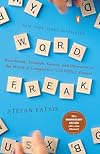
I love playing Scrabble! It's a popular word game of skill and chance and journalist Stefan Fatsis entered the competitive world of Scrabble hoping for some material worthy of publishing.
What he discovered was an intense sub culture with its own rules and guiding principles and a range of dedicated, intelligent and sometimes eccentric players all striving to win. Word Freak - Heartbreak, Triumph, Genius, and Obsession in the World of Competitive Scrabble Players by Stefan Fatsis is the show more result of his research and complete immersion in the Scrabble scene.
First, it's important to know Scrabble can be played on a competitive level and the book largely takes place in the USA.
"To play competitive Scrabble, one has to get over the conceit of refusing to acknowledge certain words as real and accept that the game requires learning words that may not have any outside utility." Page 40
This is why competitive Scrabble doesn't appeal to me as a player. The author explains that vocabulary defines the better player in a living room situation, but in a competitive environment it's about mastering the rules of the game and memorising words. Two letter words are 'twos', three letter words 'threes' and so forth. Players keep track of tiles the way a card shark counts cards and there are endless strategies for discarding tiles, playing offensive and defensive and more.
Fatsis explains that players who compete at tournaments receive ranking points based on a very complicated system of wins and margins and are paired within divisions according to their latest ranking. A competitor will play multiple games at each tournament and Fatsis tells us just how hierarchical these tournaments are:
"In the playing room, you can't just sit wherever you fancy. The top-division tables typically are farthest from the main doors. And Table 1 of Division 1 - where the players with the best records meet in the latter stages of most tournaments - is usually in the farthest corner. The quality of play descends to the weakest novices in the room's opposite corner. And there isn't much interdivisional mingling. Experts have no interest in novice boards, and novices, who could benefit from learning new words or watching experts analyze positions, appear afraid to cross class boundaries." Page 37
In this way, the author quickly establishes the basics of competitive Scrabble and is glad to be warmly welcomed into the fold so to speak. Players knows he's a journalist from The Wall Street Journal and readily answer his questions while encouraging him to improve his game.
Many of the top players enjoy anagramming with each other in a playfully competitive nature and intellect is celebrated. Anagramming involves arranging tiles alphabetically on a rack - or saying them aloud - and identifying words made from the letters. This helps the players refine their skills and see the potential in the rack, and the majority of highly ranked players have created or implemented some kind of study program to learn and remember words.
There's quite a lot of content around the accepted dictionary of words, how it began and how it's updated etc.
"The Scrabble world decided that The Official Scrabble Players Dictionary [OSPD], first published in 1978, would for the purposes of the game, answer the question: What is a word?" Pages 40-41
But just to complicate things, there are two separate word sources that govern the game of Scrabble in North America and Great Britain.
"The new book is called the Official Tournament and Club Word List, and is known as the OWL." Page 41
I'd elaborate further but it gets quite confusing, suffice to say that Americans are at a significant disadvantage when playing overseas. Some embrace the additional words available to them, whilst others - predictably - refuse to change; essentially creating two camps. The deletion of offensive words caused a ruckus in the Scrabble community and several players who did a lot of work contributing to dictionary entries and study programs have been screwed over and distanced themselves from competitive play as a result.
There was even drama at the top level, with the dissolution of the National Scrabble Association (NSA) and the formation of the North American Scrabble Players Association (NASPA) in its place. Some players had various issues with the way NASPA was organising things and while many readers may find this overkill or boring, my interest - just - carried me through. It seems politics and drama exists everywhere.
It's unclear when exactly Fatsis becomes subsumed by Scrabble, but he quickly fixates on his rating, loses his temper when he doesn't play well and embarks on a range of study techniques, implementing tips from top players along the way.
Here's an example of some advice from Joe Edley that we can all learn from:
"Studying Scrabble words is like walking around the world, but as you start walking your feet start getting bigger. Every step you take is taking you farther. The more you study, the more ability you develop and the easier it becomes to learn more." Page 133
I'd say reading is the same! This is excellent advice and it can be applied to more than just Scrabble. Witnessing the author's improvement and progression through the rankings as he dedicated more and more time to it was satisfying. Often frustrating for the author himself, it was hard not to become invested in the nitty gritty details of specific plays gone wrong, missed opportunities, excellent plays and hard won victories.
Towards the end of the book, the author acknowledges that he's played more than a thousand games of Scrabble since embarking on his journey to write about the sub culture and it's taken him to unexpected places. I was surprised at the depth of relationships he developed over the course of the book, always rooming and carpooling with fellow players, regularly socialising outside of competitions and playing endless games in between.
Openly sharing their advice, strategies and study techniques, Fatsis also shared personal observations of their character, personality and lifestyle choices giving the reader quite an intimate view of some of the players. I often wondered whether he'd crossed the line and later learned in the Afterword that at least one player was unhappy about the way in which he was portrayed in the book.
Originally published in 2001, my new copy has an updated Preface and - cleverly titled - Afterwordfreak published in 2011. I particularly enjoyed reading updates on players who featured quite prominently in the book, and in a very meta way, the impact Word Freak had on new and upcoming players in the ten years it's been on shelves. The increase in technology and the emergence of new players who grew up playing bots online and using apps to improve their skills have now entered the fray. You'd assume the old-school players would feel threatened by them, but they seem to enjoy seeing new talent emerging and celebrate the successes of players decades younger than themselves.
While reading Word Freak I started playing the odd game of Scrabble online - against the computer - and found myself enjoying the game immensely and implementing many of the techniques outlined in this book. Word Freak by Stefan Fatsis was a terrific deep dive into the competitive world of Scrabble and I hope to watch the subsequent documentary Word Wars. show less
What he discovered was an intense sub culture with its own rules and guiding principles and a range of dedicated, intelligent and sometimes eccentric players all striving to win. Word Freak - Heartbreak, Triumph, Genius, and Obsession in the World of Competitive Scrabble Players by Stefan Fatsis is the show more result of his research and complete immersion in the Scrabble scene.
First, it's important to know Scrabble can be played on a competitive level and the book largely takes place in the USA.
"To play competitive Scrabble, one has to get over the conceit of refusing to acknowledge certain words as real and accept that the game requires learning words that may not have any outside utility." Page 40
This is why competitive Scrabble doesn't appeal to me as a player. The author explains that vocabulary defines the better player in a living room situation, but in a competitive environment it's about mastering the rules of the game and memorising words. Two letter words are 'twos', three letter words 'threes' and so forth. Players keep track of tiles the way a card shark counts cards and there are endless strategies for discarding tiles, playing offensive and defensive and more.
Fatsis explains that players who compete at tournaments receive ranking points based on a very complicated system of wins and margins and are paired within divisions according to their latest ranking. A competitor will play multiple games at each tournament and Fatsis tells us just how hierarchical these tournaments are:
"In the playing room, you can't just sit wherever you fancy. The top-division tables typically are farthest from the main doors. And Table 1 of Division 1 - where the players with the best records meet in the latter stages of most tournaments - is usually in the farthest corner. The quality of play descends to the weakest novices in the room's opposite corner. And there isn't much interdivisional mingling. Experts have no interest in novice boards, and novices, who could benefit from learning new words or watching experts analyze positions, appear afraid to cross class boundaries." Page 37
In this way, the author quickly establishes the basics of competitive Scrabble and is glad to be warmly welcomed into the fold so to speak. Players knows he's a journalist from The Wall Street Journal and readily answer his questions while encouraging him to improve his game.
Many of the top players enjoy anagramming with each other in a playfully competitive nature and intellect is celebrated. Anagramming involves arranging tiles alphabetically on a rack - or saying them aloud - and identifying words made from the letters. This helps the players refine their skills and see the potential in the rack, and the majority of highly ranked players have created or implemented some kind of study program to learn and remember words.
There's quite a lot of content around the accepted dictionary of words, how it began and how it's updated etc.
"The Scrabble world decided that The Official Scrabble Players Dictionary [OSPD], first published in 1978, would for the purposes of the game, answer the question: What is a word?" Pages 40-41
But just to complicate things, there are two separate word sources that govern the game of Scrabble in North America and Great Britain.
"The new book is called the Official Tournament and Club Word List, and is known as the OWL." Page 41
I'd elaborate further but it gets quite confusing, suffice to say that Americans are at a significant disadvantage when playing overseas. Some embrace the additional words available to them, whilst others - predictably - refuse to change; essentially creating two camps. The deletion of offensive words caused a ruckus in the Scrabble community and several players who did a lot of work contributing to dictionary entries and study programs have been screwed over and distanced themselves from competitive play as a result.
There was even drama at the top level, with the dissolution of the National Scrabble Association (NSA) and the formation of the North American Scrabble Players Association (NASPA) in its place. Some players had various issues with the way NASPA was organising things and while many readers may find this overkill or boring, my interest - just - carried me through. It seems politics and drama exists everywhere.
It's unclear when exactly Fatsis becomes subsumed by Scrabble, but he quickly fixates on his rating, loses his temper when he doesn't play well and embarks on a range of study techniques, implementing tips from top players along the way.
Here's an example of some advice from Joe Edley that we can all learn from:
"Studying Scrabble words is like walking around the world, but as you start walking your feet start getting bigger. Every step you take is taking you farther. The more you study, the more ability you develop and the easier it becomes to learn more." Page 133
I'd say reading is the same! This is excellent advice and it can be applied to more than just Scrabble. Witnessing the author's improvement and progression through the rankings as he dedicated more and more time to it was satisfying. Often frustrating for the author himself, it was hard not to become invested in the nitty gritty details of specific plays gone wrong, missed opportunities, excellent plays and hard won victories.
Towards the end of the book, the author acknowledges that he's played more than a thousand games of Scrabble since embarking on his journey to write about the sub culture and it's taken him to unexpected places. I was surprised at the depth of relationships he developed over the course of the book, always rooming and carpooling with fellow players, regularly socialising outside of competitions and playing endless games in between.
Openly sharing their advice, strategies and study techniques, Fatsis also shared personal observations of their character, personality and lifestyle choices giving the reader quite an intimate view of some of the players. I often wondered whether he'd crossed the line and later learned in the Afterword that at least one player was unhappy about the way in which he was portrayed in the book.
Originally published in 2001, my new copy has an updated Preface and - cleverly titled - Afterwordfreak published in 2011. I particularly enjoyed reading updates on players who featured quite prominently in the book, and in a very meta way, the impact Word Freak had on new and upcoming players in the ten years it's been on shelves. The increase in technology and the emergence of new players who grew up playing bots online and using apps to improve their skills have now entered the fray. You'd assume the old-school players would feel threatened by them, but they seem to enjoy seeing new talent emerging and celebrate the successes of players decades younger than themselves.
While reading Word Freak I started playing the odd game of Scrabble online - against the computer - and found myself enjoying the game immensely and implementing many of the techniques outlined in this book. Word Freak by Stefan Fatsis was a terrific deep dive into the competitive world of Scrabble and I hope to watch the subsequent documentary Word Wars. show less
Wild and Outside: How a Renegade Minor League Revived the Spirit of Baseball in America's Heartland by Stefan Fatsis
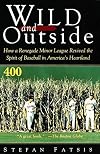
Stefan Fatsis’s Wild and Outside: How a Renegade Minor League Revived the Spirit of Baseball in America’s Heartland offers a fascinating look at the inner workings of the 1994 season of the Northern League, which was one of baseball’s premier independent leagues. And while Fatsis certainly has a good feel for the on-the-field aspects of the sport (and particularly the grassroots heart and soul of the game), it’s his keen affinity for the business end of the things that sets this book show more apart from other baseball books. This was the second season of the league, which was still not quite on firm footing. The insights into the precarious finances of the franchises, the motivations of the fledgling owners, the backstories of the harried managers, the decision-making, the headaches, the successes and failures: it’s these facets that set the book apart. Adding to the intrigue is that independent teams are comprised of reject players: those who couldn’t cut it in the majors or their affiliated minor league systems. These are players who are just barely hanging on, looking for one more shot to play well enough to be noticed by an MLB scout and a chance to picked up by a major league organization.
Fortuitously for the narrative, the 1994 season set up a serendipitous juxtaposition: in August 1994 MLB players went on strike, cancelling the remainder of the major league season, and leaving independent ball as the only baseball being played in the country from that point forward that year. While MLB shut down amid its labor strife, the heartland’s Northern League played on, firmly and staunchly independent (albeit with its own internal issues to deal with). The Duluth–Superior Dukes, St. Paul Saints, Sioux Falls Canaries, Sioux City Explorers, Winnipeg Goldeyes, and Thunder Bay Whiskey Jacks carried on. Fatsis doesn’t belabor the point, but merely presents the facts for the reader to contemplate the dichotomy. Wild and Outside reminds us of the pure joy and entertainment value in baseball. It is more than a game; it is a part of America’s deep- rooted culture to be celebrated. show less
Fortuitously for the narrative, the 1994 season set up a serendipitous juxtaposition: in August 1994 MLB players went on strike, cancelling the remainder of the major league season, and leaving independent ball as the only baseball being played in the country from that point forward that year. While MLB shut down amid its labor strife, the heartland’s Northern League played on, firmly and staunchly independent (albeit with its own internal issues to deal with). The Duluth–Superior Dukes, St. Paul Saints, Sioux Falls Canaries, Sioux City Explorers, Winnipeg Goldeyes, and Thunder Bay Whiskey Jacks carried on. Fatsis doesn’t belabor the point, but merely presents the facts for the reader to contemplate the dichotomy. Wild and Outside reminds us of the pure joy and entertainment value in baseball. It is more than a game; it is a part of America’s deep- rooted culture to be celebrated. show less
Word Freak: Heartbreak, Triumph, Genius, and Obsession in the World of Competitive Scrabble Players by Stefan Fatsis
Outstanding. Fatsis' embedding of himself in the culture of competitive play is engaging even if you're not a Scrabble fan. The mental game he so carefully examines of both aspiring and top players reveals how many layers of emotion and calculation go into playing at higher levels. How can you do well at such a specialized pursuit without flirting with mania?
Word Freak: Heartbreak, Triumph, Genius, and Obsession in the World of Competitive Scrabble Players by Stefan Fatsis
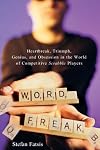
I love a good behind-the-scenes underbelly story and the more seemingly off the wall the better. I am not sure where I ran across a mention of this book but since I grew up playing lots of Scrabble it of course caught my attention. What happened next was both a trip down memory lane and a recognition of some things within my own family.
"Joe is describing one of the core facts about Scrabble: It is a game of imperfect information. Chess is a game of perfect information. Both players have show more access to all of the information about the game."
This was an aha moment for me as I have never liked chess. I have always wanted to like it and always wanted to be good at it but I am not, nor will I ever be. So this quote explained a lot about the way I think. I like imperfect information because it leaves room to learn and grow. In my opinion once you have only perfect information there is no need to learn anything new or grow any more.
The other thing that I learned about this book is that competitive Scrabble apparently allows for "phonies" which are made up words that appear to be legitimate; the trick is to know when to play them. This made me laugh out loud because the Grandma that I played Scrabble with the most was always making up words and she would often get caught. She probably didn't realize this was a legitimate tactic but it was something that we often laughed about.
In any event, this was a fun book with the kind of quirky cast of characters to be expected in this type of book and if you enjoy(ed) playing Scrabble at all, I do recommend this book. Oh, and I learned some new Scrabble words along the way. show less
"Joe is describing one of the core facts about Scrabble: It is a game of imperfect information. Chess is a game of perfect information. Both players have show more access to all of the information about the game."
This was an aha moment for me as I have never liked chess. I have always wanted to like it and always wanted to be good at it but I am not, nor will I ever be. So this quote explained a lot about the way I think. I like imperfect information because it leaves room to learn and grow. In my opinion once you have only perfect information there is no need to learn anything new or grow any more.
The other thing that I learned about this book is that competitive Scrabble apparently allows for "phonies" which are made up words that appear to be legitimate; the trick is to know when to play them. This made me laugh out loud because the Grandma that I played Scrabble with the most was always making up words and she would often get caught. She probably didn't realize this was a legitimate tactic but it was something that we often laughed about.
In any event, this was a fun book with the kind of quirky cast of characters to be expected in this type of book and if you enjoy(ed) playing Scrabble at all, I do recommend this book. Oh, and I learned some new Scrabble words along the way. show less
Lists
Awards


You May Also Like


Associated Authors
Statistics
- Works
- 4
- Also by
- 1
- Members
- 2,081
- Popularity
- #12,346
- Rating
- 3.8
- Reviews
- 58
- ISBNs
- 20
- Languages
- 1