

Jim Harter (1941–2016)
Author of Animals: 1,419 Copyright-Free Illustrations of Mammals, Birds, Fish, Insects, Etc.
About the Author
Jim Harter has traveled throughout America and Europe searching out Victorian-era wood engravings for his work as an "image archivist," a self-defined profession which has produced fourteen collections of engravings as well as a book of collages
Works by Jim Harter
Animals: 1,419 Copyright-Free Illustrations of Mammals, Birds, Fish, Insects, Etc. (1979) 333 copies, 3 reviews
Plants: 2,400 Royalty-Free Illustrations of Flowers, Trees, Fruits and Vegetables (Dover Pictorial Archive) (1988) 91 copies
Transportation: A Pictorial Archive from Nineteenth-Century Sources -- 525 Copyright-Free Illustrations for Artists and Designers (1984) 54 copies
Nautical Illustrations: 681 Permission-Free Illustrations from Nineteenth-Century Sources (2003) 35 copies
American Railroads of the Nineteenth Century: A Pictorial History in Victorian Wood Engravings (1998) 16 copies
World Railways of the Nineteenth Century: A Pictorial History in Victorian Engravings (2005) 14 copies
Tagged
Common Knowledge
- Canonical name
- Harter, Jim
- Birthdate
- 1941-10-02
- Date of death
- 2016-09-27
- Gender
- male
- Nationality
- USA
- Associated Place (for map)
- USA
Members
Reviews
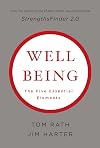
Many definitions of wisdom focus on judgment and actions that increase wellbeing. With wellbeing central to the concept of wisdom, it becomes important to know what it is and how it can be improved.
Authors Tom Rath and Jim Harter marshaled the considerable resources of the Gallup organization to identify the elements of wellbeing. They began by defining wellbeing as all the things that are important to how we think about and experience our lives. They then used carefully constructed survey show more methods to gather data from more than 350,000 adults in 150 countries, representing 98% of the world’s adult population.
Their findings are grouped into these five distinct statistical factors that describe important aspects of our lives that we can do something about:
• Career or occupational Wellbeing: how people occupy their time during the day and whether it is fulfilling. Do you like what you do each day?
• Social Wellbeing: the quality of relationships in people’s lives
• Financial Wellbeing: the degree of financial security people have
• Physical Wellbeing: the extent to which people can do what they want to free of pain
• Community Wellbeing: the extent to which people feel safe and are involved in giving to their community
For each of these five areas, they describe the detailed research findings followed by three actionable recommendations for improving your wellbeing in that area.
Their research highlights the importance of balance; while a majority of people are doing well in at least one of these five areas, only 7% are thriving in all five. They also stress the importance of finding short-term incentives that are consistent with our long-term objectives.
These results are remarkable because they are so unremarkable. Your grandmother may have given you similar advice, and that is good news! Absent from the list are the extremist ideologies used to justify so many wars. Trendy fashions, religious fundamentalism, and Joe Camel did not make the list.
The main text is quite short; however the book includes several informative and data-rich appendices.
The book purchase includes an access code to unlock an on-line program including the wellbeing finder and daily tracker intended to measure and help manage your wellbeing. These tools can help identify conditions that limit or contribute to your own wellbeing, and suggest changes that can increase your wellbeing.
This book takes one more step towards establishing a broadly accepted standard for assessing and achieving wellbeing. It takes a scientific approach to discovering what humans value most and helps bring us toward a consensus on this essential issue. show less
Authors Tom Rath and Jim Harter marshaled the considerable resources of the Gallup organization to identify the elements of wellbeing. They began by defining wellbeing as all the things that are important to how we think about and experience our lives. They then used carefully constructed survey show more methods to gather data from more than 350,000 adults in 150 countries, representing 98% of the world’s adult population.
Their findings are grouped into these five distinct statistical factors that describe important aspects of our lives that we can do something about:
• Career or occupational Wellbeing: how people occupy their time during the day and whether it is fulfilling. Do you like what you do each day?
• Social Wellbeing: the quality of relationships in people’s lives
• Financial Wellbeing: the degree of financial security people have
• Physical Wellbeing: the extent to which people can do what they want to free of pain
• Community Wellbeing: the extent to which people feel safe and are involved in giving to their community
For each of these five areas, they describe the detailed research findings followed by three actionable recommendations for improving your wellbeing in that area.
Their research highlights the importance of balance; while a majority of people are doing well in at least one of these five areas, only 7% are thriving in all five. They also stress the importance of finding short-term incentives that are consistent with our long-term objectives.
These results are remarkable because they are so unremarkable. Your grandmother may have given you similar advice, and that is good news! Absent from the list are the extremist ideologies used to justify so many wars. Trendy fashions, religious fundamentalism, and Joe Camel did not make the list.
The main text is quite short; however the book includes several informative and data-rich appendices.
The book purchase includes an access code to unlock an on-line program including the wellbeing finder and daily tracker intended to measure and help manage your wellbeing. These tools can help identify conditions that limit or contribute to your own wellbeing, and suggest changes that can increase your wellbeing.
This book takes one more step towards establishing a broadly accepted standard for assessing and achieving wellbeing. It takes a scientific approach to discovering what humans value most and helps bring us toward a consensus on this essential issue. show less
It's the Manager: Gallup finds the quality of managers and team leaders is the single biggest factor in your organization's long-term success. by Jim Clifton
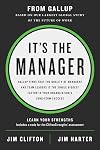
Summarizes Gallup's research on workplace trends. More of a generic HR or management information/resource than a how-to book.
Each of the 50+ chapters are really short to present 1 idea (or a facet of an idea). It's highly repetitive, with the same points being repackaged in different forms over and over again. Each chapter is sliced so finely that some can barely stand on their own if you don't read other chapters. In many places, it reads like a collection of loose points or an outright show more promotion of Gallups’ tools and assessments.
Still, if you're looking for facts or data to incorporate into your strategy or presentations, or just want to get a quick idea about how the workplace is evolving, this book has some good resources
What it covers:
• How work expectations have changed for Millennials and Generation Z, and what it means for your organization’s strategy and culture;
• How to attract, develop and retain top talents by building an employment brand and managing the employee life cycle. This includes: attracting top talents, hiring the best fit, setting the right tone with onboarding, managing performance, improving employee engagement, coaching people to grow, planning effective successions and exits; and
• What's the future of work, including trends/priorities in: diversity and inclusion, creativity and innovation, technology and digitization, telecommuting, remote work and gig jobs.
Book summary at: https://readingraphics.com/book-summary-its-the-manager/ show less
Each of the 50+ chapters are really short to present 1 idea (or a facet of an idea). It's highly repetitive, with the same points being repackaged in different forms over and over again. Each chapter is sliced so finely that some can barely stand on their own if you don't read other chapters. In many places, it reads like a collection of loose points or an outright show more promotion of Gallups’ tools and assessments.
Still, if you're looking for facts or data to incorporate into your strategy or presentations, or just want to get a quick idea about how the workplace is evolving, this book has some good resources
What it covers:
• How work expectations have changed for Millennials and Generation Z, and what it means for your organization’s strategy and culture;
• How to attract, develop and retain top talents by building an employment brand and managing the employee life cycle. This includes: attracting top talents, hiring the best fit, setting the right tone with onboarding, managing performance, improving employee engagement, coaching people to grow, planning effective successions and exits; and
• What's the future of work, including trends/priorities in: diversity and inclusion, creativity and innovation, technology and digitization, telecommuting, remote work and gig jobs.
Book summary at: https://readingraphics.com/book-summary-its-the-manager/ show less
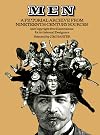
Wondermark without comic form. Still fuckin' hilarious

This book is a 1980s New Age successor to the Surrealist Une Semaine De Bonte of Max Ernst. It impressed me as a teenager, and I should "re-read" it.
Lists
Awards


You May Also Like


Statistics
- Works
- 33
- Members
- 1,825
- Popularity
- #14,093
- Rating
- 3.8
- Reviews
- 11
- ISBNs
- 48
- Languages
- 1