
Ernst Haeckel (1834–1919)
Author of Art Forms in Nature
About the Author
Image credit: Courtesy of the NYPL Digital Gallery
(image use requires permission from the New York Public Library)
(image use requires permission from the New York Public Library)
Works by Ernst Haeckel
The Evolution of Man: A Popular Exposition of the Principal Points of Human Ontogeny and Phylogeny, Volume I (2004) 18 copies
The Evolution of Man: A Popular Exposition of the Principal Points of Human Ontogeny and Phylogeny, Volume II (2004) 17 copies
Eternity; world-war thoughts on life and death, religion, and the theory of evolution, (2009) 8 copies
The History of Creation, Vol. I (of 2) Or the Development of the Earth and its Inhabitants by the Action of Natural Causes (2007) 8 copies
Naturlig skapelsehistoria. : Öfvers. från originalets sjunde uppl. af A.F.Åkerberg. Med 20 träsnitt och 7 litografi (1868) 8 copies
Uit Insulinde 5 copies
Art Forms in Nature by Ernst Haeckel: 100 Downloadable High-Resolution Prints for Artists, Designers and Nature Lovers (2020) 4 copies
The Story Of The Development Of A Youth By Ernst Haeckel Letters To His Parents 1852-1856 (2012) 3 copies
Generelle Morphologie der Organismen : allgemeine Grundzüge der organischen Formen-Wissenschaft (1988) 3 copies
Indische Reisebriefe 2 copies
Un Viaje a la India — Author — 2 copies
Gemeinverständliche Vorträge und Abhandlungen aus dem Gebiete der Entwickelungslehre, Bd. 2 2 copies
Monism 2 copies
Die Radiolarien (Rhizopoda radiaria): Eine Monographie von Ernst Haeckel.: T.2 (German Edition) (2018) 2 copies
Le monisme, lien entre la religion et la science: profession de foi d'un naturaliste (French Edition) (2013) 2 copies
Die Lebenswunder 1 copy
Två föredrag 1 copy
Ernst Häckel en zijn monisme 1 copy
Ernst Häckel en zijn monisme 1 copy
Ewigkeit ; Weltkriegsgedanken über Leben u. Tod, Religion u. Entwicklungslehre von Ernst Haeckel 1 copy
Das ungelöste Welträtsel. Frida von Uslar-Gleichen und Ernst Haeckel. Briefe und Tagebücher 1898 - 1903 (2000) — Author — 1 copy
Ewigkeit ; Weltkriegsgedanken über Leben u. Tod, Religion u. Entwicklungslehre von Ernst Haeckel 1 copy
Anthropogenie oder Entwicklungsgeschichte des Menchen - Erster Teil: Keimesgeschichte des Menchen 1 copy
Anthropogenie oder Entwicklungsgeschichte des Menchen - Zweiter Teil: Stammesgeschichte des Menchen 1 copy
Die Kalkschwämme : eine Monographie ; in 2 Bänden Text und einem Atlas mit 60 Tafeln Abbildungen 1 copy
Studien zur Gastraea-Theorie 1 copy
India and Ceylon 1 copy
Tropenfahrten - Reiseschilderungen aus Ceylon, Java und den Mittelmeergebieten - Herausgegeben von Anneliese Dangel (1971) 1 copy
Az élet csodái 1 copy
Ernst Haeckel Gemeinverständliche Werke Band II: Natürliche Schöpfungsgeschichte zweiter Teil 1 copy
History of Creation 1 copy
Associated Works
Ode to Boy: Vol. 2: An Anthology of Same-Sex Attraction in Literature from the 19th Century Through the First World War (2014) — Contributor — 2 copies
Tagged
Common Knowledge
- Legal name
- Haeckel, Ernst Heinrich Philipp August
- Birthdate
- 1834-02-16
- Date of death
- 1919-08-09
- Gender
- male
- Education
- University of Berlin (Dr.med|1857)
University of Jena (habilitation 1861, Dr.phil 1865)
University of Würzburg
University of Vienna
Domgymnasium, Merseburg - Occupations
- professor
naturalist
philosopher
physician
artist
zoologist (show all 8)
anatomist
biologist - Organizations
- University of Jena
- Awards and honors
- Darwin Medal (1900)
Linnean Medal (1894)
Darwin-Wallace Medal (1908)
American Philosophical Society (1885) - Short biography
- Ernst Heinrich Philipp August Haeckel (German: [ˈhɛkəl]) was a German biologist, naturalist, philosopher, physician, professor, marine biologist, and artist who discovered, described and named thousands of new species, mapped a genealogical tree relating all life forms, and coined many terms in biology, including anthropogeny, ecology, phylum, phylogeny, stem cell, and Protista. Haeckel promoted and popularised Charles Darwin's work in Germany and developed the influential but no longer widely held recapitulation theory ("ontogeny recapitulates phylogeny") claiming that an individual organism's biological development, or ontogeny, parallels and summarises its species' evolutionary development, or phylogeny.
The published artwork of Haeckel includes over 100 detailed, multi-colour illustrations of animals and sea creatures (see: Kunstformen der Natur, "Art Forms of Nature"). As a philosopher, Ernst Haeckel wrote Die Welträtsel (1895–1899; in English: The Riddle of the Universe, 1901), the genesis for the term "world riddle" (Welträtsel); and Freedom in Science and Teaching to support teaching evolution.
[https://en.wikipedia.org/wiki/Ernst_Ha...] biography segment, 3/28/2018. - Nationality
- Prussia (birth)
Germany (after 1871) - Birthplace
- Potsdam, Kingdom of Prussia
- Places of residence
- Jena, Germany
- Place of death
- Jena, Germany
- Associated Place (for map)
- Jena, Germany
Members
Reviews
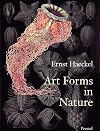
A. Maz. Ing. A. Stound. Ing. Do words fail me? I fail words. I wdn't rate this bk, it's invaluable - wch isn't to say w/o value. Haeckel is my new favorite artist. I 'discovered' him thanks to a documentary called "Proteus - A Nineteenth Century Vision" by David LeBrun. I loved the movie. If you check it out, make sure to also check out "The Making of PROTEUS" wch I, as a film & vaudeo maker, found particularly compelling. The amt of work that LeBrun was driven to in order to complete the show more movie is IMPRESSIVE.
& Haeckel's incredible energy, his drive for a thorough worldview, his meticulousness, is BEYOND IMPRESSIVE. This edition has introductory essays by Olaf Breidbach & Irendäus Eibl-Eibesfeldt. I liked them both. BUT, it was Eibl-Eibesfeldt's essay that really GRABBED ME. The background on research into our perceptual mechanism(s) & their relevance to Haeckel were fascinating, engrossing. Eibl-Eibesfeldt is obviously another man w/ a vision pursued w/ profound dedication.
Eibl-Eibesfeldt quotes Haeckel at length:
"Purely speculative metaphysics, which were further developed from theories of apriorism established by Kant and which found its most radical advocate in Hegel, ultimately led to the utter rejection of empiricism and claimed that all knowledge is in fact acquired through pure reason, independent of all experience. Kant's great mistake, which had such serious consequences for all of philosophy that followed, largely lies in the fact that his critical "Theory of Cognition" did not take into account physiological and phylogenetic principles which were only acquired sixty years after his death through Darwin's reform of the theory of evolution and through the discoveries of the physiology of the brain. He regarded the human soul with its inborn characteristics of reason as a ready-made being and did not inquire into its historical origins ... he did not consider that this soul could have developed phylogenetically from the most closely related mammals. However, the wonderful ability to make a priori judgements has arisen through the inheritance of cerebral structures, which the vertebrate ancestors of humans acquired slowly and in stages (through adaptation and synthetic association of a posteriori experiences and perceptions). Moreover, the firmly established perceptions of mathematics and physics, which Kant explained as synthetic a priori judgements, originated by means of the phyletic development of the faculty of judgement and may be traced back to continually recurring a posteriori experiences and conclusions based thereupon. The "necessity," which Kant ascribed to a particular characteristic of these a priori judgements were these phenomena and conditions fully known."
Genius, pure genius. Alas, Eibl-Eibesfeldt goes on to develop his wonderful essay w/ this: "Is it not possible that the aesthetic sensibilities of people who have grown up in what many would find ugly, artificial environments of the industrial fringes of modern metropolises, have also been altered as a result of such new environments? If this were so, would it not explain, at least in part, the acceptance of assemblages made from found objects and other ignoble materials?" Oh well.. weren't Haeckel's radiolarian ALSO "found materials"? & "ugly" & "ignoble"? These terms reek too much of "decadent art" for me! Still, Eibl-Eibesfeldt's essay is fantastic.
BUT THE ART!!!!! Haeckel's devotion is praiseworthy in the extreme by my standards. This man was not lazy. These drawings-turned-prints are DETAILED. DDDDDEEEEETTTTTAAAAAIIIIILLLLLEEEEEDDDDD!!!!! The centerpiece of plate 61, Phaeodaria, is an alchemist's latticework if I've ever seen one. a geodesic dome, an a priori grasping of biomorphic geometry. Or something. & plate 87? What's this perspective-receding Brion Gysin-like quasi-rectangle underneath it all?
I don't care whether this man has been somewhat discredited by modern science - he's made an impression on me that once again demonstrates that the greatest minds are interspersed throughout time & aren't the flavor-of-the-month. STUDY THIS BK! STUDY EVERYTHING BY HAECKEL! show less
& Haeckel's incredible energy, his drive for a thorough worldview, his meticulousness, is BEYOND IMPRESSIVE. This edition has introductory essays by Olaf Breidbach & Irendäus Eibl-Eibesfeldt. I liked them both. BUT, it was Eibl-Eibesfeldt's essay that really GRABBED ME. The background on research into our perceptual mechanism(s) & their relevance to Haeckel were fascinating, engrossing. Eibl-Eibesfeldt is obviously another man w/ a vision pursued w/ profound dedication.
Eibl-Eibesfeldt quotes Haeckel at length:
"Purely speculative metaphysics, which were further developed from theories of apriorism established by Kant and which found its most radical advocate in Hegel, ultimately led to the utter rejection of empiricism and claimed that all knowledge is in fact acquired through pure reason, independent of all experience. Kant's great mistake, which had such serious consequences for all of philosophy that followed, largely lies in the fact that his critical "Theory of Cognition" did not take into account physiological and phylogenetic principles which were only acquired sixty years after his death through Darwin's reform of the theory of evolution and through the discoveries of the physiology of the brain. He regarded the human soul with its inborn characteristics of reason as a ready-made being and did not inquire into its historical origins ... he did not consider that this soul could have developed phylogenetically from the most closely related mammals. However, the wonderful ability to make a priori judgements has arisen through the inheritance of cerebral structures, which the vertebrate ancestors of humans acquired slowly and in stages (through adaptation and synthetic association of a posteriori experiences and perceptions). Moreover, the firmly established perceptions of mathematics and physics, which Kant explained as synthetic a priori judgements, originated by means of the phyletic development of the faculty of judgement and may be traced back to continually recurring a posteriori experiences and conclusions based thereupon. The "necessity," which Kant ascribed to a particular characteristic of these a priori judgements were these phenomena and conditions fully known."
Genius, pure genius. Alas, Eibl-Eibesfeldt goes on to develop his wonderful essay w/ this: "Is it not possible that the aesthetic sensibilities of people who have grown up in what many would find ugly, artificial environments of the industrial fringes of modern metropolises, have also been altered as a result of such new environments? If this were so, would it not explain, at least in part, the acceptance of assemblages made from found objects and other ignoble materials?" Oh well.. weren't Haeckel's radiolarian ALSO "found materials"? & "ugly" & "ignoble"? These terms reek too much of "decadent art" for me! Still, Eibl-Eibesfeldt's essay is fantastic.
BUT THE ART!!!!! Haeckel's devotion is praiseworthy in the extreme by my standards. This man was not lazy. These drawings-turned-prints are DETAILED. DDDDDEEEEETTTTTAAAAAIIIIILLLLLEEEEEDDDDD!!!!! The centerpiece of plate 61, Phaeodaria, is an alchemist's latticework if I've ever seen one. a geodesic dome, an a priori grasping of biomorphic geometry. Or something. & plate 87? What's this perspective-receding Brion Gysin-like quasi-rectangle underneath it all?
I don't care whether this man has been somewhat discredited by modern science - he's made an impression on me that once again demonstrates that the greatest minds are interspersed throughout time & aren't the flavor-of-the-month. STUDY THIS BK! STUDY EVERYTHING BY HAECKEL! show less
Just once in a while, 5 stars aren't enough. This book is far more than amazing, it's stupendously, fantastically, magically wonderful (and that isn't hyperbole!) The book, as the introduction makes clear, is a work of scientific illustrations of primitive organisms. But the illustrations are other-worldly both in form and in the feeling they give: that rotifers, protozoans and medusae don't just inhabit scarcely-visible parts of our world, no they have their own world which we can barely show more glimpse into, as different and exotic as any science-fiction artwork.
If I wasn't at all interested in science, I would still want to own this book. Indeed, until I was forced to sell it (a good offer was made and, after all I am a bookseller, I can't hang on to my favourite items forever and I managed a year with this one) it was hidden on my private shelf where I could look at it almost every day. show less
These are disk jellyfish. Top right is Cassiopeia
If I wasn't at all interested in science, I would still want to own this book. Indeed, until I was forced to sell it (a good offer was made and, after all I am a bookseller, I can't hang on to my favourite items forever and I managed a year with this one) it was hidden on my private shelf where I could look at it almost every day. show less
(Rating: 4.5 /5.0, rounded down)
Haeckel was, as it turns out, a rather repugnant individual. But these prints (places hand over heart): absolutely exquisite.
Haeckel was, as it turns out, a rather repugnant individual. But these prints (places hand over heart): absolutely exquisite.
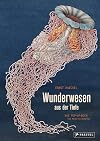
Dieses Pop-up-Buch zeigt die faszinierende Unterwasserwelt nach den Zeichnungen von Ernst Haeckel als 3D-Kunstwerk. Die Wunder der Natur, abgebildet in einem Wunderwerk aus Papier. Hauchdünne Unterwasserszenarien entfalten sich vor den staunenden Augen des Betrachters. Kraken, Seeanemonen, Quallen und andere Meereslebewesen zeigen sich in ihrer grazilen Pracht. Wundersame Gebilde aus dem Ozean, gezeichnet von einem berühmten Künstler, als dreidimensionale Kunstwerke - in dreifacher show more Schönheit. show less
Awards

You May Also Like


Associated Authors
Statistics
- Works
- 107
- Also by
- 3
- Members
- 1,413
- Popularity
- #18,195
- Rating
- 4.2
- Reviews
- 20
- ISBNs
- 120
- Languages
- 4
- Favorited
- 3


