
Janet Perlman
Author of Cinderella Penguin, or, The Little Glass Flipper
About the Author
Disambiguation Notice:
Animator and author Janet Laurie Perlman, born Sept. 19, 1954, is the author of books for chilldren.
Works by Janet Perlman
Associated Works
"Neurotica 2" More Mania, Monsters, and Middle-Age Dread — Director — 1 copy
Tagged
Common Knowledge
- Birthdate
- 1954-09-19
- Gender
- female
- Awards and honors
- Academy Award nominee (short animation ∙ 1982)
- Nationality
- Canada
- Places of residence
- Montréal, Québec, Canada
Cambridge, Massachusetts, USA - Disambiguation notice
- Animator and author Janet Laurie Perlman, born Sept. 19, 1954, is the author of books for chilldren.
- Associated Place (for map)
- Canada
Members
Reviews
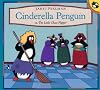
Cinderella as a penguin suffers all the misfortune as her traditional Cinderella counterpart. She is made to clean, and in this version has to sleep on a mere shelf. Eventually she goes to the royal ball after her fairy godmother transforms her into a well dressed beauty with glass flippers. She falls in love with the prince, and when he comes to look for her, that glass flipper fits!
The illustrations in this story were so enjoyable. Plump little penguins are not what you think of as show more portraying beautiful princesses, but the humor in the depiction of these well known characters is what makes this telling of Cinderella memorable. This telling of Cinderella would make a great addition to a collection of Cinderella stories. show less
The illustrations in this story were so enjoyable. Plump little penguins are not what you think of as show more portraying beautiful princesses, but the humor in the depiction of these well known characters is what makes this telling of Cinderella memorable. This telling of Cinderella would make a great addition to a collection of Cinderella stories. show less
Today, we have two stories with a lesson. In our first story, three friends learn an important lesson; everyone has different strengths. In the second story, two chameleons learn to share.
Ninja, Cowboy and Bear are good friends and do everything together...until one day they start arguing about who is better. The bear can build bigger rockpiles than the nina. The ninja can catch more bunnies than the cowboy. And so it goes until they all feel awful and their friendship is broken. Finally, show more each one finds a quiet way to think about things; and they realize that each one is important and different in a unique way. The story ends with a version of "rock, paper, scissors."
Although the unexplained disintegration of the characters' friendship is a realistic part of childhood - who hasn't seen kids playing in perfect harmony one moment and fighting the next? -- it doesn't make for a good story. The problem with this narrative is that there's not really any plot, it's just a series of events and platitudes. The language is mostly simplistic but sprinkled with unexpectedly complex words. Like most heavily didactic picture books, this is aimed at teachers and parents desperate to calm down competitive and constantly fighting children. The kids won't care, but it will make the adults feel better.
However, I did really like Hilary Leung's illustrations! They make me think of the Japanese kawaii culture (correct me if I'm wrong, this is just my impression). There's the rounded and somehow perky characters with their fingerless hands and bright cheerful colors. The illustrations include small insets of games the characters are playing and bigger, bright landscapes as the characters compete.
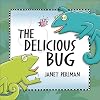
So, if the previous book is an example of how not to write a didactic picture book, this book is an example of a good picturebook that teaches a lesson. Although the main point of the story is the importance of sharing, there's a definite plot and characters outside the lesson. Two chameleons are good friends and always share the bugs they catch. But one day, they unexpectedly catch a delicious bumblebug simultaneously. Chaos ensues as the two selfish chameleons fight over who's going to get the bug until their selfishness nearly gets them eaten. Reconciled, the two friends repair the damages and settle back into their shared friendship.
There's no need to emphasize the lesson in this story, since it's seamlessly blended into the plot of the two bickering chameleons. It's full of hilarious little asides from the other animals and the funniest part is the two chameleons sparring away with their tongues sticking out, which leads to much silly dialogue "back off shlobberface! back off dragonlipsh!". It's natural that the sheepish chameleons should clean up the mess, after seeing the chaos they've caused and the friends they've irritated. It's no surprise that this book is based on an animated short by the author, "Dinner for Two". The illustrations are delightfully splodgy with side panels showing parallel stories and reactions from the other creatures - I can easily see this being quite a funny cartoon!
The best didactic picturebooks are those whose plots can stand alone with their accompanying "lesson." Remove the lesson from Ninja Cowboy Bear, and there's nothing left but some cute illustrations. Remove the lesson from Delicious Bug, and you still have a fun and silly story about sparring chameleons.
Verdict: If you have enough extra in your budget, Legend of Ninja Cowboy Bear is worth buying for the illustrations and to hand to those aforementioned harried teachers and parents. I'd strongly recommend Delicious Bug - perfect for small storytimes and recommended to readers who like a good story with a lesson.
P. S. Some bloggers liked Legend of Ninja Cowboy Bear much better than I (I am notoriously picky about didactic books of any kind). If you want another opinion, check out BookMoot's review.
The Legend of Ninja Cowboy Bear
ISBN: 978-1554534869; Published September 2009 by Kids Can Press; Review copy provided by the publisher through Raab Associates
Delicious Bug
ISBN: 978-1553379966; Published September 2009 by Kids Can Press; Review copy provided by the publisher through Raab Associates show less
Ninja, Cowboy and Bear are good friends and do everything together...until one day they start arguing about who is better. The bear can build bigger rockpiles than the nina. The ninja can catch more bunnies than the cowboy. And so it goes until they all feel awful and their friendship is broken. Finally, show more each one finds a quiet way to think about things; and they realize that each one is important and different in a unique way. The story ends with a version of "rock, paper, scissors."
Although the unexplained disintegration of the characters' friendship is a realistic part of childhood - who hasn't seen kids playing in perfect harmony one moment and fighting the next? -- it doesn't make for a good story. The problem with this narrative is that there's not really any plot, it's just a series of events and platitudes. The language is mostly simplistic but sprinkled with unexpectedly complex words. Like most heavily didactic picture books, this is aimed at teachers and parents desperate to calm down competitive and constantly fighting children. The kids won't care, but it will make the adults feel better.
However, I did really like Hilary Leung's illustrations! They make me think of the Japanese kawaii culture (correct me if I'm wrong, this is just my impression). There's the rounded and somehow perky characters with their fingerless hands and bright cheerful colors. The illustrations include small insets of games the characters are playing and bigger, bright landscapes as the characters compete.
So, if the previous book is an example of how not to write a didactic picture book, this book is an example of a good picturebook that teaches a lesson. Although the main point of the story is the importance of sharing, there's a definite plot and characters outside the lesson. Two chameleons are good friends and always share the bugs they catch. But one day, they unexpectedly catch a delicious bumblebug simultaneously. Chaos ensues as the two selfish chameleons fight over who's going to get the bug until their selfishness nearly gets them eaten. Reconciled, the two friends repair the damages and settle back into their shared friendship.
There's no need to emphasize the lesson in this story, since it's seamlessly blended into the plot of the two bickering chameleons. It's full of hilarious little asides from the other animals and the funniest part is the two chameleons sparring away with their tongues sticking out, which leads to much silly dialogue "back off shlobberface! back off dragonlipsh!". It's natural that the sheepish chameleons should clean up the mess, after seeing the chaos they've caused and the friends they've irritated. It's no surprise that this book is based on an animated short by the author, "Dinner for Two". The illustrations are delightfully splodgy with side panels showing parallel stories and reactions from the other creatures - I can easily see this being quite a funny cartoon!
The best didactic picturebooks are those whose plots can stand alone with their accompanying "lesson." Remove the lesson from Ninja Cowboy Bear, and there's nothing left but some cute illustrations. Remove the lesson from Delicious Bug, and you still have a fun and silly story about sparring chameleons.
Verdict: If you have enough extra in your budget, Legend of Ninja Cowboy Bear is worth buying for the illustrations and to hand to those aforementioned harried teachers and parents. I'd strongly recommend Delicious Bug - perfect for small storytimes and recommended to readers who like a good story with a lesson.
P. S. Some bloggers liked Legend of Ninja Cowboy Bear much better than I (I am notoriously picky about didactic books of any kind). If you want another opinion, check out BookMoot's review.
The Legend of Ninja Cowboy Bear
ISBN: 978-1554534869; Published September 2009 by Kids Can Press; Review copy provided by the publisher through Raab Associates
Delicious Bug
ISBN: 978-1553379966; Published September 2009 by Kids Can Press; Review copy provided by the publisher through Raab Associates show less
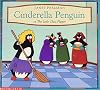
Genre: I would classify this as traditional literature under the subtitle of a fairytale, because even though it is about penguins, it has the basic structure of Cinderella, with only about two details that are different about it (including the penguin as the main character). The illustrations are outlandish and fun and the students would enjoy them. Traditionally, one can predict the outcome of this story because it is extremely close, if not almost exactly identical, to the original show more plotline of the Cinderella story, down to the characters, the shoe being left behind, the ball, and living happily ever after as the last line of the story.
The media used in this book, I believe was either ink or some kind of watercolor and acrylic paint. The colors are solid and the details are varied, but they are not small enough to have ink work or small etching done. The colors are modern and the drawings are also of the modern variety. The characters are very humorous to look at and the illustrations are what make the story so much better in my opinion. show less
The media used in this book, I believe was either ink or some kind of watercolor and acrylic paint. The colors are solid and the details are varied, but they are not small enough to have ink work or small etching done. The colors are modern and the drawings are also of the modern variety. The characters are very humorous to look at and the illustrations are what make the story so much better in my opinion. show less
This story takes the classic story of Cinderella and gives it a twist. Instead of all of the characters being human, they are penguins! Cinderella is treated very horribly by her stepmother and stepsister. Her fairy godmother makes all of her dreams come true when she puts together a dress for her which allows her to go to the ball just like her step sisters. She goes to a ball, meets the prince and then they fall in love. She has to leave a midnight so she runs off and she leaves her show more flipper in the process. The prince is able to find her by having her try on the slipper which fits her perfectly.
I really enjoyed the video format of this book! It was super humorous to see this story with penguins. I was able to read the book and it was everything I expected but it did not exceed my expectations. It was a little more humorous to see the penguins in the video versus reading the story. The story is the same so I found reading it a little boring. The video format would work really well in a classroom. show less
I really enjoyed the video format of this book! It was super humorous to see this story with penguins. I was able to read the book and it was everything I expected but it did not exceed my expectations. It was a little more humorous to see the penguins in the video versus reading the story. The story is the same so I found reading it a little boring. The video format would work really well in a classroom. show less
Awards


You May Also Like


Associated Authors
Statistics
- Works
- 13
- Also by
- 1
- Members
- 1,772
- Popularity
- #14,529
- Rating
- 3.8
- Reviews
- 20
- ISBNs
- 47
- Languages
- 3