
James Moffett (1) (1929–1996)
Author of Points of View: An Anthology of Short Stories, Revised & Updated Edition
For other authors named James Moffett, see the disambiguation page.
Works by James Moffett
Points of View: An Anthology of Short Stories, Revised & Updated Edition (1995) — Editor & Contributor — 442 copies, 7 reviews
Points of View: An Anthology of Short Stories {original} (1966) — Editor & Contributor — 297 copies, 3 reviews
The Universal Schoolhouse: Spiritual Awakening Through Education (Jossey Bass Education Series) (1994) 28 copies, 1 review
The Suicides of Private Greaves 2 copies
Signs [2 - Interaction: A Student-Centered Language Arts and Reading Program] (1973) — Editor — 2 copies
Associated Works
Tagged
Common Knowledge
- Legal name
- Moffett, James Porter
- Birthdate
- 1929
- Date of death
- 1996
- Gender
- male
- Education
- Harvard University
- Organizations
- Phillips Exeter Academy
- Nationality
- USA
- Birthplace
- Cleveland, Ohio, USA
- Map Location
- Ohio, USA
Members
Reviews
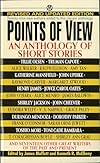
This is a valuable book because it works on two levels.
First: It's a solid collection of 44 short stories, sort of a "best of the best" type collection. They were obviously chosen with a great deal of thought. The stories were written between the mid-19th century and the early 1990s, half were written by men and half by women, and the authors come from diverse backgrounds. However, although there is deliberate diversity, the book is still entirely US-centric--only five of the authors are show more from elsewhere. Further, none of the stories is translated. Representing US diversity, there are Asian-Americans, Latino-Americans, Jewish-Americans, African-Americans, and so on.
An aside here -- I found it interesting how the majority of these stories were about people struggling in dire poverty. Urban poor, rural poor, western poor, Appalachian poor, southern poor . . . if an alien was to read this book, it would believe people living in the United States are a downtrodden bunch!
I've called this book a "best-of-the-best" sort of anthology because it has stories by Eudora Welty, Alice Munro, Alice Walker, T Coraghessan Boyle, James Baldwin, Raymond Carver, John Cheever, Amy Tan, Frank O'Connor, Truman Capote, VS Naipaul, Henry James, Katherine Mansfield, etc and so on. However, there are a handful of obscure authors, and some of their stories were very strong indeed. In this category I have to list "My Sister's Marriage," by Cynthia Marshall Rich; "The Circuit," by Francisco Jimenez; "The Passing," by Durango Mendoza, "Doby's Gone," by Ann Petry, and perhaps my favourite, "Inez," by Merle Hodge.
The second level this book works on is as a text book or self-learning tool. The stories are arranged in a purposeful chronological order, and are designed to be read in order (back to front, or front to back, it doesn't matter). They are divided into categories, and there is a short lesson at the beginning of each category. These are:
Interior monologue
Dramatic monologue
Letter narration
Diary narration
Subjective narration
Detached autobiography
Memoir, or observer narration
Anonymous narration--single character point of view
Anonymous narration--dual character point of view
Anonymous narration--multiple character point of view
Anonymous narration--no character point of view
This helps the reader observe and study narrative techniques, and to see how authors use different techniques to best tell their story. After all, how a story is told is often as important as what is told.
Recommended for: Anyone looking for a solid collection of short stories and doesn't mind the strong US-centric flavour. But this book is really great for the reader who wants to sharpen his or her skills and become a more sophisticated and perceptive reader.
Not recommended for: English teachers and people who already know this stuff! Also, readers who've read widely through the short story world will find a lot of repetition in this volume. show less
First: It's a solid collection of 44 short stories, sort of a "best of the best" type collection. They were obviously chosen with a great deal of thought. The stories were written between the mid-19th century and the early 1990s, half were written by men and half by women, and the authors come from diverse backgrounds. However, although there is deliberate diversity, the book is still entirely US-centric--only five of the authors are show more from elsewhere. Further, none of the stories is translated. Representing US diversity, there are Asian-Americans, Latino-Americans, Jewish-Americans, African-Americans, and so on.
An aside here -- I found it interesting how the majority of these stories were about people struggling in dire poverty. Urban poor, rural poor, western poor, Appalachian poor, southern poor . . . if an alien was to read this book, it would believe people living in the United States are a downtrodden bunch!
I've called this book a "best-of-the-best" sort of anthology because it has stories by Eudora Welty, Alice Munro, Alice Walker, T Coraghessan Boyle, James Baldwin, Raymond Carver, John Cheever, Amy Tan, Frank O'Connor, Truman Capote, VS Naipaul, Henry James, Katherine Mansfield, etc and so on. However, there are a handful of obscure authors, and some of their stories were very strong indeed. In this category I have to list "My Sister's Marriage," by Cynthia Marshall Rich; "The Circuit," by Francisco Jimenez; "The Passing," by Durango Mendoza, "Doby's Gone," by Ann Petry, and perhaps my favourite, "Inez," by Merle Hodge.
The second level this book works on is as a text book or self-learning tool. The stories are arranged in a purposeful chronological order, and are designed to be read in order (back to front, or front to back, it doesn't matter). They are divided into categories, and there is a short lesson at the beginning of each category. These are:
Interior monologue
Dramatic monologue
Letter narration
Diary narration
Subjective narration
Detached autobiography
Memoir, or observer narration
Anonymous narration--single character point of view
Anonymous narration--dual character point of view
Anonymous narration--multiple character point of view
Anonymous narration--no character point of view
This helps the reader observe and study narrative techniques, and to see how authors use different techniques to best tell their story. After all, how a story is told is often as important as what is told.
Recommended for: Anyone looking for a solid collection of short stories and doesn't mind the strong US-centric flavour. But this book is really great for the reader who wants to sharpen his or her skills and become a more sophisticated and perceptive reader.
Not recommended for: English teachers and people who already know this stuff! Also, readers who've read widely through the short story world will find a lot of repetition in this volume. show less

I was a teacher and teacher educator for forty-five years. It was my vocation, in the most genuine sense of that word. I wish that I were more optimistic now, in what are said to be my “golden years,” about the future of teaching and learning in our culture.
If I were asked to list ten books from the twentieth century that all educators and educational leaders should read (including legislators, school boards, government officials, and Congress itself), I would probably not frighten them show more with Ivan Illich, Neil Postman, or Paulo Freire—maybe not even John Dewey. I would include such practical voices as Deborah Meiers, Linda Darling-Hammond, Howard Gardner, and Robert Bellah (q.v.). But I would have to let myself include one visionary, James Moffett, and from among several of his books I would choose The Universal Schoolhouse (Jossey-Bass, 1994).
I had known Moffett’s work for many years. I had followed and admired his writing, recommending titles to students, colleagues, and professional leaders. I had publicly expressed to him the gratitude of teachers for ideas we had borrowed, especially from his own teaching at Phillips Exeter Academy. But when The Universal Schoolhouse first came out, I must admit I thought it was too idealistic, too other-worldly. I had to grow into it. In the meantime, the profession has proceeded in an opposite direction. The culture has not grown with Moffett. Schools have, in many ways, reverted to the fifties (when I first entered the profession). Somehow we need to ponder his vision and to consider introducing his strategies for reform among teachers and learners who are clinging to the edge in desperation.
The subtitle of his book is Spiritual Awakening Through Education. Since that terminology is likely to turn lots of folks off, especially in an age when our traditional separation of church and state is being threatened, I’ll limit myself in this review to some comments on his first chapter, “Spirituality and Education,” and then to a brief list of some of his recommended reforms.
He begins by mentioning two classic works on human consciousness (Richard Bucke’s and Julian Jaynes’), which developed ideas of “cosmic consciousness” and the “breakdown of the bicameral mind.” As our population grows, as technology mushrooms, and diversity becomes more apparent and problematical, Moffett identifies the “trick of our era”: “creating social coherence while fostering personal self realization.” Now that’s tricky indeed. Social coherence (serving our community, our society) and self-realization (asserting self-awareness and independence) sound almost like polar opposites. Moffett is quick to explore their complementarity, and also to distinguish between spirituality and religion. These statements indicate what he means by spirituality:
“It validates the inner life of thought and feeling and the sense of personal being in the face of depersonalization and a preoccupation with physical things. It calls us back from surfaces to essences, to whatever may be at the bottom of things or beyond our immediate kin and ken. It invites us to seek commonalities beneath commonplaces, for the sake of mind as well as morality.” (p. 19)
“. . . people who extend the range of their identity and sympathy naturally do what is good for others as well as for themselves, because they dissolve the boundaries of the ego and feel always the connectedness. If [social] evolution reverses involution, then its direction is spiritual in that, as Bucke believed, more and more people will see life whole and act accordingly.” (p. 22)
That, at its heart, is Moffett’s vision. Serving ourselves through serving our communities and redefining community in a global sense are first steps in realizing a “cosmic consciousness.” This is spirituality, not religion, but it coincides with world views espoused by many of the world’s religions, including but not limited to Taoism, Buddhism, Hinduism, Sufism, even some forms of Islam, Judaism, and Christianity. Developing inner as well as outer consciousness is one pathway to spiritual growth, developing intuitive as well as rational thinking, creative as well as critical, collaborative as well as individual, in other words, exercising both sides of the bicameral mind.
“The Hindu notion of the manifest world as maya or illusion has always assumed the ‘constructionist’ view of knowledge that reigns today in cognitive psychology circles, that is, that humans make knowledge or meaning, collectively and individually, by putting together their perceptions of the world . . . .” (p. 28)
Himself a student and instructor of yoga, Moffett would have education balance physical, emotional or devotional, intellectual, altruistic or activist, and meditational approaches to learning. “These multiple pathways,” he maintains, “develop body, heart, mind and spirit for the realization of the individual at all levels of being. Were they offered as means to an ideal secular education one might never suspect that they issued from a spiritual discipline aimed at enlightenment or awakening. As a program, these paths would fulfill the traditional [US] American goals of citizenship, employment, and personal development.” (p. 29)
It’s as simple—and as profound—as that. “The old polarity between spirit and matter,” he says, “may turn out, like the one between matter and energy, to be a costly habit of mind more than a representation of reality.” He concludes, “Even if you understand spirituality only as metaphor or myth, it can help you to think big and see deep when contemplating educational and societal transformation.” (p. 32)
Moffett then proceeds with some of the practical issues of “flag and-dollar” schooling, with school reform, with education to transform culture and to transform consciousness. Part Three of his book brings him to actual strategies for teaching and learning that characterize his “universal schoolhouse.” Let me just list a few of them without taking time to define or expand upon them. Consider this list:
concentric learning centers
“rippling”
tutoring and coaching
apprenticing and interning
visiting
community service
playing games
practicing the arts
home-schooling
self-teaching
individual, modular courses
projects
global thinking
Finally, his vision sweeps outward toward cultural reform, replacing welfare, rechartering corporations, reallocating governmental functions, “banding together.”
For practical, if not ideological, reasons, citizens in the twenty-first century should talk about Moffett’s ideas, try out some of his strategies for teaching and learning, maybe even read some of the books on “universal spiritual traditions” that he recommends. It couldn’t hurt. show less
If I were asked to list ten books from the twentieth century that all educators and educational leaders should read (including legislators, school boards, government officials, and Congress itself), I would probably not frighten them show more with Ivan Illich, Neil Postman, or Paulo Freire—maybe not even John Dewey. I would include such practical voices as Deborah Meiers, Linda Darling-Hammond, Howard Gardner, and Robert Bellah (q.v.). But I would have to let myself include one visionary, James Moffett, and from among several of his books I would choose The Universal Schoolhouse (Jossey-Bass, 1994).
I had known Moffett’s work for many years. I had followed and admired his writing, recommending titles to students, colleagues, and professional leaders. I had publicly expressed to him the gratitude of teachers for ideas we had borrowed, especially from his own teaching at Phillips Exeter Academy. But when The Universal Schoolhouse first came out, I must admit I thought it was too idealistic, too other-worldly. I had to grow into it. In the meantime, the profession has proceeded in an opposite direction. The culture has not grown with Moffett. Schools have, in many ways, reverted to the fifties (when I first entered the profession). Somehow we need to ponder his vision and to consider introducing his strategies for reform among teachers and learners who are clinging to the edge in desperation.
The subtitle of his book is Spiritual Awakening Through Education. Since that terminology is likely to turn lots of folks off, especially in an age when our traditional separation of church and state is being threatened, I’ll limit myself in this review to some comments on his first chapter, “Spirituality and Education,” and then to a brief list of some of his recommended reforms.
He begins by mentioning two classic works on human consciousness (Richard Bucke’s and Julian Jaynes’), which developed ideas of “cosmic consciousness” and the “breakdown of the bicameral mind.” As our population grows, as technology mushrooms, and diversity becomes more apparent and problematical, Moffett identifies the “trick of our era”: “creating social coherence while fostering personal self realization.” Now that’s tricky indeed. Social coherence (serving our community, our society) and self-realization (asserting self-awareness and independence) sound almost like polar opposites. Moffett is quick to explore their complementarity, and also to distinguish between spirituality and religion. These statements indicate what he means by spirituality:
“It validates the inner life of thought and feeling and the sense of personal being in the face of depersonalization and a preoccupation with physical things. It calls us back from surfaces to essences, to whatever may be at the bottom of things or beyond our immediate kin and ken. It invites us to seek commonalities beneath commonplaces, for the sake of mind as well as morality.” (p. 19)
“. . . people who extend the range of their identity and sympathy naturally do what is good for others as well as for themselves, because they dissolve the boundaries of the ego and feel always the connectedness. If [social] evolution reverses involution, then its direction is spiritual in that, as Bucke believed, more and more people will see life whole and act accordingly.” (p. 22)
That, at its heart, is Moffett’s vision. Serving ourselves through serving our communities and redefining community in a global sense are first steps in realizing a “cosmic consciousness.” This is spirituality, not religion, but it coincides with world views espoused by many of the world’s religions, including but not limited to Taoism, Buddhism, Hinduism, Sufism, even some forms of Islam, Judaism, and Christianity. Developing inner as well as outer consciousness is one pathway to spiritual growth, developing intuitive as well as rational thinking, creative as well as critical, collaborative as well as individual, in other words, exercising both sides of the bicameral mind.
“The Hindu notion of the manifest world as maya or illusion has always assumed the ‘constructionist’ view of knowledge that reigns today in cognitive psychology circles, that is, that humans make knowledge or meaning, collectively and individually, by putting together their perceptions of the world . . . .” (p. 28)
Himself a student and instructor of yoga, Moffett would have education balance physical, emotional or devotional, intellectual, altruistic or activist, and meditational approaches to learning. “These multiple pathways,” he maintains, “develop body, heart, mind and spirit for the realization of the individual at all levels of being. Were they offered as means to an ideal secular education one might never suspect that they issued from a spiritual discipline aimed at enlightenment or awakening. As a program, these paths would fulfill the traditional [US] American goals of citizenship, employment, and personal development.” (p. 29)
It’s as simple—and as profound—as that. “The old polarity between spirit and matter,” he says, “may turn out, like the one between matter and energy, to be a costly habit of mind more than a representation of reality.” He concludes, “Even if you understand spirituality only as metaphor or myth, it can help you to think big and see deep when contemplating educational and societal transformation.” (p. 32)
Moffett then proceeds with some of the practical issues of “flag and-dollar” schooling, with school reform, with education to transform culture and to transform consciousness. Part Three of his book brings him to actual strategies for teaching and learning that characterize his “universal schoolhouse.” Let me just list a few of them without taking time to define or expand upon them. Consider this list:
concentric learning centers
“rippling”
tutoring and coaching
apprenticing and interning
visiting
community service
playing games
practicing the arts
home-schooling
self-teaching
individual, modular courses
projects
global thinking
Finally, his vision sweeps outward toward cultural reform, replacing welfare, rechartering corporations, reallocating governmental functions, “banding together.”
For practical, if not ideological, reasons, citizens in the twenty-first century should talk about Moffett’s ideas, try out some of his strategies for teaching and learning, maybe even read some of the books on “universal spiritual traditions” that he recommends. It couldn’t hurt. show less

James Moffett (1929-1996) was one of the most influential education visionaries of the 20th century—or at least, he should have been. Like John Dewey, Ivan Illich, and Paolo Freire, he envisioned a true democratization of public education, he led actively in that direction and modeled the process, and he remained optimistic in spite of dramatic personal setbacks and widespread professional indifference.
One could profitably review many of his works (and maybe I will): Teaching the Universe show more of Discourse; A Student-Centered Language Arts Curriculum, Grades K-13; Points of View; Points of Departure; Interaction [a textbook series]; Active Voice: A Writing Program across the Curriculum and Active Voices I-IV: A Writer’s Reader [another series]; Storm in the Mountain; and The Universal Schoolhouse. One of his last books, Harmonic Learning (Heinemann, 1992) was also one of his most forthright and, consequently, futuristic. Subtitled Keynoting School Reform, it is (as the blurb accurately claims) “an iconoclastic book” that addresses the way to “harmonize the emotional, intellectual, social, and spiritual aspects of the individual life.”
It is the spiritual dimension of his holistic thinking that I want to focus on in this review. The book has three parts: “Wanting Not to Know,” an analysis of contemporary trends in public education in the US; “Wanting to Know,” a consideration of the nature and role of research in education; and “Arranging to Know,” specific proposals for broad curriculum reform. The first part, indirectly at least, grows out of his experience when his textbook series became part of the nationally publicized censorship controversy in Kanawha County, West Virginia, in 1974. As religious fundamentalism became an active political force, both in Christendom and Islam, in the last quarter of the 20th century, he saw it strike an alliance with the avaricious materialism of corporate America. “The religious conversion that amoral corporations have undergone to accommodate fundamentalist censors,” he maintains,” symbolizes the ludicrous union that has occurred between the moralistic and materialistic factions in the private center.” The same union, of course, came to dominate national elections in the US, beginning with the triumph of Ronald Reagan and culminating with the narrow victories of George W. Bush, which Moffett did not live to see. Furthermore, he concludes, “A society that leaves the dissemination of ideas to such ungovernably selfish organizations as today’s corporations [textbook publishers, in particular] is begging for trouble and foolish enough to deserve what happens as a result. An old-fashioned despot might well sneer that the private sector to which its powers were so idealistically transferred abuses the citizenry just as much as he ever did.”
Moffett identifies ethnocentricism and authoritarianism as unifying factors in fundamentalist and corporate USAmerica. “The real motive” he says, “is to create an in-group for social solidarity, self-definition, and self-congratulation,” thus discriminating against outsiders and controlling dissension. In contrast, Moffett has the temerity to go back to the”founding fathers” and point out the source of the spiritual dimension of their thinking in the freemasonry of the time.
“So in forbidding theocracy, the founding fathers certainly did not mean to bar spirituality from the government and education of this country. In addition to being Christian, they belonged to an international, ecumenical, cross-cultural spiritual brotherhood that was transmitting a universal esoteric teaching synthesized from Greek, Egyptian, Christian, Jewish, Persian, and Indian sources and common to all religions but driven underground by the exoteric, or popular, teaching that the ethnocentric majority exacted of its churches.” [p. 15]
Not only the symbols of the US seal, but its slogan—e pluribus unum—were adapted from freemasonry. Though publicists limited its meaning to the union of the colonies and the “melting pot” that accommodated foreign immigrants, its original meaning was “that many can become one because the many came from the One, a cosmic essence of which all partake.” Put very simply, Moffett defines “spirituality” as the capacity to recognize the unity that underlies our pluralism, the One in whom the many adhere.
The rest of this book develops Moffett’s methods for achieving spiritual education. He begins with some basics he shares with the holistic education movement: heterogeneous grouping of students with rigorous standards for all, responsiveness to student diversity, active inquiry across the curriculum , collaborative learning in small groups, assessment of actual performance (not multiple-choice examinations), emphasis on problem solving as well as critical and creative thinking: in short, a student-centered organization of schools and teacher preparation for curricular autonomy. However, it is really in his own extension of these principles that he reveals the true visionary. His thinking is too subtle and complex to adequately summarize in a review like this. Ultimately, his three I’s are individualization, interaction, and integration.
Let me just mention of a few kinds of integration he would want schools to address: verbal and nonverbal learning (schools now seriously neglect nonverbal learning and, hence, limit learning and discriminate against most learners); linguistic understanding and learning theory; mathematics and literature, music, and the humanities; social interaction and individual inquiry; and all the “subjects” in the school curriculum (for example, government, economics, history, chemistry, and psychology). All these subjects share (1) methods of investigation, (2) kinds of discourse, (3) levels of abstracting, and (4) kinds of knowledge. Developing those commonalities, in the long run, is far more important than information that might be recalled or abstract concepts that might be restated on an examination. “Organize around projects that entail all these processes and that cut across subject areas,” he insists. Students, thus, would “investigate something, create something, or improve something” and teachers would focus on helping students learn “how to conceive and execute projects that embody their curiosity, aspiration, and practical intention.”
The final integration that Moffett calls for, and the one underlying all the others, is the integration of modern, empirical thinking and ancient, gnostic or meditative thinking. The latter, of course, would be literally earth-shaking in its significance in contemporary educational institutions.
“In the meditative view, people may learn by resonance, by going into themselves in order to tune into things outside. This way of knowing assumes an underlying unity across nature that includes correspondences between inner and outer, mind and matter. These permit attunements between human nature and the rest of nature. If everything is consubstantial, the All is knowable through direct and total revelation in the instantaneous way attributed to intuition or inspiration, whereas the experiential learning by sense and reason slowly reunifies the world through successive approximations.” [p. 129] Now that "direct and total revelation" begins to sound like William Blake’s “imagination,” doesn’t it, the ”human form divine”?
The two last sections of this book are labeled “reason as rhythm” and “learning as attunement.” That’s integration taken to its utmost; that’s a much needed and much neglected spiritual dimension of education. show less
One could profitably review many of his works (and maybe I will): Teaching the Universe show more of Discourse; A Student-Centered Language Arts Curriculum, Grades K-13; Points of View; Points of Departure; Interaction [a textbook series]; Active Voice: A Writing Program across the Curriculum and Active Voices I-IV: A Writer’s Reader [another series]; Storm in the Mountain; and The Universal Schoolhouse. One of his last books, Harmonic Learning (Heinemann, 1992) was also one of his most forthright and, consequently, futuristic. Subtitled Keynoting School Reform, it is (as the blurb accurately claims) “an iconoclastic book” that addresses the way to “harmonize the emotional, intellectual, social, and spiritual aspects of the individual life.”
It is the spiritual dimension of his holistic thinking that I want to focus on in this review. The book has three parts: “Wanting Not to Know,” an analysis of contemporary trends in public education in the US; “Wanting to Know,” a consideration of the nature and role of research in education; and “Arranging to Know,” specific proposals for broad curriculum reform. The first part, indirectly at least, grows out of his experience when his textbook series became part of the nationally publicized censorship controversy in Kanawha County, West Virginia, in 1974. As religious fundamentalism became an active political force, both in Christendom and Islam, in the last quarter of the 20th century, he saw it strike an alliance with the avaricious materialism of corporate America. “The religious conversion that amoral corporations have undergone to accommodate fundamentalist censors,” he maintains,” symbolizes the ludicrous union that has occurred between the moralistic and materialistic factions in the private center.” The same union, of course, came to dominate national elections in the US, beginning with the triumph of Ronald Reagan and culminating with the narrow victories of George W. Bush, which Moffett did not live to see. Furthermore, he concludes, “A society that leaves the dissemination of ideas to such ungovernably selfish organizations as today’s corporations [textbook publishers, in particular] is begging for trouble and foolish enough to deserve what happens as a result. An old-fashioned despot might well sneer that the private sector to which its powers were so idealistically transferred abuses the citizenry just as much as he ever did.”
Moffett identifies ethnocentricism and authoritarianism as unifying factors in fundamentalist and corporate USAmerica. “The real motive” he says, “is to create an in-group for social solidarity, self-definition, and self-congratulation,” thus discriminating against outsiders and controlling dissension. In contrast, Moffett has the temerity to go back to the”founding fathers” and point out the source of the spiritual dimension of their thinking in the freemasonry of the time.
“So in forbidding theocracy, the founding fathers certainly did not mean to bar spirituality from the government and education of this country. In addition to being Christian, they belonged to an international, ecumenical, cross-cultural spiritual brotherhood that was transmitting a universal esoteric teaching synthesized from Greek, Egyptian, Christian, Jewish, Persian, and Indian sources and common to all religions but driven underground by the exoteric, or popular, teaching that the ethnocentric majority exacted of its churches.” [p. 15]
Not only the symbols of the US seal, but its slogan—e pluribus unum—were adapted from freemasonry. Though publicists limited its meaning to the union of the colonies and the “melting pot” that accommodated foreign immigrants, its original meaning was “that many can become one because the many came from the One, a cosmic essence of which all partake.” Put very simply, Moffett defines “spirituality” as the capacity to recognize the unity that underlies our pluralism, the One in whom the many adhere.
The rest of this book develops Moffett’s methods for achieving spiritual education. He begins with some basics he shares with the holistic education movement: heterogeneous grouping of students with rigorous standards for all, responsiveness to student diversity, active inquiry across the curriculum , collaborative learning in small groups, assessment of actual performance (not multiple-choice examinations), emphasis on problem solving as well as critical and creative thinking: in short, a student-centered organization of schools and teacher preparation for curricular autonomy. However, it is really in his own extension of these principles that he reveals the true visionary. His thinking is too subtle and complex to adequately summarize in a review like this. Ultimately, his three I’s are individualization, interaction, and integration.
Let me just mention of a few kinds of integration he would want schools to address: verbal and nonverbal learning (schools now seriously neglect nonverbal learning and, hence, limit learning and discriminate against most learners); linguistic understanding and learning theory; mathematics and literature, music, and the humanities; social interaction and individual inquiry; and all the “subjects” in the school curriculum (for example, government, economics, history, chemistry, and psychology). All these subjects share (1) methods of investigation, (2) kinds of discourse, (3) levels of abstracting, and (4) kinds of knowledge. Developing those commonalities, in the long run, is far more important than information that might be recalled or abstract concepts that might be restated on an examination. “Organize around projects that entail all these processes and that cut across subject areas,” he insists. Students, thus, would “investigate something, create something, or improve something” and teachers would focus on helping students learn “how to conceive and execute projects that embody their curiosity, aspiration, and practical intention.”
The final integration that Moffett calls for, and the one underlying all the others, is the integration of modern, empirical thinking and ancient, gnostic or meditative thinking. The latter, of course, would be literally earth-shaking in its significance in contemporary educational institutions.
“In the meditative view, people may learn by resonance, by going into themselves in order to tune into things outside. This way of knowing assumes an underlying unity across nature that includes correspondences between inner and outer, mind and matter. These permit attunements between human nature and the rest of nature. If everything is consubstantial, the All is knowable through direct and total revelation in the instantaneous way attributed to intuition or inspiration, whereas the experiential learning by sense and reason slowly reunifies the world through successive approximations.” [p. 129] Now that "direct and total revelation" begins to sound like William Blake’s “imagination,” doesn’t it, the ”human form divine”?
The two last sections of this book are labeled “reason as rhythm” and “learning as attunement.” That’s integration taken to its utmost; that’s a much needed and much neglected spiritual dimension of education. show less
This was a large collection of short stories that sometimes hit, other times miss. Nevertheless, there are classics here-- as well as other inclusions that touch on the basis of narrative. The entire book formulates itself around points of view and the various ways that they can be used to write, describe, and facilitate the telling of a story. Overall, the small briefs before each section are considerably well-written and allow for deep, meaningful thoughts about the subject matter. show more Overall, it was a nice collection, and its lessons are not easily forgotten for the savvy reader.
3.5 show less
3.5 show less
You May Also Like
Associated Authors
Statistics
- Works
- 19
- Also by
- 2
- Members
- 989
- Popularity
- #26,037
- Rating
- 3.8
- Reviews
- 13
- ISBNs
- 51
- Languages
- 1