
Bernal Díaz del Castillo (1495–1584)
Author of The Conquest of New Spain
About the Author
Díaz del Castillo was a soldier in the army of Hernán Cortés. He is best known for writing a classic memoir of the conquest of Mexico.
Image credit: Bust of Bernal Diaz, Medina del Campo, Spain. Photo by José-Manuel Benito / Wikimedia Commons.
Series
Works by Bernal Díaz del Castillo
Historia verdadera de la conquista de la Nueva España [Antología] (El Libro De Bolsillo - Historia) (2016) 14 copies
The True History of the Conquest of New Spain, Volumem V. By Bernal Diaz del Castillo, One of its Conquerors. (2010) 3 copies
The Fall of the Aztecs with Illustrations By the Conquered and Text By the Conquerors (1965) 2 copies
Associated Works
Introducción a la literatura hispanoamericana : de la conquista al siglo XX (1997) — Contributor — 23 copies
Tagged
Common Knowledge
- Canonical name
- Díaz del Castillo, Bernal
- Legal name
- Díaz del Castillo, Bernal
- Birthdate
- 1495
1492 - Date of death
- 1584
c.1580 - Gender
- male
- Occupations
- conquistador
governor (Santiago de los Caballeros) - Short biography
- Bernal Díaz del Castillo (1495–1584) served under Cortés through the entire Mexican campaign, and his narrative, one of only four extant firsthand accounts, is both an invaluable hirstorical document and a spectacular epic. He was with Cortés when the latter sank the ships, thus committing the small band of conquistadors irrevocably to the Conquest; he was privy to the counsels of the leaders and was at hand when Montezuma was made a prisoner in his own palace. Bernal Díaz fought in over a hundred battles and skirmishes against an enemy who made living sacrifices of their prisoners. These things he saw and recorded in a bold blunt voice whose immediacy, in Maudslay’s classic translation, reaches across the centuries to invite readers to witness for themselves the horrors and wonders of the initial, apocalyptic clash between two great civilizations. Edited from the only exact copy of the original manuscript (and published in Mexico) by Genaro Garcia. (L)
- Nationality
- Spain
- Birthplace
- Medina del Campo, Spain
- Places of residence
- Medina del Campo, Spain (birth)
La Antigua Guatemala, Guatemala - Associated Place (for map)
- Spain
Members
Reviews
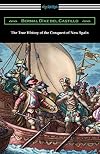
You’ll never read another book like this. Only once would a European empire and a Mesoamerican empire meet for the first and final time in a clash of arms that would destroy one and vault the other to global dominance. Conquistador Bernal Díaz del Castillo was there, and he has a lot to say.
This is the memoir of an old soldier stung by historians and opportunists who weren’t there and don’t know. This is the war of Hernán Cortés against the Mexican Empire through the eyes of a show more veteran who, in his old age, still sleeps on a hard floor because the war left him unable to endure a soft bed.
For this reason, you shouldn’t swallow this whole. It’s one man’s memory of a pivot in world history, and yet it has the ring of truth. More accurately, it has the ring of Díaz del Castillo’s truth. He doubts none of the justice of this holy war, or of the benefits conferred on the Mesoamericans by their incorporation into the Christian empire of Charles V.
This is what makes Díaz del Castillo’s memoir both terrible and transfixing. On the one hand, in our post-Enlightenment West, we recoil from the specter of an unprovoked war of aggression under the banner of the cross, a violent crusade in which blood, gold, and faith mingle without distinction.
On the other hand, the Mexican Empire itself is an affront to Enlightenment sensibilities. Even making traditional allowances for Spanish exaggeration, there’s no doubt this empire was an expansionist war machine in its own right, animated by its own religious fervor to pour the blood of human sacrifice and ritual cannibalism into the maw of gods on whom the stability of the cosmos rested.
Neither the Castilians nor the Mexicans fit comfortably into contemporary fables of good versus evil. Díaz del Castillo himself is alternately sickened by the flayed skins of sacrificial victims and captivated by the kindness and nobility of local chiefs. He admires the priests and monks who minister to the Mesoamericans in the name of Christ, and contemns Spanish brutes who abuse the men and women stripped from vassalage to Tenochtitlan and made vassals of Spain.
Beneath the weight of this memoir, the easy moralities of Internet memes and pop history buckle. This is a portal into a past both familiar and alien, and a subversion of expectations for anyone who thinks they know what happens when worlds collide. Díaz del Castillo expresses amusement throughout at soldiers fresh from Italian battlefields who had no idea what they were in for, because this is not Europe. Welcome to Mexico. show less
This is the memoir of an old soldier stung by historians and opportunists who weren’t there and don’t know. This is the war of Hernán Cortés against the Mexican Empire through the eyes of a show more veteran who, in his old age, still sleeps on a hard floor because the war left him unable to endure a soft bed.
For this reason, you shouldn’t swallow this whole. It’s one man’s memory of a pivot in world history, and yet it has the ring of truth. More accurately, it has the ring of Díaz del Castillo’s truth. He doubts none of the justice of this holy war, or of the benefits conferred on the Mesoamericans by their incorporation into the Christian empire of Charles V.
This is what makes Díaz del Castillo’s memoir both terrible and transfixing. On the one hand, in our post-Enlightenment West, we recoil from the specter of an unprovoked war of aggression under the banner of the cross, a violent crusade in which blood, gold, and faith mingle without distinction.
On the other hand, the Mexican Empire itself is an affront to Enlightenment sensibilities. Even making traditional allowances for Spanish exaggeration, there’s no doubt this empire was an expansionist war machine in its own right, animated by its own religious fervor to pour the blood of human sacrifice and ritual cannibalism into the maw of gods on whom the stability of the cosmos rested.
Neither the Castilians nor the Mexicans fit comfortably into contemporary fables of good versus evil. Díaz del Castillo himself is alternately sickened by the flayed skins of sacrificial victims and captivated by the kindness and nobility of local chiefs. He admires the priests and monks who minister to the Mesoamericans in the name of Christ, and contemns Spanish brutes who abuse the men and women stripped from vassalage to Tenochtitlan and made vassals of Spain.
Beneath the weight of this memoir, the easy moralities of Internet memes and pop history buckle. This is a portal into a past both familiar and alien, and a subversion of expectations for anyone who thinks they know what happens when worlds collide. Díaz del Castillo expresses amusement throughout at soldiers fresh from Italian battlefields who had no idea what they were in for, because this is not Europe. Welcome to Mexico. show less
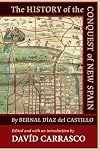
I just finished the 376 page abridgment of Bernal Diaz del Castillo's "true" History of the Conquest of New Spain selected, edited and translated by David Carrasco. I stumbled across this book in a reference, an extended quote, from another book I was reading on the history of the feather (Feathers by Thor Hanson). A vivid description of the splendor of the aviaries in Tenochitlan, and their subsequent targeted destruction by burning by Cortés.
Though I didn't find either of the quotes in show more this selection, it did provide an extremely thoughtfully contextualized overview of the Spanish perspective of the conquest of Latin America. Abridged from a much longer document, the sections included describe in (sometimes excruciating, sometimes tedious) detail the progression of the Spanish invasion, their relationships with native city-states, their duplicities in negotiating, the extreme cruelty on both sides of the wars, and the fascinating religious and political justifications for the two infamous massacres perpetrated by the Spanish in cities that were not warring. Woah, that was a long sentence, sorry about that.
The essays following address women's roles in the conquest as property, anchors, and interpreters; the exaggeration and distortion of the practices of human sacrifice and cannibalism; and the political motivations for the composition of this text in the first place. A really accessible, fascinating collection of scholarly essays.
A great engaging text, and a wonderful translation. The translation renders the language simultaneously accessible (the tone is clear, crisp, the usage mostly standard) and poetic. Diaz del Castillo was a skilled storyteller, and was using his skills for gain. The motivations behind the composition are exquisitely evoked throughout the translation. Carrasco leaves in gestures that continuously remind readers of their distance from the text in space, time, and language, while making sure that it remains engaging. A perfect balance for a text like this.
[Originally posted on Alluringly Short, http://alluringlyshort.com/2013/08/18/the-history-of-the-conquest-of-new-spain-b.... ] show less
Though I didn't find either of the quotes in show more this selection, it did provide an extremely thoughtfully contextualized overview of the Spanish perspective of the conquest of Latin America. Abridged from a much longer document, the sections included describe in (sometimes excruciating, sometimes tedious) detail the progression of the Spanish invasion, their relationships with native city-states, their duplicities in negotiating, the extreme cruelty on both sides of the wars, and the fascinating religious and political justifications for the two infamous massacres perpetrated by the Spanish in cities that were not warring. Woah, that was a long sentence, sorry about that.
The essays following address women's roles in the conquest as property, anchors, and interpreters; the exaggeration and distortion of the practices of human sacrifice and cannibalism; and the political motivations for the composition of this text in the first place. A really accessible, fascinating collection of scholarly essays.
A great engaging text, and a wonderful translation. The translation renders the language simultaneously accessible (the tone is clear, crisp, the usage mostly standard) and poetic. Diaz del Castillo was a skilled storyteller, and was using his skills for gain. The motivations behind the composition are exquisitely evoked throughout the translation. Carrasco leaves in gestures that continuously remind readers of their distance from the text in space, time, and language, while making sure that it remains engaging. A perfect balance for a text like this.
[Originally posted on Alluringly Short, http://alluringlyshort.com/2013/08/18/the-history-of-the-conquest-of-new-spain-b.... ] show less

Gory stuff from 500 years ago! This little pocket book will be enough for most readers, I expect, in order to get a flavour of the Aztecs and the Spanish conquistadores. Given the state of the world in late 2024, it is disappointing how the human race has developed over the past five hundred years (not developed, perhaps, the right phrase!).

The history of the Spanish Conquest of the Mexica (Aztec) state is enlivened by this edition and translation of the sixteenth Century memoir by a participant. Bernal Diaz de Castillo was a medium rank officer in that epic struggle, and was driven by his ego and by some legal grudges to add his account to the other books covering the period. J.M. Cohen produced a very readable translation, and assures the reader that he has excised a considerable amount of the original text which directly show more attacks several other historians and which describes the legal maneuvers that some of the original members of Cortes' army were driven to while trying to get their fair share of the booty of the conquest. Bernal Diaz's book provides a great deal of the colour that later historians have relied on. It is a book which a researcher in the field should pay respect to for its coverage. Cohen's introduction and notes are very high quality. Sadly, my Penguin copy does not rise to the luxury of an index, though the mapping is adequate. show less
Lists
Awards


You May Also Like


Associated Authors
Statistics
- Works
- 49
- Also by
- 4
- Members
- 2,606
- Popularity
- #9,856
- Rating
- 4.0
- Reviews
- 44
- ISBNs
- 178
- Languages
- 7
- Favorited
- 2
