
Colin Dickey
Author of Ghostland: An American History in Haunted Places
About the Author
Colin Dickey is the co-editor (with Nicole Antebi and Robby Herbst) of Failure! Experiments in Aesthetic and Social Practices. His fiction and nonfiction have appeared in Lapham's Quarterly, Cabinet, TriQuarterly, and The Santa Monica Review. A native of the San Francisco Bay Area, he now lives in show more Los Angeles. show less
Works by Colin Dickey
The Unidentified: Mythical Monsters, Alien Encounters, and Our Obsession with the Unexplained (2020) 230 copies, 7 reviews
Under the Eye of Power: How Fear of Secret Societies Shapes American Democracy (2023) 100 copies, 3 reviews
Associated Works
The Public Domain Review: Selected Essays, The First Three Years, 2011-2013 (2014) — Contributor — 33 copies, 2 reviews
Tagged
Common Knowledge
- Birthdate
- 1977-09-03
- Gender
- male
- Agent
- Anna Sproul-Latimer (Neon Literary)
- Nationality
- USA
- Places of residence
- California, USA
- Associated Place (for map)
- California, USA
Members
Reviews
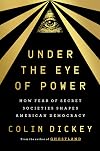
Many books dissecting conspiracy theories spend a lot of time on Europe, but Dickey keeps his focus on the United States, digging out examples of conspiratorial thinking that have been present in the US (amongst European colonists and immigrants) since before the revolution.
Along the way, we get insights into the way attitudes about freemasons changed over time from seeing them as noble benefactors (back) to dark conspirators.
He also addressed the long history of anti-Catholicism in the US, show more brought over from England originally, but recurring over and over.
In fact, recurrence is maybe Dickey's key point: the same sorts of conspiratorial thinking come up again and again, with slight adjustments to their particular manifestations, targets, and secret manipulators. (Although, let's face it, they always—always—come back to blaming Jews.)
I've read a lot of books about conspiracies and their workings and history, but I learned a bunch of new things about US history and US-specific conspiracies that I hadn't encountered before. (As usual, of course, learning new things about US history pretty much always equates to learning new _bad_ things about US history.) show less
Along the way, we get insights into the way attitudes about freemasons changed over time from seeing them as noble benefactors (back) to dark conspirators.
He also addressed the long history of anti-Catholicism in the US, show more brought over from England originally, but recurring over and over.
In fact, recurrence is maybe Dickey's key point: the same sorts of conspiratorial thinking come up again and again, with slight adjustments to their particular manifestations, targets, and secret manipulators. (Although, let's face it, they always—always—come back to blaming Jews.)
I've read a lot of books about conspiracies and their workings and history, but I learned a bunch of new things about US history and US-specific conspiracies that I hadn't encountered before. (As usual, of course, learning new things about US history pretty much always equates to learning new _bad_ things about US history.) show less
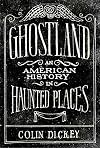
Readers hoping for a collection of ghost stories related to American history may well be disappointed with this, but I enjoyed it very much. Dickey doesn't actually tell many ghost stories, and certainly never with the level of detail that make them fun. What he's interested in is the why of ghosts. Why certain places and circumstances inspire ghost stories, what ghosts and their stories give us that we need.
This reminded me some of W. Scott Poole's Monsters in America, which explores show more historical/social developments as possible backgrounds for supernatural beliefs, except that Dickey focuses only on ghosts. His style is somewhat breezier, also, but both authors see communal guilt or discomfort with actions taken against overpowered minorities, generally native Americans and African-Americans, as an underlying “itch” which inspires many American stories of victims who refuse to permanently disappear after their deaths. Stories of murdered slaves and vengeful native American spirits reflect anxieties with histories which don't fit our preferred narratives. Also, though, Dickey regularly points out the profit motives, both financial and otherwise, which may motivate ghost stories. As well as selling tickets for ghost tour guides, ghost stories can offer cautionary tales for potentially wayward children (“don't hitchhike!”), satisfactory resolutions in cases where the wicked are indicted by their victims from beyond the grave, entertaining explanations of why particular buildings or other settings which should be mundane feel, instead, oddly unsettling.
Ghost stories can accrue to many types of locations, and, section by section, Dickey explores ghosts connected with homes, hotels, brothels, asylums, cemeteries, cities, etc. Since his interest is not so much in particular stories as in the reasons that ghosts may “arise,” he tends to jump around quite a bit, bringing in stories as they support or illustrate his points.
While not a “debunker,” Dickey does tend to expose most of the stories he conveys as, at least to a large extent, fictions. His interest, again, is not in the reality of the ghosts, but in why their stories are compelling enough to be told and retold. Stories which are verifiably false, though, do, particularly, invite the question of what it is that keeps them circulating. For example, he tells the story of the ghost of George D. Mason, who supposedly haunts Detroit's Masonic Temple, from the roof of which he jumped to his death due to financial woes. Dickey says,
Dickey really summarizes his book nicely right up front in his “Author's Note,” when he says,
Dickey's exploration of why ghost stories are told, what they tell us about ourselves, why we enjoy them is entertaining reading. show less
This reminded me some of W. Scott Poole's Monsters in America, which explores show more historical/social developments as possible backgrounds for supernatural beliefs, except that Dickey focuses only on ghosts. His style is somewhat breezier, also, but both authors see communal guilt or discomfort with actions taken against overpowered minorities, generally native Americans and African-Americans, as an underlying “itch” which inspires many American stories of victims who refuse to permanently disappear after their deaths. Stories of murdered slaves and vengeful native American spirits reflect anxieties with histories which don't fit our preferred narratives. Also, though, Dickey regularly points out the profit motives, both financial and otherwise, which may motivate ghost stories. As well as selling tickets for ghost tour guides, ghost stories can offer cautionary tales for potentially wayward children (“don't hitchhike!”), satisfactory resolutions in cases where the wicked are indicted by their victims from beyond the grave, entertaining explanations of why particular buildings or other settings which should be mundane feel, instead, oddly unsettling.
Ghost stories can accrue to many types of locations, and, section by section, Dickey explores ghosts connected with homes, hotels, brothels, asylums, cemeteries, cities, etc. Since his interest is not so much in particular stories as in the reasons that ghosts may “arise,” he tends to jump around quite a bit, bringing in stories as they support or illustrate his points.
While not a “debunker,” Dickey does tend to expose most of the stories he conveys as, at least to a large extent, fictions. His interest, again, is not in the reality of the ghosts, but in why their stories are compelling enough to be told and retold. Stories which are verifiably false, though, do, particularly, invite the question of what it is that keeps them circulating. For example, he tells the story of the ghost of George D. Mason, who supposedly haunts Detroit's Masonic Temple, from the roof of which he jumped to his death due to financial woes. Dickey says,
”A popular story, yes, but among the most patently false and easily disproved ghost stories out there. Mason was eighty-eight at the time of his death, from natural causes (as any quick Google search will tell you), which took place more than twenty years after the Masonic Temple was finished. And yet the story has cachet in part because it reflects a narrative tha many have about Detroit: one of ostentatious overreach, folly, and death from financial ruin. So even though it's obviously false, it still gets told and retold.”
Dickey really summarizes his book nicely right up front in his “Author's Note,” when he says,
”Even if you don't believe in the paranormal, ghost stories and legends of haunted places are a vital, dynamic means of confronting the past and those who have gone before us. Ultimately, this book is about the relationship between place and story: how the two depend on each other and how they bring each other alive.”
Dickey's exploration of why ghost stories are told, what they tell us about ourselves, why we enjoy them is entertaining reading. show less

Most history books we read nowadays deal with dead people. Cranioklepty, however, deals with a different aspect of its dead people: it chronicles their journeys AFTER they've died.
Cranioklepty, the word pertains to skull theft, which, while widespread in the lesser civilized parts of the world, made its leap into civilization through a little pseudoscience known as "phrenology," which uses the bumps and valleys on one's skull to determine aptitude and skill and whatnot.
Phrenology led to show more skulduggery, and pretty soon, even respected individuals were collecting the skulls of other respected individuals. Headhunting left the forest and tribal scene and became a passtime of highbrow individuals (including an ancestor of the Bush dynasty).
The book itself is written in clear language, has annotations for all the bizarre and possibly unbelievable passages, and does not hesitate to call a spade a spade, or explain how one goes from a recently deceased body to a bleached skull. Some passages may not be for the squeamish!
It chronicles the post-death story of several severed heads: Haydn, Mozart, Beethoven, Thomas Browne, and so forth, tracing the historical twists and turns that led each of these great minds (now hollow skulls) into the hands of different collectors.
The book mixes humor with history, being factual and funny. All in all, if you're not easily turned off by the subject matter at hand, you will find Cranioklepty to be a book worth reading. I highly recommend you get this book for yourself, or perhaps for that large-headed friend of yours. show less
Cranioklepty, the word pertains to skull theft, which, while widespread in the lesser civilized parts of the world, made its leap into civilization through a little pseudoscience known as "phrenology," which uses the bumps and valleys on one's skull to determine aptitude and skill and whatnot.
Phrenology led to show more skulduggery, and pretty soon, even respected individuals were collecting the skulls of other respected individuals. Headhunting left the forest and tribal scene and became a passtime of highbrow individuals (including an ancestor of the Bush dynasty).
The book itself is written in clear language, has annotations for all the bizarre and possibly unbelievable passages, and does not hesitate to call a spade a spade, or explain how one goes from a recently deceased body to a bleached skull. Some passages may not be for the squeamish!
It chronicles the post-death story of several severed heads: Haydn, Mozart, Beethoven, Thomas Browne, and so forth, tracing the historical twists and turns that led each of these great minds (now hollow skulls) into the hands of different collectors.
The book mixes humor with history, being factual and funny. All in all, if you're not easily turned off by the subject matter at hand, you will find Cranioklepty to be a book worth reading. I highly recommend you get this book for yourself, or perhaps for that large-headed friend of yours. show less
The Unidentified: Mythical Monsters, Alien Encounters, and Our Obsession with the Unexplained by Colin Dickey

I admit it. I’m one of those people who are charmed or intrigued by the thought that Yetis or Sasquatches exist, that there really are sea serpents, or that aliens really do visit our planet in spaceships. Why?
I think Colin Dickey is onto the right direction for answering the question. Our world has become ordinary by being understood. We don’t understand everything, but we are assured that whatever there is out there at least CAN be understood, given time, resources, and smart show more scientists. Dickey recalls Max Weber’s term, “disenchantment,” to characterize this attitude.
The Sasquatches, Yetis, sea serpents, and aliens don’t fit that world. That’s what’s attractive about them. They represent the possibility that, no, we don’t understand, and maybe we can’t and never will understand everything. They are the unknown, maybe the unknowable in the midst of the mundane, what Dickey calls “the unidentifiable.”
There’s a sweet spot for these kinds of things. A sweet spot for maintaining curiosity and charisma. It seems to lie in the valley between what can be definitively confirmed and what can be definitively disconfirmed. The tantalizing “evidence” — the grainy pictures of UFOs or ghosts, the repressed memories recovered under hypnosis, the footprint captured in the snow or the forest — it all gives us enough to believe, not enough to confirm, and nothing that would provide a true critical test. A good “unidentifiable” has to live in that gray zone.
It’s a delicate balance that can easily be upset unless the thing is just right. Things that don’t meet the criteria get selected out and lose their intrigue.
Sasquatch is a good candidate. We have tantalizing evidence — first hand accounts of encounters, footprints, indecisive photographs. And there’s a kind of intuitive appeal. Why should humans be the only surviving line that branched away from the apes? Couldn’t others still exist in remote environments? These are things to hang belief on.
Maybe best of all, it’s pretty hard to prove they don’t exist. We haven’t looked everywhere, and they could be just the types of creatures that are very good at avoiding contact.
A perfect balance. We can believe what evidence we have, or we can turn skepticism into dogmatic rejection, or we can find our balance in the gray zone. Dickey quotes anthropologist Don Abbot speaking about the existing video purporting to show a creature like Sasquatch or Bigfoot — “It is about as hard to believe the film is faked as it is to admit such a creature really lives.” Perfect.
It may take some work, though, to keep a candidate in the gray zone. And things might get ugly. Factual claims, e.g., that a saucer-like spaceship with aliens aboard crashed near Roswell, New Mexico, and that its remains are kept in a secret government facility, are subject to at least some degree of empirical scrutiny. But if the government opens its hands to show them empty or issues a report, that’s just more evidence that they are hiding something. The “unidentified” phenomenon broadens into a conspiracy. And belief in it doesn’t diminish, it hardens.
That merger of anti-government conspiracy with UFO (and other) beliefs is a rough one — now the government is hiding something from us, an agenda we need to know about.
Things did take an ugly turn here. We went from strange lights in the sky and the intriguing possibility that they just might be visitors from elsewhere to an oppressive government conspiracy to hide the truth and pursue some nefarious agenda. And the scope of that agenda grew out of control. Its scope-creep wouldn’t stop. It’s not just the aliens, like reptilian alien creatures that control the US government — if such things were true, why not also believe that the New World Order is using a pizza restaurant as a front for child pornography or sexual slavery. Only the naive think that a pizza restaurant is just a pizza restaurant.
When the going gets ugly, the ugly turn pro.
That’s more than unfortunate, because I think there’s a good side to the “unidentifiable" that is worth preserving, for the sake of our humility. Maybe the gray zone should have some permanent inhabitants, or a permanent in-flow of new inhabitants to replace the ones that get outed.
In fact I think it would be unfortunate if we were to definitively resolve the status of Sasquatch, the Yetis, the sea serpents, and the aliens in their spaceships, to remove them from the gray zone and either confirm them as real or explain definitively that they aren’t and why people have been mistaken about them. When they live in the gray zone, they may be at their best, reminding us to be humble.
One thing I have to add by way of criticism about the book is its lack of pictures or illustrations of any kind. When talking about so many instances of blurry or grainy photos, old newspaper accounts, heroes of the popular culture of UFOs, etc., it would be nice to see what they look like. In some cases, maybe there are problems with rights, say to photographs published elsewhere. Still that would have added to the experience Dickey gives us, as good as I think it is as it stands. show less
I think Colin Dickey is onto the right direction for answering the question. Our world has become ordinary by being understood. We don’t understand everything, but we are assured that whatever there is out there at least CAN be understood, given time, resources, and smart show more scientists. Dickey recalls Max Weber’s term, “disenchantment,” to characterize this attitude.
The Sasquatches, Yetis, sea serpents, and aliens don’t fit that world. That’s what’s attractive about them. They represent the possibility that, no, we don’t understand, and maybe we can’t and never will understand everything. They are the unknown, maybe the unknowable in the midst of the mundane, what Dickey calls “the unidentifiable.”
There’s a sweet spot for these kinds of things. A sweet spot for maintaining curiosity and charisma. It seems to lie in the valley between what can be definitively confirmed and what can be definitively disconfirmed. The tantalizing “evidence” — the grainy pictures of UFOs or ghosts, the repressed memories recovered under hypnosis, the footprint captured in the snow or the forest — it all gives us enough to believe, not enough to confirm, and nothing that would provide a true critical test. A good “unidentifiable” has to live in that gray zone.
It’s a delicate balance that can easily be upset unless the thing is just right. Things that don’t meet the criteria get selected out and lose their intrigue.
Sasquatch is a good candidate. We have tantalizing evidence — first hand accounts of encounters, footprints, indecisive photographs. And there’s a kind of intuitive appeal. Why should humans be the only surviving line that branched away from the apes? Couldn’t others still exist in remote environments? These are things to hang belief on.
Maybe best of all, it’s pretty hard to prove they don’t exist. We haven’t looked everywhere, and they could be just the types of creatures that are very good at avoiding contact.
A perfect balance. We can believe what evidence we have, or we can turn skepticism into dogmatic rejection, or we can find our balance in the gray zone. Dickey quotes anthropologist Don Abbot speaking about the existing video purporting to show a creature like Sasquatch or Bigfoot — “It is about as hard to believe the film is faked as it is to admit such a creature really lives.” Perfect.
It may take some work, though, to keep a candidate in the gray zone. And things might get ugly. Factual claims, e.g., that a saucer-like spaceship with aliens aboard crashed near Roswell, New Mexico, and that its remains are kept in a secret government facility, are subject to at least some degree of empirical scrutiny. But if the government opens its hands to show them empty or issues a report, that’s just more evidence that they are hiding something. The “unidentified” phenomenon broadens into a conspiracy. And belief in it doesn’t diminish, it hardens.
That merger of anti-government conspiracy with UFO (and other) beliefs is a rough one — now the government is hiding something from us, an agenda we need to know about.
Things did take an ugly turn here. We went from strange lights in the sky and the intriguing possibility that they just might be visitors from elsewhere to an oppressive government conspiracy to hide the truth and pursue some nefarious agenda. And the scope of that agenda grew out of control. Its scope-creep wouldn’t stop. It’s not just the aliens, like reptilian alien creatures that control the US government — if such things were true, why not also believe that the New World Order is using a pizza restaurant as a front for child pornography or sexual slavery. Only the naive think that a pizza restaurant is just a pizza restaurant.
When the going gets ugly, the ugly turn pro.
That’s more than unfortunate, because I think there’s a good side to the “unidentifiable" that is worth preserving, for the sake of our humility. Maybe the gray zone should have some permanent inhabitants, or a permanent in-flow of new inhabitants to replace the ones that get outed.
In fact I think it would be unfortunate if we were to definitively resolve the status of Sasquatch, the Yetis, the sea serpents, and the aliens in their spaceships, to remove them from the gray zone and either confirm them as real or explain definitively that they aren’t and why people have been mistaken about them. When they live in the gray zone, they may be at their best, reminding us to be humble.
One thing I have to add by way of criticism about the book is its lack of pictures or illustrations of any kind. When talking about so many instances of blurry or grainy photos, old newspaper accounts, heroes of the popular culture of UFOs, etc., it would be nice to see what they look like. In some cases, maybe there are problems with rights, say to photographs published elsewhere. Still that would have added to the experience Dickey gives us, as good as I think it is as it stands. show less
Lists
Awards


You May Also Like


Associated Authors
Statistics
- Works
- 6
- Also by
- 4
- Members
- 1,613
- Popularity
- #15,972
- Rating
- 3.7
- Reviews
- 76
- ISBNs
- 24
- Languages
- 3
- Favorited
- 1
