
Sylvia Earle
Author of Sea Critters
About the Author
Sylvia Earle can lay claim to the titles marine botanist, environmentalist, businesswoman, writer, and deep-sea explorer. Of them all, the last is perhaps the one that most captures the imagination. She has spent more than 6,000 hours (over seven months) underwater. In 1979, she attached herself to show more a submarine that took her, at times as fast as 100 feet per minute, to the ocean floor 1,250 feet below. Dressed in a "Jim suit," a futuristic concoction of plastic and metal armor, she made the deepest solo dive ever made without a cable connecting her to a support vessel at the surface. This daring dive is comparable to the NASA voyage to the moon 10 years before. In 1984 Earle became the co-designer (with Graham Hawkes) of Deep Rover, a deep-sea submersible capable of exploring the midwaters of the ocean. Their company, Deep Ocean Technology, went on to develop a second-generation submersible, Deep Flight, that can speed through the ocean at depths of as much as 4,000 feet. Currently under development is Ocean Everest, expected to operate at a depth of up to 35,800 feet, which will take scientists to the deepest parts of the sea. Although the uses of submersibles are still largely scientific, Earle hopes that they might one day transport laypeople to the bottom of the sea. She feels that the "experience of flying through a dark ocean, of watching the lights of a luminescent creature flash all around us" might help us gain more respect for the largely unexplored ocean world. In addition to the scientific work that led to her being appointed in 1990 as chief scientist of the National Oceanic and Atmospheric Administration (NOAA), Earle has worked tirelessly to educate the public. Working with Al Giddings, she coauthored a documentary film, Gentle Giants of the Pacific, which appeared on public television in 1980. In the same year, their book Exploring the Deep Frontier appeared. It includes a discussion of the "Jim dive." Her most recent scientific and environmental work has been to assess the environmental damage caused by the Prince William Sound oil spill and the results of Iraq's destruction of some 400 oil wells during the 1991 Persian Gulf War. (Bowker Author Biography) show less
Image credit: Coastal America / U.S. Environmental Protection Agency
Works by Sylvia Earle
Humpbacks: The Gentle Whales 1 copy
Life with the Dutch touch 1 copy
Associated Works
The Sweet Breathing of Plants: Women Writing on the Green World (2001) — Contributor — 101 copies, 1 review
Place Matters: Geospatial Tools For Marine Science, Conservation, And Management in the Pacific Northwest (2005) — Foreword — 4 copies
Tagged
Common Knowledge
- Canonical name
- Earle, Sylvia
- Legal name
- Earle, Sylvia Alice
- Birthdate
- 1935-08-30
- Gender
- female
- Education
- Florida State University
Duke University - Occupations
- oceanographer
explorer
author
lecturer - Organizations
- National Oceanic and Atmospheric Administration
California Academy of Sciences
University of California, Berkeley
Harvard University
Deep Ocean Engineering
DOER Marine (show all 7)
National Geographic Society - Awards and honors
- Time Magazine's Hero for the Planet (1998)
Order of the Golden Ark
National Women's Hall of Fame (2000) - Nationality
- USA
- Birthplace
- Gibbstown, New Jersey, USA
- Places of residence
- Oakland, California, USA
- Associated Place (for map)
- USA
Members
Reviews
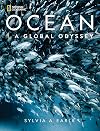
I have always loved the water. When I turned 40, my parents offered me the gift of a scuba class. It remains the best gift I've ever been given. There's something about being underwater that feeds my soul in a way that nothing else comes close to. I feel right there. I am at home. More than that, it is my home. And indeed, the ocean is the birthplace of life for all of us. Without it, there would be no life on Earth. In National Geographic Ocean by Sylvia Earle, just how important the ocean show more and the health of the ocean is to all of us is made crystal clear.
Sylvia Earle is a major figure in the ocean world and she's focused her entire life on the ocean. Who better to write about this vast and amazing place? Her knowledge, combined with the absolutely amazing photographs taken by talented National Geographic photographers, makes for a comprehensive and impressive coffee table sized book. The book, while focused on the ocean as its primary topic, also discusses air/wind, fresh water, land, and more, because on this Earth ecosystem of ours, everything is intimately, inextricably connected and no one system can be divorced from any other. It is, indeed, this enduring balance, one that we humans are endangering, that maintains all of life on this beautiful blue planet.
The book covers the creation and history of the ocean(s), how it functions, the animals and organisms living in it (including a gorgeous fold out section showing some of the amazing creatures that live in the deep blue of the ocean), the technology--high and low--that we humans have used to explore and learn about this ever surprising and still relatively unexplored place, the outsized and terrible impact we are having on its failing health and the climate as a whole, and finishes with atlases of the oceans. The text is important and informative, although it can sometimes read a bit like an introductory class textbook. The photographs are as awe inspiring as you would expect coming from Nat Geo (and they make me want to slip on scuba gear right now). Earle does not hide or sugarcoat the alarming changes in the ocean in recent decades, almost all of which are human driven. She is absolutely an advocate for this stunning, powerful, unbelievably vast, and yet fragile source for sustaining all of life on Earth. This book is a beauty. It is a lesson. And it is visual wake-up call for us to protect and cherish our ocean. As Earle has made clear, we should want to, but we also don't have a choice. We have to. show less
Sylvia Earle is a major figure in the ocean world and she's focused her entire life on the ocean. Who better to write about this vast and amazing place? Her knowledge, combined with the absolutely amazing photographs taken by talented National Geographic photographers, makes for a comprehensive and impressive coffee table sized book. The book, while focused on the ocean as its primary topic, also discusses air/wind, fresh water, land, and more, because on this Earth ecosystem of ours, everything is intimately, inextricably connected and no one system can be divorced from any other. It is, indeed, this enduring balance, one that we humans are endangering, that maintains all of life on this beautiful blue planet.
The book covers the creation and history of the ocean(s), how it functions, the animals and organisms living in it (including a gorgeous fold out section showing some of the amazing creatures that live in the deep blue of the ocean), the technology--high and low--that we humans have used to explore and learn about this ever surprising and still relatively unexplored place, the outsized and terrible impact we are having on its failing health and the climate as a whole, and finishes with atlases of the oceans. The text is important and informative, although it can sometimes read a bit like an introductory class textbook. The photographs are as awe inspiring as you would expect coming from Nat Geo (and they make me want to slip on scuba gear right now). Earle does not hide or sugarcoat the alarming changes in the ocean in recent decades, almost all of which are human driven. She is absolutely an advocate for this stunning, powerful, unbelievably vast, and yet fragile source for sustaining all of life on Earth. This book is a beauty. It is a lesson. And it is visual wake-up call for us to protect and cherish our ocean. As Earle has made clear, we should want to, but we also don't have a choice. We have to. show less
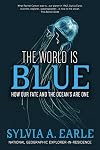
The heavy subject means that this is not an easy book to read, and yet it's important to not look away from the horrors and work towards making things better. And no one speaks for the value of the ocean and its inhabitants better than Earle, who manages to not succumb to doomerism despite the atrocious state of affairs.
She starts by describing in heart-breaking and gut-wrenching detail the devastating wholesale slaughter of whales, dolphins, sharks, fish, mollusks, cephalopods by the show more fishing and whaling industries. Subsequent chapters detail the problems of plastics and pollution, oil spills, the loss of biodiversity, climate change and ocean acidification. If you don't already think that humans are the worst animals on Earth, you will by the time you get through the first half of the book.
Towards the end she provides some hope for the future, outlining a range of specific policy and governance proposals, as well as tangible approaches towards developing sustainable fisheries, farming, and other activities. Some progress has been made, and there is a lot of work left to do, so now is not the time to despair, but to get to work. show less
She starts by describing in heart-breaking and gut-wrenching detail the devastating wholesale slaughter of whales, dolphins, sharks, fish, mollusks, cephalopods by the show more fishing and whaling industries. Subsequent chapters detail the problems of plastics and pollution, oil spills, the loss of biodiversity, climate change and ocean acidification. If you don't already think that humans are the worst animals on Earth, you will by the time you get through the first half of the book.
Towards the end she provides some hope for the future, outlining a range of specific policy and governance proposals, as well as tangible approaches towards developing sustainable fisheries, farming, and other activities. Some progress has been made, and there is a lot of work left to do, so now is not the time to despair, but to get to work. show less

I don’t normally bother to mention coffee table books, especially ones published by National Geographic (not that I own many of them, in fact I think this is the only one). But Exploring the Deep Frontier is a pretty good run-through of underwater exploration – the history and the state-of-the-art as of 1980 – and, unsurprisingly, contains a number of especially nice photographs. That’s Earle there on the cover in a JIM suit. She also leads an all-female team in the Tekton underwater show more habitat, rides in a submersible, and dives in various places around the world. She provides the text of the book, which switches between her own first-person experiences, and a quick history of underwater exploration. Giddings is the photographer. A pretty book. It’s just a shame my copy is so tatty (an eBay purchase, natch), but given it’s 36 years old I suppose that’s understandable. It’s also sadly disappointing that Exploring the Deep Frontier is subtitled “The Adventure of Man in the Sea” when the author is a woman and the bulk of the text covers her adventures. show less
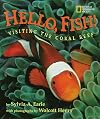
This book talks about the coral reef and introduces 12 different kinds of fish that live in them. The photograph actually shows the readers the color that a coral reef has in it, as well as the abundance of life that lives around it.
This book was actually very interesting to read myself. The vivid photos caught my attention and kept it as I learned about the life underwater surrounding these reefs.
This is a fun way of teaching children about the coral reef and ecosystems. This book really show more talks about how all of the organisms live together in harmony. This emphasises how all of the organisms play a part in the reef. I would use this to talk about not only ecosystems, but the abundance of species under the sea. show less
This book was actually very interesting to read myself. The vivid photos caught my attention and kept it as I learned about the life underwater surrounding these reefs.
This is a fun way of teaching children about the coral reef and ecosystems. This book really show more talks about how all of the organisms live together in harmony. This emphasises how all of the organisms play a part in the reef. I would use this to talk about not only ecosystems, but the abundance of species under the sea. show less
Awards


You May Also Like


Associated Authors
Statistics
- Works
- 25
- Also by
- 7
- Members
- 1,685
- Popularity
- #15,260
- Rating
- 4.2
- Reviews
- 14
- ISBNs
- 44
