
Janell Cannon
Author of Stellaluna
About the Author
Picture book author and illustrator Janell Cannon was born November 3, 1957, in St. Paul, Minnesota. The left-handed artist claims she drew so much in high school that her hand was perpetually black from smearing the ink of her favorite Bic pens. Cannon worked at the Carlsbad Library in southern show more California, where she discovered that there were few books about bats available for children, so she decided to make her own. The result, Stellaluna (1994), became a best seller, allowing Cannon to leave her job at the library and write Trupp: A Fuzzhead Tale (1995), and other books. Janell Cannon lives in California. (Bowker Author Biography) show less
Works by Janell Cannon
Associated Works
The 20th-Century Children's Book Treasury: Picture Books and Stories to Read Aloud (1998) — Contributor — 1,840 copies, 14 reviews
Tagged
Common Knowledge
- Birthdate
- 1957-11-03
- Gender
- female
- Education
- Burnsville High School
- Occupations
- graphic artist
children's program developer
children's book author - Awards and honors
- Grammy Award
- Nationality
- USA
- Birthplace
- St. Paul, Minnesota, USA
- Places of residence
- St. Paul, Minnesota, USA
California, USA - Associated Place (for map)
- USA
Members
Reviews

Verdi is full of beautiful, lush, vibrant illustrations. It tells a story of a baby python. He and all his siblings are born yellow and his mother's wish for them all is that they grow up big and green. But Verdi doesn't want that. He thinks the green pythons are boring and lazy and does not want to be like them. Verdi is afraid of change. He does not want to grow up because he thinks he will not be him anymore. But the story is about Verdi learning that change isn't necessarily bad and who show more you are remains the same. It is a story about not being afraid of change or growing up, about not assuming your ideas and choices are always the best, about learning that (sometimes at least) your elders might actually know something you don't. It is beautifully told in a quiet voice so you are hearing the message without realizing there is a message. Children will learn the lessons but think they are just listening to a sweet story about a loveably baby python. show less

A tiny baby fruit bat gets separated from her mother in a thunderstorm and winds up in a bird’s nest. She tries her hardest to be a bird - stays awake during the day, eats bugs, stands right-side-up. But nothing works. When she and her adopted siblings leave the nest they run into a group of bats who show Stellaluna who she really is.
A little darker at the beginning than I remembered, so I skimmed over some parts while reading it to my niece for the first time. After that she knew what was show more going to happen so I felt more comfortable with the fright and getting separated from her mother. I really enjoy that everyone in this story is nice. The bird family is very welcoming to Stellaluna and the bird mother takes care of her just like her own kids, without question or ridicule. Stellaluna's efforts to be something she's not come mostly from herself, not external forces (aside from a couple comments about her being upside down). I also enjoyed the reversal at the end when the bird siblings meet the group of bats and try to fit in. Still a nice book, after all these years, with beautiful, vivid, and biologically accurate art. And I’m always happy to see a positive representation of bats. show less
A little darker at the beginning than I remembered, so I skimmed over some parts while reading it to my niece for the first time. After that she knew what was show more going to happen so I felt more comfortable with the fright and getting separated from her mother. I really enjoy that everyone in this story is nice. The bird family is very welcoming to Stellaluna and the bird mother takes care of her just like her own kids, without question or ridicule. Stellaluna's efforts to be something she's not come mostly from herself, not external forces (aside from a couple comments about her being upside down). I also enjoyed the reversal at the end when the bird siblings meet the group of bats and try to fit in. Still a nice book, after all these years, with beautiful, vivid, and biologically accurate art. And I’m always happy to see a positive representation of bats. show less
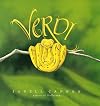
Young Verdi doesn’t want to grow up big and green. He likes his bright yellow skin and sporty stripes. Besides, all the green snakes he meets are lazy, boring, and rude. When Verdi finds a pale green stripe stretching along his whole body, he tries every trick he can think of to get rid of it--and ends up in a heap of trouble. Despite his efforts, Verdi turns green, but to his delight, he discovers that being green doesn’t mean he has to stop being himself.
2 books
2 books
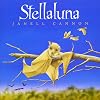
I like this one not only because it's a sweet story--it's really unfortunate when a kids' book isn't at least that--but because of its psychological realness, with Stellaluna the bat and the three bird kids flung together and needing to figure things out, gravitating close to one another and then shifting apart to grow on their own and then settling into a happy separate-together harmony. And with it the way the mama bird shifts from protector to antagonist without changing her fundamental show more caring nature, the way the bats welcome Stellaluna in as one of their own but don't force her to conform, let her share her own wisdom about where she's been and what she's seen and be friends with birds and live authentically. I can imagine this book being really meaningful to foster kids, and in a broader, less pointed way to children, say, growing up in a multicultural immigrant city and starting to figure out what it means that they and their friends inhabit the same public world and culturally different private ones, and how to respect their differences and negotiate them. In that sense it's timely for children here in Vancouver in 2017, where the mirage of a white monoculture has definitively fallen away and where the future will, as futures always are but as we never quite expect, be different from the past. In that sense it's got sociological realness too. It touches gently on social tensions in the same way as it touches gently on other things toddlers sometimes find hard to navigate, like the food chain.
And then finally just the feel and the atmosphere--the cool moonlight of Stellaluna's night flights, the gawky flailing of her wings as she starts growing into her body and realizes she's a bat not a bird, and learns to be who she is. The happy eerie magic of sonar. Even! the informational backgrounder at the end of the book (of course you skip those at story time usually) in which you learn that 25% of all mammal species are bats, that little bats eat meat and look like mice and big bats eat fruit and look like foxes and can have a six-foot wingspan! (I think I knew most of that but it's good to contemplate it.) Lovely bedtime book. show less
And then finally just the feel and the atmosphere--the cool moonlight of Stellaluna's night flights, the gawky flailing of her wings as she starts growing into her body and realizes she's a bat not a bird, and learns to be who she is. The happy eerie magic of sonar. Even! the informational backgrounder at the end of the book (of course you skip those at story time usually) in which you learn that 25% of all mammal species are bats, that little bats eat meat and look like mice and big bats eat fruit and look like foxes and can have a six-foot wingspan! (I think I knew most of that but it's good to contemplate it.) Lovely bedtime book. show less
Lists
Awards


You May Also Like


Associated Authors
Statistics
- Works
- 12
- Also by
- 2
- Members
- 18,648
- Popularity
- #1,175
- Rating
- 4.2
- Reviews
- 449
- ISBNs
- 168
- Languages
- 14
- Favorited
- 5