
Robert Hardy (1) (1925–2017)
Author of Rumpole's Return
For other authors named Robert Hardy, see the disambiguation page.
About the Author
Image credit: Robert Hardy as Siegfried Farnon in All Creatures Great and Small.
Works by Robert Hardy
Sandringham [DVD] 1 copy
Associated Works
Winston and Clementine: The Personal Letters of the Churchills (1998) — Reader, some editions — 272 copies
Dear Philip, Dear Kingsley: Starring Alan Bennett & Robert Hardy (BBC Radio Collection) (2002) — Actor — 7 copies
Memoirs of Sherlock Holmes (audiobook | The Yellow Face, The Stockbroker's Clerk, The "Gloria Scott", and The Final Problem) (1989) — Narrator — 6 copies, 1 review
Ghost Stories The Stalls Of Barchester (1971) / A Warning To The Curious (1972) (DVD) — Actor — 3 copies
Hot Metal: The Complete Series 2 copies
Elizabeth R: Part I: The Lion's Cub [1971 TV episode] — Actor — 1 copy
Tagged
Common Knowledge
- Legal name
- Hardy, Timothy Sydney Robert (birth)
- Birthdate
- 1925-10-29
- Date of death
- 2017-08-03
- Gender
- male
- Education
- Rugby School
Magdalen College, Oxford - Occupations
- actor
historian - Organizations
- Worshipful Company of Bowyers (Master Bowyer|1990-1992)
Mary Rose Trust (trustee)
Royal Armouries (trustee)
British Longbow Club (member)
World Wild Life Fund (trustee)
Royal Toxophilite Society (member) - Awards and honors
- Order of the British Empire (Commander)
Broadcasting Press Guild Award (1982)
University of Reading (Hon DLitt) - Relationships
- Lewis, C. S. (tutor)
- Nationality
- United Kingdom
- Birthplace
- Cheltenham, Gloucestershire, England, UK
- Place of death
- London, Middlesex, England, UK
- Associated Place (for map)
- England, UK
Members
Reviews

In a departure from the previous tales from the career of Horace Rumpole, this book is a novel rather than a selection of short stories. Rumpole is as entertaining as ever, by turns pompous, bombastic and sarcastic and occasionally even wheedling.
As the book opens, however, Rumpole seems to have tunred his back on life at the London Bar, and he and his wife Hilda (generally known to Rumpole as ‘She Who Must Be Obeyed’) are staying with their son Nick, who lives and works in Miami. It show more seems that, after a run of ten defeats in court, all presided over by Judge ‘Mad Bull’ Bullingham, Rumpole may have hung up his wig and retired. At least, that is what Hilda, Nick and all of Rumpole’s fellow tenants in Equity Court believe. The only person who does not seem to have received the memo is Rumpole himself.
The plot surrounds the death in Notting Hill gate Underground Station of a minor aristocrat who is found stabbed. The principal suspect is a young, rather dysfunctional civil servant employed in what was then the Inland Revenue, who was found in possession of the murder weapon and a paper on which a message had been written in blood. The case finds its way to ambitious young barrister, Ken Cracknell, who has taken over Rumpole’s old room in Equity Court. Thinking Cracknell might appreciate some help on the issue of the blood stained letter (a subject on which Rumpole is recognised as an expert), Phyllida Trant writes to her former colleague, asking for his advice.
This is just the excuse Rumpole, who has struggled to adapt to a life of relative luxury and ease in Miami, needs, and he boards a budget jet flight back to London, where he gradually claws his way into the case.
I don’t think that the longer format works. Rumpole is as amusing and entertaining as ever, but the plot is rather too insubstantial to support a whole book. There is an amusing subplot involving the oleaginous Guthrie Featherstone QC, head of the Equity Court Chambers, but even this is insufficient to sustain the weight of a novel. This would have fared better if pared down a bit, and offered up as a novella, with a couple more stories to fill out a volume. show less
As the book opens, however, Rumpole seems to have tunred his back on life at the London Bar, and he and his wife Hilda (generally known to Rumpole as ‘She Who Must Be Obeyed’) are staying with their son Nick, who lives and works in Miami. It show more seems that, after a run of ten defeats in court, all presided over by Judge ‘Mad Bull’ Bullingham, Rumpole may have hung up his wig and retired. At least, that is what Hilda, Nick and all of Rumpole’s fellow tenants in Equity Court believe. The only person who does not seem to have received the memo is Rumpole himself.
The plot surrounds the death in Notting Hill gate Underground Station of a minor aristocrat who is found stabbed. The principal suspect is a young, rather dysfunctional civil servant employed in what was then the Inland Revenue, who was found in possession of the murder weapon and a paper on which a message had been written in blood. The case finds its way to ambitious young barrister, Ken Cracknell, who has taken over Rumpole’s old room in Equity Court. Thinking Cracknell might appreciate some help on the issue of the blood stained letter (a subject on which Rumpole is recognised as an expert), Phyllida Trant writes to her former colleague, asking for his advice.
This is just the excuse Rumpole, who has struggled to adapt to a life of relative luxury and ease in Miami, needs, and he boards a budget jet flight back to London, where he gradually claws his way into the case.
I don’t think that the longer format works. Rumpole is as amusing and entertaining as ever, but the plot is rather too insubstantial to support a whole book. There is an amusing subplot involving the oleaginous Guthrie Featherstone QC, head of the Equity Court Chambers, but even this is insufficient to sustain the weight of a novel. This would have fared better if pared down a bit, and offered up as a novella, with a couple more stories to fill out a volume. show less

The first "Rumpole of the Bailey" novel, in which the curmudgeonly barrister has retired and settled in Florida with She Who Must Be Obeyed, after ten straight defeats in the courtroom of his nemesis, Judge Bullingham. A letter from one of his colleagues awakens him to the fact that he abhors retirement and the Florida sunshine, and he flies back to England to insert himself back into a Bailey that is not entirely eager to welcome him back. After a few more courtroom defeats, he finally is show more served a near-impossible murder to defend, and to boot, it will be tried in the courtroom of --- Judge Bullingham. Horace Rumpole is one of my favorite characters in literature: droll, self-absorbed (but not entirely obnoxiously so), convinced of his invincibility in the courtroom (and often right), always willing to take on a hopeless case and a small cigar and glass of Pommeroy's claret. I also love how he is in thrall to She Who Must Be Obeyed (his wife, Hilda), whom he leaves behind in Florida to escape to his old life in England, but I suspect there is a strong mutual unspoken devotion there. My favorite part of this book is the priceless scene where Hilda, believing that Rumpole has been perusing naughty schoolgirl magazines, attempts to seduce an increasingly shocked and alarmed Rumpole. show less
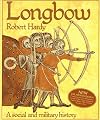
Archery and the longbow are the author's passion who is an actor by profession (appearing as Cornelius Fudge in the Harry Potter movies). His own image, both painted and photographed, appears a few times too many in this otherwise splendid book that collects a lot of information about the English longbow. The author's love for the longbow and England results in a marked neglect of longbows when not in the hands of Englishmen and also underplays the relatively quick disappearance of the show more longbow as an effective weapon from the battlefield of the late 15th century.
The nostalgia for Crécy and Agincourt led the English Kings to amass huge collections of bows (some of whose wood was even imported from Switzerland) and arrows during the gunpowder age. Curiously, most of this armory bows have not survived to modern times. Recycling the wood must have been too attractive. Thus, knowledge about actual English longbows comes from the chance find of 172 bows from the Mary Rose, a sunken Tudor warship. show less
The nostalgia for Crécy and Agincourt led the English Kings to amass huge collections of bows (some of whose wood was even imported from Switzerland) and arrows during the gunpowder age. Curiously, most of this armory bows have not survived to modern times. Recycling the wood must have been too attractive. Thus, knowledge about actual English longbows comes from the chance find of 172 bows from the Mary Rose, a sunken Tudor warship. show less
An excellent history about an important weapon by an expert. The longbow has been mythologized, and sometime just lied about, but non-the-less it was a game-changer on the battlefield. Mr. Hardy's bow has even inspired revisionist rivals in the field of weapon research, but remains a seminal work.
I read the 1976 edition, and the review stands.
I read the 1976 edition, and the review stands.
Lists
Awards

You May Also Like
Associated Authors
Statistics
- Works
- 7
- Also by
- 43
- Members
- 624
- Popularity
- #40,356
- Rating
- 3.8
- Reviews
- 13
- ISBNs
- 39
- Languages
- 1