
Fiona Moore
Author of Liberation: The Unofficial and Unauthorised Guide to Blake's 7
About the Author
Fiona Moore is from the Faculty of Business at Kingston University, UK.
Series
Works by Fiona Moore
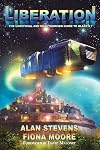
Liberation: The Unofficial and Unauthorised Guide to Blake's 7 (2003) — Author; Author — 45 copies, 2 reviews
Fall Out: The Unofficial and Unauthorised Guide to The Prisoner (2008) — Author — 24 copies, 4 reviews
Management Lessons from Game of Thrones: Organization Theory and Strategy in Westeros (2022) 6 copies, 1 review
By Your Command: The Unofficial and Unauthorised Guide to Battlestar Galactica, Volume 1: The Original Series and Galactica 1980 (2012) 5 copies
Associated Works
Time and Relative Dissertations in Space: Critical Perspectives on Doctor Who (2007) — Contributor — 48 copies, 4 reviews
Asimov's Science Fiction: Vol. 35, No. 9 [September 2011] (2011) — Contributor — 14 copies, 2 reviews
BSFA Awards 2019: Featuring All the Nominated Short Stories and Non-Fiction for the 2019 BSFA Awards (2020) — Contributor — 2 copies
Tagged
Common Knowledge
There is no Common Knowledge data for this author yet. You can help.
Members
Reviews
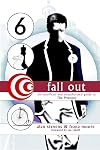
This is a highly intelligent guide and analysis of Patrick McGoohan's 1967 tv series The Prisoner. Although written by two fans, this book is definitely not typical fan fare. Rather, it is a thoughtful exploration of the series, its themes and underlying ideas.
It draws on a lot of published material: indeed, it is possibly drawn up from perhaps the most comprehensive exploration of the ur-texts of The Prisoner - to wit, the scripts, including early drafts as well as finalised shooting show more scripts. It also looks at stories that were proposed and scripts which were commissioned but not actually made.
In fact, this detailed exploration of the background to The Prisoner offers insights not otherwise available. By looking at original and unproduced scripts, and considering series metadata such as the actual shooting order of the episodes (which was very different to the transmission order, and gave the players and production staff a different perspective on the development of the story) the authors are able to draw conclusions that otherwise might not even occur to most viewers of the series, even if they have seen all the episodes many times before.
I count myself as one such viewer. I watched the series on original transmission; then some twenty years later when it was finally repeated on network television. Since then, we have had access, firstly to video and now to DVD/Blu-Ray discs. The series is now more available than ever before. But without some sort of guide, the viewer can only gain so much from even the closest repeat viewing.
After reading this book, I shall be watching The Prisoner on my next viewing with new eyes. The series does not permit of only one interpretation; but after reading fall out, I shall be interested to weigh some of the alternatives it suggests. Is the whole series a hallucination of The Prisoner, from the moment he is gassed in his own house in London to when he steps down from the cage/container on the A20 outside London near the end of the last episode? Or is the repeated prologue before almost every episode not just a recapitulation for the viewer, but an indication that every day is a brand new day, and Number Six restarts his struggle for his independence and freedom of thought and action afresh? These are just two options that the writers of this book put forward; and they are as valid as any others.
The book is fairly dense reading; there are no illustrations and the text requires a degree of concentration. Having said that, there are a number of Easter Eggs in the text in the form of allusions, references (both visual and literary) and knowing asides. The book also considers tie-in novels and comics that pick up the themes of The Prisoner and take them further or re-cast them for newer audiences. Recommended for anyone with an interest in the series. show less
It draws on a lot of published material: indeed, it is possibly drawn up from perhaps the most comprehensive exploration of the ur-texts of The Prisoner - to wit, the scripts, including early drafts as well as finalised shooting show more scripts. It also looks at stories that were proposed and scripts which were commissioned but not actually made.
In fact, this detailed exploration of the background to The Prisoner offers insights not otherwise available. By looking at original and unproduced scripts, and considering series metadata such as the actual shooting order of the episodes (which was very different to the transmission order, and gave the players and production staff a different perspective on the development of the story) the authors are able to draw conclusions that otherwise might not even occur to most viewers of the series, even if they have seen all the episodes many times before.
I count myself as one such viewer. I watched the series on original transmission; then some twenty years later when it was finally repeated on network television. Since then, we have had access, firstly to video and now to DVD/Blu-Ray discs. The series is now more available than ever before. But without some sort of guide, the viewer can only gain so much from even the closest repeat viewing.
After reading this book, I shall be watching The Prisoner on my next viewing with new eyes. The series does not permit of only one interpretation; but after reading fall out, I shall be interested to weigh some of the alternatives it suggests. Is the whole series a hallucination of The Prisoner, from the moment he is gassed in his own house in London to when he steps down from the cage/container on the A20 outside London near the end of the last episode? Or is the repeated prologue before almost every episode not just a recapitulation for the viewer, but an indication that every day is a brand new day, and Number Six restarts his struggle for his independence and freedom of thought and action afresh? These are just two options that the writers of this book put forward; and they are as valid as any others.
The book is fairly dense reading; there are no illustrations and the text requires a degree of concentration. Having said that, there are a number of Easter Eggs in the text in the form of allusions, references (both visual and literary) and knowing asides. The book also considers tie-in novels and comics that pick up the themes of The Prisoner and take them further or re-cast them for newer audiences. Recommended for anyone with an interest in the series. show less
I'd seen several episodes of the classic 60s TV series The Prisoner in the past, and had formed a vague impression of it as interesting, but sort of pointlessly weird. A recent, much more attentive viewing of the whole series quickly convinced me that it's nothing of the sort. It's intelligent and subtle, strange and surreal, and at times maddeningly obscure, but "pointless" is the one thing it clearly isn't. After I finished, I was immediately curious as to what other people might have to show more say about the show and its meaning(s), and this book proved to be exactly what I was looking for. It goes through the show episode by episode (including episodes that were never filmed and even spinoff books), analyzing its recurring themes and motifs. It does so without using any lit-crit jargon, and -- very wisely in my opinion -- without ever attempting to push any specific theories or to claim any particular interpretation as the obvious "truth." The authors have quite a few very insightful things to say, and even when I happen to think that they're stretching a point or dwelling too much on a detail, their analysis is always thought-provoking. Definitely recommended for those with an interest in the show. show less
I needed this book. It's 1) from Telos 2) by the pair behind an excellent series of articles on Doctor Who, classic and new and 3) about The Prisoner, the show that needs a guidebook if any ever did. What can I say, beyond the fact that it's an excellent guidebook, focusing more on analyzing the series than factualizing it. You might be tempted to accuse the authors of overanalysis, but if there's any television series where it's warranted, it's this one. They even cover the spinoff novels show more and comics with as much depth as the original series, which is fairly novel in any television guidebook. I'd like to watch the show again now, but the Region 1 DVD boxset was made by idiots, which makes me reluctant to either buy or Netflix it. show less
https://fromtheheartofeurope.eu/liberation-the-unoffical-and-unauthorised-guide-...
A comprehensive episode-by-episode guide to Blake’s 7, with each season introduced with notes on the overall production context, and clear opinions about which are the best and worst stories. Originally published in 2003, so before Big Finish started to produce audios featuring the surviving members of the original crew (and then their replacements), but an appendix covers the spinoff novels, plays and show more audios up to that point. I don’t agree with all the judgements – I have a sneaking affection, for instance, for “City at the Edge of the World”, while on the other hand I found the skeevy gender politics of the three episodes by Ben Steed unredeemable. However it’s good to have a chunky reference volume to pore over. show less
A comprehensive episode-by-episode guide to Blake’s 7, with each season introduced with notes on the overall production context, and clear opinions about which are the best and worst stories. Originally published in 2003, so before Big Finish started to produce audios featuring the surviving members of the original crew (and then their replacements), but an appendix covers the spinoff novels, plays and show more audios up to that point. I don’t agree with all the judgements – I have a sneaking affection, for instance, for “City at the Edge of the World”, while on the other hand I found the skeevy gender politics of the three episodes by Ben Steed unredeemable. However it’s good to have a chunky reference volume to pore over. show less
Lists
Awards


You May Also Like
Associated Authors
Statistics
- Works
- 15
- Also by
- 27
- Members
- 144
- Popularity
- #143,280
- Rating
- 3.8
- Reviews
- 10
- ISBNs
- 31