
Ian Doescher
Author of William Shakespeare's Star Wars: Verily, A New Hope
About the Author
Ian Doescher received a B.A. in music from Yale University, a Master of Divinity from Yale Divinity School, and a Ph.D. from Union Theological Seminary. He is the creative director at Pivot Group LLC, a full service marketing, research and web agency. He has written several books including William show more Shakespeare's Star Wars, William Shakespeare's The Empire Striketh Back, and William Shakespeare's The Jedi Doth Return. (Bowker Author Biography) show less
Image credit: Photo by Shan Applegate.
Series
Works by Ian Doescher
Palpatine {short story} 1 copy
Associated Works
From a Certain Point of View: 40 Stories Celebrating 40 Years of Star Wars (2017) — Contributor — 1,058 copies, 41 reviews
Tagged
Common Knowledge
- Birthdate
- 1977
- Gender
- male
- Education
- Yale University (BA|Music)
Yale Divinity School
Union Theological Seminary (PhD) - Agent
- Ranta, Adriann
- Nationality
- USA (birth)
- Places of residence
- Portland, Oregon, USA
- Associated Place (for map)
- Oregon, USA
Members
Reviews
William Shakespeare's Jedi the Last: Star Wars Part the Eighth (William Shakespeare's Star Wars) by Ian Doescher
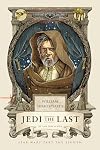
In William Shakespeare’s Jedi The Last: Star Wars Part the Eighth, Ian Doescher continues what is quite possibly the greatest metatextual analysis of the Star Wars franchise, telling the story of The Last Jedi while drawing upon the traditions of Shakespearean drama and other theatrical elements. Of particular note in this version are Kylo Ren channeling the Black Knight from Monty Python and the Holy Grail in describing his wounds (pg. 27), Luke drawing upon Obi-Wan’s description of show more “a certain point of view” (pg. 33), and references to Rogue One (pg. 57). and Hamilton (pg. 61). In one particularly nice sequence, Doescher gives the Master Codebreaker a soliloquy that names every James Bond film in a manner befitting Maz Kanata’s description of him (pg. 73-74). Doescher also explores the connection between Rey and Kylo Ren, using asides to show their hopes for each other (pg. 94). Additionally, he focuses on Poe actually reflecting on the consequences of his actions in order to become a better leader in future (pg. 120). While director Rian Johnson tweeted on 19 January 2018 to explain that Luke’s Force-projection abilities were based on Daniel Wallace’s The Jedi Path, Doescher references these abilities in-text with a conversation between two First Order troopers (pg. 121). In a nice parallel, Kylo Ren’s speech at the end begins to echo the patterns of Snoke, demonstrating his loss to the Dark Side as the new Supreme Leader (pg. 162). Those who enjoy Doescher’s work will find this one of his best as he fully delves into the themes of Johnson’s The Last Jedi in true Shakespearean fashion! show less
William Shakespeare's The Merry Rise of Skywalker (William Shakespeare's Star Wars #9) by Ian Doescher

"It seemeth our Ability to land is dubious." (pg. 95)
Ian Doescher's later Shakespeare/Star Wars mash-ups have been hamstrung by the fact that their source material has been – to put it kindly – sub-par, limiting Doescher's ability to do anything supremely positive with them. The original mash-ups from 2013-14 were excellent as they relied on the original trilogy, with its iconic lines, vivid characters and robust Joseph Campbell-inspired storytelling. The books based on the much-maligned show more prequel trilogy (which nevertheless had some residual strength) showed Doescher's struggle with elevating the material, but made up for it with clever wordplay, compassionate retconning and some tasty gimmicks.
However, the mash-ups for the Disney Star Wars films have, as I first wrote in my review of Doescher's interpretation of The Force Awakens, received a hospital pass. The new film trilogy deserves contempt, because its makers treat their audience with contempt: it is a shameless cash-in devoid of wit, interest, morality, courage or basic storytelling ability. Not coincidentally, Doescher has failed to translate these later films for his previously successful mash-ups, not only in providing engaging Shakespearean prose to compensate for the vapid dialogue, but also in repairing the story to such that it provides even basic competence.
The Force Awakens was bad but still resulted in an OK conversion by Doescher; its story was ripped shamelessly from the original trilogy, but that at least provided Doescher something to work with, however uninspired. The Last Jedi was a woozy mess, but paradoxically allowed Doescher a few subtle and entertaining digs at its incompetence (as I mentioned in my review of his mash-up Jedi the Last). The final film, The Rise of Skywalker, is, if less garishly incompetent than The Last Jedi, arguably the worst of the lot. The Disney Star Wars trilogy has always been circling the drain, and Rise is the risible, obnoxious final gurgle it makes as it drops down the plughole.
Mindful that I am writing a review of Doescher's Merry Rise on LibraryThing rather than Rise on IMDb, I mention this in order to point out that the hospital pass Doescher was played has, by the time of this third Disney infliction, become a full-blown medical crisis. The source material he has to work with is unfortunate: the film is a hasty collection of juvenile pizzazz, a tasteless sequence of storytelling cheats and retcons; a vain attempt to stem the bleeding of Disney's cynical carpet-bagging of a galaxy far, far away.
Not only are there no memorable lines for Doescher to render in Shakespearean iambic pentameter, but there are not even any substantive conversations, or coherent character arcs. Most fatally, the source film is one long (and incomprehensible) action scene, full of sound and fury and, of course, signifying nothing. The action of the Star Wars films has always been difficult for Doescher to recreate, even in his sublime original trilogy of mash-ups, and it doesn't help when the action, as in Rise, is mindless comic-book filler designed to distract rather than engage the audience.
Gone are those Joseph Campbell-inspired profundities which made Doescher's original mash-ups so vivid, that through-line from old popular storytellers like Shakespeare to newer ones like George Lucas which Doescher did so well to highlight. The new mash-up books are now what the uninitiated must have wrongly assumed the original ones from 2013-14 were: a Shakespeare pastiche, a superficial novelty. When the planet Kijimi is destroyed in Doescher's final Act of Merry Rise, I was adrift, because I had forgotten this happened in the film, even though I saw it only a few months ago. That's how stultifying Star Wars – which lit up my own childhood in the Nineties – has become. The new Disney films are memorable only in their awfulness, and even an interpreter as talented as Doescher can no longer do anything to make them tolerable. That said, in Merry Rise Doescher does provide one of the most telling stage directions since Shakespeare's famous 'Exit, pursued by a bear':
"Rey and Kylo Ren duel more, and in the process they knock over the pedestal where Vader's mask rests." (pg. 90)
That says it all about how far we are from Chewbacca's lamented "bygone glory days" (pg. 41). show less
Ian Doescher's later Shakespeare/Star Wars mash-ups have been hamstrung by the fact that their source material has been – to put it kindly – sub-par, limiting Doescher's ability to do anything supremely positive with them. The original mash-ups from 2013-14 were excellent as they relied on the original trilogy, with its iconic lines, vivid characters and robust Joseph Campbell-inspired storytelling. The books based on the much-maligned show more prequel trilogy (which nevertheless had some residual strength) showed Doescher's struggle with elevating the material, but made up for it with clever wordplay, compassionate retconning and some tasty gimmicks.
However, the mash-ups for the Disney Star Wars films have, as I first wrote in my review of Doescher's interpretation of The Force Awakens, received a hospital pass. The new film trilogy deserves contempt, because its makers treat their audience with contempt: it is a shameless cash-in devoid of wit, interest, morality, courage or basic storytelling ability. Not coincidentally, Doescher has failed to translate these later films for his previously successful mash-ups, not only in providing engaging Shakespearean prose to compensate for the vapid dialogue, but also in repairing the story to such that it provides even basic competence.
The Force Awakens was bad but still resulted in an OK conversion by Doescher; its story was ripped shamelessly from the original trilogy, but that at least provided Doescher something to work with, however uninspired. The Last Jedi was a woozy mess, but paradoxically allowed Doescher a few subtle and entertaining digs at its incompetence (as I mentioned in my review of his mash-up Jedi the Last). The final film, The Rise of Skywalker, is, if less garishly incompetent than The Last Jedi, arguably the worst of the lot. The Disney Star Wars trilogy has always been circling the drain, and Rise is the risible, obnoxious final gurgle it makes as it drops down the plughole.
Mindful that I am writing a review of Doescher's Merry Rise on LibraryThing rather than Rise on IMDb, I mention this in order to point out that the hospital pass Doescher was played has, by the time of this third Disney infliction, become a full-blown medical crisis. The source material he has to work with is unfortunate: the film is a hasty collection of juvenile pizzazz, a tasteless sequence of storytelling cheats and retcons; a vain attempt to stem the bleeding of Disney's cynical carpet-bagging of a galaxy far, far away.
Not only are there no memorable lines for Doescher to render in Shakespearean iambic pentameter, but there are not even any substantive conversations, or coherent character arcs. Most fatally, the source film is one long (and incomprehensible) action scene, full of sound and fury and, of course, signifying nothing. The action of the Star Wars films has always been difficult for Doescher to recreate, even in his sublime original trilogy of mash-ups, and it doesn't help when the action, as in Rise, is mindless comic-book filler designed to distract rather than engage the audience.
Gone are those Joseph Campbell-inspired profundities which made Doescher's original mash-ups so vivid, that through-line from old popular storytellers like Shakespeare to newer ones like George Lucas which Doescher did so well to highlight. The new mash-up books are now what the uninitiated must have wrongly assumed the original ones from 2013-14 were: a Shakespeare pastiche, a superficial novelty. When the planet Kijimi is destroyed in Doescher's final Act of Merry Rise, I was adrift, because I had forgotten this happened in the film, even though I saw it only a few months ago. That's how stultifying Star Wars – which lit up my own childhood in the Nineties – has become. The new Disney films are memorable only in their awfulness, and even an interpreter as talented as Doescher can no longer do anything to make them tolerable. That said, in Merry Rise Doescher does provide one of the most telling stage directions since Shakespeare's famous 'Exit, pursued by a bear':
"Rey and Kylo Ren duel more, and in the process they knock over the pedestal where Vader's mask rests." (pg. 90)
That says it all about how far we are from Chewbacca's lamented "bygone glory days" (pg. 41). show less
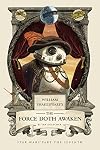
(Note: This review includes spoilers for the film.) Ian Doescher does well to create an enjoyable rendition of the latest Star Wars movie (not counting the anomalous Rogue One spin-off), which is remarkable considering Episode VII is the worst film of the whole saga (yes, that includes the prequels). I could rant geekily for hours about Abrams' fan-fiction Disney film, a Star Wars in motley, which rips entire elements from better episodes in the saga but adding even more unoriginal names show more (Starkiller?), an approach better suited to those Asylum-made 'mockbuster' films (Transmorphers, Atlantic Rim, Operation Dunkirk, etc.) than a series with such a dedicated (and long-suffering) fanbase. The much-maligned prequels, flawed as they are, were at least trying to tell a different story. Suffice to say, for his seventh William Shakespeare's Star Wars book, Doescher has been played a hospital pass.
Doescher is game, however, and he does make improvements to the story. Partly this is just because of the majesty of Shakespearean prose, and even cringey lines from the film ("Do you have a boyfriend?") approach eloquence ("Need'st thou thy family, or paramour/A paramour most fine, with golden locks?" (pg. 55)). Elsewhere, it is through more dedicated patching-up of the film's holes that the story – so derivative on the screen – becomes a bit more accessible. The clumsy and unearned character "growth" of Episode VII becomes more realistic when fleshed out in Doescher's soliloquys and asides, whilst some of the film's more glaring clunkers, such as Rey's Mary Sue tendencies (exacerbated by the "feisty" performance of the actress) and Han's cheap death (if there was any justice in Hollywood, Han should have died at the helm of a stricken Millennium Falcon), are rendered more palatable in Doescher's capable hands. If Doescher's book is better than the film, it is because the writer is solely concerned with writing a good story. He is not concerned with the box-ticking or the marketing and merchandising agenda that drove the Disney film.
I do appreciate that I am writing this review on LibraryThing and not on IMDb, but it is important to recognize that, as with Doescher's previous instalments, much of whether the book is a success is reliant on how coherent and original the corresponding film is. Episode VII was not only bad, it was lazy and unoriginal. And, most frustratingly, it was needlessly so. With the opportunity for a fresh start and with boundless goodwill behind them, the new films could have been something to behold. The sequels had so many possibilities, conceptually speaking, for storytelling.
For example, rather than the First Order just emerging fully-formed at the start of the film, you could have had the Republic struggling to reassert itself after a lifetime of war. It has lost its sense of purpose – fighting the Empire – and the outlying colonies and planets no longer see why they should follow its centralized government. Mirroring contemporary fears about the decline of the West and the weariness in our society, not to mention the increase in populism as a response to globalism, you could have had the First Order move in to fill the hole vacated by the weary Republic. The old soldiers – cameos from Leia and Han Solo – are weary, not able to fight as they were when they were younger, and yet they are also not confident in the ability of the emerging generation to tackle the problems that are arising.
In this scenario, the glorious technologies have become obsolete – the scrapped Millennium Falcon rusting away on Jakku and, in a moving scene, the noble X-Wing could be decommissioned, put out to pasture in a way reminiscent of the Turner painting The Fighting Temeraire. The technique of duelling with lightsabers is being lost, because the young do not have the patience or discipline to learn its ways (Finn's plotline could become this, including training by Luke Skywalker). Kylo Ren could be torn between the old Republic won by his parents and the more vigorous, exciting, but morally-suspect First Order. (Rey you could discard, because she is a crap character.)
To keep an adventure plotline in the mix, Kylo Ren could be sent undercover to spy on the First Order, only to fall for its charms and become its leader (much as a young, disillusioned Adolf Hitler was sent by the army to report on a German worker's party…). Mirroring the original trilogy, a second film could see the Republic plunge into darkness, having lost its leaders (Leia and Han Solo) and without any others emerging. A third film would see the good emerge triumphant.
Neat and fairly original, though I do say so myself, and mirroring contemporary fears and ideas, as good art should do. And, to be honest, it only took me about ten minutes of thinking about it. Reading this book last night and preparing my criticisms of the film, I thought: well, if I'm going to criticize Abrams et. al., could I have done any better? I thought about what I liked to see in the Star Wars films (X-Wings, mainly), got the idea of these old technologies being mothballed, and the idea rapidly expanded from there. If I could have such an idea just by offhandedly thinking about it, why couldn't Abrams? A successful filmmaker, with a huge budget at his disposal and a story-rich universe to work with, and we got cheap action and the shameless recycling – or rather, rebranding – of old ideas (which were themselves stock adventure tropes), all pushed using marketing and hype.
I'm sorry: I said I wouldn't rant, and not only have I done so, I've also ended up pitching my own idea. But the point remains: the source upon which Doescher must rely for his Shakespeare mash-up is not fit for purpose. Doescher, for all his ability as a storyteller, can only polish up the turd so much. With Episode VII as the material he has to work with, he is forced to spend too much time playing script doctor. It says a lot that the highlight of the book is a scene entirely of Doescher's creation: a humorous dialogue between two stormtroopers who lampshade the film's lack of originality (pp122-4). It is a wonderful sequence, chastising the film far more gently than I have done. It is by far the best scene, outshining any that are imported from the film, and shows that the fault in the Star Wars lies not in dear Doescher, but elsewhere. show less
Doescher is game, however, and he does make improvements to the story. Partly this is just because of the majesty of Shakespearean prose, and even cringey lines from the film ("Do you have a boyfriend?") approach eloquence ("Need'st thou thy family, or paramour/A paramour most fine, with golden locks?" (pg. 55)). Elsewhere, it is through more dedicated patching-up of the film's holes that the story – so derivative on the screen – becomes a bit more accessible. The clumsy and unearned character "growth" of Episode VII becomes more realistic when fleshed out in Doescher's soliloquys and asides, whilst some of the film's more glaring clunkers, such as Rey's Mary Sue tendencies (exacerbated by the "feisty" performance of the actress) and Han's cheap death (if there was any justice in Hollywood, Han should have died at the helm of a stricken Millennium Falcon), are rendered more palatable in Doescher's capable hands. If Doescher's book is better than the film, it is because the writer is solely concerned with writing a good story. He is not concerned with the box-ticking or the marketing and merchandising agenda that drove the Disney film.
I do appreciate that I am writing this review on LibraryThing and not on IMDb, but it is important to recognize that, as with Doescher's previous instalments, much of whether the book is a success is reliant on how coherent and original the corresponding film is. Episode VII was not only bad, it was lazy and unoriginal. And, most frustratingly, it was needlessly so. With the opportunity for a fresh start and with boundless goodwill behind them, the new films could have been something to behold. The sequels had so many possibilities, conceptually speaking, for storytelling.
For example, rather than the First Order just emerging fully-formed at the start of the film, you could have had the Republic struggling to reassert itself after a lifetime of war. It has lost its sense of purpose – fighting the Empire – and the outlying colonies and planets no longer see why they should follow its centralized government. Mirroring contemporary fears about the decline of the West and the weariness in our society, not to mention the increase in populism as a response to globalism, you could have had the First Order move in to fill the hole vacated by the weary Republic. The old soldiers – cameos from Leia and Han Solo – are weary, not able to fight as they were when they were younger, and yet they are also not confident in the ability of the emerging generation to tackle the problems that are arising.
In this scenario, the glorious technologies have become obsolete – the scrapped Millennium Falcon rusting away on Jakku and, in a moving scene, the noble X-Wing could be decommissioned, put out to pasture in a way reminiscent of the Turner painting The Fighting Temeraire. The technique of duelling with lightsabers is being lost, because the young do not have the patience or discipline to learn its ways (Finn's plotline could become this, including training by Luke Skywalker). Kylo Ren could be torn between the old Republic won by his parents and the more vigorous, exciting, but morally-suspect First Order. (Rey you could discard, because she is a crap character.)
To keep an adventure plotline in the mix, Kylo Ren could be sent undercover to spy on the First Order, only to fall for its charms and become its leader (much as a young, disillusioned Adolf Hitler was sent by the army to report on a German worker's party…). Mirroring the original trilogy, a second film could see the Republic plunge into darkness, having lost its leaders (Leia and Han Solo) and without any others emerging. A third film would see the good emerge triumphant.
Neat and fairly original, though I do say so myself, and mirroring contemporary fears and ideas, as good art should do. And, to be honest, it only took me about ten minutes of thinking about it. Reading this book last night and preparing my criticisms of the film, I thought: well, if I'm going to criticize Abrams et. al., could I have done any better? I thought about what I liked to see in the Star Wars films (X-Wings, mainly), got the idea of these old technologies being mothballed, and the idea rapidly expanded from there. If I could have such an idea just by offhandedly thinking about it, why couldn't Abrams? A successful filmmaker, with a huge budget at his disposal and a story-rich universe to work with, and we got cheap action and the shameless recycling – or rather, rebranding – of old ideas (which were themselves stock adventure tropes), all pushed using marketing and hype.
I'm sorry: I said I wouldn't rant, and not only have I done so, I've also ended up pitching my own idea. But the point remains: the source upon which Doescher must rely for his Shakespeare mash-up is not fit for purpose. Doescher, for all his ability as a storyteller, can only polish up the turd so much. With Episode VII as the material he has to work with, he is forced to spend too much time playing script doctor. It says a lot that the highlight of the book is a scene entirely of Doescher's creation: a humorous dialogue between two stormtroopers who lampshade the film's lack of originality (pp122-4). It is a wonderful sequence, chastising the film far more gently than I have done. It is by far the best scene, outshining any that are imported from the film, and shows that the fault in the Star Wars lies not in dear Doescher, but elsewhere. show less
"And this the worst of all thy rank offenses.
Methought thou'dst be the one to snuff it out.
For shame, thou art no Vader, but a child –
A child who hides beneath a silly mask." (pp28-29)
Ian Doescher again tries to bring a bit of worth and storytelling nous to the Star Wars movies, but it is increasingly a case of diminishing returns as the series – creatively speaking, if not financially – circles the drain. It no longer deserves the words spent on it; the franchise's latest incarnation show more is now merely a third-rate superhero movie, with ridiculous scenarios (I laughed out loud at Leia's spacewalk), trite Hallmark-card dialogue about 'hope', and diuretic new characters like Vice-Admiral Holdo and Rose Tico, who join Rey in plumbing depths which even Jar-Jar Binks could not find.
The best thing about Doescher's earlier William Shakespeare/Star Wars mash-ups was the recognition of the common storytelling heritage that links the two and connects engrossed audiences through the ages. But now that Disney is just flinging star-speckled shit at the walls and counting their money, there's only so much Doescher can do for repair. There is some clever wordplay and inventive tricks of language, though you can count on one hand the killer lines. It is to Doescher's great credit that there are indeed some good moments, but he has much lower-grade source material to work with than he has enjoyed previously. He does his remarkable best to polish up a turd, but there's nothing much he can do about the lingering smell.
Indeed, the most fun I had from Jedi the Last came from wondering whether Doescher knows this is what he is now doing. He says all the 'right' things when talking about the new films, and always writes with enthusiasm, but I do wonder if – like all dedicated and long-suffering fans – he secretly knows the emperor is wearing no clothes. When he refers to "a canon batt'ring ram" on page 144, I wonder: is this a typo, or is Doescher being cleverer than his Disney-approved copy-editor? I may be wrong about him, and Doescher is certainly game, but if you look at the Disney Star Wars films in light of what came before (yes, even the prequels), and move beyond the Lucas-built reputation of the brand, you see that the new pretenders are woeful. "If thou wouldst take away the pow'r of myth, To look upon their deeds, and those alone, 'Tis clear their legacy is utter failure." (pg. 76) show less
Methought thou'dst be the one to snuff it out.
For shame, thou art no Vader, but a child –
A child who hides beneath a silly mask." (pp28-29)
Ian Doescher again tries to bring a bit of worth and storytelling nous to the Star Wars movies, but it is increasingly a case of diminishing returns as the series – creatively speaking, if not financially – circles the drain. It no longer deserves the words spent on it; the franchise's latest incarnation show more is now merely a third-rate superhero movie, with ridiculous scenarios (I laughed out loud at Leia's spacewalk), trite Hallmark-card dialogue about 'hope', and diuretic new characters like Vice-Admiral Holdo and Rose Tico, who join Rey in plumbing depths which even Jar-Jar Binks could not find.
The best thing about Doescher's earlier William Shakespeare/Star Wars mash-ups was the recognition of the common storytelling heritage that links the two and connects engrossed audiences through the ages. But now that Disney is just flinging star-speckled shit at the walls and counting their money, there's only so much Doescher can do for repair. There is some clever wordplay and inventive tricks of language, though you can count on one hand the killer lines. It is to Doescher's great credit that there are indeed some good moments, but he has much lower-grade source material to work with than he has enjoyed previously. He does his remarkable best to polish up a turd, but there's nothing much he can do about the lingering smell.
Indeed, the most fun I had from Jedi the Last came from wondering whether Doescher knows this is what he is now doing. He says all the 'right' things when talking about the new films, and always writes with enthusiasm, but I do wonder if – like all dedicated and long-suffering fans – he secretly knows the emperor is wearing no clothes. When he refers to "a canon batt'ring ram" on page 144, I wonder: is this a typo, or is Doescher being cleverer than his Disney-approved copy-editor? I may be wrong about him, and Doescher is certainly game, but if you look at the Disney Star Wars films in light of what came before (yes, even the prequels), and move beyond the Lucas-built reputation of the brand, you see that the new pretenders are woeful. "If thou wouldst take away the pow'r of myth, To look upon their deeds, and those alone, 'Tis clear their legacy is utter failure." (pg. 76) show less
Lists
Awards


You May Also Like


Associated Authors
Statistics
- Works
- 33
- Also by
- 2
- Members
- 7,197
- Popularity
- #3,406
- Rating
- 4.0
- Reviews
- 276
- ISBNs
- 70
- Languages
- 1
- Favorited
- 2
