
Alexander Freed
Author of Rogue One: A Star Wars Story
Series
Works by Alexander Freed
The End of History 2 copies
Mask Of Fear 2 copies
One Thousand Levels Down 2 copies
Star Wars™ - Schattenfall: Ein Alphabet-Geschwader-Roman (Die Alphabet-Geschwader-Serie, Band 2) (2022) 2 copies
Star Wars: Alphabet Squadron Series 3 Books Collection Set (Alphabet Squadron, Shadow Fall & Victory’s Price) (2024) 1 copy
Contingency Plan 1 copy
Star Wars #105 (Dino) 1 copy
Associated Works
From a Certain Point of View: 40 Stories Celebrating 40 Years of Star Wars (2017) — Contributor — 1,066 copies, 41 reviews
From a Certain Point of View: 40 Stories Celebrating 40 Years of The Empire Strikes Back (2020) — Contributor — 521 copies, 8 reviews
Tagged
Common Knowledge
- Canonical name
- Freed, Alexander
- Other names
- Freed, Alexander Marsh
- Birthdate
- 1980
- Gender
- male
- Occupations
- writer
scriptwriter
responsable de l'édition (Bioware) - Nationality
- USA
- Places of residence
- Austin, Texas, USA
- Associated Place (for map)
- Texas, USA
Members
Reviews
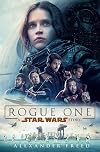
Film novelisations are a subgenre that I generally avoid, as previous experiences have suggested they are terrible (although that may also reflect on my taste in films). I made an exception for ‘Rogue One’ because I really liked the film and people on tumblr said it had a very good novelisation. They weren’t wrong, as this is a solid novel that adds additional detail and characterisation to the film. Why I was particularly keen for such additions can only be explained with spoilers show more (for both book and film, naturally).
First, a comparison. A few days before Christmas 2015, my dad and I went to see a Star Wars film: The Force Awakens. A few days before Christmas 2016, my dad and I went to see a Star Wars film: Rogue One. Same cinema, a retro single screen affair with velvet seats. Same sort of audience, families out for a festive treat. Yet utterly different experiences. At the end of The Force Awakens, the audience broke into applause and happy cheering. At the end of Rogue One, silence and I very much doubt that I was the only one crying. Because at the end of Rogue One, every single main character is dead. There are eight people on the book’s cover, none of whom survive to the end. Not only is that unheard of in a family blockbuster, it sends a much more intense message about the sacrifices required for the sake of political resistance than you’d expect from a Disney-owned franchise. I didn’t object to the bloodbath, although it made me cry, as it was so effectively done. The emphasis was on the solidarity and co-operation of many so that the rebellion could survive, rather than one or two heroes saving everybody. That’s a theme not enough action films explore. Although the main characters of Rogue One each have skills or experiences that make them a little bit extraordinary, all of them need to work together to achieve their goal.
I found that the novel added two things to the film: more detail and nuance to the politics and more depth to the characterisation of the main six: Jyn, Cassian, Baze, Chirrut, Bohdi, and K2. The former gave more time to Mon Mothma, who was barely present in the film. She explains at one point how the rebellion contains a series of quarrelsome factions that can only agree on one thing: fear of the empire. Their views on how to deal with it, however, vary widely from ‘commando raids’ through ‘political maneuvering’ to ‘unconditional surrender’. In this fragility, which also allows for considerable flexibility and resilience, an analogy with opposition to Trump can be seen. The politics of the empire are also shown, albeit more briefly, in Krennic’s peevish rivalry with Tarkin. I was rather amused by the interlude of Galen Erso’s memos, which explain how he was able to build a catastrophic flaw into the Death Star thanks to project overrun and managerial incompetence. That also feels like a relevant allegory.
As for the latter point, it was lovely to spend more time with the interesting and sympathetic characters that the film introduced, briefly established, then systematically killed off. In particular, I felt that Jyn’s personality came through much more clearly in the book. There’s also additional background for Bohdi, more married banter between Baze and Chirrut, and further sarcastic remarks from K2. Although the core six characters fight and die together, neither book nor film forgets that they’ve mostly known each other for mere days and are united by a cause rather than being a team as such. They’re such great characters and their dynamics so promising that it seems deeply unfair that their stories end so abruptly, despite it being thematically appropriate.
It was a little odd reading a novel while picturing exactly what was going to happen, however Freed does more than simply describe the film’s visuals. The additional political context, depth of characterisation, and incidental moments kept it compelling. I’d be interested to know what someone who hadn’t seen the film would make of this novelisation. Unlike any other film novelisation I’ve ever read, I suspect it may stand up on its own. The film is great, though, so I definitely recommend watching that too. show less
I found that the novel added two things to the film: more detail and nuance to the politics and more depth to the characterisation of the main six: Jyn, Cassian, Baze, Chirrut, Bohdi, and K2. The former gave more time to Mon Mothma, who was barely present in the film. She explains at one point how the rebellion contains a series of quarrelsome factions that can only agree on one thing: fear of the empire. Their views on how to deal with it, however, vary widely from ‘commando raids’ through ‘political maneuvering’ to ‘unconditional surrender’. In this fragility, which also allows for considerable flexibility and resilience, an analogy with opposition to Trump can be seen. The politics of the empire are also shown, albeit more briefly, in Krennic’s peevish rivalry with Tarkin. I was rather amused by the interlude of Galen Erso’s memos, which explain how he was able to build a catastrophic flaw into the Death Star thanks to project overrun and managerial incompetence. That also feels like a relevant allegory.
As for the latter point, it was lovely to spend more time with the interesting and sympathetic characters that the film introduced, briefly established, then systematically killed off. In particular, I felt that Jyn’s personality came through much more clearly in the book. There’s also additional background for Bohdi, more married banter between Baze and Chirrut, and further sarcastic remarks from K2. Although the core six characters fight and die together, neither book nor film forgets that they’ve mostly known each other for mere days and are united by a cause rather than being a team as such. They’re such great characters and their dynamics so promising that it seems deeply unfair that their stories end so abruptly, despite it being thematically appropriate.
It was a little odd reading a novel while picturing exactly what was going to happen, however Freed does more than simply describe the film’s visuals. The additional political context, depth of characterisation, and incidental moments kept it compelling. I’d be interested to know what someone who hadn’t seen the film would make of this novelisation. Unlike any other film novelisation I’ve ever read, I suspect it may stand up on its own. The film is great, though, so I definitely recommend watching that too. show less
Victory's Price (Star Wars): An Alphabet Squadron Novel (Star Wars: Alphabet Squadron Book 3) by Alexander Freed
What a culmination of this trilogy—I kept avoiding this book as I was reading it because it was so tense and I didn’t want to see my good friends the Alphabet Squadron get hurt or make Bad Choices. But it was so good, even if it was so tense I wanted to throw the book across the room.
But god, Freed really dives into the most interesting—and tense, fraught!—questions about a post-Empire world and what it means in material terms to try to build a new political structure on the other show more side of that. It also asked some really interesting questions about how we might go about repairing from massive harm (though I don’t know that it answered them in hugely satisfactory ways—this book greatest weakness in my opinion is the epilogue, because it left some things feeling too neat after three whole books of deep messiness, but it might serve more of a “and this is the End of the Trilogy” mode, instead of leaving things open.) Especially watching Quell develop her own answers to the problem that Keize seems repeatedly stuck on was very powerful, as what seemed to be a fairly reasonable stance instead became one that looked more and more deranged over time, which I think is a really difficult needle to thread narratively.
Overall, I think this was just a great end to a powerful trilogy, and they might be my favorite books of new canon. show less
But god, Freed really dives into the most interesting—and tense, fraught!—questions about a post-Empire world and what it means in material terms to try to build a new political structure on the other show more side of that. It also asked some really interesting questions about how we might go about repairing from massive harm (though I don’t know that it answered them in hugely satisfactory ways—this book greatest weakness in my opinion is the epilogue, because it left some things feeling too neat after three whole books of deep messiness, but it might serve more of a “and this is the End of the Trilogy” mode, instead of leaving things open.) Especially watching Quell develop her own answers to the problem that Keize seems repeatedly stuck on was very powerful, as what seemed to be a fairly reasonable stance instead became one that looked more and more deranged over time, which I think is a really difficult needle to thread narratively.
Overall, I think this was just a great end to a powerful trilogy, and they might be my favorite books of new canon. show less
Whoa. Gritty - more real than I expected.
Freed gives us the story of the forming of a motley crew - the eponymous "Alphabet Squadron," of the title. Drawing on decades of the GFFA, he creates a breathtakingly moving story of the swirl motives and backgrounds driving the team.
Funny - after finishing this, I went back to reading "Second Foundation," the classic by Asimov. While Asimov is certainly groundbreaking, I was surprised by how ... two-dimensional his book seemed in contrast. (Not a show more slam on Asimov - just a recognition of the depth of what Freed crafted...
---
2021: finished a re-read (well, listen) show less
Freed gives us the story of the forming of a motley crew - the eponymous "Alphabet Squadron," of the title. Drawing on decades of the GFFA, he creates a breathtakingly moving story of the swirl motives and backgrounds driving the team.
Funny - after finishing this, I went back to reading "Second Foundation," the classic by Asimov. While Asimov is certainly groundbreaking, I was surprised by how ... two-dimensional his book seemed in contrast. (Not a show more slam on Asimov - just a recognition of the depth of what Freed crafted...
---
2021: finished a re-read (well, listen) show less
Shadow Fall (Star Wars): An Alphabet Squadron Novel (Star Wars: Alphabet Squadron) by Alexander Freed
This is my spoiler-free review. You can read my full review which includes minor spoilers for the previous book over on my blog: https://geeking-by.net/review/star-wars-shadow-fall-by-alexander-freed/
Unlike book one Shadow Fall starts right in the middle of the action. I wondered if the pace would end up slowing down and dwindling into endless politics and was pleasantly surprised when it didn’t. If anything it kept ramping up. From start to finish Alphabet Squadron are in the thick of it show more as they lay a trap for their Imperial nemesis’, and like any good plan, there are always bumps along the way. These bumps allow us to get to know the characters, to watch them grow and work through what’s happening.
There are also delayed reactions to what happened in the first book and in my opinion, this is as much to do with the circumstances as it is to do with the better characterisation in this novel. Despite there being action the author has made space for the characters to get retrospective with themselves and each other. The main cast isn’t fighting over space in the novel with twenty other characters, and as I’d hoped, the line between minor and major characters is much clearer. The minor characters pop in and out like scenery, adding to the story, adjacent to Alphabet Squadron but never taking the attention away from them as they did in the first novel.
There is so much improvement in this novel that I honestly wondered at one point if it was written by a ghostwriter. However, as I continued to work my way through the book I began to see familiar patterns in the writing style that dispelled that idea. For one, the author continues to write as though striving to impress someone way too hard. This is particularly noticeable through long rambling sentence structures which would probably make J.R.Tolkien proud. In a science fiction novel that is already filled to the hilt with jargon, it just feels out of place and clunky. I ended up skimming quite a few sections of description due to the long sentence instruction because I lost interest in the lacklustre description which essentially wasn’t telling me anything I needed to know.
In the end, it was the characters and the plot that shone through, and I was pulled into the action eager to find out what would happen to the Squadron as I became emotionally attached to them at last. There are highs and lows, and there were finally moments where they said things to each other that had me laughing or made my heart squeeze with emotion. show less
Unlike book one Shadow Fall starts right in the middle of the action. I wondered if the pace would end up slowing down and dwindling into endless politics and was pleasantly surprised when it didn’t. If anything it kept ramping up. From start to finish Alphabet Squadron are in the thick of it show more as they lay a trap for their Imperial nemesis’, and like any good plan, there are always bumps along the way. These bumps allow us to get to know the characters, to watch them grow and work through what’s happening.
There are also delayed reactions to what happened in the first book and in my opinion, this is as much to do with the circumstances as it is to do with the better characterisation in this novel. Despite there being action the author has made space for the characters to get retrospective with themselves and each other. The main cast isn’t fighting over space in the novel with twenty other characters, and as I’d hoped, the line between minor and major characters is much clearer. The minor characters pop in and out like scenery, adding to the story, adjacent to Alphabet Squadron but never taking the attention away from them as they did in the first novel.
There is so much improvement in this novel that I honestly wondered at one point if it was written by a ghostwriter. However, as I continued to work my way through the book I began to see familiar patterns in the writing style that dispelled that idea. For one, the author continues to write as though striving to impress someone way too hard. This is particularly noticeable through long rambling sentence structures which would probably make J.R.Tolkien proud. In a science fiction novel that is already filled to the hilt with jargon, it just feels out of place and clunky. I ended up skimming quite a few sections of description due to the long sentence instruction because I lost interest in the lacklustre description which essentially wasn’t telling me anything I needed to know.
In the end, it was the characters and the plot that shone through, and I was pulled into the action eager to find out what would happen to the Squadron as I became emotionally attached to them at last. There are highs and lows, and there were finally moments where they said things to each other that had me laughing or made my heart squeeze with emotion. show less
Lists
Awards

You May Also Like


Associated Authors
Statistics
- Works
- 52
- Also by
- 3
- Members
- 2,810
- Popularity
- #9,137
- Rating
- 3.7
- Reviews
- 60
- ISBNs
- 119
- Languages
- 10
- Favorited
- 1