
Max L. Carter
Author of Minutiae Of The Meeting, Essays On Quaker Connections
About the Author
Works by Max L. Carter
Tagged
Common Knowledge
- Gender
- male
Members
Reviews
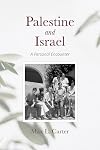
Max reflects on his travels in the region and the lessons he learned from his growing network of Jewish, Christian, and Muslim friends in this memoir covering the time from 1970 through the second Intifada. But the most important lessons may have been for students Max brought from the United States to see for themselves what it's like on the ground in places like Bethlehem, Hebron, and so many others. One of those students spoke to Max about the purpose this experience had given her: "'I show more want to learn both Arabic and Hebrew,' she told me, 'so I can tell each other's stories.' "To be sure, there are stories to tell."--Back cover. show less

Perhaps the title of this pamphlet should be something like: "Sources I find to live out of a calm center, in the midst of working for peace in the Storm of the Israel-Palestine conflict, plus strategies I use to keep my work calm." It is really about Carter's experience in doing this rather than about how to find such a calm center yourself. His perspectives and witness are valuable to us. His examples from the Israel-Palestine conflict are deeply moving and inspiring.
Carter's explanation show more about what the inner calm and peace is and how we find , maintain, and live in it is confusingly non-sequential, but can be sorted out, though it is still partial. For a deep explanation of this, go to Thomas Kelly or others. This pamphlet is important for his witness and experience, and the heart-grabbing peek it gives us into that Israeli-Palestinian Storm.
For insights into the nature of the calm center, Carter cites the AFSC feeding of starving Germans after the World Wars; Elijah in the earthquake, wind, and fire; the Quaker poet John Greenleaf Whittier; Thomas Kelly; the olive tree; and Israeli and Palestinian friends. This is the inward peace that it is possible to come into, and that God calls us to live out of. It is the source of inner peace, strength, courage, hope, persistence, and compassion for all. For him, he says, his Quaker faith with all its resources, and the Light, are the foundation for living in the calm center.
We might add wisdom to his list of gifts in the calm center, for he advises several wise skills and strategies for the action that comes out of it. These include understanding accurately what the Storm is and what is driving it, the real issues and powerful feelings of all involved,as opposed to the false claims and demeaning stereotypes that arise out of the escalation. Also picking carefully only two or three issues that he will work on, trusting that others will carry the rest.
Carter's prime experience told here is with Israel-Palestine, but clearly the calm center applies to a Storm of any kind in life. Carter refers indirectly but definitely to the "earthquake, wind, and fire" that Americans are living in right now.
This pamphlet originated as the 2025 Stephen G. Cary Memorial Lecture at Pendle Hill. show less
Carter's explanation show more about what the inner calm and peace is and how we find , maintain, and live in it is confusingly non-sequential, but can be sorted out, though it is still partial. For a deep explanation of this, go to Thomas Kelly or others. This pamphlet is important for his witness and experience, and the heart-grabbing peek it gives us into that Israeli-Palestinian Storm.
For insights into the nature of the calm center, Carter cites the AFSC feeding of starving Germans after the World Wars; Elijah in the earthquake, wind, and fire; the Quaker poet John Greenleaf Whittier; Thomas Kelly; the olive tree; and Israeli and Palestinian friends. This is the inward peace that it is possible to come into, and that God calls us to live out of. It is the source of inner peace, strength, courage, hope, persistence, and compassion for all. For him, he says, his Quaker faith with all its resources, and the Light, are the foundation for living in the calm center.
We might add wisdom to his list of gifts in the calm center, for he advises several wise skills and strategies for the action that comes out of it. These include understanding accurately what the Storm is and what is driving it, the real issues and powerful feelings of all involved,as opposed to the false claims and demeaning stereotypes that arise out of the escalation. Also picking carefully only two or three issues that he will work on, trusting that others will carry the rest.
Carter's prime experience told here is with Israel-Palestine, but clearly the calm center applies to a Storm of any kind in life. Carter refers indirectly but definitely to the "earthquake, wind, and fire" that Americans are living in right now.
This pamphlet originated as the 2025 Stephen G. Cary Memorial Lecture at Pendle Hill. show less
The author reflects on his travels in the region, and the lessons he learned from his growing network of Jewish, Christian, and Muslim friends in this memoir covering the time from 1970 through the second Intifada. But the most important lessons may have been for students Max brought from the United States to see for themselves what it's like on the ground in places like Bethlehem, Hebron, and so many others.
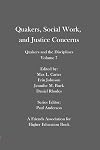
In this volume, ten authors apply theory and history of Quaker work for social change in offering insight into how Friends have approached social work. This collection of essays is divided into three sections: the first considers theory of social work and change, the second looks at individual Quakers' lives and their work, and the third considers collective work of Friends in addressing social issues - From Introduction, page xiii.
Statistics
- Works
- 13
- Members
- 88
- Popularity
- #209,355
- Rating
- 3.3
- Reviews
- 6
- ISBNs
- 9