
Mar Pavón
Author of Clucky the Hen
About the Author
Works by Mar Pavón
Tagged
Common Knowledge
There is no Common Knowledge data for this author yet. You can help.
Members
Reviews

A lady with a beehive hairdo, thick glasses, bright blue raincoat, rubber boots and bright red purse drives her tractor along the road in this picture-book from Spain. Fortunately for her, the noise of her vehicle drowns out all the naysayers who claim a lady like her shouldn't be driving a tractor, although she is able to hear the open-minded young boy who stops her to ask some questions. At the end of the day the lady returns home, where her husband has a delicious meal waiting for her, show more and her daughter declares that she wants to drive a tractor one day as well...
Originally published in Spanish as Un tractor muy, muy ruidoso, A Very, Very Noisy Tractor is the second picture-book I have read from author Mar Pavón, following upon her That's Not Normal! Both books are heavily message-driven, with the idea here being that women and men do not need to follow the traditional occupations assigned to their sex and gender, if their inclination leads them elsewhere, and that one should have confidence in one's own choices, even in the face of criticism from community members. While I certainly agree with these ideas, I do feel (much as I did with That's Not Normal!) that they are delivered in a fairly heavy-handed way. Still, the repetitive structure of the text, and the colorful, stylized illustrations from Nívola Uyá make for pleasant reading. Recommended to picture-book readers looking for somewhat quirky stories that deconstruct gendered expectations regarding work and career. show less
Originally published in Spanish as Un tractor muy, muy ruidoso, A Very, Very Noisy Tractor is the second picture-book I have read from author Mar Pavón, following upon her That's Not Normal! Both books are heavily message-driven, with the idea here being that women and men do not need to follow the traditional occupations assigned to their sex and gender, if their inclination leads them elsewhere, and that one should have confidence in one's own choices, even in the face of criticism from community members. While I certainly agree with these ideas, I do feel (much as I did with That's Not Normal!) that they are delivered in a fairly heavy-handed way. Still, the repetitive structure of the text, and the colorful, stylized illustrations from Nívola Uyá make for pleasant reading. Recommended to picture-book readers looking for somewhat quirky stories that deconstruct gendered expectations regarding work and career. show less

Elephant's extremely long trunk often comes in handy in this charming picture-book, as he uses it to bathe his son and to aid his neighbors. Whether providing impromptu stairs for the elderly Monkey or helping Zebra to wash his stripes, Elephant is always ready and willing to help out. The only one of his neighbors who doesn't appreciate his generosity is Hippopotamus, who makes himself obnoxious by constantly making fun of Elephant's trunk, claiming that such a long appendage is not normal. show more But when Baby Hippo, himself the possessor of an 'abnormal' skill, finds himself in danger from crocodiles, Elephant's trunk saves the day, thereby teaching Hippopotamus an important lesson about judging others for being different.
Originally published in Spain as ¡Eso no es normal!, and made available in this English edition by the Spanish publisher NubeOcho, That's Not Normal! is a teaching tale, intended to highlight the importance of tolerance, and the value - both ethical and utilitarian - of embracing our differences. Although I did find the delivery of the message here a little heavy-handed - young children are capable of grasping the idea from the story alone, without the narrator telling them that Hippopotamus learned his lesson - I think there was enough of a sense of humor to keep readers and listeners entertained, as well as enough narrative excitement, with the race to rescue Baby Hippo, to keep them involved. The artwork, moreover, is absolutely delightful - I loved Laure du Faÿ's use of color, and her depictions of the many uses to which Elephant put his trunk - and adds to the pleasure of reading. With the proviso that those who dislike didactic tales should give it a miss, I would recommend That's Not Normal! to anyone looking for children's stories that address issues of difference and how we should respond to it. show less
Originally published in Spain as ¡Eso no es normal!, and made available in this English edition by the Spanish publisher NubeOcho, That's Not Normal! is a teaching tale, intended to highlight the importance of tolerance, and the value - both ethical and utilitarian - of embracing our differences. Although I did find the delivery of the message here a little heavy-handed - young children are capable of grasping the idea from the story alone, without the narrator telling them that Hippopotamus learned his lesson - I think there was enough of a sense of humor to keep readers and listeners entertained, as well as enough narrative excitement, with the race to rescue Baby Hippo, to keep them involved. The artwork, moreover, is absolutely delightful - I loved Laure du Faÿ's use of color, and her depictions of the many uses to which Elephant put his trunk - and adds to the pleasure of reading. With the proviso that those who dislike didactic tales should give it a miss, I would recommend That's Not Normal! to anyone looking for children's stories that address issues of difference and how we should respond to it. show less
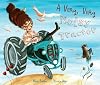
I gave it 3 stars because I want to like the message, but for some reason in this book it really fell flat for me. The message is that women can do all the same things men can do, even when it's hard work, and they should ignore all the folks who tell them otherwise. But there was something about this book that I couldn't really get behind. The cover is great, the farmer is badass in her ignoring of people telling her she shouldn't be a farmer...but also, she's apparently the only farmer in show more the area? So doesn't everyone in the town yelling at her get all their corn and potatoes and whatever from her? They must know the origin of their food, their town looks pretty rural. Unless she's one of those hipster farmers that grew up in the city and threw away her ipad one day to live the simpler life with her mustachioed foodie husband? I kind of like that explanation better - all the rural townies are skeptical of her city ways, thinking that there's no way this lady with the beehive hairdo and cat-eye glasses could ever farm, but she's a clever and industrious hipster and applied the knowledge she gained from youtube and ebooks wonderfully and it turns out, she's killing it as a farmer! You go lady. show less

Zaira enjoys watching the dolphins in her local fountain, bringing a variety of friends with her to enjoy the show. The ridicule of the other children, who cannot see either the dolphins or her friends, does nothing to deter her, but Zaira does become upset when the fountain water itself disappears. Fortunately, the fairy "Take-That" appears, and sets all to rights...
Originally published in Spain as Zaira y los Delfines, this sweet original fairy-tale extols the virtues of imaginative play, show more rewarding Zaira for her games of make-believe with a visit from a real fairy. I found the story interesting, and liked the conclusion, in which Zaira meets her dolphins once again inher bath . The accompanying artwork from Cha Coco is colorful and appealing, ably capturing the madcap sensibility of the story. Recommended to picture-book readers who like stories about imaginary friends, imaginative play, or fairies who visit everyday children. show less
Originally published in Spain as Zaira y los Delfines, this sweet original fairy-tale extols the virtues of imaginative play, show more rewarding Zaira for her games of make-believe with a visit from a real fairy. I found the story interesting, and liked the conclusion, in which Zaira meets her dolphins once again in
Awards


You May Also Like


Associated Authors
Statistics
- Works
- 38
- Members
- 246
- Popularity
- #92,612
- Rating
- 3.7
- Reviews
- 12
- ISBNs
- 88
- Languages
- 5