
Anne Ishii
Author of Bat-Manga!: The Secret History of Batman in Japan
About the Author
Image credit: Photo by Eric Reynolds
Series
Works by Anne Ishii
Loups-Garous 2 copies
Associated Works
My Brother's Husband, Volume 1 [omnibus] (2015) — Translator, some editions — 592 copies, 32 reviews
My Brother's Husband, Volume 2 [omnibus] (2016) — Translator, some editions — 327 copies, 24 reviews
My Brother's Husband, Volumes 1 & 2 [complete omnibus] (2017) — Translator, some editions — 122 copies, 6 reviews
What is Obscenity?: The Story of a Good For Nothing Artist and her Pussy (2016) — Translator, some editions — 83 copies, 3 reviews
The Passion of Gengoroh Tagame: Master of Gay Erotic Manga, Vol. 1 (2013) — Translator, some editions — 80 copies, 1 review
The Passion of Gengoroh Tagame: Master of Gay Erotic Manga, Vol. 2 (2022) — Translator, some editions — 30 copies, 1 review
The Passion of Gengoroh Tagame: Master of Gay Erotic Manga: Vols. 1 & 2 (2024) — Translator, some editions — 12 copies
Tagged
Common Knowledge
- Canonical name
- Ishii, Anne
- Gender
- female
- Occupations
- translator
- Nationality
- USA
- Associated Place (for map)
- USA
Members
Reviews
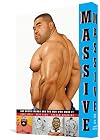
The first major publication of gay manga to be printed in English was The Passion of Gengoroh Tagame: The Master of Gay Erotic Manga. Soon after its release a new project--a gay manga anthology called Massive--was announced by the same team that worked on Tagame's debut English collection. Originally intended to be released by PictureBox, the anthology was temporarily orphaned when the publisher ceased releasing comics before the volume was completed. I was thrilled when Fantagraphics took show more on the project. Edited by Anne Ishii, Chip Kidd, and Graham Kolbeins, Massive: Gay Erotic Manga and the Men Who Make It became one of my most anticipated releases of 2014. Gay manga is an extremely underrepresented genre of manga in English. Massive, like The Passion of Gengoroh Tagame before it, is a groundbreaking work. Through manga, interviews, photography, and essays, the anthology introduces nine of the genre's most influential, respected, and promising creators to an English-reading audience.
The volume's table of contents is formed by a gallery of photographs paired with full-page color pin-ups illustrated by each of the contributors to Massive: Gengoroh Tagame, Inu Yoshi, Kumada Poohsuke, Takeshi Matsu, Jiraiya, Gai Mizuki, Fumi Miyabi, Seizoh Ebisubashi, and Kazuhide Ichikawa. This is followed by introductory essays written by each of the three editors. Kidd's "It Feels Too Good" conveys the excitement over the fact that a volume like Massive even exists, while Ishii reveals some of the steps it took to publish the material in "Seeking English Translator." Kolbeins essay "Glocalizing Gei Manga" is particularly enlightening, providing a greater context for Massive and a brief overview of the history of gay manga and how the volume fits into it. Also included is a timeline of male-male sexuality in Japanese culture, a list of recommended readings, and numerous photographs and illustrations. However, the real meat of the collection is the individual profiles of each of the creators introducing their work and personal histories and exploring their careers and the impacts they have made on the genre of gay erotic manga. The other major highlight of Massive is the inclusion of examples of their manga.
For most of the contributors, Massive marks their debut in English. Excluding Tagame, who has thus far had four collections published, Matsu is the only creator to have had a major release in English. And except for Jiraiya's "Caveman Guu," which was previously printed separately, all of the manga collected in Massive is being translated into English for the first time. Some are excerpts of longer works, like Tagame's Do You Remember South Island P.O.W. Camp? and Poohsuke's Dreams of the New Century Theatre, while others are shorter, standalone stories. There is humor and playfulness to be found in Yoshi's "Kandagawa-Kun" and Matsu's "Kannai's Dilemma," more dubious encounters in Mizuki's "Fantasy and Jump Rope," Ebisubashi's "Mr. Tokugawa," and Ichikawa's "Yakuza Godfathers", and even mythological inspiration in Miyabe's "Tengudake." The manga collected in Massive is most definitely erotic in nature. Some of the selections are simply suggestive, but many feature explicit, uncensored, and uninhibited sex between hypermasculine, muscular, and otherwise large-bodied men. It is called Massive for a reason, after all.
The profiles of the creators included in Massive are just as engaging as the manga that has been collected. The volume provides an incredibly valuable look into the creation of gay erotic manga and art. Interestingly enough, several of the contributors mention that they would like to create gay manga without as much erotic content, but to successfully do so would be difficult due to the demands of their audience and what is expected from the genre of gay manga as a whole. The artists address many of the same subjects in their interviews but they each bring their own perspective to the discussion. It's fascinating to learn about how the manga industry has changed and continues to change, the impact and challenges presented by foreign scanlations of manga, the benefits of working within the manga industry or independently outside of it, the use and misappropriation of the term bara both in Japan and in the West, and the relationship between gay manga and boys' love manga, among many other topics. Massive truly is a spectacular volume and highly recommended for anyone interested in gay manga, its history, and its creators; it's a fantastic introduction to the genre.
Experiments in Manga show less
The volume's table of contents is formed by a gallery of photographs paired with full-page color pin-ups illustrated by each of the contributors to Massive: Gengoroh Tagame, Inu Yoshi, Kumada Poohsuke, Takeshi Matsu, Jiraiya, Gai Mizuki, Fumi Miyabi, Seizoh Ebisubashi, and Kazuhide Ichikawa. This is followed by introductory essays written by each of the three editors. Kidd's "It Feels Too Good" conveys the excitement over the fact that a volume like Massive even exists, while Ishii reveals some of the steps it took to publish the material in "Seeking English Translator." Kolbeins essay "Glocalizing Gei Manga" is particularly enlightening, providing a greater context for Massive and a brief overview of the history of gay manga and how the volume fits into it. Also included is a timeline of male-male sexuality in Japanese culture, a list of recommended readings, and numerous photographs and illustrations. However, the real meat of the collection is the individual profiles of each of the creators introducing their work and personal histories and exploring their careers and the impacts they have made on the genre of gay erotic manga. The other major highlight of Massive is the inclusion of examples of their manga.
For most of the contributors, Massive marks their debut in English. Excluding Tagame, who has thus far had four collections published, Matsu is the only creator to have had a major release in English. And except for Jiraiya's "Caveman Guu," which was previously printed separately, all of the manga collected in Massive is being translated into English for the first time. Some are excerpts of longer works, like Tagame's Do You Remember South Island P.O.W. Camp? and Poohsuke's Dreams of the New Century Theatre, while others are shorter, standalone stories. There is humor and playfulness to be found in Yoshi's "Kandagawa-Kun" and Matsu's "Kannai's Dilemma," more dubious encounters in Mizuki's "Fantasy and Jump Rope," Ebisubashi's "Mr. Tokugawa," and Ichikawa's "Yakuza Godfathers", and even mythological inspiration in Miyabe's "Tengudake." The manga collected in Massive is most definitely erotic in nature. Some of the selections are simply suggestive, but many feature explicit, uncensored, and uninhibited sex between hypermasculine, muscular, and otherwise large-bodied men. It is called Massive for a reason, after all.
The profiles of the creators included in Massive are just as engaging as the manga that has been collected. The volume provides an incredibly valuable look into the creation of gay erotic manga and art. Interestingly enough, several of the contributors mention that they would like to create gay manga without as much erotic content, but to successfully do so would be difficult due to the demands of their audience and what is expected from the genre of gay manga as a whole. The artists address many of the same subjects in their interviews but they each bring their own perspective to the discussion. It's fascinating to learn about how the manga industry has changed and continues to change, the impact and challenges presented by foreign scanlations of manga, the benefits of working within the manga industry or independently outside of it, the use and misappropriation of the term bara both in Japan and in the West, and the relationship between gay manga and boys' love manga, among many other topics. Massive truly is a spectacular volume and highly recommended for anyone interested in gay manga, its history, and its creators; it's a fantastic introduction to the genre.
Experiments in Manga show less
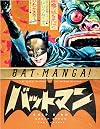
Continuing a bout of re-reading. Jiro Kuwata was already a well-known figure in Japan when he hired on to adapt America's Batman for a manga audience. In an interview in this book, he says he pretty much read and then discarded with much of Bob Kane's stories, trying to craft something with the domestic readership in mind.
Some four decades later, the work would be re-discovered by Chip Kidd (in a circuitous manner that's a good story unto its own).
The book is a lot of fun, especially show more because it provides a kind of Rosetta Stone moment for American manga readers. Not exactly the direct translation tool provided by the actual Rosetta Stone, but there's a lesson to be had here in seeing how Japanese creators "see" American comics, giving how long we in America have been gaining a perspective on Japanese comics. show less
Some four decades later, the work would be re-discovered by Chip Kidd (in a circuitous manner that's a good story unto its own).
The book is a lot of fun, especially show more because it provides a kind of Rosetta Stone moment for American manga readers. Not exactly the direct translation tool provided by the actual Rosetta Stone, but there's a lesson to be had here in seeing how Japanese creators "see" American comics, giving how long we in America have been gaining a perspective on Japanese comics. show less
http://lampbane.livejournal.com/596256.html
"I've praised the damn thing before based on its graphic design, but how does the thing actually read?
Not very well, I'm afraid. The book collects a forgotten manga series from the 1960's that was not well-preserved, so that presents the first problem: very few of the stories in the collection are actually complete. You can't fault Kidd and company for that, but it does make the book more of an artistic piece than a narrative piece. [...]
Judging the show more actual stories, they're not bad. There's a few good tales in there (I think I enjoyed the Weather Wizard one, though incomplete) but also a few clunkers. It's funny to note that in the interview with Jiro Kuwata, he mentions how unrealistic some of the American stories are and how the Japanese prefer realism. This is a comic where Batman has a likeness of himself carved into the side of Mt. Gotham, for god's sake.
The art is decent for its time, and the reproductions of each page are photographed well enough that the lines are crisp and clear. The pages sometimes had to be shot from bound volumes, but despite that setback each page looks great. They chose to keep the textures of the paper and the bleed-through, which increases the feel of the book as an art piece rather than reading material." show less
"I've praised the damn thing before based on its graphic design, but how does the thing actually read?
Not very well, I'm afraid. The book collects a forgotten manga series from the 1960's that was not well-preserved, so that presents the first problem: very few of the stories in the collection are actually complete. You can't fault Kidd and company for that, but it does make the book more of an artistic piece than a narrative piece. [...]
Judging the show more actual stories, they're not bad. There's a few good tales in there (I think I enjoyed the Weather Wizard one, though incomplete) but also a few clunkers. It's funny to note that in the interview with Jiro Kuwata, he mentions how unrealistic some of the American stories are and how the Japanese prefer realism. This is a comic where Batman has a likeness of himself carved into the side of Mt. Gotham, for god's sake.
The art is decent for its time, and the reproductions of each page are photographed well enough that the lines are crisp and clear. The pages sometimes had to be shot from bound volumes, but despite that setback each page looks great. They chose to keep the textures of the paper and the bleed-through, which increases the feel of the book as an art piece rather than reading material." show less
Unbeknowst to most fans and historians, an original series of Batman tales appeared in the pages of the popular sixties weekly manga Shohen King. Inspired by the Adam West Batman show and employing a unique blend of Western and Japanese styles, Jiro Kuwata's unique vision of the Caped Crusader (and Robin) debuted in 1966. Kidd reprints a large selection of the strips along with full color covers and images of various 1960s Japanese Batman paraphernalia. Kuwata's tales compare favorably with show more any of the era's Batman stories. Designer Kidd's wise decision to reprint the strips in the traditional manga format, right to left, and in an over-sized thick volume reminiscent of the original Shohen King adds an additional layer of quality to this sensational collection. show less
Awards

You May Also Like


Associated Authors
Statistics
- Works
- 4
- Also by
- 17
- Members
- 272
- Popularity
- #85,117
- Rating
- 4.3
- Reviews
- 6
- ISBNs
- 3