
About the Author
Jim Dent, a New York Times bestselling author, has written ten books, including fan favorites Twelve Mighty Orphans and The Junction Boys, which became a popular ESPN movie. He is an award-winning journalist who covered the Dallas Cowboys for the Dallas Times Herald and Fort Worth Star-Telegram for show more eleven years. For more information on the author and his book signings, visit Jim Dent on Facebook. show less
Works by Jim Dent
The Junction Boys: How Ten Days in Hell with Bear Bryant Forged a Championship Team (1999) 224 copies, 2 reviews
Twelve Mighty Orphans: The Inspiring True Story of the Mighty Mites Who Ruled Texas Football (2007) 159 copies, 1 review
The Undefeated: The Oklahoma Sooners and the Greatest Winning Streak in College Football (2001) 67 copies, 1 review
Monster of the Midway: Bronko Nagurski, the 1943 Chicago Bears, and the Greatest Comeback Ever (2003) 52 copies, 1 review
Tagged
Common Knowledge
- Legal name
- Dent, Harry James
- Birthdate
- 1953
- Gender
- male
- Occupations
- journalist
author
sportswriter
prisoner - Organizations
- Fort Worth Star-Telegram
- Nationality
- USA
- Associated Place (for map)
- USA
Members
Reviews
Monster of the Midway: Bronko Nagurski, the 1943 Chicago Bears, and the Greatest Comeback Ever by Jim Dent
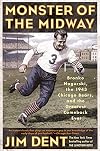
We have a saying in our family, “Never let truth constrain a good story.” Jim Dent might have learned his craft from my father, whose version of any particular historical event always improved with its retelling. In any event, Dent’s version of “the Greatest Comeback Ever,” starring Bronislau “Bronko” Nagurski and the 1943 Chicago Bears, is a ripping good tale, related in the exaggerated style of early 20th century sports writing, roughly equivalent to my father’s fourth or show more fifth telling of a story.
Bronko played fullback and line backer for the Bears at a time when men were really men—players played both offense and defense, and two of his teammates even distained helmets (!), not that the leather versions of the time provided all that much protection. And Bronko was the baddest (and nearly the biggest) member of the rough gangs recruited and exploited to play pro football by the likes of George Halas (Bears), Curley Lambeau (Packers), and George Preston Marshall (Redskins).
Although not nearly as “nifty” a runner as his teammate Red Grange, Bronko was very tough to bring down once he got going. Dent relates an incident when Nagurski broke several tackles, ran out of bounds, and then collided with and knocked down a policeman’s horse that happened to be standing along the sideline! Bronko himself remembered the hardest hit he sustained as a runner as the time he broke several more tackles, burst over the goal line, only to be stopped short by the brick wall at Wrigley Field’s north end. On returning to the huddle for the extra point try, he reportedly said: "That last guy hit me awfully hard." Nagurski seems to have run with his head down much of the time.
The NFL players of the 1930’s did not make much money, and Bronko retired from football after playing from 1930-37 to pursue a professional wrestling career. Wrestling wasn’t much of a career either in those days, and so when the Bears called the Bronk in 1943 to supplement their war-depleted roster, he decided to give it another shot. Because his knees and back had undergone substantial deterioration, he felt unable to play fullback, but was still up to contributing at offensive and defensive tackle. The Bears won most of their games that year, but needed a victory against their cross town rivals (the Chicago football Cardinals) in the final game to qualify for the league championship.
The Bears were trailing in the second half, and desperately needed some spark on offense. In the “Greatest Comeback Ever,” Bronko switched back to playing fullback, and ground out the yardage for two winning touchdowns. The following week, he was still at fullback and still unstoppable, leading the Bears to a 41-21 victory over Sammy Baugh and the Washington Redskins for the league championship.
Dent frequently resorts to hyperbole (maybe he forgot that Michael Jordan “came back” to win three championships), but it is all in good fun. I enjoyed reading about some of the not quite star players (Mainiaci, Manders, Osmanski, Musso, and Turner), whose exploits had been the subject of some of my father’s regaling. Most especially, I enjoyed reading about Bronko’s chief rival for best fullback of the era, Clarke Hinkle, who was my father’s college football coach. A perfect book for a 10-16 year old sports nut, and not a bad one for us older fans. show less
Bronko played fullback and line backer for the Bears at a time when men were really men—players played both offense and defense, and two of his teammates even distained helmets (!), not that the leather versions of the time provided all that much protection. And Bronko was the baddest (and nearly the biggest) member of the rough gangs recruited and exploited to play pro football by the likes of George Halas (Bears), Curley Lambeau (Packers), and George Preston Marshall (Redskins).
Although not nearly as “nifty” a runner as his teammate Red Grange, Bronko was very tough to bring down once he got going. Dent relates an incident when Nagurski broke several tackles, ran out of bounds, and then collided with and knocked down a policeman’s horse that happened to be standing along the sideline! Bronko himself remembered the hardest hit he sustained as a runner as the time he broke several more tackles, burst over the goal line, only to be stopped short by the brick wall at Wrigley Field’s north end. On returning to the huddle for the extra point try, he reportedly said: "That last guy hit me awfully hard." Nagurski seems to have run with his head down much of the time.
The NFL players of the 1930’s did not make much money, and Bronko retired from football after playing from 1930-37 to pursue a professional wrestling career. Wrestling wasn’t much of a career either in those days, and so when the Bears called the Bronk in 1943 to supplement their war-depleted roster, he decided to give it another shot. Because his knees and back had undergone substantial deterioration, he felt unable to play fullback, but was still up to contributing at offensive and defensive tackle. The Bears won most of their games that year, but needed a victory against their cross town rivals (the Chicago football Cardinals) in the final game to qualify for the league championship.
The Bears were trailing in the second half, and desperately needed some spark on offense. In the “Greatest Comeback Ever,” Bronko switched back to playing fullback, and ground out the yardage for two winning touchdowns. The following week, he was still at fullback and still unstoppable, leading the Bears to a 41-21 victory over Sammy Baugh and the Washington Redskins for the league championship.
Dent frequently resorts to hyperbole (maybe he forgot that Michael Jordan “came back” to win three championships), but it is all in good fun. I enjoyed reading about some of the not quite star players (Mainiaci, Manders, Osmanski, Musso, and Turner), whose exploits had been the subject of some of my father’s regaling. Most especially, I enjoyed reading about Bronko’s chief rival for best fullback of the era, Clarke Hinkle, who was my father’s college football coach. A perfect book for a 10-16 year old sports nut, and not a bad one for us older fans. show less
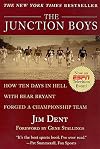
I didn't go to A&M nor did I play football. I did go to the Air Force Academy in the late 1970s. The lessons of The Junction Boys remind me of basic cadet training and the Doolie year. Determination and perseverance to overcome physical and emotional pressures help build uncommon bonds of friendship and character. I enjoyed Dent's writing style, especially the frequent similes: "Bryant stared impatiently at the floor. In a monotone as flat as Lubbock, he said, 'We didn't come out here to show more eat. We came out here to practice football'". show less
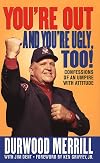
Not a mystery at all. But, if you love baseball like I do, you'll love this journal of this famous umpire's career. It's not a glossed over report of the wonders of baseball. Merrill loves and admires some players, managers and other umpires. And he's definitely on the other side of the mat from a whole series of others and his book gives his own personal poop on all of them. It's a marvelous new perspective on the game.
The Undefeated: The Oklahoma Sooners and the Greatest Winning Streak in College Football by Jim Dent
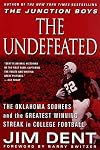
My thoughts on this book have changed from the first time I read it in 2001. The story of the OU football team that went undefeated is a great one. Sadly, this book isn't great. I would love to see someone who can actually write tell this story. The writing is sloppy and chock full of cliches and hyperbole. There are also numerous errors in fact, and those are just the ones that I have noticed. It was sloppily edited, and I'm really not sure if it was even fact checked. I would recommend show more this book for my fellow die-hard Sooner Born and Sooner Bred, but don't expect to be blown away. The writing leaves a lot to be desired! show less
Awards

You May Also Like


Associated Authors
Statistics
- Works
- 11
- Members
- 668
- Popularity
- #37,770
- Rating
- 3.8
- Reviews
- 10
- ISBNs
- 37