
Stanley Donwood
Author of Holloway
About the Author
Works by Stanley Donwood
Amnesiac Radiohead 2 copies
Associated Works
Thomas Hardy: Selected Poems — Illustrator — 1 copy
Tagged
Common Knowledge
- Canonical name
- Donwood, Stanley
- Legal name
- Rickwood, Dan
- Birthdate
- 1968-10-29
- Gender
- male
- Occupations
- artist
- Relationships
- Yorke, Thom (friend and collaborator)
- Nationality
- UK
- Birthplace
- Essex, England, UK
- Associated Place (for map)
- England, UK
Members
Reviews
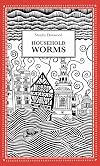
Disturbing, intriguing flash fiction run through with a self depreciating humour. Modern day horrors, snippets of almost poetry, twisting short tales all dark all quite beautiful. It's a book to dip into and savour, to laugh at life’s dark heart and his true yet exaggerated take.
"I am the noise you hear at night. I am the lights, you wish in your heart, we're an identified flying object.
Oh yes. It's me. It's not distant thunder and it's not a further distant atomic explosion.
It's me, in an show more aeroplane, bored nearly out of my mind,
And it's so beautiful up here."
Two of my favourites showcase the expanse. One is a mere three quarters of page, a musing of love versus life’s darkness shot through with dark humour on how silly we can be and then a frisson of oddity, of a disturbing narrator. The second (one of the longest stories) is a tale of having to take an awful job to pay the bills and having your worst fears come true, no pay, bullying, incompetence and murder, yet funny.
Highly recommended for those with a darker humour, a love of language or short sharp, surreal shocks. show less
"I am the noise you hear at night. I am the lights, you wish in your heart, we're an identified flying object.
Oh yes. It's me. It's not distant thunder and it's not a further distant atomic explosion.
It's me, in an show more aeroplane, bored nearly out of my mind,
And it's so beautiful up here."
Two of my favourites showcase the expanse. One is a mere three quarters of page, a musing of love versus life’s darkness shot through with dark humour on how silly we can be and then a frisson of oddity, of a disturbing narrator. The second (one of the longest stories) is a tale of having to take an awful job to pay the bills and having your worst fears come true, no pay, bullying, incompetence and murder, yet funny.
Highly recommended for those with a darker humour, a love of language or short sharp, surreal shocks. show less
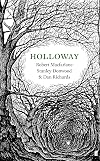
I first came across Robert Macfarlane in a book called Lost Words that he created with Jackie Morris. It was beautiful, both visually and wordly. A children's dictionary was removing some words that were hardly ever used and Macfarlane and Morris were horrified. They were words to do with nature. What happens if you can't look up words that are to do with the natural world? Fern, heather, kingfisher, otter, raven, willow, wren. So Holloway held few surprises for me.
Holloways are sunken paths show more or shady lanes, tracks that have been worn over centuries 'landmarks that speak of habit rather than sudden-ness'. Most holloways begin as ways to markets, the sea or pilgrimages and have tributaries and branches. The description makes me think of Watery Lane near me, a covered over track, now tarmaced, that leads down to the sea with branches off that end in housing but would have once led to a singular dwelling, hostelry or other tracks.
Greenways, droveways, stanways, stoweys, bradways, whiteways, reddaways, radways, rudways, halsways, roundways, trods, footpaths, field-paths, leys, dykes, drongs, sarns, snickets, bostles, shutes, driftways, licjways, sandways, ridings, halter-paths, cartways, carneys, causeways, here-paths-& also fearways, dangerways, coffin-paths, corpseways & ghostways.
p3
Each part of the country probably has their own words for them. I know snickets which my paternal grandparents uses for the pathways around them in Exmouth.
The book is an evocation of two trips by Macfarlane to find a particular holloway in Dorset, once with Roger Deakin and then with Donwoods and Richards. It is a very slim book, but just the right amount of Macfarlane/Richards' writing as I can take. Like a too-rich chocolate cake, his longer books are more than I can take. The writing is poetic, descriptively historic and linguistically rich. I am unsure which parts Macfarlane wrote and which parts Richards wrote or whether the words were created jointly.
Down in the dusk of the holloway, the landscape's pasts felt excitingly alive & coexistent, as if history had pleated back on itself, bringing discontinuous moments into contact & creating correspondences that survived as a territorial imperative to concealment, escape and encounter.
p13
There is no map of this place, you have to explore, read the landscape and be prepared to slither and slide but once in it you are back in time and still present.
Looking out from the lower turf ramparts of Pilsdon Pen we sight a crescent moon of hills - a vein within a leaf spring - arcing to the coast. Somewhere in there lies our quarry; a lane diving into the dark.
An inky eye ammonite.
A hollow, foot-querned way.
p27
A quern is a hand-operated mill to grind grain.
What the book also contains is a testament to male friendship. Out exploring and discovering on foot or bicycle, carrying few things other than blunt knives and alcohol but also books of poetry to read out aloud at night by the fire and an openness to soak up what the landscape is telling you.
The illustrations by Stanley Donwood - now there is a surname - show the closed overness, the hidden and the tunnel-like depths and reminded me of altered books created by Alexi Francis.
I loved it. show less
Holloways are sunken paths show more or shady lanes, tracks that have been worn over centuries 'landmarks that speak of habit rather than sudden-ness'. Most holloways begin as ways to markets, the sea or pilgrimages and have tributaries and branches. The description makes me think of Watery Lane near me, a covered over track, now tarmaced, that leads down to the sea with branches off that end in housing but would have once led to a singular dwelling, hostelry or other tracks.
Greenways, droveways, stanways, stoweys, bradways, whiteways, reddaways, radways, rudways, halsways, roundways, trods, footpaths, field-paths, leys, dykes, drongs, sarns, snickets, bostles, shutes, driftways, licjways, sandways, ridings, halter-paths, cartways, carneys, causeways, here-paths-& also fearways, dangerways, coffin-paths, corpseways & ghostways.
p3
Each part of the country probably has their own words for them. I know snickets which my paternal grandparents uses for the pathways around them in Exmouth.
The book is an evocation of two trips by Macfarlane to find a particular holloway in Dorset, once with Roger Deakin and then with Donwoods and Richards. It is a very slim book, but just the right amount of Macfarlane/Richards' writing as I can take. Like a too-rich chocolate cake, his longer books are more than I can take. The writing is poetic, descriptively historic and linguistically rich. I am unsure which parts Macfarlane wrote and which parts Richards wrote or whether the words were created jointly.
Down in the dusk of the holloway, the landscape's pasts felt excitingly alive & coexistent, as if history had pleated back on itself, bringing discontinuous moments into contact & creating correspondences that survived as a territorial imperative to concealment, escape and encounter.
p13
There is no map of this place, you have to explore, read the landscape and be prepared to slither and slide but once in it you are back in time and still present.
Looking out from the lower turf ramparts of Pilsdon Pen we sight a crescent moon of hills - a vein within a leaf spring - arcing to the coast. Somewhere in there lies our quarry; a lane diving into the dark.
An inky eye ammonite.
A hollow, foot-querned way.
p27
A quern is a hand-operated mill to grind grain.
What the book also contains is a testament to male friendship. Out exploring and discovering on foot or bicycle, carrying few things other than blunt knives and alcohol but also books of poetry to read out aloud at night by the fire and an openness to soak up what the landscape is telling you.
The illustrations by Stanley Donwood - now there is a surname - show the closed overness, the hidden and the tunnel-like depths and reminded me of altered books created by Alexi Francis.
I loved it. show less
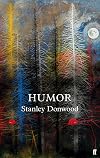
As a fan of 'Slowly Downward', the author's website, I was excited to hear about this publication. These writings are essentially fragments, ranging in size from a single paragraph to around a dozen pages. They are collected under the headings of the four 'humours', the ancient system that categorises human temperament, and separated by some wonderful examples of Stanley Donwood's famous artwork. The stories are the collection of Stanley's dreams and nightmares, and the author's introduction show more eloquently describes the true purpose of the collection. The writing is beautifully descriptive sometimes, very visual with some wonderful phrases ("I stood transfixed...watching an aeroplane scratching the underside of the shredded clouds"). Typical to dreams, there is a disconnection between the pieces, the happenings are disconcerting, some genuinely frightening, mostly just weird. We are shown the strange places the mind can go, but it does feel a little like reading someone's diary. I'm left thinking that this project is more for the author's benefit than the reader's. The experience for me was both unsettling and strangely fascinating. show less
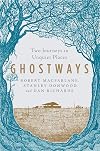
I generally really enjoy Macfarlane's stuff. But the first piece here (originally [b:Ness|44084056|Ness|Robert Macfarlane|https://i.gr-assets.com/images/S/compressed.photo.goodreads.com/books/1564582134l/44084056._SY75_.jpg|68552831]), particularly, I found to be unsatisfyingly vague (or overly "litry"). The second piece (originally [b:Holloway|17847110|Holloway|Robert Macfarlane|https://i.gr-assets.com/images/S/compressed.photo.goodreads.com/books/1368349628l/17847110._SY75_.jpg|24777047]), show more which is woven with memories of his great friend, Roger Deakin, was much richer and enjoyable. show less
Lists
Awards


You May Also Like


Associated Authors
Statistics
- Works
- 13
- Also by
- 11
- Members
- 681
- Popularity
- #37,120
- Rating
- 3.8
- Reviews
- 35
- ISBNs
- 34
- Languages
- 2
- Favorited
- 1