
Cecile Andrews
Author of The Circle of Simplicity: Return to the Good Life
About the Author
Cecile Andrews is a community educator, and author of Slow is Beautiful, Circle of Simplicity and co-author of Less is More. She is active in the Transition Movement in the US. Cecile and her husband divide their time between Santa Cruz CA, where they are members of Walnut Commons Cohousing, and show more Seattle, where they live in Sustainable Phinney Neighborhood. Cecile has her doctorate in education from Stanford University. show less
Works by Cecile Andrews
Less is More: Embracing Simplicity for a Healthy Planet, a Caring Economy and Lasting Happiness (2009) 71 copies, 1 review
Living Room Revolution: A Handbook for Conversation, Community and the Common Good (2013) 10 copies, 1 review
Associated Works
Take Back Your Time: Fighting Overwork and Time Poverty in America (2003) — Contributor — 90 copies, 2 reviews
Tagged
Common Knowledge
- Gender
- female
Members
Reviews
Living Room Revolution: A Handbook for Conversation, Community and the Common Good by Cecile Andrews
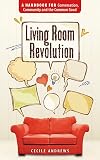
When I saw the description of this book, I was excited. Last spring I started an informal discussion group in my home modeled after the Paris salons of the 19th and 20th centuries, and I thought a book called Living Room Revolution would give some great pointers on how to be successful with my little gatherings. The book is fine, but it isn't what I expected. The practical suggestions for starting conversation groups are geared towards groups with a specific purpose, like study groups or show more social action groups. Since that's not what I'm looking for, it's not really the right book for me.
I thought her suggestions for managing difficult situations were quite good (I may well employ some variation of her ideas for helping people get to know each other at my next salon), and I enjoyed some of the pointers in Chapter 5, particularly "Listen," which I find to be an often overlooked aspect of good conversation. A couple of the suggestions, though, didn't sit right with me. It wasn't clear to me how one could plan and implement her suggestion to "Laugh Freely" in a discussion group. "Keep Things in Perspective" may have been a better suggestion to keep things convivial, or "Don't Take Yourselves too Seriously."
I was excited when I saw the suggestion "Tell Your Own Stories" because I immediately translated it to "speak for yourself and not for or about others who aren't present," which I think can cut down on the chance that conversation will turn into gossip, but that's not what Andrews meant. Her meaning---essentially, share something of your personal experience---was fine, but I think it actually goes without saying that we're supposed to share our experiences when we're in conversation. Something along the lines of "Be Vulnerable" or "Cultivate Non-Judgment" might have been more meaningful for me. Of course, this implies that the book ought to be meaningful to me as an individual when in reality, it will either hit me or it won't. It's not Cecile Andrews's responsibility to live up to my preconceived ideas about her book.
There were two primary things about the book that rankled me, though, that transcend the book being not quite what I expected.
First, Andrews is inconsistent about providing citations for her "study after study" claims about the values or community. For example, early on in the book, she refers to "a recent Gallup poll" and gives percentages from that poll that didn't make sense to me. I wanted to read more about the poll, so I turned to the back of the book to look up the citation...and there was no "Works Cited" section. In the beginning of the book, she writes that she's going to provide enough information that we can Google her references and learn more, but many times she doesn't even provide enough to do that. A list of resources at the back, and possibly even web links or at least a little nudge in the right direction would have improved the book, unless she wants it to be a book about her personal experience leading small groups, in which case, there's no need for references. That would have been a totally reasonable way to go, and it would have shortened the book by quite a lot.
The other sticking point for me, which I might not have noticed as much had I not just finished Susan Cain's Quiet: The Power of Introverts in a World that Can't Stop Talking is that Andrews seems to have a distinctly extroverted bent. At the beginning of chapters 5 and 6, she has an imaginary woman named Joan who sits at home reading but longs for conversation, community, and connection. After thinking about the difficulties of conversation in our day and age, she sighs and resigns herself to a boring, solitary evening of reading. I both enjoy reading and crave real, meaningful conversation, and I don't actually think it's necessary to give up one for the other. I don't sit at home and read because I have no one to talk to. I sit at home and read because I love to read and because by evening, I need to decompress and social interaction is distinctly compressing for me.
She also takes the general results of studies that show that people who belong to groups have lower mortality rates than loners and makes some logical leaps. So far, I've not seen any research to suggest that a particular number of close friends is healthier than any other number, just that people who have close connections are healthier, yet Andrews seems to imply that those of us content to have our family and one or two close friends are risking our lives because we won't talk to five strangers a day or don't want to live in a co-housing community. As far as I know, this isn't supported by the research (although if Andrews provided better citations, I might be able to judge better). I agree that our society could use a little brush-up (or perhaps a big brush-up) on the community side of things, but Andrews paints just one very extroverted picture of what this improvement might look like.
While this book has some good suggestions for building community through conversation, it would have been stronger if Andrews had stuck with her area of expertise and offered suggestions based on her years of experience with small groups rather than spending so many pages arguing for the benefits of community. show less
I thought her suggestions for managing difficult situations were quite good (I may well employ some variation of her ideas for helping people get to know each other at my next salon), and I enjoyed some of the pointers in Chapter 5, particularly "Listen," which I find to be an often overlooked aspect of good conversation. A couple of the suggestions, though, didn't sit right with me. It wasn't clear to me how one could plan and implement her suggestion to "Laugh Freely" in a discussion group. "Keep Things in Perspective" may have been a better suggestion to keep things convivial, or "Don't Take Yourselves too Seriously."
I was excited when I saw the suggestion "Tell Your Own Stories" because I immediately translated it to "speak for yourself and not for or about others who aren't present," which I think can cut down on the chance that conversation will turn into gossip, but that's not what Andrews meant. Her meaning---essentially, share something of your personal experience---was fine, but I think it actually goes without saying that we're supposed to share our experiences when we're in conversation. Something along the lines of "Be Vulnerable" or "Cultivate Non-Judgment" might have been more meaningful for me. Of course, this implies that the book ought to be meaningful to me as an individual when in reality, it will either hit me or it won't. It's not Cecile Andrews's responsibility to live up to my preconceived ideas about her book.
There were two primary things about the book that rankled me, though, that transcend the book being not quite what I expected.
First, Andrews is inconsistent about providing citations for her "study after study" claims about the values or community. For example, early on in the book, she refers to "a recent Gallup poll" and gives percentages from that poll that didn't make sense to me. I wanted to read more about the poll, so I turned to the back of the book to look up the citation...and there was no "Works Cited" section. In the beginning of the book, she writes that she's going to provide enough information that we can Google her references and learn more, but many times she doesn't even provide enough to do that. A list of resources at the back, and possibly even web links or at least a little nudge in the right direction would have improved the book, unless she wants it to be a book about her personal experience leading small groups, in which case, there's no need for references. That would have been a totally reasonable way to go, and it would have shortened the book by quite a lot.
The other sticking point for me, which I might not have noticed as much had I not just finished Susan Cain's Quiet: The Power of Introverts in a World that Can't Stop Talking is that Andrews seems to have a distinctly extroverted bent. At the beginning of chapters 5 and 6, she has an imaginary woman named Joan who sits at home reading but longs for conversation, community, and connection. After thinking about the difficulties of conversation in our day and age, she sighs and resigns herself to a boring, solitary evening of reading. I both enjoy reading and crave real, meaningful conversation, and I don't actually think it's necessary to give up one for the other. I don't sit at home and read because I have no one to talk to. I sit at home and read because I love to read and because by evening, I need to decompress and social interaction is distinctly compressing for me.
She also takes the general results of studies that show that people who belong to groups have lower mortality rates than loners and makes some logical leaps. So far, I've not seen any research to suggest that a particular number of close friends is healthier than any other number, just that people who have close connections are healthier, yet Andrews seems to imply that those of us content to have our family and one or two close friends are risking our lives because we won't talk to five strangers a day or don't want to live in a co-housing community. As far as I know, this isn't supported by the research (although if Andrews provided better citations, I might be able to judge better). I agree that our society could use a little brush-up (or perhaps a big brush-up) on the community side of things, but Andrews paints just one very extroverted picture of what this improvement might look like.
While this book has some good suggestions for building community through conversation, it would have been stronger if Andrews had stuck with her area of expertise and offered suggestions based on her years of experience with small groups rather than spending so many pages arguing for the benefits of community. show less
Finished Slow is Beautiful: New visions of community, leisure, and joie de vivre by Cecile Andrews. In this book Andrews motivates the idea of the "slow life" and discusses some way of slowing down your own life.
The central claim of this book is that the "fast" life does not lead to happiness. The constant chase after more money, more status, and more stuff decreases happiness rather than increases it. Some people find the fast life satisfying, but it is increasingly clear that the universal show more emphasis on the fast life is harmful to individuals and communities.
Andrews supports this claim with an overview of some of the recent research on happiness. This research supports the conclusion that the things that make us happy are the things that we have less time for in our overworked, over scheduled lives. For most people happiness comes from spending time with people they care about, participating in activities where they can achieve a state of flow, and having enough free time to do these things.
Andrews concludes that we need to slow down our lives to make room for the things that make us happy. She gives a number of tips for this, but she also emphasizes the importance of social change to allow more people to choose to slow down their lives. Andrews realizes something that much of the happiness literature misses: in American society today, slowing down your life is a privilege that few can take advantage of. Even those financially able to work part time have a hard time doing so in the career of their choice because many careers do not offer part time opportunities (part time software engineers are few and far between; I have heard stories of lawyers who were asked to leave their practice when they asked for a "part time" 40 hour week). Those who can find part time work that they find interesting usually have to sacrifice health care. Andrews recognizes that slowing down society (or at least giving all of its members the choice to slow down) will more than individual life changes.
Despite all the good things about this book, I can only give it a middling recommendation overall. The parts that were on topic were quite good. However, Andrews would occassionally go off into a political rant that was, as often as not, only tangentially related to the topic at hand. These political rants rarely added to the discussion. Even reading this in April of 2009, the frequent criticisms of George W. Bush seemed dated. Sadly, these digressions were frequent enough to seriously detract from the quality of the book.
This book is a valuable read, but you have to be willing to leave behind the dirt and take home the gems. show less
The central claim of this book is that the "fast" life does not lead to happiness. The constant chase after more money, more status, and more stuff decreases happiness rather than increases it. Some people find the fast life satisfying, but it is increasingly clear that the universal show more emphasis on the fast life is harmful to individuals and communities.
Andrews supports this claim with an overview of some of the recent research on happiness. This research supports the conclusion that the things that make us happy are the things that we have less time for in our overworked, over scheduled lives. For most people happiness comes from spending time with people they care about, participating in activities where they can achieve a state of flow, and having enough free time to do these things.
Andrews concludes that we need to slow down our lives to make room for the things that make us happy. She gives a number of tips for this, but she also emphasizes the importance of social change to allow more people to choose to slow down their lives. Andrews realizes something that much of the happiness literature misses: in American society today, slowing down your life is a privilege that few can take advantage of. Even those financially able to work part time have a hard time doing so in the career of their choice because many careers do not offer part time opportunities (part time software engineers are few and far between; I have heard stories of lawyers who were asked to leave their practice when they asked for a "part time" 40 hour week). Those who can find part time work that they find interesting usually have to sacrifice health care. Andrews recognizes that slowing down society (or at least giving all of its members the choice to slow down) will more than individual life changes.
Despite all the good things about this book, I can only give it a middling recommendation overall. The parts that were on topic were quite good. However, Andrews would occassionally go off into a political rant that was, as often as not, only tangentially related to the topic at hand. These political rants rarely added to the discussion. Even reading this in April of 2009, the frequent criticisms of George W. Bush seemed dated. Sadly, these digressions were frequent enough to seriously detract from the quality of the book.
This book is a valuable read, but you have to be willing to leave behind the dirt and take home the gems. show less
So much ranting. I really wanted to push through it, but I stopped about 20 pages short when she suggested placed the blame for a school shooting on a student prayer groups who were the target.
Slow is, indeed, beautiful. But don't read this book if you want to know why.
Slow is, indeed, beautiful. But don't read this book if you want to know why.
1st ed. Offers advice to those seeking to simplify, slow down, and focus their lives, offering a set of principles by which readers can summon their creativity and regain a connection to their communities.
You May Also Like


Associated Authors
Statistics
- Works
- 5
- Also by
- 1
- Members
- 378
- Popularity
- #63,850
- Rating
- 3.5
- Reviews
- 7
- ISBNs
- 10