
Sharon Astyk
Author of Independence Days: A Guide to Sustainable Food Storage and Preservation
About the Author
Sharon Astyk is a writer, teacher, blogger, and farmer who raises vegetables, poultry and dairy goats with her family in upstate New York. She is a member of the Board of Directors of ASPO-USA and the award-winning author of three previous books including Depletion and Abundance and Independence show more Days. show less
Image credit: Sharon Astyk
Works by Sharon Astyk
Independence Days: A Guide to Sustainable Food Storage and Preservation (2009) 138 copies, 2 reviews
Making Home: Adapting Our Homes and Our Lives to Settle in Place (Mother Earth News Books for Wiser Living) (2012) 59 copies, 4 reviews
Tagged
Common Knowledge
- Birthdate
- 20th Century
- Gender
- female
- Nationality
- USA
- Associated Place (for map)
- USA
Members
Reviews
Making Home: Adapting Our Homes and Our Lives to Settle in Place (Mother Earth News Books for Wiser Living) by Sharon Astyk

This book is just what I needed to nudge me from my indecision and take action. Actually, I was able to make a decision right after reading the review in Permaculture Magazine, while I was still waiting for my ordered copy to arrive.
As I read it, I kept thinking "Yes! Someone else thinks this is important. I'm not crazy." Astyk nicely verbalizes reasons why we should make lifestyle changes, without going into excrutiating detail proving that climate change/economic show more collapse/name-your-favorite-doomsday-scenario is actually going to happen. If the scenario does happen, you are already prepared with the skills and tools you need. If it doesn't happen, Astyk shows how our changes make our lives stress free and happy living closer to our roots.
I've always loved hanging clothes outside, the fresh small when I bring them in. Why not arrange my life so I do that all the time, meanwhile saving on energy costs?
Astyk leads us in strategizing how to deal with probable scenarios. She encourages us to consider shared housing, sharing expenses during economic hard times, sharing the workload of a low-purchased-energy household, adding more skills for household support. But she doesn't suggest this purely for economic reasons, because community and caring for others are necessary values to see us thru hard times. She walks her talk: her home included 2 elderly grandparents and continually has foster children.
She doesn't go into all the details of HOW to have a sufficient lifestyle. She implies her previous book Independence Days does that, but see my review of that (https://www.librarything.com/work/9139791) --I think you'd be better off getting some specific reference books for your area of need (e.g. canning, gardening). In this book, instead of details she does the enormous service of helping us get our brains around all the things we need to do to plan our lives, to choose and then to settle in the place we belong.
2011 review. show less
As I read it, I kept thinking "Yes! Someone else thinks this is important. I'm not crazy." Astyk nicely verbalizes reasons why we should make lifestyle changes, without going into excrutiating detail proving that climate change/economic show more collapse/name-your-favorite-doomsday-scenario is actually going to happen. If the scenario does happen, you are already prepared with the skills and tools you need. If it doesn't happen, Astyk shows how our changes make our lives stress free and happy living closer to our roots.
I've always loved hanging clothes outside, the fresh small when I bring them in. Why not arrange my life so I do that all the time, meanwhile saving on energy costs?
Astyk leads us in strategizing how to deal with probable scenarios. She encourages us to consider shared housing, sharing expenses during economic hard times, sharing the workload of a low-purchased-energy household, adding more skills for household support. But she doesn't suggest this purely for economic reasons, because community and caring for others are necessary values to see us thru hard times. She walks her talk: her home included 2 elderly grandparents and continually has foster children.
She doesn't go into all the details of HOW to have a sufficient lifestyle. She implies her previous book Independence Days does that, but see my review of that (https://www.librarything.com/work/9139791) --I think you'd be better off getting some specific reference books for your area of need (e.g. canning, gardening). In this book, instead of details she does the enormous service of helping us get our brains around all the things we need to do to plan our lives, to choose and then to settle in the place we belong.
2011 review. show less

At first I thought this was going to be another book about how to can, and it turned out not to be, and for that I am glad. Independence Days is a book that, instead of telling you how to can or giving you tons of recipes, outlines why you should preserve food, how you can do it, and gives other tips for emergency preparedness.
Astyk argues that it's not about preparing for the end days or the rapture (unless that's what you're worried about, in which case go for it). Stocking up on food, show more water, emergency supplies and the like is important for all types of occasions: long-term power outages (I still remember that ice storm in NY in '87 that left my family out of power for at least a week), job layoffs, medical emergencies, natural disasters, and the like. Moreover, the self sufficiency can be a morale booster as well as money saver. There's practically no downside (other than the time it takes).
Astyk brings out the bigger picture, which is community awareness and preparedness, and I like that she doesn't confine food storage to an individual's actions. We, ideally, should look out for everyone in our communities. She gives some bigger-picture ideas of what a self-sufficient community would look like: community kitchens for canning, water pumps at the local park, food banks, and co-ops.
I like this book because it really made me think that if I save money for emergencies, why wouldn't I also want to save food (which I can eat, unlike money)? I've already been interested in gardening and preserving the fruits of my labor, and now I'm even more interested in making it happen. Astyk is realistic and understands that we all have to start small and make mistakes, so hopefully this is something that I can continue to learn and build on, and I think others would do well to learn to store food in bulk, preserve fruits, etc. show less
Astyk argues that it's not about preparing for the end days or the rapture (unless that's what you're worried about, in which case go for it). Stocking up on food, show more water, emergency supplies and the like is important for all types of occasions: long-term power outages (I still remember that ice storm in NY in '87 that left my family out of power for at least a week), job layoffs, medical emergencies, natural disasters, and the like. Moreover, the self sufficiency can be a morale booster as well as money saver. There's practically no downside (other than the time it takes).
Astyk brings out the bigger picture, which is community awareness and preparedness, and I like that she doesn't confine food storage to an individual's actions. We, ideally, should look out for everyone in our communities. She gives some bigger-picture ideas of what a self-sufficient community would look like: community kitchens for canning, water pumps at the local park, food banks, and co-ops.
I like this book because it really made me think that if I save money for emergencies, why wouldn't I also want to save food (which I can eat, unlike money)? I've already been interested in gardening and preserving the fruits of my labor, and now I'm even more interested in making it happen. Astyk is realistic and understands that we all have to start small and make mistakes, so hopefully this is something that I can continue to learn and build on, and I think others would do well to learn to store food in bulk, preserve fruits, etc. show less
This is a particularly wise book. Basing her thinking on Wendall Berry is an excellent start; and balancing protest, interior personal change and societal change makes total sense.
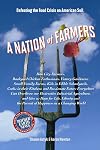
Limited practical information, and the rhetoric became increasingly unconvincing even to me, a die-hard urban gardener. I think it is counterproductive to tell people that gardening will be painless, and certainly unhelpful to tell poor people that their main problem is that they're unable to cook - if only poor people knew what to do with dry beans, then they could just live off the food bank instead of stuffing their ignorant faces with fast food, right? This was insulting enough, but when show more the authors assured me that it was completely possible to feed your family organic, locally-produced foods using your food stamps, I sort of blew my lid. That may be true in some limited places - like the liberal college town where I live, with an easily accessible farmer's market, but totally ludicrous in most poor neighborhoods, which may lack even a basic grocery store. They briefly mention the vegetable stands of Southwestern cities, which are undeniably life savers for people stuck in crappy neighborhoods - say with shoddy bus service and a mini mart for supplies - but are not exactly 'organic' or even 'local'. I bought many a bag of super cheap veggies from stands in California, of unknown origin, because the alternative - taking a city bus to the Whole Foods in a better neighborhood - wasn't an affordable option. If I wanted 'organic' I had to grow it myself.
Urban city gardens are undeniably the answer, both for larger food security issues and for addressing the health problems of America's urban poor. The authors only mentioned urban efforts in passing, choosing to concentrate on suburban gardeners (and those with a 1/3 acre lot), which is fine, but I'm not convinced that this narrow picture in any way represents a "nation of farmers". It certainly does not get at the root of our problems with food. show less
Urban city gardens are undeniably the answer, both for larger food security issues and for addressing the health problems of America's urban poor. The authors only mentioned urban efforts in passing, choosing to concentrate on suburban gardeners (and those with a 1/3 acre lot), which is fine, but I'm not convinced that this narrow picture in any way represents a "nation of farmers". It certainly does not get at the root of our problems with food. show less
Lists
You May Also Like


Associated Authors
Statistics
- Works
- 6
- Members
- 427
- Popularity
- #57,178
- Rating
- 3.9
- Reviews
- 11
- ISBNs
- 9
- Favorited
- 1