
Johnny Cash (1932–2003)
Author of Cash
About the Author
Works by Johnny Cash
Johnny Cash: The Last Interview: and Other Conversations (The Last Interview Series) (2021) — Interview — 13 copies
Hello I'm Johnny Cash 8 copies
Greatest Hits, Volume 1 5 copies
(compilation) 4 copies
Johnny Cash 4 copies
Collection 4 copies
From Sea To Shining Sea 4 copies
The songs of Johnny Cash 4 copies
Johnny Cash - The Anthology 3 copies
Mean As Hell! 3 copies
Johnny Cash at San Quentin 3 copies
Rock Island Line 3 copies
The Rambler 2 copies
Everybody Loves A Nut 2 copies
...johnny cash (disk 385) 2 copies
Living Legend 2 copies
Water From the Wells of Home 2 copies
Johnny Cash the Collection 2 copies
Greatest Hits of Johnny Cash, Vol. 2 2 copies
Johnny Cash: Country Christmas 2 copies
The Johnny Cash Show 2 copies
Now There Was a Song! 2 copies
A Believer Sings The Truth 2 copies
Johnny Cash - 16 Biggest Hits 2 copies
The Holy Land 2 copies
Itchy Feet-20 Foot-Tappin' Greats 2 copies
Original hits [Sony Music] 1 copy
The Legend of Johnny Cash 1 copy
Now here's Johnny Cash [rm] 1 copy
Johnny Cash's America 1 copy
Sound of Johnny Cash 1 copy
Johnny Cash - Chapter & Verse - Bible on DVD & Gospel Music CD - Special Edition (CD/DVD Set) (2008) 1 copy
I walk the line [lp] 1 copy
Water From The Wells Of Home 1 copy
Hello, I'm Johnny Cash [us] 1 copy
The Gospel road 1 copy
Ride this train [rm] 1 copy
Orange blossom special [rm] 1 copy
Golden Country Moments (Johnny Cash, Dolly Parton, Merle Haggard, Lynn Anderson, Nitty Gritty Dirt Band, a.m.m.) (2005) 1 copy
Carryin' on [rm] 1 copy
The Singer And The Song 1 copy
Mean as hell [lp] 1 copy
No title 1 copy
Blue Train 1 copy
Country U.S.A. 1968 1 copy
Platinum & Gold Collection 1 copy
The Sun years [us] 1 copy
Hey Porter 1 copy
Up through the years [de] 1 copy
Any Old Wind That Blows 1 copy
Classic Country Stars — Contributor — 1 copy
I Walk The Line 1 copy
Ride This Train 1 copy
Jonny Cash : An Anthology Of The Man In Black [DVD] — Composer — 1 copy
Greatest Hits Volume III 1 copy
The Original Johnny Cash 1 copy
At Folson Prison 1 copy
Johnny Cash Greates 1 copy
Johnny Cash 1 copy
At Folsom Prison 1 copy
9 Pound Hammer 1 copy
Fabulous 1 copy
At San Quentin 1 copy
Greatest Hits Volume 1 1 copy
The Holy Land 1 copy
Johnny Cash at San Quentin 1 copy
Greatest Hits, Volume One 1 copy
American III. Solitary Man 1 copy
The Ultimate Collection 1 copy
Čovek u belom 1 copy
Johnny Cash; A Boy Named Sue 1 copy
The Collection 1 copy
Strawberry cake 1 copy
Johnny Cash Gold 1 copy
Johnny Cash The Legend 1 copy
Get Rhythm & Life Goes On 1 copy
Biggest Hits [LP] 1 copy
The King 1 copy
Legends and Love Songs 1 copy
"Mama, You Been on My Mind" 1 copy
Now Here'S Johnny 1 copy
...Country & Western - A Ride Through History 1924-60: 1000 Hits & Rarities [40 CD Documents Box Set] (2012) 1 copy
The Greatest Years 1958-1986 1 copy
Great Johnny Cash 1 copy
Same 1 copy
The Greatest: Duets 1 copy
Welcome Friend 1 copy
Legacy 1 copy
Originals 1 copy
The Walls of a Prison 1 copy
Gone girl 1 copy
Johnny Cash opus collection 1 copy
16 Biggest Hits, volume II 1 copy
Happiness Is You 1 copy
A Living Legend 1 copy
Storytellers 1 copy
I've Been Everywhere 1 copy
The Blue Train 1 copy
Cash for Kenya 1 copy
In concert - Johnny Cash 1 copy
Johnny Cash The Originals 1 copy
Johnny Cash Classic Hits 1 copy
Johnny Cash & Willie Nelson 1 copy
The 20 most requested 1 copy
Legends - Johnny Cash 1 copy
A Boy Named Johnny 1 copy
Music the Matters to Him 1 copy
"Redemption Song" 1 copy
"She Used to Love Me a Lot" 1 copy
36 Classic Tracks 1 copy
American. III : Solitary man 1 copy
Live from Austin TX 1 copy
the johnny cash show 1 copy
Greatest Songs Trilogy 1 copy
Jackson 1 copy
Country Music 1 copy
Christmas with Johnny Cash 1 copy
Encore 1 copy
Pickwick/33 PTP-2045 1 copy
Stars of Christmas 1 copy
Big River 1 copy
Christmas Spirit 1 copy
Rainbow 1 copy
Hot Hundred 1 copy
Americans music legends 1 copy
America's country 1 copy
Greatest Hits Vol. 2 1 copy
Mystery of Life 1 copy
Der Mann in Schwarz 1 copy
Starbucks Opus Collection: Commemorating The 80th Anniversary Of The Birth Of Johhny Cash (2012) 1 copy
Destination Victoria Station 1 copy
Hymns From The Heart 1 copy
Legend 1 copy
Today (no photograph) 1 copy
Associated Works
All I Did Was Ask: Conversations with Writers, Actors, Musicians, and Artists (2004) — Contributor — 602 copies, 13 reviews
Dead Man Walking : Music from and inspired by the motion picture {sound recording} (1995) — Contributor; Vocals, Guitar [In Your Mind] — 27 copies
Elvis, Hank, and Me: Making Musical History on the Louisiana Hayride (1998) — Introduction — 8 copies
The Pride of Jesse Hallum [and] Five Minutes to Live (Double Feature Video) — Actor — 6 copies
Uncut Presents: Drifter's Escape (The Music That Inspired Bob Dylan's John Wesley Harding And Nashville Skyline) (February 2008) (2008) — Contributor — 4 copies
The Muppet Show: Season 5 3 copies
Country USA - 1956 — Contributor — 3 copies
My Music Original Masters: Folk Rewind — Contributor — 2 copies
Country USA - 1970 — Performer — 2 copies
Country USA - 1967 — Contributor — 1 copy
Country USA - 1971 — Contributor — 1 copy
Country USA - 1965 — Contributor — 1 copy
Country USA - 1955 — Contributor — 1 copy
Country USA - 1966 — Contributor — 1 copy
Dead Man Walking : Music from the motion picture {3-track promo} {sound recording} (1995) — Contributor — 1 copy
Country USA - 1958 — Contributor — 1 copy
My Darling Vivian [2020 TV movie] — Actor — 1 copy
Country USA - 1959 — Contributor — 1 copy
Country USA - 1964 — Contributor — 1 copy
The Headliners Volume Two 1 copy
Johnny Cash: The Redemption of an American Icon [2022 Film] (2022) — Self (Archive footage) — 1 copy
Tagged
Common Knowledge
- Legal name
- Cash, John R.
- Other names
- Cash, J. R. (birth)
- Birthdate
- 1932-02-26
- Date of death
- 2003-09-12
- Gender
- male
- Occupations
- musician
singer-songwriter
author
actor - Organizations
- US Air Force
- Awards and honors
- National Medal of Arts (2001)
Kennedy Center Honors (1996)
Rock and Roll Hall of Fame (1992)
Country Music Hall of Fame (1980)
Gospel Music Hall of Fame (2010)
Grammy Lifetime Achievement Award (1999) - Relationships
- Cash, Vivian (wife|divorced)
Cash, June Carter (wife)
Cash, Roseanne (daugher)
Cash, John Carter (son)
Cash, Tommy (brother) - Short biography
- John R. "Johnny" Cash was an American singer-songwriter, author and actor, and one of the most influential musicians of the 20th century. His musical talent spanned other different genres including rock and roll and Rockabilly, gospel music, folk, and blues. His crossover earned him the rare honor of induction into the Country Music Hall of Fame, the Rock and Roll Hall of Fame, and the Gospel Music Hall of Fame.
- Cause of death
- complications of diabetes
- Nationality
- USA
- Birthplace
- Kingsland, Arkansas, USA
- Places of residence
- Kingsland, Arkansas, USA
Dyess, Arkansas, USA
Hendersonville, Tennessee, USA
Landsberg am Lech, Germany - Place of death
- Nashville, Tennessee, USA
- Burial location
- Hendersonville Memory Gardens, Hendersonville, Tennessee, USA
- Associated Place (for map)
- USA
Members
Reviews

Blossom offers a profound portrait of adolescence, capturing a young boy’s struggle to rebuild his identity in the wake of illness, loss, and the demands of growing up. The story follows Duncan Pepper, a gifted teenage actor playing Hamlet, whose path is interrupted by an impossible decision.
Blossom’s choice to mirror Duncan’s arc with Shakespeare’s Hamlet is more than structural. Like the prince of Denmark, Duncan grapples with grief, legacy, and the pressure to choose how, and show more whether, to act. His most powerful moment comes not in a staged scene but in a callback improv exercise, where he channels his pain into spontaneous, surreal dialogue. It’s an extraordinary passage, rich with rhythm and symbolism, and it reveals what the book suggests all along: performance, when honest, becomes its own kind of truth.
Alongside Duncan’s inner life, the novel captures the emotional steadiness of his relationships with Beck, a tech-savvy classmate with a sharp tongue and a generous heart; and Gale, the unconventional, bell-bottom-wearing drama teacher who becomes both director and guide. Beck, in particular, is a standout character: funny, grounded, and refreshingly free from cliché. Her friendship with Duncan evolves gradually into something deeper, and their dynamic is rendered with the tenderness of two people still figuring themselves out. Set largely in school hallways, locker rooms, and theater spaces, the novel also tackles the subtle violence of masculinity. Blossom is unsparing in his depiction of how the adolescent male body becomes a battlefield. Duncan’s size, his “delayed” puberty, and his emotional self-possession make him an object of suspicion and ridicule. But instead of collapsing under this pressure, Duncan studies it. He resists not by fighting back, but by refusing to be defined by others’ ideas of what a boy should be.
The writing is understated and clean. Blossom favors clarity over flourish, and his strength lies in the interiority he builds for Duncan. His voice is sharp, often humorous, and occasionally heartbreaking, with dialogue that captures the awkward eloquence of adolescence. Structurally, the book resists melodrama. There are no easy redemptions and no sudden fixes; just a gradual process of Duncan learning to carry himself through the world with more intention, more confidence, and more love. By the final pages, the novel makes its argument quietly but clearly: becoming yourself is not a single moment but a lifelong performance. And sometimes, the hardest act is simply choosing to continue. Lovers of “A Monster Calls" by Patrick Ness and “The Perks of Being a Wallflower" by Stephen Chbosky will find much to admire here. Sensitive, smart, and deeply felt. show less
Blossom’s choice to mirror Duncan’s arc with Shakespeare’s Hamlet is more than structural. Like the prince of Denmark, Duncan grapples with grief, legacy, and the pressure to choose how, and show more whether, to act. His most powerful moment comes not in a staged scene but in a callback improv exercise, where he channels his pain into spontaneous, surreal dialogue. It’s an extraordinary passage, rich with rhythm and symbolism, and it reveals what the book suggests all along: performance, when honest, becomes its own kind of truth.
Alongside Duncan’s inner life, the novel captures the emotional steadiness of his relationships with Beck, a tech-savvy classmate with a sharp tongue and a generous heart; and Gale, the unconventional, bell-bottom-wearing drama teacher who becomes both director and guide. Beck, in particular, is a standout character: funny, grounded, and refreshingly free from cliché. Her friendship with Duncan evolves gradually into something deeper, and their dynamic is rendered with the tenderness of two people still figuring themselves out. Set largely in school hallways, locker rooms, and theater spaces, the novel also tackles the subtle violence of masculinity. Blossom is unsparing in his depiction of how the adolescent male body becomes a battlefield. Duncan’s size, his “delayed” puberty, and his emotional self-possession make him an object of suspicion and ridicule. But instead of collapsing under this pressure, Duncan studies it. He resists not by fighting back, but by refusing to be defined by others’ ideas of what a boy should be.
The writing is understated and clean. Blossom favors clarity over flourish, and his strength lies in the interiority he builds for Duncan. His voice is sharp, often humorous, and occasionally heartbreaking, with dialogue that captures the awkward eloquence of adolescence. Structurally, the book resists melodrama. There are no easy redemptions and no sudden fixes; just a gradual process of Duncan learning to carry himself through the world with more intention, more confidence, and more love. By the final pages, the novel makes its argument quietly but clearly: becoming yourself is not a single moment but a lifelong performance. And sometimes, the hardest act is simply choosing to continue. Lovers of “A Monster Calls" by Patrick Ness and “The Perks of Being a Wallflower" by Stephen Chbosky will find much to admire here. Sensitive, smart, and deeply felt. show less
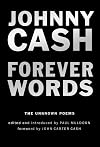
Johnny Cash has always been a ghostly figure on the periphery of my life. I grew up in a Christian home filled largely with the sounds of Christian music. Except when Dad and I would take a trip down to Grandpa's farm; without any big announcement, Dad would tune the radio to the AM country station (KRVN out of Lexington, NE), and for the next hour and a half, we'd listen to Johnny Cash, George Jones, Waylon Jennings, Merle Haggard, etc. So I've always associated country music with "going show more home"; to this day (and much to my wife's puzzlement), I will turn on country music when I drive home to Nebraska.
But you can't grow up in a place like Nebraska and NOT encounter country music. And, if you've had even the tiniest exposure to country music, you know Johnny Cash. Cash and the music he represents has always intrigued me, especially in how it whipsaws from murderer's laments ("Folsom Prison Blues") to warnings about the Second Coming of Christ ("When the Man Comes Around"). Equal parts religious and bawdy, I think that Rodney Clapp was right to use Johnny Cash as the icon of what he called the "Great American Contradiction." Cash's songs have always struck me as authentically "human"--deeply flawed but somehow still hopeful. Cash's cover of Trent Reznor's "Hurt" is mind-blowing to me: Cash's voice is still strong but quavers, and it lifts the song from being a drug addict's lament to being a stunning reflection on human frailty.
I came across this collection of poems and songs, gathered by his son John Carter Cash, in an airport bookstore after a particularly grueling trip. I guess subconsiously, I needed to "get home" in more ways than one. The poems in here, arranged in no apparent particular order, span the entirety of Cash's life. Some were written in the 1940s; others were written in the late 1990s; many are undated.
Each piece often sounds less like a polished poem and more like a "song in progress" (which is probably the reason these pieces were never published), but you can still hear Cash's "voice" in them, that "outlaw cowboy" perspective that is equally rooted in an unshakable faith in God and in the frailty of sinful humanity. There are poems about love, violence, drugs, the Atonement, the biblical character Job (one of my favorites), and the natural beauty of the place called "home." To me, what unites the collection is the sense of longing...for restored relationships, for freedom from addiction, for a return to a lost and beautiful yesterday. There's something about Cash's lyrics that makes me go, "You know, he's right about that..." There's an edge of beauty even when he's confronting the ugliest truths about who we truly are.
For me, the poem that captures the essence of the book and of Cash's art is one from the 1970s (Vietnam-era) entitled, "The Walking Wounded." It opens:
We're in the church-house kneeling down
We're in the subways underground
We're in the bars and on the streets
We drive a truck, we walk a beat
We're in the mills and factories
We make the steel, we cut the trees,
A thousand-yard stare, eyes of glass
We will see you when you pass
We are the walking wounded
We lost our homes, we lost our dreams
All our goals turned into schemes
We hurt each other and ourselves
We went through long, traumatic spells
We cried out from the deepest pit
But rise back up each time we're hit
We fell from power and from grace
But resurrection's in our face
We are the walking wounded
That second-to-last line just slapped me in the face. The near-defiance of a hope that simply will not die...that's why Cash's music lives on. And that's why, even though my young mind couldn't articulate it, I felt so deeply captivated by Cash's rumbling baritone in those long-ago car trips: I was hearing woven into those words the same deep faith carried by the hymns and choruses we played at home...in a different register, yes...in a minor key, true...but there none the less. show less
But you can't grow up in a place like Nebraska and NOT encounter country music. And, if you've had even the tiniest exposure to country music, you know Johnny Cash. Cash and the music he represents has always intrigued me, especially in how it whipsaws from murderer's laments ("Folsom Prison Blues") to warnings about the Second Coming of Christ ("When the Man Comes Around"). Equal parts religious and bawdy, I think that Rodney Clapp was right to use Johnny Cash as the icon of what he called the "Great American Contradiction." Cash's songs have always struck me as authentically "human"--deeply flawed but somehow still hopeful. Cash's cover of Trent Reznor's "Hurt" is mind-blowing to me: Cash's voice is still strong but quavers, and it lifts the song from being a drug addict's lament to being a stunning reflection on human frailty.
I came across this collection of poems and songs, gathered by his son John Carter Cash, in an airport bookstore after a particularly grueling trip. I guess subconsiously, I needed to "get home" in more ways than one. The poems in here, arranged in no apparent particular order, span the entirety of Cash's life. Some were written in the 1940s; others were written in the late 1990s; many are undated.
Each piece often sounds less like a polished poem and more like a "song in progress" (which is probably the reason these pieces were never published), but you can still hear Cash's "voice" in them, that "outlaw cowboy" perspective that is equally rooted in an unshakable faith in God and in the frailty of sinful humanity. There are poems about love, violence, drugs, the Atonement, the biblical character Job (one of my favorites), and the natural beauty of the place called "home." To me, what unites the collection is the sense of longing...for restored relationships, for freedom from addiction, for a return to a lost and beautiful yesterday. There's something about Cash's lyrics that makes me go, "You know, he's right about that..." There's an edge of beauty even when he's confronting the ugliest truths about who we truly are.
For me, the poem that captures the essence of the book and of Cash's art is one from the 1970s (Vietnam-era) entitled, "The Walking Wounded." It opens:
We're in the church-house kneeling down
We're in the subways underground
We're in the bars and on the streets
We drive a truck, we walk a beat
We're in the mills and factories
We make the steel, we cut the trees,
A thousand-yard stare, eyes of glass
We will see you when you pass
We are the walking wounded
We lost our homes, we lost our dreams
All our goals turned into schemes
We hurt each other and ourselves
We went through long, traumatic spells
We cried out from the deepest pit
But rise back up each time we're hit
We fell from power and from grace
But resurrection's in our face
We are the walking wounded
That second-to-last line just slapped me in the face. The near-defiance of a hope that simply will not die...that's why Cash's music lives on. And that's why, even though my young mind couldn't articulate it, I felt so deeply captivated by Cash's rumbling baritone in those long-ago car trips: I was hearing woven into those words the same deep faith carried by the hymns and choruses we played at home...in a different register, yes...in a minor key, true...but there none the less. show less
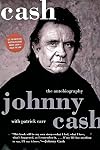
In High Fidelity (2000) John Cusack as Rob Gordon says, "But I have to say my all-time favorite book is Johnny Cash's autobiography Cash by Johnny Cash."
I now can see why this quip bears scrutiny. I have read, literally, hundreds of biographies in my life and this is one of the very best. Cash's personality and depth exude from these pages as if he was telling the reader personally his recollections and thoughts around the table in his tour bus "Unit One" between one stop and another. This show more feels very personal and authentic. Cash brings in history of the South, country music and more in revealing chapters that each read like a topical essay on his Bible spirituality, battles with drug addiction, sense of home and family, love for his wife June Carter Cash and more. show less
I now can see why this quip bears scrutiny. I have read, literally, hundreds of biographies in my life and this is one of the very best. Cash's personality and depth exude from these pages as if he was telling the reader personally his recollections and thoughts around the table in his tour bus "Unit One" between one stop and another. This show more feels very personal and authentic. Cash brings in history of the South, country music and more in revealing chapters that each read like a topical essay on his Bible spirituality, battles with drug addiction, sense of home and family, love for his wife June Carter Cash and more. show less
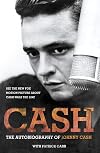
You really hear Johnny Cash's distinctive voice come across in this sincere and conversational memoir. Particularly in the earlier parts of the book, it is quite powerful in its stories, observations and even its prose. The anecdotal, non-chronological structure of the book is very bracing and readable, though it does presume some foreknowledge on the part of the reader of the general arc of Cash's career.
Towards the end, however, the vignette-like structure starts to become disjointed and show more the book runs out of steam. It loses its grave but grateful tone, and the final chapters read like an extended Acknowledgements page. Regardless, it is a rare 'celebrity' memoir that delivers, and while you don't become educated about his complete biography, you do get from the intimate, natural conversation with him a sense of the essence of the Man in Black. show less
Towards the end, however, the vignette-like structure starts to become disjointed and show more the book runs out of steam. It loses its grave but grateful tone, and the final chapters read like an extended Acknowledgements page. Regardless, it is a rare 'celebrity' memoir that delivers, and while you don't become educated about his complete biography, you do get from the intimate, natural conversation with him a sense of the essence of the Man in Black. show less
Lists
Awards


You May Also Like


Associated Authors
Statistics
- Works
- 468
- Also by
- 58
- Members
- 4,863
- Popularity
- #5,166
- Rating
- 3.8
- Reviews
- 69
- ISBNs
- 193
- Languages
- 13
- Favorited
- 2