
Philip Dwyer
Author of Napoleon: The Path to Power
About the Author
Philip Dwyer is an author who wrote Citizen Emperor: Napoleon in Power 1799-1815, whcih made the National Biography Award for biographical writing and memoir 2015 shortlist. (Bowker Author Biography)
Works by Philip Dwyer
The Darker Angels of Our Nature: Refuting the Pinker Theory of History & Violence (2021) 35 copies, 2 reviews
Theatres of Violence: Massacre, Mass Killing and Atrocity Throughout History (International Studies in Social History) (Studies on War and Genocide) (2012) 12 copies
Violence, Colonialism and Empire in the Modern World (Cambridge Imperial and Post-Colonial Studies) (2017) 6 copies
Charles-Maurice de Talleyrand, 1754-1838: A Bibliography (Bibliographies of World Leaders) (1996) 2 copies, 1 review
Associated Works
Tagged
Common Knowledge
- Gender
- male
- Nationality
- United Kingdom
- Birthplace
- Perth, Western Australia, Australia
- Associated Place (for map)
- Perth, Western Australia, Australia
Members
Reviews

Napoleon Bonaparte is one of those leaders, like Churchill and Lincoln, about whom so much ink has already been spilled that it's hard to believe any writer has much usefully to add about him. Philip Dwyer is the rare historian who does, as he demonstrates in this very good biography.
As he swept across Europe like a tide, washing away remnants of the medieval order, Bonaparte became a prototype for many of the worst types of the twentieth century: master of political propaganda, military show more dictator, and centralizing-unifying-standardizing Leader of "the people" and fulfillment of the Revolution. As such, he's been a hero to megalomaniacs everywhere. But Dwyer cuts through all that to show us the vain, brutal, and intensely driven young man at the heart of it all. I found it interesting and useful that for much of the book, Dwyer refers to his subject as "Buonaparte," the Corsican-Italian name he was born with, only adopting the French spelling as he began to rise in prominence and visibility. It's a strong reminder of the importance of Bonaparte's position, during so much of his early life, on the geographic and social margins of French society.
French Revolutionary and Napoleonic history has never really been my thing, preferring as I do other parts of Europe and other eras in time. But not only did I very much enjoy this book on its own merits and learn a great deal from it, but I'm also most pleased to see this is intended to be the first volume in a biographical series. I'm sure the subsequent volume(s) will continue the strong pace set by this first book. show less
As he swept across Europe like a tide, washing away remnants of the medieval order, Bonaparte became a prototype for many of the worst types of the twentieth century: master of political propaganda, military show more dictator, and centralizing-unifying-standardizing Leader of "the people" and fulfillment of the Revolution. As such, he's been a hero to megalomaniacs everywhere. But Dwyer cuts through all that to show us the vain, brutal, and intensely driven young man at the heart of it all. I found it interesting and useful that for much of the book, Dwyer refers to his subject as "Buonaparte," the Corsican-Italian name he was born with, only adopting the French spelling as he began to rise in prominence and visibility. It's a strong reminder of the importance of Bonaparte's position, during so much of his early life, on the geographic and social margins of French society.
French Revolutionary and Napoleonic history has never really been my thing, preferring as I do other parts of Europe and other eras in time. But not only did I very much enjoy this book on its own merits and learn a great deal from it, but I'm also most pleased to see this is intended to be the first volume in a biographical series. I'm sure the subsequent volume(s) will continue the strong pace set by this first book. show less
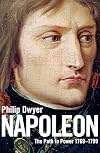
Excellent combination of scholarship and readability. Military history is not overemphasized, and the battle scenes that are presented are generally well supported by maps. (The one exception is the Battle of the Nile; but considering that this was a naval battle of Nelson versus Brueys, the absence of a battle map is consistent with the somewhat cursory treatment that Dwyer legitimately gives to a battle in which Napoleon himself played virtually no part.)
One complaint might be that Dwyer show more gives too summary a treatment to the French Revolution itself, but it's probably fair to expect a reader to have at least a general knowledge of this historical event and Dwyer does give a very good background of Paoli and Corsica, so important to Bonaparte's early life but not that well known among contemporary readers.
I also like the numerous illustrations of artwork that pertain to the Napoleonic myth and Dwyer's excellent tie-in between these illustrations and his text. show less
One complaint might be that Dwyer show more gives too summary a treatment to the French Revolution itself, but it's probably fair to expect a reader to have at least a general knowledge of this historical event and Dwyer does give a very good background of Paoli and Corsica, so important to Bonaparte's early life but not that well known among contemporary readers.
I also like the numerous illustrations of artwork that pertain to the Napoleonic myth and Dwyer's excellent tie-in between these illustrations and his text. show less
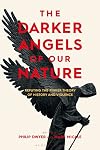
Lots of essays critiquing Steven Pinker’s argument that things are generally getting better in terms of human violence, some more successful than others. (If you count violence against the environment, for example, matters look different, or emotional violence—but I might actually not want to count the latter.) Still, interesting points about how violence varies across cultures; how Pinker way overstates the physical violence of prehistorical and medieval periods; and other relevant show more considerations. For example, comparing homicide rates to those in the medieval era in which there were no antibiotics and no understanding of things like sudden infant death syndrome, for which mothers were often blamed, does not make a lot of sense as a measure of relative rates of violence. show less
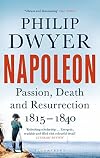
The epilogue of Napoleon’s most momentous life: his final exile and death in St. Helena, and then his surprising afterlife as time and Napoleon’s own efforts made the man once seen as a tyrant and conquered appear more of a liberal man of the people.
Dwyer tells of Napoleon’s exile, death and popular resurrection in a book that seemed shorter than I expected. There’s not actually that much plot here, and the personages are mostly third-tier nonentities compared to the Wellingtons and show more Talleyrands, tears and kings, Josephines and Hortenses with whom Napoleon interacted during his heyday. But Dwyer is an engaging writer who keeps readers engaged with — or perhaps despite — a very tight focus. I might have appreciated a deeper discussion of Napoleon’s memoirs and how they rewrote the public story of Napoleon’s life, but we largely don’t get details.
Still, this is an essential final chapter to understand the life of the most consequential man of his age. show less
Dwyer tells of Napoleon’s exile, death and popular resurrection in a book that seemed shorter than I expected. There’s not actually that much plot here, and the personages are mostly third-tier nonentities compared to the Wellingtons and show more Talleyrands, tears and kings, Josephines and Hortenses with whom Napoleon interacted during his heyday. But Dwyer is an engaging writer who keeps readers engaged with — or perhaps despite — a very tight focus. I might have appreciated a deeper discussion of Napoleon’s memoirs and how they rewrote the public story of Napoleon’s life, but we largely don’t get details.
Still, this is an essential final chapter to understand the life of the most consequential man of his age. show less
Lists
THE WAR ROOM (1)
Awards


You May Also Like


Associated Authors
Statistics
- Works
- 17
- Also by
- 1
- Members
- 569
- Popularity
- #43,980
- Rating
- 3.9
- Reviews
- 12
- ISBNs
- 72
- Languages
- 1
