
Katherine Eban
Author of Bottle of Lies: The Inside Story of the Generic Drug Boom
About the Author
Katherine Eban, an investigative journalist, is a Fortune contributor and an Andrew Carnegie Fellow. She has also written for Vanity Fair, the New York Times, Self, The Nation, the New York Observer, and other publications. She is the author of Dangerous Doses: A True Story of Cops, Counterfeiters, show more and the Contamination of America's Drug Supply, and lectures frequently on the topic of pharmaceutical integrity. Educated at Brown University and the University of Oxford, where she was a Rhodes Scholar, she lives in Brooklyn with her husband and two daughters. show less
Image credit: Katherine Eban
Works by Katherine Eban
Dangerous Doses: How Counterfeiters Are Contaminating America's Drug Supply (2005) 58 copies, 2 reviews
Tagged
Common Knowledge
- Birthdate
- c. 1966
- Gender
- female
- Education
- Brown University
University of East Anglia
University of Oxford (MPhil) - Occupations
- journalist
- Nationality
- USA
- Places of residence
- Brooklyn, New York, USA
- Associated Place (for map)
- New York, USA
Members
Reviews
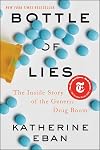
Everyone knows the lack of ethics in India. Corruption pervades the public and private sectors, and even the most conscientious of citizens can barely escape this now-routine fact of our lives.
I had always assumed that certain sectors might still be sacrosanct because of their very nature of their existence. Right now though, after reading this book, I'm terribly depressed and worried and have lost almost all hopes about reform in this country.
Bottle of Lies is an exposé by US investigative show more journalist Katherine Eban about the generic drug industry, its boom and its flaws. Ranbaxy is its primary target, viewed through the eyes of Dinesh Thakur, the whistle-blower who made public the deep-rooted unethical corruption within the company.
Though the book primarily focuses on Ranbaxy, the list of companies Eban has named with actual instances of malpractices contains the who's who of the Indian Pharmaceutical sector: Dr. Reddys, Zydus Pharma, GSK Pharma, Wockhardt, Glaxo Smithkline, Cipla. Glenmark, Aurobindo, Sun Pharma... The names and the malpractices perpetrated leave you astounded.
Eban's narrative is fast-paced and leaves you breathless. You feel like you're reading a scary dystopian thriller instead of some boring documentation of a whistle-blower's experience. All tactics used by the Indian cheats are mentioned: repairing instead of replacing faulty equipment, falsification of data, shifting employees temporarily to a department to show the adherence to minimum required staff numbers, lack of testing as per norms, circumventing the truth constantly by using loopholes, lack of documentation, making different versions of the same drug for different markets,... Things that you wouldn't ever expect of reputed multinational companies! She even mentions "Jugaad" and "Chalta Hai" as two inherent problems in Indian corporate mentality because of which companies work around a problem rather than working on it. (A small part of me was even waiting for "Jhol" to make an appearance, but I was disappointed by its being missed out!)
Obviously, Eban also focuses on FDA and the struggles it faces wrt lack of understanding of medical jargon, low number of agents willing to travel abroad for checks and their need to balance US Congress requirements of cheap medical availability with medicinal integrity. The first half is almost panegyric of FDA. But the second half of the book reveals even their problems of corruption and bureaucracy. (That was a teeny saving grace: to know that even American institutions struggle with bureaucratic pressures and delays.)
If I have to nitpick, I can say that the book does have a lot of white supremacy, especially in the first half. American FDA investigators are portrayed in the veil of ethical cowboys out to (metaphorically) kill the bad generic pharma guys. The Indian culprits are openly criticised. But the Britisher Brian Tempest, who was the Ranbaxy CEO during the debacle, is only mentioned by name and without any character flaws detailed. Additionally, there are too many physical descriptions of the Americans, right down to the colour of their eyes, which to me was unnecessary and distracting.
A slightly bigger irritant for me was the complete lack of acknowledgement of the problems that even Indian citizens face with these cheap drugs dumped here. About 90% of the book is totally about the US citizens and their rights, with one chapter focusing on Africa. Still, I suppose this is partly understandable as both Eban and the FDA are American and their loyalties would obviously lie there.
These, however, are just trivial issues coming from the heart of a disgruntled and shamefaced Indian. The above flaws don't take away anything from this masterful eye-opener.
A caveat though: Read the book at your own risk. You'll never look at medicines the same way again. The book will create depression and enhance pessimism.
Rating : 4.75/5
*********************************************
Join me on the Facebook group, "Readers Forever!", for more reviews and other book-related discussions and fun. show less
I had always assumed that certain sectors might still be sacrosanct because of their very nature of their existence. Right now though, after reading this book, I'm terribly depressed and worried and have lost almost all hopes about reform in this country.
Bottle of Lies is an exposé by US investigative show more journalist Katherine Eban about the generic drug industry, its boom and its flaws. Ranbaxy is its primary target, viewed through the eyes of Dinesh Thakur, the whistle-blower who made public the deep-rooted unethical corruption within the company.
Though the book primarily focuses on Ranbaxy, the list of companies Eban has named with actual instances of malpractices contains the who's who of the Indian Pharmaceutical sector: Dr. Reddys, Zydus Pharma, GSK Pharma, Wockhardt, Glaxo Smithkline, Cipla. Glenmark, Aurobindo, Sun Pharma... The names and the malpractices perpetrated leave you astounded.
Eban's narrative is fast-paced and leaves you breathless. You feel like you're reading a scary dystopian thriller instead of some boring documentation of a whistle-blower's experience. All tactics used by the Indian cheats are mentioned: repairing instead of replacing faulty equipment, falsification of data, shifting employees temporarily to a department to show the adherence to minimum required staff numbers, lack of testing as per norms, circumventing the truth constantly by using loopholes, lack of documentation, making different versions of the same drug for different markets,... Things that you wouldn't ever expect of reputed multinational companies! She even mentions "Jugaad" and "Chalta Hai" as two inherent problems in Indian corporate mentality because of which companies work around a problem rather than working on it. (A small part of me was even waiting for "Jhol" to make an appearance, but I was disappointed by its being missed out!)
Obviously, Eban also focuses on FDA and the struggles it faces wrt lack of understanding of medical jargon, low number of agents willing to travel abroad for checks and their need to balance US Congress requirements of cheap medical availability with medicinal integrity. The first half is almost panegyric of FDA. But the second half of the book reveals even their problems of corruption and bureaucracy. (That was a teeny saving grace: to know that even American institutions struggle with bureaucratic pressures and delays.)
If I have to nitpick, I can say that the book does have a lot of white supremacy, especially in the first half. American FDA investigators are portrayed in the veil of ethical cowboys out to (metaphorically) kill the bad generic pharma guys. The Indian culprits are openly criticised. But the Britisher Brian Tempest, who was the Ranbaxy CEO during the debacle, is only mentioned by name and without any character flaws detailed. Additionally, there are too many physical descriptions of the Americans, right down to the colour of their eyes, which to me was unnecessary and distracting.
A slightly bigger irritant for me was the complete lack of acknowledgement of the problems that even Indian citizens face with these cheap drugs dumped here. About 90% of the book is totally about the US citizens and their rights, with one chapter focusing on Africa. Still, I suppose this is partly understandable as both Eban and the FDA are American and their loyalties would obviously lie there.
These, however, are just trivial issues coming from the heart of a disgruntled and shamefaced Indian. The above flaws don't take away anything from this masterful eye-opener.
A caveat though: Read the book at your own risk. You'll never look at medicines the same way again. The book will create depression and enhance pessimism.
Rating : 4.75/5
*********************************************
Join me on the Facebook group, "Readers Forever!", for more reviews and other book-related discussions and fun. show less
This book actually scared me.
One little overlooked consequence of globalization and the generics boom is the move to overseas production of pharmaceuticals--in particular, India (though China is also a problem, but getting information is difficult). The FDA has historically been regarded as one of the strongest, if not the strongest, pharma regulators in the world, and manufacturers take it seriously. In the US, they have the power to conduct inspections without notice and with full access. show more For overseas facilities, they don't: notice is given. Pharma companies in the US, Canada, and Western Europe take safety and quality seriously. A growing number of our generics are manufactured outside the US and Western Europe, including injectable medications that are incredibly sensitive to contamination, and an even larger supply of raw ingredients comes from overseas.
Indian pharmaceutical manufacturers jumped on the opportunity to reverse engineer popular drugs and sell them in the US. Problem was, some of them faked their safety data and hid it from the FDA. Eventually, a whistleblower spilled the beans.
Eban traces the story of the generics boom, the laws and regulations that govern it, and in particular the story of Ranbaxy, which faked its data and went to great lengths to cover it up. The consequences were not just confined to the US, but to other countries. Ranbaxy had a hierarchy of liability: the US and Canada first, Africa last. When a scientist expressed concern over the quality of AIDS drugs Ranbaxy was supplying for the PEPFAR initiative, a top executive replied, "Who cares? It's just blacks dying."
I looked askance at my bottles of generic medicine after finishing. show less
One little overlooked consequence of globalization and the generics boom is the move to overseas production of pharmaceuticals--in particular, India (though China is also a problem, but getting information is difficult). The FDA has historically been regarded as one of the strongest, if not the strongest, pharma regulators in the world, and manufacturers take it seriously. In the US, they have the power to conduct inspections without notice and with full access. show more For overseas facilities, they don't: notice is given. Pharma companies in the US, Canada, and Western Europe take safety and quality seriously. A growing number of our generics are manufactured outside the US and Western Europe, including injectable medications that are incredibly sensitive to contamination, and an even larger supply of raw ingredients comes from overseas.
Indian pharmaceutical manufacturers jumped on the opportunity to reverse engineer popular drugs and sell them in the US. Problem was, some of them faked their safety data and hid it from the FDA. Eventually, a whistleblower spilled the beans.
Eban traces the story of the generics boom, the laws and regulations that govern it, and in particular the story of Ranbaxy, which faked its data and went to great lengths to cover it up. The consequences were not just confined to the US, but to other countries. Ranbaxy had a hierarchy of liability: the US and Canada first, Africa last. When a scientist expressed concern over the quality of AIDS drugs Ranbaxy was supplying for the PEPFAR initiative, a top executive replied, "Who cares? It's just blacks dying."
I looked askance at my bottles of generic medicine after finishing. show less
5 stars
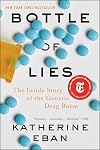
Bottle of Lies is the story of the generic drug boom of the early 2000s, specifically that caused by the increasing availability of cheap generic drugs from India and China. It follows the history of one specific Indian drug company, Ranbaxy, and the attempts by a whistleblower, certain contingents of the FDA, and FDA inspectors to bring attention to its widespread issues. In doing so, it exposes the consequences of globalization on the generic pharmaceutical industry as a whole.
This show more book was genuinely frightening. Eban's writing style is very engaging; it doesn't read like nonfiction. In fact, I spent most of the book wishing it was as I looked suspiciously at the pill bottle full of generic medication next to me. I would say it is one of the best pieces of investigative journalism I've ever read. show less
Bottle of Lies is the story of the generic drug boom of the early 2000s, specifically that caused by the increasing availability of cheap generic drugs from India and China. It follows the history of one specific Indian drug company, Ranbaxy, and the attempts by a whistleblower, certain contingents of the FDA, and FDA inspectors to bring attention to its widespread issues. In doing so, it exposes the consequences of globalization on the generic pharmaceutical industry as a whole.
This show more book was genuinely frightening. Eban's writing style is very engaging; it doesn't read like nonfiction. In fact, I spent most of the book wishing it was as I looked suspiciously at the pill bottle full of generic medication next to me. I would say it is one of the best pieces of investigative journalism I've ever read. show less
Another edition of this book has the subtitle "The Dark Side of Indian Pharma", which is much more accurate.
I can't really recommend this book. Eban essentially tells the story of a pervasive culture of dishonesty and malpractice at Ranbaxy, one Indian generic drug manufacturer, with some discussion of the regulators' laxity in inspections and enforcement that permitted the culture to thrive. The narrative surrounding the company and the FDA is well-written, but the rest of the book needs show more additional supporting facts and explanations.
First, the precise process of generic drug formulation isn't explained very well - why do generic manufacturers have to create their own production processes? Which ones must they create? Why aren't they doing some sort of corporate espionage and stealing more practices from the original manufacturers? How much of this is US/Europe specific? How do these things vary with newer drugs compared to those that have been out of patent for years?
Second, after discussing the problems at Ranbaxy in a lot of depth, the book takes a much more scattered approach to problems at other generic manufacturers. We get quotes from various doctors stating that some generics have problems, but it's not clear if we're meant to conclude that all drugs coming from India and China have problems, all drugs from certain manufacturers, or just that generic drug manufacturing is a horrible mess and we should pay for brand-name everything.
Third, the book implies very strongly that name-brand drugs don't have these problems, but never really discusses whether that's actually the case, or why there would be a difference. Some of the generic companies discussed in the book are owned by Novartis and Pfizer, and some of them are manufacturing terrible generics in the US - what's different about brand-name manufacturing? There's some discussion about good manufacturing practices, etc., which we're told that brand-name manufacturers follow, but apparently Mylan followed this until they didn't anymore. I assume some of this is due to cost, but is it really? How much is the difference in cost?
After reading this book, all I can conclude is that drug manufacturing isn't done very well. Which, really, doesn't surprise me that much. show less
I can't really recommend this book. Eban essentially tells the story of a pervasive culture of dishonesty and malpractice at Ranbaxy, one Indian generic drug manufacturer, with some discussion of the regulators' laxity in inspections and enforcement that permitted the culture to thrive. The narrative surrounding the company and the FDA is well-written, but the rest of the book needs show more additional supporting facts and explanations.
First, the precise process of generic drug formulation isn't explained very well - why do generic manufacturers have to create their own production processes? Which ones must they create? Why aren't they doing some sort of corporate espionage and stealing more practices from the original manufacturers? How much of this is US/Europe specific? How do these things vary with newer drugs compared to those that have been out of patent for years?
Second, after discussing the problems at Ranbaxy in a lot of depth, the book takes a much more scattered approach to problems at other generic manufacturers. We get quotes from various doctors stating that some generics have problems, but it's not clear if we're meant to conclude that all drugs coming from India and China have problems, all drugs from certain manufacturers, or just that generic drug manufacturing is a horrible mess and we should pay for brand-name everything.
Third, the book implies very strongly that name-brand drugs don't have these problems, but never really discusses whether that's actually the case, or why there would be a difference. Some of the generic companies discussed in the book are owned by Novartis and Pfizer, and some of them are manufacturing terrible generics in the US - what's different about brand-name manufacturing? There's some discussion about good manufacturing practices, etc., which we're told that brand-name manufacturers follow, but apparently Mylan followed this until they didn't anymore. I assume some of this is due to cost, but is it really? How much is the difference in cost?
After reading this book, all I can conclude is that drug manufacturing isn't done very well. Which, really, doesn't surprise me that much. show less
Lists
Awards


You May Also Like


Statistics
- Works
- 2
- Members
- 351
- Popularity
- #68,158
- Rating
- 4.1
- Reviews
- 16
- ISBNs
- 15