
Eugenia Price (1916–1996)
Author of Savannah
About the Author
Eugenia Price, 1916 - 1996 Eugenia Price, born on June 22, 1916, was an American author best known for her historical novels which were set in the American South. Early in Price's writing career, she was a well-known author of many Christian books. While on St. Simons Island, she wandered through show more Christ Church cemetery where she found the graves of Anson Dodge, his wives Ellen and Anna, and his child. She wanted to take her writing in a different direction and the graves inspired her to write biographies about average people who only impacted those around them. The result was "Beloved Invader," the post Civil War story of the Reverend Anson Dodge. This first book about St. Simons Island, where she spent time in a cottage researching the Island families, created a new genre. She followed with "Lighthouse" and "New Moon Rising," which went back in time from the Civil War. Price used everything that she wrote, such as articles she wrote for Coastal Illustrated, which were collected and published as "At Home on St. Simons," and the diary she kept while working on a novel became "Diary of a Novel." She also wrote the Savannah quartet, with the final novel titled "Stranger in Savannah." It's a love story that takes place during the time that the country was heading towards the Civil War. Her last book, which was finished a few weeks before her death, was "The Waiting Time." On May 28, 1996, Eugenia Price died of congestive heart failure and was laid to rest in the Christ Church Cemetery. (Bowker Author Biography) show less
Series
Works by Eugenia Price
The Burden Is Light: The Autobiography of a Transformed Pagan Who Took God at His Word (1973) 279 copies, 1 review
St. Simons memoir: The personal story of finding the island and writing the St. Simons trilogy of novels (1978) 86 copies, 1 review
The Eugenia Price Trilogy: The Burden Is Light!, Discoveries, Early Will I Seek Thee (2003) 60 copies, 1 review
Complete GEORGIA TRILOGY - Bright Captivity / Where Shadows Go / Beauty from Ashes (Georgia Trilogy) (1995) 4 copies
Savannah Quartet: Savannah, To See Your Face Again, Before the Darkness Falls, Stranger in Savannah 2 copies
G.T.#1, Bright Captivity 1 copy
Bright Cativity 1 copy
G.T.#2, Where Shadows Go 1 copy
2 Eugenia Price Books! 4 Stories! 1) The Waiting Time 2) ~ The Burden is Light ~Discoveries ~ Early Will I Seek Thee (1998) 1 copy
Created for Purpose 1 copy
Leading Ladies 1 copy
See Your Face Again 1 copy
Der weite Raüm 1 copy
Where God Offers Freedom 1 copy
Beloved World 1 copy
Associated Works
Tagged
Common Knowledge
- Canonical name
- Price, Eugenia
- Other names
- 尤珍妮.柏拉絲
- Birthdate
- 1916-06-22
- Date of death
- 1996-05-28
- Gender
- female
- Education
- Ohio University
Northwestern Dental School
University of Chicago - Occupations
- scriptwriter
novelist
non-fiction author - Relationships
- Blackburn, Joyce (friend)
- Cause of death
- congestive heart failure
- Nationality
- USA
- Birthplace
- Charleston, West Virginia, USA
- Places of residence
- Charleston, West Virginia, USA
Chicago, Illinois, USA
St. Simons Island, Georgia, USA - Place of death
- Brunswick, Georgia, USA
- Burial location
- Christ Church Frederica, St. Simons Island, Georgia, USA
- Map Location
- West Virginia, USA
Members
Reviews
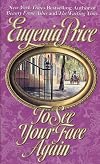
Having read the first novel in the quartet ("Savannah"), I couldn't wait to read the next one, but found myself with mixed feelings from the start. While the whole story of the Pulaski shipwreck - taken from actual events, as are many situations in Ms. Price's novels - was well written, as it didn't go heavy on melodrama and at the same time made you feel you were really there (I could swear I know what it's like to be floating in the middle of the ocean, sunburnt and thirsty, surrounded by show more wreckage and corpses), the rest of the novel was less than stellar, due to the self centered, spoiled leading lady, Natalie Browning, daughter of Mark Browning, leading man in the previous book.
I believe Ms. Price was trying to create a character to rival Scarlett O'Hara, but she didn't quite make it. Scarlett may have been willful, headstrong and self-centered, but she never came across as a childish brat, the way Natalie did. (Not to mention that Natalie's favorite expression of scorn, "Foot!", hardly compares to "Fiddle Dee Dee!") While both young women went through tragedy, Scarlett's experiences made her grow up fast, whereas Natalie just became more of a willful child.
Scarlett had to cope with her whole way of life being destroyed along with Atlanta, and had to start over with strength and determination. Her great weakness was her obsession with the wrong man.
Natalie, on the other hand, obsesses over the right one, and expects everyone else in her life to act as if nothing else mattered besides her love story with Burke Latimer. Given that they met under highly unusual circumstances (a shipwreck being far from the average social gathering) all her family wanted her to do was give things a little time, to be sure what she felt wasn't some sort of knight-in-shining-armor syndrome, especially since she was still a teenager. Princess Natalie acts as if they committed high treason! How dare they try to prevent her from marrying her true love right away! Too often, her parents chose to dance to whatever tune she played, because she considered it a betrayal if they didn't, and this was a very disappointing part of the novel, since in the first book, they were strong, independent characters, particularly Mark Browning, who - much to my chagrin - was now more a pathetic shadow of a man, who allowed himself to be dominated by his brat of a daughter.
Ditto everyone else, except the man of her dreams. Burke's the only one with a backbone that he won't let Natalie break. (One of the results of this is Natalie burning his house down, and him walking out of her life for quite some time. The fact that he comes back emphasizes this being a work of fiction. And even so, Rhett Butler walked away with an "I don't give a damn", too bad Mr. Latimer didn't follow suit.)
A very disappointing read after "Savannah", one that prevented me from reading the next two novels. I have a feeling I didn't miss much, especially if Natalie was still around. Many a time wished she had drowned at sea. show less
I believe Ms. Price was trying to create a character to rival Scarlett O'Hara, but she didn't quite make it. Scarlett may have been willful, headstrong and self-centered, but she never came across as a childish brat, the way Natalie did. (Not to mention that Natalie's favorite expression of scorn, "Foot!", hardly compares to "Fiddle Dee Dee!") While both young women went through tragedy, Scarlett's experiences made her grow up fast, whereas Natalie just became more of a willful child.
Scarlett had to cope with her whole way of life being destroyed along with Atlanta, and had to start over with strength and determination. Her great weakness was her obsession with the wrong man.
Natalie, on the other hand, obsesses over the right one, and expects everyone else in her life to act as if nothing else mattered besides her love story with Burke Latimer. Given that they met under highly unusual circumstances (a shipwreck being far from the average social gathering) all her family wanted her to do was give things a little time, to be sure what she felt wasn't some sort of knight-in-shining-armor syndrome, especially since she was still a teenager. Princess Natalie acts as if they committed high treason! How dare they try to prevent her from marrying her true love right away! Too often, her parents chose to dance to whatever tune she played, because she considered it a betrayal if they didn't, and this was a very disappointing part of the novel, since in the first book, they were strong, independent characters, particularly Mark Browning, who - much to my chagrin - was now more a pathetic shadow of a man, who allowed himself to be dominated by his brat of a daughter.
Ditto everyone else, except the man of her dreams. Burke's the only one with a backbone that he won't let Natalie break. (One of the results of this is Natalie burning his house down, and him walking out of her life for quite some time. The fact that he comes back emphasizes this being a work of fiction. And even so, Rhett Butler walked away with an "I don't give a damn", too bad Mr. Latimer didn't follow suit.)
A very disappointing read after "Savannah", one that prevented me from reading the next two novels. I have a feeling I didn't miss much, especially if Natalie was still around. Many a time wished she had drowned at sea. show less

I’ve just returned from another time (1812-1825) and place (Savannah, Georgia). This trip was taken without pen and paper at hand; it is rare for me to read without taking notes all along the way. But this trip was for the pleasure of the journey itself. I’ve wandered the squares of Savannah, walked along the river paths on plantations, worked on the wharf, and alongside my mistress in the kitchens. This book is brimming with an atmosphere of place and time.
The story centers on the show more fictional character of Mark Browning, a young man recently orphaned, who moves to Savannah. It weaves his story into the lives of real persons, famous in their time. Ms. Price’s research and love of the area shine through her finished work. It was a lovely, lovely beach read. show less
The story centers on the show more fictional character of Mark Browning, a young man recently orphaned, who moves to Savannah. It weaves his story into the lives of real persons, famous in their time. Ms. Price’s research and love of the area shine through her finished work. It was a lovely, lovely beach read. show less

Where I got the book: review copy provided by publisher. My feature article on the Savannah Quartet appears on the Historical Novel Society website.
This second novel of the Savannah Quartet begins with a disaster, so heavily foreshadowed pretty much from the beginning that I don’t feel I’m being spoilerish telling you about it. The melodrama quotient climbs to stratospheric levels as Natalie Browning struggles to survive and falls in love at the same time. Much of the rest of the novel show more is about Natalie pursuing the object of her somewhat obsessive love into the Georgia backcountry, giving Price a great reason to explore the settlement of inland Georgia and the history of some of its real-life inhabitants, not to mention the plight of the Cherokees who were being driven out of Georgia onto the Trail of Tears at the time.
I spent much of the book wanting to smack Natalie, who never, at any point in this series, seems to behave like a proper adult, but I still enjoyed it. There was tons of drama, and Price never missed an opportunity to exploit all the opportunities her overblown plot gave her. This is one of those books where you roll your eyes a lot but you still keep reading, and become fond of the characters despite their failings. show less
This second novel of the Savannah Quartet begins with a disaster, so heavily foreshadowed pretty much from the beginning that I don’t feel I’m being spoilerish telling you about it. The melodrama quotient climbs to stratospheric levels as Natalie Browning struggles to survive and falls in love at the same time. Much of the rest of the novel show more is about Natalie pursuing the object of her somewhat obsessive love into the Georgia backcountry, giving Price a great reason to explore the settlement of inland Georgia and the history of some of its real-life inhabitants, not to mention the plight of the Cherokees who were being driven out of Georgia onto the Trail of Tears at the time.
I spent much of the book wanting to smack Natalie, who never, at any point in this series, seems to behave like a proper adult, but I still enjoyed it. There was tons of drama, and Price never missed an opportunity to exploit all the opportunities her overblown plot gave her. This is one of those books where you roll your eyes a lot but you still keep reading, and become fond of the characters despite their failings. show less

Where I got the book: review copy provided by the publisher. My review feature on the Savannah Quartet appeared on the Historical Novel Society’s website.
This is the fourth and last book of the Savannah Quartet, and the lives of the Browning, Mackay and Stiles families are now set firmly against the background of the country’s slide into civil war. As with all the other books there is a romance plot, but this time it is a real-life tale of love and heartbreak and is my favorite of all show more the romance plots in this series because it covers a situation so often encountered by Victorian women—with so many women dying in childbirth, there were a lot of widowers around looking for new brides and it wasn’t all that uncommon for a young woman to be wed to an older, wealthy man who had already worn out a wife or two.
Price doesn’t sugar-coat the situation, and nor does she soft-pedal the treatment accorded to Mark Browning as he becomes increasingly isolated from his former Savannah friends. Mark has the choice of giving up his Northern views on slavery or becoming a social outcast, and his whole family is involved in the political conflict so he doesn’t get much respite at home either.
The only trouble with Mark is that Price refuses to portray him as anything but good. Left with no option to do anything but follow the dictates of his Great Nobel Heart, Mark seems, in Stranger in Savannah, to melt into a puddle of weakness. He becomes physically weak, too, despite having been a vigorous man throughout the series. So I wanted to smack him. And still wanted to smack Natalie. And could still never summon up much sympathy for Mary. And still kept reading till the end, and was sorry that the series had ended. I can see why it has so many fans. show less
This is the fourth and last book of the Savannah Quartet, and the lives of the Browning, Mackay and Stiles families are now set firmly against the background of the country’s slide into civil war. As with all the other books there is a romance plot, but this time it is a real-life tale of love and heartbreak and is my favorite of all show more the romance plots in this series because it covers a situation so often encountered by Victorian women—with so many women dying in childbirth, there were a lot of widowers around looking for new brides and it wasn’t all that uncommon for a young woman to be wed to an older, wealthy man who had already worn out a wife or two.
Price doesn’t sugar-coat the situation, and nor does she soft-pedal the treatment accorded to Mark Browning as he becomes increasingly isolated from his former Savannah friends. Mark has the choice of giving up his Northern views on slavery or becoming a social outcast, and his whole family is involved in the political conflict so he doesn’t get much respite at home either.
The only trouble with Mark is that Price refuses to portray him as anything but good. Left with no option to do anything but follow the dictates of his Great Nobel Heart, Mark seems, in Stranger in Savannah, to melt into a puddle of weakness. He becomes physically weak, too, despite having been a vigorous man throughout the series. So I wanted to smack him. And still wanted to smack Natalie. And could still never summon up much sympathy for Mary. And still kept reading till the end, and was sorry that the series had ended. I can see why it has so many fans. show less
Lists
Awards


You May Also Like


Associated Authors
Statistics
- Works
- 77
- Also by
- 4
- Members
- 7,523
- Popularity
- #3,251
- Rating
- 3.7
- Reviews
- 67
- ISBNs
- 424
- Languages
- 5
- Favorited
- 9