
Desmond Bagley (1923–1983)
Author of Running Blind
About the Author
Image credit: Desmond Bagley, 1966.
Series
Works by Desmond Bagley
Reader's Digest Auswahlbücher 175 : Atemlos. Das Lied der Delphine. Kommando Sankt Anselm. Frau in der Wildnis. (1991) 6 copies
Devastation 1 copy
Superspannung. Drei ungekürzte Thriller: Der goldene Kiel / Feuersturm im Pazifik / Londen Match (1994) 1 copy
Desmond Bagley 1 copy
Lassu' qualcuno mi odia. 1 copy
Grofwild 1 copy
Associated Works
Reader's Digest Auswahlbücher 133 - Ein Schrei in der Nacht. Der Stern der Cherokee. Blindlings. Ich nannte ihn Yukon. (1984) 5 copies
Reader's Digest Condensed Books: Wildfire • Siege of Silence • The Sound of Distant Cheering • Night of Error (1986) 5 copies
Het Beste Boek 142: Dodelijk Ontwerp / Poppetje gezien kassie dicht / Nachtelijke dwaling / Johnnie Zonder Naam (1990) 4 copies, 1 review
Het Beste Boek 151: Vlucht in het verleden / De dans van de wolf / De Cock en de smekende dood / Een waaier van geluk (1991) — Author — 2 copies, 1 review
Australian Reader's Digest Condensed Books: By My Own Authority / The Deep End / A Walk in the Dark / Running Blind (1977) — Author — 2 copies
Het Beste Boek 137: Een nieuwe wereld voor Hendrik van Ham / Op dood spoor / De sluipende dood / De sleutels van het koninkrijk (1989) 1 copy, 1 review
Reader's Digest Condensed Books: The Master Mariner • The Snow Tiger • Alone in the Wilderness • Overload (1979) 1 copy
Tagged
Common Knowledge
- Canonical name
- Bagley, Desmond
- Other names
- Bagley, Simon
- Birthdate
- 1923-10-29
- Date of death
- 1983-04-12
- Gender
- male
- Occupations
- printer's assistant
factory worker
freelance writer
novelist - Short biography
- Desmond Bagley veröffentlichte auch Kurzgeschichten. Wenn er nicht unterwegs war, um Schauplätze und Hintergründe für seine Romane zu recherchieren, verbrachte er seine Zeit oft auf seiner Segelyacht oder seinem Motorboot. Er liebte es überdies, sich mit klassischer Musik, Militärgeschichte sowie dem modellhaften Nachspielen historischer Schlachten zu beschäftigen.
Bagley schrieb seine Werke nahezu ausschließlich mit zwei Fingern auf einer alten Schreibmaschine, erst die letzten Werke entstanden auf einem Xerox-Computersystem mit Textverarbeitungsprogramm. - Nationality
- UK
- Birthplace
- Kendal, Cumbria, England, UK
- Places of residence
- Blackpool, Lancashire, England, UK
Durban, South Africa
Italy
Totnes, Devon, England, UK
Guernsey, Bailiwick of Guernsey
Bishopsteignton, Devon, England, UK - Place of death
- Southampton, Hampshire, England, UK
- Burial location
- cremated
- Map Location
- England, UK
Members
Reviews
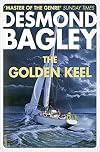
Published in 1963, this was Bagley's first thriller. Apart from a slightly pedestrian style at the very beginning as the scene is set, it sets the reader on a roller coaster ride of 'thrills' as a successful small businessman pulls together a team to recover gold and other goodies hidden in the war.
They say you should write about what you know so Bagley gives us a partial alter ego who, like him, is an English emigre to South Africa who has made a success of himself in a minor way (in show more Bagley's case as journalist) and then adds some knowledge from working in the gold industry.
The novel is what you would want and without pretension. It is largely very well written, unliterary (which is a blessing) and with sufficient knowledgeable detail to create verisimilitude without boring or confusing the reader - though it might help to be a yachtsman in places.
The crew is interesting with a few plot twists and turns - a weak alcoholic and a troublesome and aggressive South African Boer who know where the gold is hidden, joined later by the 'love interest' (handled curtly and not interrupting the flow) in Francesca with her gang of former partisans.
Characterisation is excellent with many side characters of which the most interesting (enough to regret that Bagley was not to use him more than once) is the smuggler/gangster Metcalfe who is possibly the most intrinsically likeable sociopath ever to appear in fiction.
The action moves from South Africa to Tangier (with a nice picture of an anarchic trading post in its last days of freedom, a Beirut before Beirut) and then to Rapallo and the Ligurian hills where the gold is buried, with some wild sea action inbetween.
There is nothing too deep to say about this book which is possibly why it is so enjoyable. The story is set in a marginal world where the events of the Second World War are in their final stages of resolution before the action is going to have to move to more exotic climes.
In 1963, the capture of Mussolini's gold and its recovery and the anti-communist partisans seem like a swansong for the dominant wartime thrillers of the 1950s but it is largely set in the 'present' and it is no accident that Metcalfe is inclined to give up on Tangier for the Congo.
The other thing to note is that these people are unsentimental (except when in love and then rather practical about the business) and only interested in profit. A huge cache of papers of huge historical interest is of no interest - only tradeable gold and jewels.
Money (capital) is there to meet personal dreams and freedom from subservience. This is not a bunch of people who trust each other very much. The stab in the back is assumed at all times. This is not a collective enterprise so much as a temporary merger of self-interested pirates.
In this, Bagley captures much of the post-war mentality of the last of the old imperial generation still under the delusion of an empire (the book was published only as Macmillan was unravelling that delusion) - individualist, exploitative, competitive, 'macho', entrepreneurial and tough.
It is also an essay in leadership. Halloran, our hero, is not only leader because he finances the expedition (the businesslike nature of petty organised crime is well explained here) but because he is the best psychologist and the most intelligent in what starts out as a company of equals.
If there is something to take out of this book other than enjoyment, it is Bagley's take on how alpha males become alpha males, what constitutes weakness and strength, what deserves respect or disdain and when to act and when not to act.
Although from an entirely different world to ours, young men and women today could learn things from old-fashioned thrillers like these without necessarily abandoning what we have learned since. Francesca, incidentally, is clearly as 'alpha' as Halloran and more so than most males in the tale.
The lightly-worn Halloran-Francesca relationship has its interest in this context, if only because Halloran is recovering from the death of a much-loved wife in an accident but this is a new Halloran and a committed 'alpha' adventuress is pretty close to most alpha male dreams.
The implication of the story is that, if his wife had lived, Halloran would have done the conventional thing and built his boat-building business to a prosperous retirement. Loss has turned him into an adventurer and his mate must now be an adventuress but a loyal one too.
Nothing better describes the two sides of the male psyche that thrillers are designed to tap. Most readers chose or are stuck in the former world but those readers are reading these thrillers because they crave the world created by loss where risks can be taken.
It is actually an attempt to revert to an early state of youthful adventure. After all, Halloran ended up in South Africa as the result of a risk-taking adventure and made something of himself. Once the structure of that achievement had been broken, he had to start again to 'find a mate'.
The implication is that he may not end up a career adventurer after all. The second start simply returns him to where he was - a more experienced boat builder with a new wife and a possible family. And that might in itself be psychologically reassuring to the reader.
After all, it is all very well vicariously experiencing such 'thrills' but the right sort of ending is still required - a reaffirmation of the conservative order of solid business achievement and household. And, by the way, that is not a spoiler, just an interpretation of something that surprises to the end.
The point is that post-war late-imperial Britain was simultaneously built on adventurism and reliant on conformity. Literature of this sort had an unconscious mission to square the implicit dialectic and its best works generally do.
Within a few years, the 1960s would have cast great doubt on conformity while the end of empire would wind down the opportunities for independent non-criminal adventure - or rather much adventure would be redefined as criminal where once it was just entrepreneurial risk-taking.
It is as if the two worlds of conformity and risk-taking swapped places to create an entirely different culture with the same basic dialectic - domestic life became a game of risk-taking and economic life a game of global corporate and managerial conformity.
This may be why there is no communication between the British past and the liberal present. Thrillers like Bagley's allow us to open the door on the past and take stock of what we have gained but also what we have lost. show less
They say you should write about what you know so Bagley gives us a partial alter ego who, like him, is an English emigre to South Africa who has made a success of himself in a minor way (in show more Bagley's case as journalist) and then adds some knowledge from working in the gold industry.
The novel is what you would want and without pretension. It is largely very well written, unliterary (which is a blessing) and with sufficient knowledgeable detail to create verisimilitude without boring or confusing the reader - though it might help to be a yachtsman in places.
The crew is interesting with a few plot twists and turns - a weak alcoholic and a troublesome and aggressive South African Boer who know where the gold is hidden, joined later by the 'love interest' (handled curtly and not interrupting the flow) in Francesca with her gang of former partisans.
Characterisation is excellent with many side characters of which the most interesting (enough to regret that Bagley was not to use him more than once) is the smuggler/gangster Metcalfe who is possibly the most intrinsically likeable sociopath ever to appear in fiction.
The action moves from South Africa to Tangier (with a nice picture of an anarchic trading post in its last days of freedom, a Beirut before Beirut) and then to Rapallo and the Ligurian hills where the gold is buried, with some wild sea action inbetween.
There is nothing too deep to say about this book which is possibly why it is so enjoyable. The story is set in a marginal world where the events of the Second World War are in their final stages of resolution before the action is going to have to move to more exotic climes.
In 1963, the capture of Mussolini's gold and its recovery and the anti-communist partisans seem like a swansong for the dominant wartime thrillers of the 1950s but it is largely set in the 'present' and it is no accident that Metcalfe is inclined to give up on Tangier for the Congo.
The other thing to note is that these people are unsentimental (except when in love and then rather practical about the business) and only interested in profit. A huge cache of papers of huge historical interest is of no interest - only tradeable gold and jewels.
Money (capital) is there to meet personal dreams and freedom from subservience. This is not a bunch of people who trust each other very much. The stab in the back is assumed at all times. This is not a collective enterprise so much as a temporary merger of self-interested pirates.
In this, Bagley captures much of the post-war mentality of the last of the old imperial generation still under the delusion of an empire (the book was published only as Macmillan was unravelling that delusion) - individualist, exploitative, competitive, 'macho', entrepreneurial and tough.
It is also an essay in leadership. Halloran, our hero, is not only leader because he finances the expedition (the businesslike nature of petty organised crime is well explained here) but because he is the best psychologist and the most intelligent in what starts out as a company of equals.
If there is something to take out of this book other than enjoyment, it is Bagley's take on how alpha males become alpha males, what constitutes weakness and strength, what deserves respect or disdain and when to act and when not to act.
Although from an entirely different world to ours, young men and women today could learn things from old-fashioned thrillers like these without necessarily abandoning what we have learned since. Francesca, incidentally, is clearly as 'alpha' as Halloran and more so than most males in the tale.
The lightly-worn Halloran-Francesca relationship has its interest in this context, if only because Halloran is recovering from the death of a much-loved wife in an accident but this is a new Halloran and a committed 'alpha' adventuress is pretty close to most alpha male dreams.
The implication of the story is that, if his wife had lived, Halloran would have done the conventional thing and built his boat-building business to a prosperous retirement. Loss has turned him into an adventurer and his mate must now be an adventuress but a loyal one too.
Nothing better describes the two sides of the male psyche that thrillers are designed to tap. Most readers chose or are stuck in the former world but those readers are reading these thrillers because they crave the world created by loss where risks can be taken.
It is actually an attempt to revert to an early state of youthful adventure. After all, Halloran ended up in South Africa as the result of a risk-taking adventure and made something of himself. Once the structure of that achievement had been broken, he had to start again to 'find a mate'.
The implication is that he may not end up a career adventurer after all. The second start simply returns him to where he was - a more experienced boat builder with a new wife and a possible family. And that might in itself be psychologically reassuring to the reader.
After all, it is all very well vicariously experiencing such 'thrills' but the right sort of ending is still required - a reaffirmation of the conservative order of solid business achievement and household. And, by the way, that is not a spoiler, just an interpretation of something that surprises to the end.
The point is that post-war late-imperial Britain was simultaneously built on adventurism and reliant on conformity. Literature of this sort had an unconscious mission to square the implicit dialectic and its best works generally do.
Within a few years, the 1960s would have cast great doubt on conformity while the end of empire would wind down the opportunities for independent non-criminal adventure - or rather much adventure would be redefined as criminal where once it was just entrepreneurial risk-taking.
It is as if the two worlds of conformity and risk-taking swapped places to create an entirely different culture with the same basic dialectic - domestic life became a game of risk-taking and economic life a game of global corporate and managerial conformity.
This may be why there is no communication between the British past and the liberal present. Thrillers like Bagley's allow us to open the door on the past and take stock of what we have gained but also what we have lost. show less
I give it 2 stars for the fact it included geology, but everything else needed some serious help. I know it's an action adventure with thrills all over, but there were just parts that were too unbelievable. The guy is so burnt up in a car wreck that he has skin grafts from his arms on his face and is literally unrecognisable but is still able to grow a full beard? That plastic surgeon really was amazing. SPOILER....
He runs across the top of a landslide, grabs hold of something with one hand, show more hangs on to another person with another and then manages to stay put as a dam bursts and a giant wave washes over him? Ah, no.
A woman is locked in a cellar for five days with no water or food and she is pretty much able to jump around and hug the hero and fully recover in a matter of hours after a drink and some cold cuts? No water, 5 days. That's 120 hours. Even if she drank her own pee and licked the damp walls, that's some serious organ shut down right there.
The author could also do with honing their craft. The writing was adverb city. Nearly every bit of speech was I, he, she said something-ly. I got sick of reading it. It made dialogue stilted and pulled me out of the story.
I felt the story would have read a lot better of it had been made tighter. There's probably a good 50 pages that could be cut without much loss, especially considering by the end we still don't really know what went on any more than had been guessed at half way through. That kind of spoilled any reveals and a sort of near death bed confession seemed an easy way out to hurry up the ending.
Read this book if you just want to not think for a while, but it might make you mad. I probably won't read any more by this author. show less
He runs across the top of a landslide, grabs hold of something with one hand, show more hangs on to another person with another and then manages to stay put as a dam bursts and a giant wave washes over him? Ah, no.
A woman is locked in a cellar for five days with no water or food and she is pretty much able to jump around and hug the hero and fully recover in a matter of hours after a drink and some cold cuts? No water, 5 days. That's 120 hours. Even if she drank her own pee and licked the damp walls, that's some serious organ shut down right there.
The author could also do with honing their craft. The writing was adverb city. Nearly every bit of speech was I, he, she said something-ly. I got sick of reading it. It made dialogue stilted and pulled me out of the story.
I felt the story would have read a lot better of it had been made tighter. There's probably a good 50 pages that could be cut without much loss, especially considering by the end we still don't really know what went on any more than had been guessed at half way through. That kind of spoilled any reveals and a sort of near death bed confession seemed an easy way out to hurry up the ending.
Read this book if you just want to not think for a while, but it might make you mad. I probably won't read any more by this author. show less
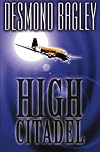
Written in the mid-60s, ‘High Citadel’ is about as solid a traditional adventure thriller as you could hope to read. It has a simple but effective premise, a square-jawed hero, a decent supporting cast, and as much of the peril coming from nature as it does bad guys. I wrote recently in my review of Bagley’s recently published novel ‘Domino Island’ that I thought this was one of he first “grown up” books I read. Reading it I’m not sure it was, as none of it rung a bell for show more me. I definitely remember a paperback copy of the edition I’ve used for the cover image being in the house when I was a kid though. And indeed when I mailed my Dad to give him my thoughts on ‘Domino Island’, he mentioned ‘High Citadel’ as his favourite of Bagley’s books.
Like a lot of these kind of novels, the hero is a white man abroad. If that feels like a dated set up nowadays, then the fact that a great deal of the dialogue is about how terrible communists are probably won’t seem any more current. The book is certainly very much of its time. In this case the white man is Irish pilot Tom O’Hara, who flies a battered old Dakota for a shoestring airline operating in the Andes. He’s given the task of flying ten passengers across the mountains, but then the flight is hijacked and he has to make a crash landing. O’Hara and the surviving passengers end up in a fight for survival against a vicious group of soldiers (communist ones, naturally).
Politics aside, it’s an immediately appealing set up. The battle against both the hostile environment and the troops is genuinely gripping, with the passengers using their ingenuity to survive. Bagley throws everything at them. The books features mountain climbing, aerial dogfights, medieval weapons and more. It’s a classic adventure and thrilling from first page to last. O’Hara is an enjoyable everyman hero, but it’s the ragtag supporting characters that really make the book fun. They have the variety of a disaster movie cast and are just as enjoyable. The book is over 50 years old now, but I’d still take this kind of thriller over the carbon copy ex-special forces operatives getting revenge style books that seem to make up the genre nowadays. show less
Like a lot of these kind of novels, the hero is a white man abroad. If that feels like a dated set up nowadays, then the fact that a great deal of the dialogue is about how terrible communists are probably won’t seem any more current. The book is certainly very much of its time. In this case the white man is Irish pilot Tom O’Hara, who flies a battered old Dakota for a shoestring airline operating in the Andes. He’s given the task of flying ten passengers across the mountains, but then the flight is hijacked and he has to make a crash landing. O’Hara and the surviving passengers end up in a fight for survival against a vicious group of soldiers (communist ones, naturally).
Politics aside, it’s an immediately appealing set up. The battle against both the hostile environment and the troops is genuinely gripping, with the passengers using their ingenuity to survive. Bagley throws everything at them. The books features mountain climbing, aerial dogfights, medieval weapons and more. It’s a classic adventure and thrilling from first page to last. O’Hara is an enjoyable everyman hero, but it’s the ragtag supporting characters that really make the book fun. They have the variety of a disaster movie cast and are just as enjoyable. The book is over 50 years old now, but I’d still take this kind of thriller over the carbon copy ex-special forces operatives getting revenge style books that seem to make up the genre nowadays. show less

I love Bagley and the way he writes, the way none of his heroes are supermen and more often than not normal people thrown into extraordinary circumstances. He excels when writing in remote landscapes so Running Blind being set in Iceland is a real treat for both fans and people new to him.
Alan Stewart thinks he has retired from the apartment (a branch of the secret service) and has made a new life for himself in Akureyri, along with a beautiful girlfriend he wants to marry. He is contacted show more out of the blue and 'asked' to complete one last job, something simple for a man of his capabilities, just to deliver a package. For this he has the guarantee of a stress free life and that his enemies will not be informed of his new location. Unfortunately the job isn't as straightforward as he would have liked and very soon he has a dead man on his hands and foreign agents tracking his every move. Unsure who to trust he escapes into the barren icelandic country where he must battle the elements as well as trying to work out who is friend or foe.
A brilliant story, with a brilliant character that will have you turning the page until it is over with a climatic finish. Easily recomendable and I am unsure why he isn't as well known as other authors such as Ian Fleming and Alistair Maclean - although I think the films of their works have helped. A proper 'man's' book (if we are allowed to say that any more?). Give it a try. show less
Alan Stewart thinks he has retired from the apartment (a branch of the secret service) and has made a new life for himself in Akureyri, along with a beautiful girlfriend he wants to marry. He is contacted show more out of the blue and 'asked' to complete one last job, something simple for a man of his capabilities, just to deliver a package. For this he has the guarantee of a stress free life and that his enemies will not be informed of his new location. Unfortunately the job isn't as straightforward as he would have liked and very soon he has a dead man on his hands and foreign agents tracking his every move. Unsure who to trust he escapes into the barren icelandic country where he must battle the elements as well as trying to work out who is friend or foe.
A brilliant story, with a brilliant character that will have you turning the page until it is over with a climatic finish. Easily recomendable and I am unsure why he isn't as well known as other authors such as Ian Fleming and Alistair Maclean - although I think the films of their works have helped. A proper 'man's' book (if we are allowed to say that any more?). Give it a try. show less
Lists
Awards


You May Also Like


Associated Authors
Statistics
- Works
- 45
- Also by
- 16
- Members
- 5,657
- Popularity
- #4,375
- Rating
- 3.4
- Reviews
- 83
- ISBNs
- 596
- Languages
- 13
- Favorited
- 14