
Emma Leslie (1837–1909)
Author of Tom Watkin's Mistake
About the Author
Series
Works by Emma Leslie
The Gipsy Queen 2 copies
Daybreak in Italy 2 copies
Percy Raydon, or, Self-conquest 2 copies
At the Sign of the Blue Boar 2 copies
The life and reign of Queen Victoria 2 copies
Mártires do Coliseu Romano 2 copies
The Five Cousins 1 copy
Ellerslie House 1 copy
Brought Out of Peril 1 copy
Building bridges across religious frontiers in Cambodia: reflections and insights from interfaith peace building initiatives 1 copy, 1 review
The Chained Book 1 copy
Alone in the World 1 copy
ARTHUR RANYARD'S TRAINING 1 copy
Maggie's Message 1 copy
The Prisoner of Prague 1 copy
Tagged
Common Knowledge
- Legal name
- Dixon, Emma
- Birthdate
- 1837
- Date of death
- 1909
- Gender
- female
Members
Reviews

Late one day, in the summer of 782 A.D., young Adalinda is startled to come upon a Saxon family in the forest where she lives with her father. Their tribe had been captured by Charlemagne's soldiers and brought to France after they refused to convert to Christianity, but with Godrith's wife and children grew too weak to continue marching, the family had been abandoned.
Godrith is suspicious of Adalinda's kindness, remembering how the "Christian" soldiers had burned his village and killed or show more captured so many of his people, but as she and her father offer shelter to these Saxon strangers, Godrith begins to see a new picture of Christianity, and her small acts of service have a greater impact than Adalinda could have ever imagined. show less
Godrith is suspicious of Adalinda's kindness, remembering how the "Christian" soldiers had burned his village and killed or show more captured so many of his people, but as she and her father offer shelter to these Saxon strangers, Godrith begins to see a new picture of Christianity, and her small acts of service have a greater impact than Adalinda could have ever imagined. show less
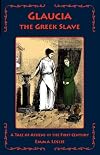
Following the death of their Epicurean father - a man following a hedonistic Greek philosophy that drove him into heavy debt - young siblings Glaucia and Laon are removed from Greece and taken to Rome. The proceeds from their sale will be applied to a portion of their father’s debt. Young Glaucia is sold into the service of the Gracchi family as a slave to their daughter, while Laon manages to escape following a ferocious beating. After his recovery Laon vows to rescue his sister from the show more danger she faces as a slave owned by Romans, driven on by fear on his sisters behalf of the vicious punishments employed by Romans towards slaves who disobey.
While seeking a means and way to both find and deliver his sister from slavery Laon encounters a variety of strange individuals who speak to him about a God whose love extends even to slaves. After returning to Greece with her Roman owners, Glaucia is confronted with the gospel there as well. As the light of Christ begins to dawn in their hearts, those around them are affected by their witness and begin to seek the face of their Creator in turn.
Shortly after the death of Christ and the expansion of His church, Laon encounters Paul - author of much of the New Testament - sharing the gospel from his house arrest in Rome. Likewise, the epistles he wrote to the churches abroad (such as Corinth) are newly penned, delivered and shared between believers. As such, Glaucia coincides with a time period in which the New Testament was still being written, an exciting prospect.
Originally published in 1874, Glaucia the Greek Slave: A Tale of Athens in the First Century is the first in the Emma Leslie Church History Series, which explores significant events throughout the history of the Christian church. Emma Dixon - writing under the name of Emma Leslie in England - was a prolific children’s author with over 100 titles to her name.
Written during the Victorian age her historical fiction novels include sentence structure, phrasing, and vocabulary that are rarely found today in books for young readers, let alone adults. Every Salem Ridge Press title has a large, empty margin at the bottom of each page for explaining period specific or archaic terms upon their first appearance; while I have seen this space used occasionally in other Salem Ridge titles, it is extensively utilized in Glaucia the Greek Slave.
The book contains such potentially daunting dialogue as:
“Nay; but tarry awhile and rest and refresh thyself while I break these seals,” said the minister as he heard the inquiry; “unless thou art the bearer of tidings to our sister,” he added.
As such, the 274 page novel will prove a challenge to all but the most intrepid young scholar. Families accustomed to reading the KJV Bible will likely have an easier time with this title, but I can certainly see why it is recommended for the ten and over age range. Certainly, if I were to read it to my younger children, they would find it quite challenging in terms of vocabulary. While out of range for reluctant readers, Glaucia the Greek Slave will serve as a challenge to eager young students of church history. Greek and Roman culture, philosophy, and religion are accurately depicted without glorifying their pantheon of gods; the evangelical zeal of the early church and spirit of meek servanthood are clearly displayed; and the violent persecution of Christians is not shied away from (another reason to limit this title to older readers). These redeeming features mark the Emma Leslie Church History Series as one to make note of for families seeking to ground their children in a solid understanding of the foundations and progress of Christianity.
Reviewed at http://quiverfullfamily.com show less
While seeking a means and way to both find and deliver his sister from slavery Laon encounters a variety of strange individuals who speak to him about a God whose love extends even to slaves. After returning to Greece with her Roman owners, Glaucia is confronted with the gospel there as well. As the light of Christ begins to dawn in their hearts, those around them are affected by their witness and begin to seek the face of their Creator in turn.
Shortly after the death of Christ and the expansion of His church, Laon encounters Paul - author of much of the New Testament - sharing the gospel from his house arrest in Rome. Likewise, the epistles he wrote to the churches abroad (such as Corinth) are newly penned, delivered and shared between believers. As such, Glaucia coincides with a time period in which the New Testament was still being written, an exciting prospect.
Originally published in 1874, Glaucia the Greek Slave: A Tale of Athens in the First Century is the first in the Emma Leslie Church History Series, which explores significant events throughout the history of the Christian church. Emma Dixon - writing under the name of Emma Leslie in England - was a prolific children’s author with over 100 titles to her name.
Written during the Victorian age her historical fiction novels include sentence structure, phrasing, and vocabulary that are rarely found today in books for young readers, let alone adults. Every Salem Ridge Press title has a large, empty margin at the bottom of each page for explaining period specific or archaic terms upon their first appearance; while I have seen this space used occasionally in other Salem Ridge titles, it is extensively utilized in Glaucia the Greek Slave.
The book contains such potentially daunting dialogue as:
“Nay; but tarry awhile and rest and refresh thyself while I break these seals,” said the minister as he heard the inquiry; “unless thou art the bearer of tidings to our sister,” he added.
As such, the 274 page novel will prove a challenge to all but the most intrepid young scholar. Families accustomed to reading the KJV Bible will likely have an easier time with this title, but I can certainly see why it is recommended for the ten and over age range. Certainly, if I were to read it to my younger children, they would find it quite challenging in terms of vocabulary. While out of range for reluctant readers, Glaucia the Greek Slave will serve as a challenge to eager young students of church history. Greek and Roman culture, philosophy, and religion are accurately depicted without glorifying their pantheon of gods; the evangelical zeal of the early church and spirit of meek servanthood are clearly displayed; and the violent persecution of Christians is not shied away from (another reason to limit this title to older readers). These redeeming features mark the Emma Leslie Church History Series as one to make note of for families seeking to ground their children in a solid understanding of the foundations and progress of Christianity.
Reviewed at http://quiverfullfamily.com show less
Building bridges across religious frontiers in Cambodia: reflections and insights from interfaith peace building initiatives by Emma Leslie

Peacebuilding, Religious tolerance,Interfaith initiatives.
You May Also Like


Statistics
- Works
- 70
- Members
- 538
- Popularity
- #46,305
- Rating
- 3.4
- Reviews
- 3
- ISBNs
- 78
- Languages
- 2