
Jim Pojar
Author of Plants of the Pacific Northwest Coast
About the Author
Image credit: via ecoreserves.bc.ca
Works by Jim Pojar
Tagged
Common Knowledge
Members
Reviews
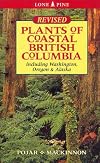
the best book on plants in my area that I've ever encountered. comprehensive, intuitively arranged, and full of interesting information
Plants of the Pacific Northwest Coast: Washington, Oregon, British Columbia, and Alaska by Jim Pojar
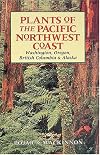
This book is good enough to deserve a place in my backpack, even after many years of use. The descriptions are not only helpful, they are entertaining. Traditional plant uses and historical information is included for every plant. This is the book for identifying plant life you will see along any Pacific Northwest trail or boating experience. The photographs help beginning botanists find the correct plant quickly, and the text has enouh little-known tidbits to keep more experienced plant show more people reading. Excellent! show less
Plants of the Pacific Coast: From Alaska to Oregon, including British Columbia and Washington by Jim Pojar
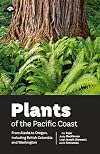
Outstanding guide book for PNW nature lovers! Easily understood, logically laid out, beautiful photographs, excellent descriptions. All one would need to enjoy a day poking around the woods and wondering what plant that is. I will most definitely be buying a hard copy for my pack when I am out hiking. Can't go wrong with this book!
Thanks to NetGalley and the publisher for early access to an ARC of this book.
Thanks to NetGalley and the publisher for early access to an ARC of this book.
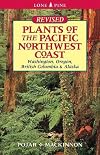
If one can own but one native plant book for the Pacific Northwest, this is the one which provides the best balance of being an introduction, and to covering the widest variety of common native plants. The coverage of trees, liverworts, mosses, ferns, lichens and flowering plants are all first rate. None of these areas of treatment have been added as an afterthought. For example, the narrative accompanying moss illustrations provide information on appearance, habitat, description of the show more sporophyte, and ways to separate this species from others. This latter aspect is not always covered in many professional field guides where the authors often assume that their particular keys have sufficiently separated the species from all others.
Coverage of grasses is good, but I found the keys a little hard to use, and the use of tribes doesn't always translate into the manner and approach of keys in other field books.
The index is quite consistent in its manner of referencing plants and their page location. Each species is referenced by one Latin name and minimally one common name. For example, in the index for the species "Douglas Maple", there are entries under "Acer glabrum", "Maple, Douglas", and "Maple, Rocky Mountain"; but not under "Rocky Mountain maple" or "Douglas maple". Another example, an entry would be found under "monkeyflower, pink" but not under "pink monkeyflower" show less
Coverage of grasses is good, but I found the keys a little hard to use, and the use of tribes doesn't always translate into the manner and approach of keys in other field books.
The index is quite consistent in its manner of referencing plants and their page location. Each species is referenced by one Latin name and minimally one common name. For example, in the index for the species "Douglas Maple", there are entries under "Acer glabrum", "Maple, Douglas", and "Maple, Rocky Mountain"; but not under "Rocky Mountain maple" or "Douglas maple". Another example, an entry would be found under "monkeyflower, pink" but not under "pink monkeyflower" show less
Lists
You May Also Like


Associated Authors
Statistics
- Works
- 8
- Members
- 1,107
- Popularity
- #23,219
- Rating
- 4.5
- Reviews
- 9
- ISBNs
- 18