
Larry Winget
Author of Shut Up, Stop Whining, and Get a Life: A Kick-Butt Approach to a Better Life
About the Author
Larry Winget is a bestselling author, television personality, social commentator and internationally acclaimed speaker. He is the author of six New York Times/Wall Street Journal best-sellers that have been translated into over twenty languages. He is a Hall Of Fame speaker with over thirty years show more of experience speaking around the world to nearly 400 of the Fortune 500 companies. He is the trademarked Pitbull of Personal Development and is known worldwide for being direct, caustic, irreverent and in-your-face. He offers solid advice for improving your life, business, finances and family. Not often do you find someone who can bring solid information delivered in such a humorous, thought-provoking, transformational style. show less
Works by Larry Winget
Shut Up, Stop Whining, and Get a Life: A Kick-Butt Approach to a Better Life (2004) 262 copies, 5 reviews
You're Broke Because You Want to Be: How to Stop Getting By and Start Getting Ahead (2007) 153 copies, 3 reviews
People Are Idiots and I Can Prove It!: The 10 Ways You Are Sabotaging Yourself and How You Can Overcome Them (2008) 61 copies, 1 review
Your Kids Are Your Own Fault: A Guide For Raising Responsible, Productive Adults (2010) 35 copies, 1 review
Grow a Pair: How to Stop Being a Victim and Take Back Your Life, Your Business, and Your Sanity (2013) 29 copies, 3 reviews
No Time for Tact: 365 Days of the Wit, Words, and Wisdom of Larry Winget (2009) 18 copies, 2 reviews
What's Wrong with Damn Near Everything!: How the Collapse of Core Values Is Destroying Us and How to Fix It (2017) 9 copies, 1 review
Money is Easy: How to Increase Prosperity, Attract Riches, Experience Abundance, and Have More Money (2001) 3 copies
Menschen sind Idioten - und ich kann s beweisen!: Maßnahmen gegen die 10 Methoden, mit denen sich jeder selbst sabotiert (2009) 2 copies
Tagged
Common Knowledge
Members
Reviews
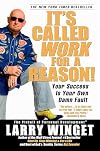
I just finished it, and I know there are parts I may want to read again. There were a few things I could identify with personally. There were also a lot of coworkers that I identified right away as the lazy bums they are that, if they worked for Larry, would have been long gone by now. A lot of this book is common sense, or at least readers may think it is common sense until they start reading. I say the readers may think it is common sense because if everybody actually embraced at least show more some of the ideas Mr. Winget is presenting the workplace would be a much better place-- we would have better customer service; we would have workplaces where workers put forth their best work; we would have bosses that would not micromanage and would know to get out of the way so those of us who actually work can get on with work.
Mr. Winget has a very blunt and straight style. To some it may seem like yelling on the page, but tell it like it is he does. There is no reason to accept poor customer service. There is no real reason to tolerate shoddy work in the workplace. The fact is these things would go away if more people would stop tolerating them. It's like I say: you support what you tolerate. Now, Winget does not say you have to be rude in order to demand change, but you do have to stand up and demand change--change in yourself and change in others. If you tolerate the mediocrity, you are just supporting it, and in the end, you would be as bad as those mediocre people. It's a pretty simple idea. Another simple idea: you should do the work you get paid for. It's a simple concept. You take the job, and you agree to do it for the pay the boss agrees to give you. Anything else--liking your coworkers, whether the environment is pleasant, so on-- is extra. Do your job. Don't like it, leave, but it does help if you do like the job.
Winget covers leadership and management, the workplace, advice for workers and for bosses, how sell better (and it is not just selling a product. You sell yourself every day), and customer service. Some of his stories will make you smile, and others will make you cringe. I do think that readers, whether they agree or disagree, whether they like his somewhat abrasive style or not, will gain something from this book. The sad thing is that I know many managers and workers will not read this book. I am not a big reader of "business" or "self-help" books, but this is definitely one to read and to reread when you need a little more inspiration. In some cases, you may want to grab the book and smack a certain someone over the head with it, then tell him to read it.
On an additional note, even though Mr. Winget's work is focused mostly on the business world, and a big part of it deals with sales (probably because Mr. Winget does have ample sales experience), there are lessons here for librarians and librarianship. True, we do not exist to generate a profit, but we still deal with things like customer service, our reputations and work ethic, and for those of us in the trenches, we do have to deal with the occasional less than ideal boss or coworker. And in times when libraries are suffering cutbacks, we need more than ever to be selling our products if we are to prove our value and survive. That is not just the business world. That is something we can learn and act upon as well. Overall, this is a book I would like to place in more people's hands, and it is a book I think will provide benefit to librarians who read it, discuss it, then act on it. show less
Mr. Winget has a very blunt and straight style. To some it may seem like yelling on the page, but tell it like it is he does. There is no reason to accept poor customer service. There is no real reason to tolerate shoddy work in the workplace. The fact is these things would go away if more people would stop tolerating them. It's like I say: you support what you tolerate. Now, Winget does not say you have to be rude in order to demand change, but you do have to stand up and demand change--change in yourself and change in others. If you tolerate the mediocrity, you are just supporting it, and in the end, you would be as bad as those mediocre people. It's a pretty simple idea. Another simple idea: you should do the work you get paid for. It's a simple concept. You take the job, and you agree to do it for the pay the boss agrees to give you. Anything else--liking your coworkers, whether the environment is pleasant, so on-- is extra. Do your job. Don't like it, leave, but it does help if you do like the job.
Winget covers leadership and management, the workplace, advice for workers and for bosses, how sell better (and it is not just selling a product. You sell yourself every day), and customer service. Some of his stories will make you smile, and others will make you cringe. I do think that readers, whether they agree or disagree, whether they like his somewhat abrasive style or not, will gain something from this book. The sad thing is that I know many managers and workers will not read this book. I am not a big reader of "business" or "self-help" books, but this is definitely one to read and to reread when you need a little more inspiration. In some cases, you may want to grab the book and smack a certain someone over the head with it, then tell him to read it.
On an additional note, even though Mr. Winget's work is focused mostly on the business world, and a big part of it deals with sales (probably because Mr. Winget does have ample sales experience), there are lessons here for librarians and librarianship. True, we do not exist to generate a profit, but we still deal with things like customer service, our reputations and work ethic, and for those of us in the trenches, we do have to deal with the occasional less than ideal boss or coworker. And in times when libraries are suffering cutbacks, we need more than ever to be selling our products if we are to prove our value and survive. That is not just the business world. That is something we can learn and act upon as well. Overall, this is a book I would like to place in more people's hands, and it is a book I think will provide benefit to librarians who read it, discuss it, then act on it. show less
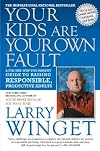
Exactly the book I was looking for when searching for parenting ideas and approaches for my children. Larry is in-your-face, brash, direct, and blunt. He certainly subscribes to the school of Radical Honesty (I don't). I agreed with him on 80% of his points, vehemently agreed with him on 15%, and disagreed with him on 5%. However, he did advise not to dismiss all his advice just because I might disagree with him on some. Know what? That's good advice. Three major points I disagreed on: 1) I show more don't believe in spanking, ever, no exceptions. 2) "Because I said so" is a not a valid response for me. 3) I think kids need to be treated a bit more gently than he espouses. Also, he recommended the book, "How to Talk so Kids Will Listen..." The book is useless. Larry's book is very, very good. I love his chain of command idea where the parent closest in proximity is in charge. show less
People Are Idiots and I Can Prove It!: The 10 Ways You Are Sabotaging Yourself and How You Can Overcome Them by Larry Winget
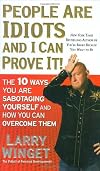
Larry Winget’s book “People are Idiots and I can Prove it” focuses on ten ways you are sabotaging yourself and shows you how to work to overcome those ways. He says that people are sabotaging themselves in these ways: people are ignorant; people are stupid; people are lazy; people don’t give a damn; people lack vision; people have low expectations; people don’t recognize the consequences of their actions; people have bad habits; people have poor role models; and people have no show more plan. Along with giving advice on how to stop sabotaging yourself, Winget also talks about and leaves space throughout the book to make lists on things like how to take responsibility; how to save money; how to be a better person; how to be healthier; how to deal with jerks; how to make a better world; and much more.
As the title “People are Idiots and I can Prove it” indicates, Winget’s book isn’t for everyone, something he points out early on in the book. He’s a tough talker and won’t take excuses from anyone, including himself. He also says early on that everything he says is not news; he is just presenting it in a different way. Personally, I like his no-nonsense style as he forces people to take a good look at themselves. He’s not offering a miracle cure, but wants you to look within yourself for answers. As he says, he wants to show you “a” way to be more successful, not “the” way. His style is blunt and harsh at times, but he is upfront with the fact that he is as hard on himself as he is on other people. He stops throughout the book to have people create lists based on what he has written about – something I found very helpful. If I have any gripes about this book it’s the fact that Winget frequently references other books he has written – I could do without the constant sales pitch.
“People are Idiots and I can Prove it” is a blunt book and may not be for everyone’s taste, but I did learn some things from it, which is what I’m looking for in a self-help book. show less
As the title “People are Idiots and I can Prove it” indicates, Winget’s book isn’t for everyone, something he points out early on in the book. He’s a tough talker and won’t take excuses from anyone, including himself. He also says early on that everything he says is not news; he is just presenting it in a different way. Personally, I like his no-nonsense style as he forces people to take a good look at themselves. He’s not offering a miracle cure, but wants you to look within yourself for answers. As he says, he wants to show you “a” way to be more successful, not “the” way. His style is blunt and harsh at times, but he is upfront with the fact that he is as hard on himself as he is on other people. He stops throughout the book to have people create lists based on what he has written about – something I found very helpful. If I have any gripes about this book it’s the fact that Winget frequently references other books he has written – I could do without the constant sales pitch.
“People are Idiots and I can Prove it” is a blunt book and may not be for everyone’s taste, but I did learn some things from it, which is what I’m looking for in a self-help book. show less
Larry Winget is a self-described "Irritational Speaker" and host of A&E's reality show, Big Spender. He talks a lot about what we already know (or at least suspect), with all of the manners of a marine drill sergeant. The book, as is his seminars, is meant to be a kick-in-the-ass to light a fire under anyone whose life isn't panning out to be all it could be. And that demographic probably describes most of us.
The book is geared toward a general audience, although some chapters are rather show more specific towards management. Larry is a big fan of firing...a revolving door is an essential feature of his office space. He maintains that the bottom 20% of performers in any organization should be fired...and once that's done, another group will now be the bottom 20% and they need to be fired too. And so on. Larry is a natural salesman, and much of this book would be useful to those in customer service roles (regardless of whether the customer is external or internal). He call BS on the concept of teamwork, maintaining that the top performers should not be compelled to dilute their effort propping up lesser team members. He clearly doesn't like trade unions or the absurdity of many civil judgments regarding anything from employee dismissal to sexual harassment charges stemming from a genuine complement. While he stops short of advising that a manager show wanton disregard for such things (not to mention ignoring company policy to the contrary), he does add that often a good lawyer is still cheaper than a bad employee.
Most of the book was right, and certainly parts of it applied to myself. It's also the sort of thing I might want my employees to listen to...he explains the concept of achieving results and serving the customer way better than I can, although I've always been an advocate of the same. show less
The book is geared toward a general audience, although some chapters are rather show more specific towards management. Larry is a big fan of firing...a revolving door is an essential feature of his office space. He maintains that the bottom 20% of performers in any organization should be fired...and once that's done, another group will now be the bottom 20% and they need to be fired too. And so on. Larry is a natural salesman, and much of this book would be useful to those in customer service roles (regardless of whether the customer is external or internal). He call BS on the concept of teamwork, maintaining that the top performers should not be compelled to dilute their effort propping up lesser team members. He clearly doesn't like trade unions or the absurdity of many civil judgments regarding anything from employee dismissal to sexual harassment charges stemming from a genuine complement. While he stops short of advising that a manager show wanton disregard for such things (not to mention ignoring company policy to the contrary), he does add that often a good lawyer is still cheaper than a bad employee.
Most of the book was right, and certainly parts of it applied to myself. It's also the sort of thing I might want my employees to listen to...he explains the concept of achieving results and serving the customer way better than I can, although I've always been an advocate of the same. show less
You May Also Like


Statistics
- Works
- 30
- Members
- 815
- Popularity
- #31,298
- Rating
- 3.6
- Reviews
- 25
- ISBNs
- 103
- Languages
- 5
- Favorited
- 1