
Rembrandt van Rijn (1606–1669)
Author of The Life and Times of Rembrandt
About the Author
Image credit: Self-portrait
Works by Rembrandt van Rijn
The Complete Etchings of Rembrandt: Reproduced in Original Size (Dover Fine Art, History of Art) (1977) 165 copies, 1 review
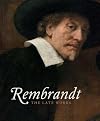
Rembrandt: The Late Works (cat. exp., National Gallery, London 15 October 2014 - 18 January 2015, Rijksmuseum Amsterdam 12 February - 17 May 2015) (2014) 106 copies, 1 review
Rembrandt/Not Rembrandt in the Metropolitan Museum of Art: Aspects of Connoisseurship (1995) 68 copies
Rembrandt : 1669 - 1969 (cat. exp. Amsterdam, Rijskmuseum, 13 septembre – 30 novembre 1969) (1969) 34 copies, 1 review
Rembrandt, Quest of a Genius (cat. exp., Museum Het Rembrandthuis, Amsterdam, 1 april - 2 juli 2006) (2006) 17 copies
Rembrandt's Life of Christ (Paintings, Drawings and Etchings with Quotations From The Gospel) (1966) 16 copies
The mystery of the young Rembrandt (cat. exp., Staatliche Museen Kassel, Nov 3 ∙ [2001] ∙ 2002 ∙ Rembrandthuis ∙ Amsterdam Feb. 20 to May 26 ∙ 2002) (2001) 13 copies
Rembrandt : tentoonstelling ter herdenking van de geboorte van Rembrandt op 15 juli 1606. [II]: Schilderijen (1956) 12 copies
Rembrandt och hans tid : människan i centrum = Rembrandt and his age : focus on man : en utställning ing°aende i Nati (1992) 8 copies
Rembrandt and the Dutch golden age (cat. exp., Museum of Fine Arts, Budapest, 30 October 2014 - 15 February 2015) (2014) 6 copies
Was die Nacht hell macht : Weihnachten in Bildern von Rembrandt Harmensz van Rijn (1999) — Artist — 5 copies
A collection of etchings by Rembrandt Harmensz. van Rijn (1606-1669) formed by Joseph R. Ritman : presented for sale by Artemis and Sotheby's (1997) 5 copies
Der Meister und seine Werkstatt. Gemälde / Zeichnungen und Radierungen. Zu den Ausstellungen in Berlin, Amsterdam und L (1991) 5 copies
Rembrandt Harmensz van Rijn 4 copies
Rembrandt-Bijbel 4 copies
Rembrandt; L'Oeuvre du Maitre. 4 copies
Rembrandt: Fifty Exceptional Etchings. Proofs printed by the master. Fall exhibition, Nov.-Dec. 1981. (1981) 4 copies
Rembrandt (1606-1669) 4 copies
Rembrandt et son ecole collections du musée de l'Ermitage de Saint-Pétersbourg : Musée des Beaux-Arts de Dijon, 24 no (2003) 3 copies
Drawings for the Bible 3 copies
Rembrandt : schilderijen 3 copies
Self-Portrait (oil on canvas) 3 copies
Rembrandt: Cena in Emmaus 3 copies
Self-Portrait 3 copies
Self-Portrait 2 copies
Rembrandt und seine Werkstatt II. Zeichnungen und Radierungen. Zu den Ausstellungen in Berlin, Amsterdam und London (1991) 2 copies
Seven letters by Rembrandt 2 copies
Paintings, drawings and etchings 2 copies
Rembrandt tentoonstelling 2 copies
Portrait of a Woman (oil on canvas) 2 copies
Rembrandt, de etser : het complete grafische werk : (Rembrandt in alle staten) : alle etsen van Rembrandt op één cd-rom (2000) 2 copies
Rembrandt's drawings 2 copies
The Drawings of Rembrandt 2 copies
Rembrandt: le acqueforti 2 copies
Acqueforti di Rembrandt 2 copies
Rembrandt 2 copies
The distinguished collection of Rembrandt etchings formed by Gordon W. Nowell-Usticke, Part Two 2 copies
Jan Six (oil on canvas) 1 copy
The Woman Taken in Adultery 1 copy
Bathsheba at Her Bath 1 copy
The Supper at Emmaus 1 copy
The Carcass of Beef 1 copy
A Polish Nobleman 1 copy
Self-portrait [postcard] 1 copy
Night watch 1 copy
Man with the golden helmet 1 copy
Danae (oil on canvas) 1 copy
History Scene (oil on panel) 1 copy
Self-Portrait (oil on panel) 1 copy
Ganymede (oil on canvas) 1 copy
Saskia (oil on panel) 1 copy
The Mill (oil on canvas) 1 copy
Nicolaes Ruts (oil on panel) 1 copy
Visitation (oil on panel) 1 copy
Rembrandt 1 copy
Rembrandt's Etchings from the Kunstlerhaus Society of Austrian Visual Artists, Vienna, Austria (1985) 1 copy
The Great Artists : Their lives, works and inspiration : 46 : Rembrandt (1985) — Illustrator — 1 copy
Rembrandt's Gospel 1 copy
Rembrandt: Leyda 1606 Amsterdam 1669 : [catalogo della mostra a Torino, 1991] (l'Arte antica) (1991) 1 copy
Etchings of Rembrandt 1 copy
Rembrandt and the Bible 1 copy
Rembrandt paintings 1 copy
Rembrandt-Bibel 1 copy
Rembrandt : Briefkaartenboek 1 copy
Autoritratti 1 copy
Symposium 1 copy
The Rembrandt Album 1 copy
Rembrant 1 copy
Rembrandt schilderijen 1 copy
Rembrandt Radierungen 1 copy
Rembrandt van Ryn 1 copy
Rembrandt, 1 copy
A Boy Reading (Titus) 1 copy
The Bridal Couple 1 copy
Family Portrait 1 copy
Rembrandt en de Bijbel. verhalen uit het Oude en Nieuwe Testament / Het Nieuwe Testament (1981) 1 copy
Rembrandt on paper 1 copy
Radierungen von Rembrandt 1 copy
Rembrandt-Bibel ; Altes und Neues Testament : Zwei Bande Mit 240 Abbildungen / Gewahlt Und Eingeleitet Von E. W. Bredt (1921) 1 copy
Rembrandts målningar 1 copy
Associated Works
Daemon Voices: On Stories and Storytelling (2017) — Illustrator, some editions — 738 copies, 9 reviews
Rembrandt: The Master and His Workshop: Drawings and Etchings (1991) — Illustrator — 95 copies, 1 review
Out of the Best Books: An Anthology of Literature, Vol. 4: The World Around Us (1968) — Contributor — 28 copies
Medea : Treurspel — Illustrator — 1 copy
Velhagen und Klasings Almanach 1909 — Illustrator; Featured Artist — 1 copy
Tagged
Common Knowledge
- Canonical name
- Rijn, Rembrandt van
- Legal name
- Rijn, Rembrandt Harmenszoon van
- Other names
- Rembrandt
- Birthdate
- 1606-07-15
- Date of death
- 1669-10-04
- Gender
- male
- Education
- University of Leiden
apprenticeship - Occupations
- painter
etcher
drawer - Organizations
- Sint-Lucasgilde in Amsterdam. Guild of St. Luke
- Relationships
- Dou, Gerrit (pupil)
Rhyn, Titus van (son)
Lastman, Pieter (teacher)
Flinck, Govert (pupil)
Bol, Ferdinand (pupil)
Fabritius, Carel (pupil) (show all 12)
Uylenburgh, Saskia (wife)
Dircx, Geertje (caregiver for his son, love relation)
Stoffels, Hendrickje (caregiver for his son, love relation)
Cornelia (daughter)
Rijn, Titia van (granddaughter)
Hoogstraten, Samuel van (pupil) - Nationality
- Netherlands
- Birthplace
- Leiden, Netherlands
- Places of residence
- Leiden, Netherlands
Amsterdam, Netherlands - Place of death
- Amsterdam, Netherlands
- Burial location
- Westerkerk, Amsterdam, Netherlands
- Associated Place (for map)
- Amsterdam, Netherlands
Members
Discussions
Rembrandt in Nederlandstalige lezers (November 2023)
Reviews
(...)
Enter me, 35, seeing Rembrandt Van Rijn’s final self-portrait in the Mauritshuis in The Hague, July 2014. That museum has Vermeer’s The Girl With The Pearl Earing too, but the 1669 self-portrait is the true gem of the collection. I was struck by lightning. I had seen paintings by Rembrandt before, but never one of his late works. The way he painted his hair, topped with a kind of turban or ribbon, is simply stunning. In a way, what I saw was the birth of impressionist and even show more expressionist painting, already in the 17th century. It took me half an hour before I could continue to the next painting, and before leaving the museum, I returned to it again. A profound delight.
(...)
The authors do a great job of putting Rembrandt firmly in his historical context. To our eyes Rembrandt might seem old hat – he’s such a part of our visual collective subconscious – but he’s not. Even today he remains fresh and relevant, and back in the 17th century he simply was in a league of his own. The texts feature quite a lot of quotations of 17th and 18th century art historians, and they succeed in proving the exceptional, revolutionary nature of Rembrandt. And that’s not just because of his technique – his brush strokes, his command of light, etc. – but also his command of composition and emotion, and the specific, singular way he chose to portray subjects and topics that were common at the time. He was a true genius, on multiple accounts. The book also zooms in a bit on Rembrandt eventful, tragic life. It’s not a biography however, the focus is on his art throughout.
(...)
Please read the full review on Weighing A Pig show less
Enter me, 35, seeing Rembrandt Van Rijn’s final self-portrait in the Mauritshuis in The Hague, July 2014. That museum has Vermeer’s The Girl With The Pearl Earing too, but the 1669 self-portrait is the true gem of the collection. I was struck by lightning. I had seen paintings by Rembrandt before, but never one of his late works. The way he painted his hair, topped with a kind of turban or ribbon, is simply stunning. In a way, what I saw was the birth of impressionist and even show more expressionist painting, already in the 17th century. It took me half an hour before I could continue to the next painting, and before leaving the museum, I returned to it again. A profound delight.
(...)
The authors do a great job of putting Rembrandt firmly in his historical context. To our eyes Rembrandt might seem old hat – he’s such a part of our visual collective subconscious – but he’s not. Even today he remains fresh and relevant, and back in the 17th century he simply was in a league of his own. The texts feature quite a lot of quotations of 17th and 18th century art historians, and they succeed in proving the exceptional, revolutionary nature of Rembrandt. And that’s not just because of his technique – his brush strokes, his command of light, etc. – but also his command of composition and emotion, and the specific, singular way he chose to portray subjects and topics that were common at the time. He was a true genius, on multiple accounts. The book also zooms in a bit on Rembrandt eventful, tragic life. It’s not a biography however, the focus is on his art throughout.
(...)
Please read the full review on Weighing A Pig show less
The life and times of Rembrandt, R. v. R., is an account of the last years and the death of one Rembrandt Harmenszoon van Rijn, who was attended in his ... chirurgeon in extraordinary, who during a by Hendrik Willem van Loon

More of a historical fiction piece about van Loon's ancestor, who was the occasional doctor to and more often friend of Rembrandt. I enjoyed the historical background of the times and was entertained by the adventures of Dr. van Loon. I was a bit surprised to discover that the good doctor was trying to experiment with cannabis to relieve pain in his patients. That's pretty daring, both for the 1600s and 1930, when my edition was printed.

This is one of the first Van Loon's I bought. It is a very large book, 570 pages of fairly close type with some prints of Rembrandt's prints scattered through it. I really enjoyed it. Not only did Van Loon make Rembrandt an interesting person, the style of writing used was good to read. It is one of my favourites.
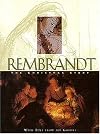
Rembrandt: The Christmas Story edited by David Wavre. Library section 7F: Religious Arts. I found this book at ELC’s rummage sale! I am glad I could get it for the library.
Rembrandt van Rijn, b. 1606, was one of the Netherlands’ most famous painters. This little book presents more than forty oil paintings, pen and ink sketches, and etchings depicting with great sweetness and power the story of the birth of Christ. Some scenes such as the “Adoration of the Shepherds” may be show more familiar, others such as “The Flight into Egypt” are less so.
The editor’s nine-page introduction discusses the importance of Rembrandt, how his home, his wife, and his own infant children may have been models for these works. Indeed, Jesus being rocked in his wicker cradle by mother Mary looks contemporary of Rembrandt’s time and the cozy intimacy suggest the joy Rembrandt found in his own family life. A scene in John the Baptist’s home includes a large, curtained, four poster bed, another give-away that the painter is a northern European.
Rembrandt used lighting to make his works dramatic, long before spotlights were invented! Often the light source – a lantern, candle or torch – is hidden by a foreground figure, so the figure is in darkness and the area behind the figure is lit, perhaps with large cast shadows on the far wall to heighten the drama. In each painting of Jesus, Rembrandt focuses light on the Christ child, the center of attention. But in at least a few scenes, the light emanates from Jesus himself, symbolizing his holy status.
Family cats and dogs inhabit these scenes, creating a feeling of domesticity. The building architecture is Gothic – northern European, certainly not middle eastern. Costumes are what Rembrandt and his Netherlanders imagined middle eastern Jewish costumes might have looked like – vaguely “Oriental,” flowing garments, cloaks, heavy veils worn more for warmth than modesty, and tall bulbous hats.
Beyond the introduction, the each work by Rembrandt is accompanied by Bible verses upon which the works are based. Also included are the sizes of the works and where the originals are located. When sharing this book’s pictures with a child, first ask the child to guess what part of the Nativity story the scene shows. Who are the people in it? Then read the bible verses to find the answer.
For an older child, talk about how the picture was made – an oil painting on canvas, a pen and ink sketch, or an etching (a scene scratched into a metal plate, then inked, wiped off, and printed. The ink that has remained in the tiny lines on the metal plate gets printed on the paper.) Discuss the size of the work with the child and where the work is located. It is important for children to learn that actual art works are often much, much larger than the reproduction in the book may be, and that if the child wishes, he can one day travel to see the actual art work. Some of these works are in Detroit, the National Gallery in Washington, DC, London, Paris, and Amsterdam. In this way you open the work of art to your child. Ask your child to draw her own picture of one part of the Nativity story, and hang it up for display. show less
Rembrandt van Rijn, b. 1606, was one of the Netherlands’ most famous painters. This little book presents more than forty oil paintings, pen and ink sketches, and etchings depicting with great sweetness and power the story of the birth of Christ. Some scenes such as the “Adoration of the Shepherds” may be show more familiar, others such as “The Flight into Egypt” are less so.
The editor’s nine-page introduction discusses the importance of Rembrandt, how his home, his wife, and his own infant children may have been models for these works. Indeed, Jesus being rocked in his wicker cradle by mother Mary looks contemporary of Rembrandt’s time and the cozy intimacy suggest the joy Rembrandt found in his own family life. A scene in John the Baptist’s home includes a large, curtained, four poster bed, another give-away that the painter is a northern European.
Rembrandt used lighting to make his works dramatic, long before spotlights were invented! Often the light source – a lantern, candle or torch – is hidden by a foreground figure, so the figure is in darkness and the area behind the figure is lit, perhaps with large cast shadows on the far wall to heighten the drama. In each painting of Jesus, Rembrandt focuses light on the Christ child, the center of attention. But in at least a few scenes, the light emanates from Jesus himself, symbolizing his holy status.
Family cats and dogs inhabit these scenes, creating a feeling of domesticity. The building architecture is Gothic – northern European, certainly not middle eastern. Costumes are what Rembrandt and his Netherlanders imagined middle eastern Jewish costumes might have looked like – vaguely “Oriental,” flowing garments, cloaks, heavy veils worn more for warmth than modesty, and tall bulbous hats.
Beyond the introduction, the each work by Rembrandt is accompanied by Bible verses upon which the works are based. Also included are the sizes of the works and where the originals are located. When sharing this book’s pictures with a child, first ask the child to guess what part of the Nativity story the scene shows. Who are the people in it? Then read the bible verses to find the answer.
For an older child, talk about how the picture was made – an oil painting on canvas, a pen and ink sketch, or an etching (a scene scratched into a metal plate, then inked, wiped off, and printed. The ink that has remained in the tiny lines on the metal plate gets printed on the paper.) Discuss the size of the work with the child and where the work is located. It is important for children to learn that actual art works are often much, much larger than the reproduction in the book may be, and that if the child wishes, he can one day travel to see the actual art work. Some of these works are in Detroit, the National Gallery in Washington, DC, London, Paris, and Amsterdam. In this way you open the work of art to your child. Ask your child to draw her own picture of one part of the Nativity story, and hang it up for display. show less
Lists
You May Also Like


Associated Authors
Statistics
- Works
- 312
- Also by
- 16
- Members
- 2,402
- Popularity
- #10,679
- Rating
- 4.3
- Reviews
- 22
- ISBNs
- 173
- Languages
- 14
- Favorited
- 1


