
Elizabeth Moon
Author of The Speed of Dark
About the Author
Elizabeth Moon was born March 7, 1945, and grew up in McAllen, Texas, graduating from McAllen High School in 1963. She has a B.A. in History from Rice University (1968) and another in Biology from the University of Texas at Austin (1975) with graduate work in Biology at the University of Texas, San show more Antonio. She served in the USMC from 1968 to 1971, first at MCB Quantico and then at HQMC. She married Richard Moon, a Rice classmate and Army officer, in 1969; they moved to the small central Texas town where they still live in 1979. They have one son, born in 1983. (Publisher Fact Sheets) Elizabeth Moon was born on March 7, 1945 in Texas. She received a B.A. in history from Rice University in 1968 and a B.S. in biology from the University of Texas at Austin in 1975 with graduate work in biology at the University of Texas, San Antonio. She served in the United States Marine Corps from 1968 to 1971. In the early 1980s, she wrote the Florence News column for the county weekly newspaper. She is a science fiction and fantasy author. In 1986, she published her first science fiction story in the monthly magazine Analog and the anthology series Sword and Sorceress. Her first novel, The Sheepfarmer's Daughter, was published in 1988 and won the Compton Crook Award in 1989. Her other works include Remnant Population, Oath of Fealty, Kings of the North, and Echoes of Betrayal. She has won several awards including the Nebula Award for Best Novel for The Speed of Dark in 2003 and the Heinlein Award in 2007. (Bowker Author Biography) show less
Series
Works by Elizabeth Moon
Point of Honor 6 copies
No Pain No Gain 3 copies
If Nudity Offends You 3 copies
Welcome To Wheel Days 2 copies
Gifts 2 copies
Sweet Charity 2 copies
Judgment 2 copies
Fool's Gold 2 copies
Cross Purposes 2 copies
Chameleons 2 copies
And Ladies of the Club 2 copies
First Blood 1 copy
Tradition 1 copy
Gravesite Revisited 1 copy
Say Cheese 1 copy
Combat Shopping [novella] 1 copy
Oath of Cold 1 copy
Associated Works
Don't Forget Your Spacesuit, Dear: The Mother of All Anthologies (1996) — Contributor — 229 copies, 5 reviews
The Magazine of Fantasy and Science Fiction July 1989, Vol. 77, No. 1 (1989) — Contributor — 11 copies
Tagged
Common Knowledge
- Legal name
- Moon, Susan Elizabeth Norris
- Birthdate
- 1945-03-07
- Gender
- female
- Education
- Rice University (BA ∙ History ∙ 1968)
University of Texas at Austin (BA ∙ Biology ∙ 1975)
University of Texas at San Antonio (Biology) - Occupations
- science fiction writer
paramedic
Marine Corps officer - Organizations
- United States Marine Corps (computer specialist, 1st lieutenant, 1968-1971)
- Awards and honors
- Robert A. Heinlein Award (2007)
- Agent
- Joshua Bilmes
[UK & Commonwealth] John Berlyne (Zeno Agency) - Nationality
- USA
- Birthplace
- McAllen, Texas, USA
- Places of residence
- Austin, Texas, USA
Florence, Texas, USA - Associated Place (for map)
- Texas, USA
Members
Discussions
FEBRUARY READ - SPOILERS - The Speed of Dark in The Green Dragon (February 2015)
FEBRUARY READ - NO SPOILERS - The Speed of Dark in The Green Dragon (February 2015)
Reviews

With Crown of Renewal, Elizabeth Moon concludes the seven book series of Paksenarrion's world. In her characteristically thorough and meticulous way, Moon gathers up all of the threads and loose ends developed over the previous six books and weaves them into a spell-binding conclusion (all puns are intended). While some of the chapters serve to extend the development of the plot or present the gossip among villagers as a way of telling how a character or event ended, some chapters really show more soar, the chapters on the elvinhome being especially lyrical.
Transformation has been a theme in all of the earlier books in the series, but now, from Fin Panir in the far west to the Pirate Bay in the east, from the north marches to the arid dunes of southern Aare, transformation is the biggest source of conflict and also the most powerful of solutions, all the while exposing the true, deep nature of each of the characters. Each is given their hour upon the stage to reach their well-deserved fortune or comeuppance. It was a joy to read the conclusion of each of these threads, to feel the essence of these fascinating people, to know how things finally turned out, but it was also sad, knowing that this was the end of the story for each one. The series has had a life since 1982, with the start of Sheepfarmer's Daughter, but as the dragon says, change happens!
And indeed it does, but a discussion of the events that await the reader would be all spoilers, would give away the essence of the story. Let's just say that transformation is pervasive, from elves ending up wondering if the Singer is changing The Song, from Marshals considering revising the Law of Gird and questioning whether they have been teaching a correct version in the first place, to the social effects on communities and individuals of magic appearing all over the land.
This is fantasy at its best, with the reader feeling the true essence of good and evil, of the pain that change brings, of the joyous ecstasy found in nature and the profound sadness of loss. And the ending was so good that I cried. One hopes Elizabeth Moon lives a long and fruitful life and continues to gift us with treasures like the Paksenarrion series!
I received a free copy of this book from the publisher in exchange for an honest review. ( 5 stars ) show less
Transformation has been a theme in all of the earlier books in the series, but now, from Fin Panir in the far west to the Pirate Bay in the east, from the north marches to the arid dunes of southern Aare, transformation is the biggest source of conflict and also the most powerful of solutions, all the while exposing the true, deep nature of each of the characters. Each is given their hour upon the stage to reach their well-deserved fortune or comeuppance. It was a joy to read the conclusion of each of these threads, to feel the essence of these fascinating people, to know how things finally turned out, but it was also sad, knowing that this was the end of the story for each one. The series has had a life since 1982, with the start of Sheepfarmer's Daughter, but as the dragon says, change happens!
And indeed it does, but a discussion of the events that await the reader would be all spoilers, would give away the essence of the story. Let's just say that transformation is pervasive, from elves ending up wondering if the Singer is changing The Song, from Marshals considering revising the Law of Gird and questioning whether they have been teaching a correct version in the first place, to the social effects on communities and individuals of magic appearing all over the land.
This is fantasy at its best, with the reader feeling the true essence of good and evil, of the pain that change brings, of the joyous ecstasy found in nature and the profound sadness of loss. And the ending was so good that I cried. One hopes Elizabeth Moon lives a long and fruitful life and continues to gift us with treasures like the Paksenarrion series!
I received a free copy of this book from the publisher in exchange for an honest review. ( 5 stars ) show less
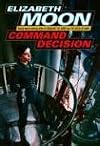
Book after book this series is taking shape and substance and this installment went a long way toward helping me forget the slight disappointment of volume 2, that I’m now regarding more as a case of “growing pains” than anything else. Despite a few residual niggles, truly too small to spoil my enjoyment of the story, Command Decision turned out to be a solid, entertaining read.
In previous books, Kylara Vatta, whose family made a fortune with their interstellar transport business, was show more expelled from the SpaceForce Academy in the aftermath of an unfortunate mishap and went back into the family’s fold trying to re-invent herself as a merchant captain. An unprecedented attack on her home world resulted in the death of a huge portion of Ky’s family so she resorted to try and resurrect the family business while fighting the encroaching expansion of a pirate consortium. In Command Decision, we saw Ky working to consolidate her small but growing coalition of merchant captains who choose to stand up to the pirates, but we are also afforded a wider view of the overall situation, discovering alongside the characters that the pirates are only a part of the problem, one that involves hostile corporate takeovers, political maneuvers and a generalized regression in the galaxy’s civilized dealings.
The shifting focus between the various situations keeps the pace lively and the story interesting, and in some cases it changed my opinion of previously encountered characters: a case in point is represented by Rafe, whose earlier appearance seemed to point toward a Gary Stu kind of figure, while here he takes on some much-needed depth and morphs into a very intriguing person. It’s through Rafe’s segment of the story that we start perceiving the scope of what looks like a huge conspiracy to change the political and economical face of the galaxy: having lost contact with his family, he travels in incognito to his homeworld only to discover that his parents and siblings have disappeared and any inquiry on their whereabouts raises the interest of some unsavory characters. There is a subtle irony in the fact that Rafe was sent away from home because of a dramatic incident that changed him profoundly, and now he’s his family’s only hope for freedom and safety: as I saw him struggle to resolve the situation without endangering their chances for survival, and while I learned what it meant to him to be perceived as a monster, I slowly warmed up to him and started to see the real person under the rakish façade, someone who can forget any bitterness at the unfair treatment received and risk everything for those he holds dear. In a way, I believe that Rafe’s back story runs on a similar course to Kylara, since both of them needed to re-invent themselves after a traumatic experience, and that this element, rather than any form of mutual attraction, could be the basis for the future relationship that is at times hinted at as a possibility in the course of the story.
Stella, Ky’s cousin, is also slowly emerging from a trauma of her own, one that disrupted her sense of identity and belonging to the Vatta clan: while some residue from that shock might understandably linger, in this book Stella goes back to her earlier appearance, that of a well-grounded, no-nonsense person with a good head for business and the courage to try untraveled roads. Having been invested with the position of CEO for Vatta Enterprises, she throws herself into the work leaving little or no space for doubts and self-recriminations, and the need to care for the underage Toby – another survivor of the merciless attacks on the family – seems to be what she needs for her newfound balance. The most interesting comment on Stella’s transformation comes from Aunt Grace, the clan’s matriarch and a character I never see enough of, when she considers how those changes went even beyond Grace’s expectations, or anyone else’s for that matter.
But of course the main focus remains on Ky, even though she equally shares it with the others here, offsetting any danger of looking like the cliché do-it-all-by-herself heroine: she is still on a learning curve, but she’s gaining in assuredness with every challenge faced and overcome, and she’s also acquiring some of the toughness that’s required by her position, as demonstrated by the swift, uncompromising way in which she deals with the situation at Gretna station, whose inhabitants – already infamous for their racist viewpoints – have turned to fraud and slavery to increment their resources; or when she accepts Captain Ransome’s ships as part of the convoy, knowing that their inexperienced enthusiasm might prove fatal, but accepting the necessity of some “cannon fodder” on the front lines. More importantly, Ky’s storyline serves to showcase the foolishness of corporate mentality and the blindness that can impair the smooth workings of a galaxy-wide service (like ISC, the owners of the communication network), making it the far-too-easy target of anyone armed with the will to take advantage of it: this is what makes this series different from other space opera settings, the mixing of the required adventure with some economic considerations and a few social commentaries that spice up the narrative and at the same time set it firmly into a very believable background.
Command Decision does still suffer from some slight problems, like a few repetitions of known facts and the tendency to slide into undue exposition; or again the instances (thankfully less marked here) in which Ky is accused – because of her youth and perceived inexperience – of being susceptible to girlish infatuations: the latter is what makes me grind my teeth in frustration every time I encounter it, making me wonder why the author keeps undermining her character this way. That said, Vatta’s War is still shaping up nicely for what I hope will be a satisfactory ending, and a good introduction to the next series, whose first book I sampled before retracing my steps to the beginning.
Originally posted at SPACE and SORCERY BLOG show less
In previous books, Kylara Vatta, whose family made a fortune with their interstellar transport business, was show more expelled from the SpaceForce Academy in the aftermath of an unfortunate mishap and went back into the family’s fold trying to re-invent herself as a merchant captain. An unprecedented attack on her home world resulted in the death of a huge portion of Ky’s family so she resorted to try and resurrect the family business while fighting the encroaching expansion of a pirate consortium. In Command Decision, we saw Ky working to consolidate her small but growing coalition of merchant captains who choose to stand up to the pirates, but we are also afforded a wider view of the overall situation, discovering alongside the characters that the pirates are only a part of the problem, one that involves hostile corporate takeovers, political maneuvers and a generalized regression in the galaxy’s civilized dealings.
The shifting focus between the various situations keeps the pace lively and the story interesting, and in some cases it changed my opinion of previously encountered characters: a case in point is represented by Rafe, whose earlier appearance seemed to point toward a Gary Stu kind of figure, while here he takes on some much-needed depth and morphs into a very intriguing person. It’s through Rafe’s segment of the story that we start perceiving the scope of what looks like a huge conspiracy to change the political and economical face of the galaxy: having lost contact with his family, he travels in incognito to his homeworld only to discover that his parents and siblings have disappeared and any inquiry on their whereabouts raises the interest of some unsavory characters. There is a subtle irony in the fact that Rafe was sent away from home because of a dramatic incident that changed him profoundly, and now he’s his family’s only hope for freedom and safety: as I saw him struggle to resolve the situation without endangering their chances for survival, and while I learned what it meant to him to be perceived as a monster, I slowly warmed up to him and started to see the real person under the rakish façade, someone who can forget any bitterness at the unfair treatment received and risk everything for those he holds dear. In a way, I believe that Rafe’s back story runs on a similar course to Kylara, since both of them needed to re-invent themselves after a traumatic experience, and that this element, rather than any form of mutual attraction, could be the basis for the future relationship that is at times hinted at as a possibility in the course of the story.
Stella, Ky’s cousin, is also slowly emerging from a trauma of her own, one that disrupted her sense of identity and belonging to the Vatta clan: while some residue from that shock might understandably linger, in this book Stella goes back to her earlier appearance, that of a well-grounded, no-nonsense person with a good head for business and the courage to try untraveled roads. Having been invested with the position of CEO for Vatta Enterprises, she throws herself into the work leaving little or no space for doubts and self-recriminations, and the need to care for the underage Toby – another survivor of the merciless attacks on the family – seems to be what she needs for her newfound balance. The most interesting comment on Stella’s transformation comes from Aunt Grace, the clan’s matriarch and a character I never see enough of, when she considers how those changes went even beyond Grace’s expectations, or anyone else’s for that matter.
But of course the main focus remains on Ky, even though she equally shares it with the others here, offsetting any danger of looking like the cliché do-it-all-by-herself heroine: she is still on a learning curve, but she’s gaining in assuredness with every challenge faced and overcome, and she’s also acquiring some of the toughness that’s required by her position, as demonstrated by the swift, uncompromising way in which she deals with the situation at Gretna station, whose inhabitants – already infamous for their racist viewpoints – have turned to fraud and slavery to increment their resources; or when she accepts Captain Ransome’s ships as part of the convoy, knowing that their inexperienced enthusiasm might prove fatal, but accepting the necessity of some “cannon fodder” on the front lines. More importantly, Ky’s storyline serves to showcase the foolishness of corporate mentality and the blindness that can impair the smooth workings of a galaxy-wide service (like ISC, the owners of the communication network), making it the far-too-easy target of anyone armed with the will to take advantage of it: this is what makes this series different from other space opera settings, the mixing of the required adventure with some economic considerations and a few social commentaries that spice up the narrative and at the same time set it firmly into a very believable background.
Command Decision does still suffer from some slight problems, like a few repetitions of known facts and the tendency to slide into undue exposition; or again the instances (thankfully less marked here) in which Ky is accused – because of her youth and perceived inexperience – of being susceptible to girlish infatuations: the latter is what makes me grind my teeth in frustration every time I encounter it, making me wonder why the author keeps undermining her character this way. That said, Vatta’s War is still shaping up nicely for what I hope will be a satisfactory ending, and a good introduction to the next series, whose first book I sampled before retracing my steps to the beginning.
Originally posted at SPACE and SORCERY BLOG show less

After backtracking through the five novels of Elizabeth Moon’s Vatta’s War series, I was finally able to get back to Cold Welcome, the first volume in the author’s new cycle called Vatta’s Peace, one that I started reading some time ago before realizing that I was missing too much back-story for my comfort.
Granted, one could start with Cold Welcome without undue problems – and I know many have done so – since the author leaves some well-placed signposts that help the readers show more orient themselves, but getting to this point after learning to know Kylara Vatta and the way she grew, as a person and as a commander, through the previous series, is a different kind of experience, a more rounded, deep-reaching one.
The book starts a few years after the events in Victory Conditions: following the decisive success against Turek’s pirates, Admiral Kylara Vatta has expanded and consolidated her Space Defense fleet, shaping it into a solid and respected organization. Returning for the first time to her home planet at the request of her formidable Aunt Grance, Slotter Key’s Rector of Defense, Ky boards a connecting shuttle with her former Academy commander, the man who expelled her after a diplomatic incident, and from the very start something looks suspicious: the shuttle must perform unplanned course corrections due to a strong weather front, and some unexpected technical problems force the pilots to effect an emergency landing. From that point on, all hell breaks loose and Ky finds herself and the survivors of the crash marooned in a harsh, desolated land marked as “terraforming failure” by the planetary charts. It becomes immediately clear that the crash was the result of an act of sabotage (or rather several acts, since the perpetrators wanted to be certain of reaching their goal), so that Ky and her surviving comrades are not only fighting against tough environmental conditions – first on life rafts and then on an Arctic-like tundra – but against intentional damage on their survival gear. Not to mention the traitor (or traitors) hidden in the group…
This is where, I believe, knowledge of the events that shaped Ky Vatta into the person we see in this novel is essential, because otherwise she might come across as know-it-all kind of Mary Sue instead of the individual who managed to overcome a long chain of difficulties and personal losses, becoming a capable, level-headed leader. Knowing what Ky went through in the past, first with her unjust (and very possibly contrived) expulsion from the Academy, and then as a merchanter-turned-soldier as she fought Gammis Turek’s pirates, helps in contextualizing her actions and the hard decisions she must take for the survival of the group. Again, Moon does a good job in providing the new readers with all the necessary clues without cluttering the narrative with long exposition, but there is a great difference between being told about certain occurrences and reading them as they happen in Ky’s life, changing her outlook, shaping her personality and building some much-needed experience.
And that experience is what she and her group need, badly, in what looks like a desperate situation, worsened by some instances that appear more and more suspicious as the clues build up: the area where the shuttle crash-lands is one where surveillance satellites and communications don’t seem to work; some of the emergency supplies for the life rafts are either incomplete or damaged; and the behavior of some of the survivors doesn’t always add up. Never has Ky been so alone in her previous undertakings: before she always had a loyal crew to support her, and friends or family within reach, while now she must shape a group of strangers into a cohesive unit working together to survive, and the only known entity she can count on is her aide, a very uptight woman more focused on proper behavior and military decorum than on what really matters in such a situation. Not the best start, indeed…
The extreme conditions with which the group must deal offer a great chance for character exploration, so that the departure from the usual space opera or military SF themes one might expect leaves room for a very different kind of story, one where we can watch how people react to punishing environmental conditions and the very concrete possibility of death before any rescue can be effected. In this Moon truly excels, because she sketches the various personalities through the hardships they go through, and also manages to gift us with some surprising developments: there are a few scenes where the undercurrents of personality clashes come to the fore, and I enjoyed both the verbal skirmishes those entailed and Ky’s reactions, that were always quite collected despite the personal strain she was enduring at the moment.
If the narrative thread of the survivors is a fascinating one – especially when they make a quite unexpected discovery on a supposedly barren and uninhabited landmass – there is an equally intriguing storyline where Ky’s family and friends and the local authorities are concerned: even in the face of the grim odds presented about the survival of the shuttle passengers, Grace, Stella and the rest of the family are not ready to give up the search, so that when Rafe is able to confirm that Ky is indeed alive, thanks to their ansible connection, the Vattas resume their attempts to reach the survivors, finding several obstacles on their path. Clearly, the recent purge has not rooted out all the rotten apples from Slotter Key’s management structure, so that Grace, Rafe & Co. need to move with quiet stealth to avoid being thwarted in their efforts. There is a mounting sense of dread running through both narrative paths, which makes for a compelling read and a very engrossing story.
All of the above would be enough for a very satisfying read, but it’s not all one can find in Cold Welcome, because of the discovery Ky and the other survivors make in the not-so-deserted wasteland where they crashed: it’s a puzzle that will need to be unraveled (and probably the focus of the next books) and that promises to be as fraught with danger as the previous pirate chase has been. Something I’m happily looking forward to.
Originally posted at SPACE AND SORCERY BLOG show less
Granted, one could start with Cold Welcome without undue problems – and I know many have done so – since the author leaves some well-placed signposts that help the readers show more orient themselves, but getting to this point after learning to know Kylara Vatta and the way she grew, as a person and as a commander, through the previous series, is a different kind of experience, a more rounded, deep-reaching one.
The book starts a few years after the events in Victory Conditions: following the decisive success against Turek’s pirates, Admiral Kylara Vatta has expanded and consolidated her Space Defense fleet, shaping it into a solid and respected organization. Returning for the first time to her home planet at the request of her formidable Aunt Grance, Slotter Key’s Rector of Defense, Ky boards a connecting shuttle with her former Academy commander, the man who expelled her after a diplomatic incident, and from the very start something looks suspicious: the shuttle must perform unplanned course corrections due to a strong weather front, and some unexpected technical problems force the pilots to effect an emergency landing. From that point on, all hell breaks loose and Ky finds herself and the survivors of the crash marooned in a harsh, desolated land marked as “terraforming failure” by the planetary charts. It becomes immediately clear that the crash was the result of an act of sabotage (or rather several acts, since the perpetrators wanted to be certain of reaching their goal), so that Ky and her surviving comrades are not only fighting against tough environmental conditions – first on life rafts and then on an Arctic-like tundra – but against intentional damage on their survival gear. Not to mention the traitor (or traitors) hidden in the group…
This is where, I believe, knowledge of the events that shaped Ky Vatta into the person we see in this novel is essential, because otherwise she might come across as know-it-all kind of Mary Sue instead of the individual who managed to overcome a long chain of difficulties and personal losses, becoming a capable, level-headed leader. Knowing what Ky went through in the past, first with her unjust (and very possibly contrived) expulsion from the Academy, and then as a merchanter-turned-soldier as she fought Gammis Turek’s pirates, helps in contextualizing her actions and the hard decisions she must take for the survival of the group. Again, Moon does a good job in providing the new readers with all the necessary clues without cluttering the narrative with long exposition, but there is a great difference between being told about certain occurrences and reading them as they happen in Ky’s life, changing her outlook, shaping her personality and building some much-needed experience.
And that experience is what she and her group need, badly, in what looks like a desperate situation, worsened by some instances that appear more and more suspicious as the clues build up: the area where the shuttle crash-lands is one where surveillance satellites and communications don’t seem to work; some of the emergency supplies for the life rafts are either incomplete or damaged; and the behavior of some of the survivors doesn’t always add up. Never has Ky been so alone in her previous undertakings: before she always had a loyal crew to support her, and friends or family within reach, while now she must shape a group of strangers into a cohesive unit working together to survive, and the only known entity she can count on is her aide, a very uptight woman more focused on proper behavior and military decorum than on what really matters in such a situation. Not the best start, indeed…
The extreme conditions with which the group must deal offer a great chance for character exploration, so that the departure from the usual space opera or military SF themes one might expect leaves room for a very different kind of story, one where we can watch how people react to punishing environmental conditions and the very concrete possibility of death before any rescue can be effected. In this Moon truly excels, because she sketches the various personalities through the hardships they go through, and also manages to gift us with some surprising developments: there are a few scenes where the undercurrents of personality clashes come to the fore, and I enjoyed both the verbal skirmishes those entailed and Ky’s reactions, that were always quite collected despite the personal strain she was enduring at the moment.
If the narrative thread of the survivors is a fascinating one – especially when they make a quite unexpected discovery on a supposedly barren and uninhabited landmass – there is an equally intriguing storyline where Ky’s family and friends and the local authorities are concerned: even in the face of the grim odds presented about the survival of the shuttle passengers, Grace, Stella and the rest of the family are not ready to give up the search, so that when Rafe is able to confirm that Ky is indeed alive, thanks to their ansible connection, the Vattas resume their attempts to reach the survivors, finding several obstacles on their path. Clearly, the recent purge has not rooted out all the rotten apples from Slotter Key’s management structure, so that Grace, Rafe & Co. need to move with quiet stealth to avoid being thwarted in their efforts. There is a mounting sense of dread running through both narrative paths, which makes for a compelling read and a very engrossing story.
All of the above would be enough for a very satisfying read, but it’s not all one can find in Cold Welcome, because of the discovery Ky and the other survivors make in the not-so-deserted wasteland where they crashed: it’s a puzzle that will need to be unraveled (and probably the focus of the next books) and that promises to be as fraught with danger as the previous pirate chase has been. Something I’m happily looking forward to.
Originally posted at SPACE AND SORCERY BLOG show less
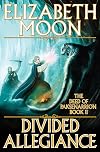
Whoa. I jumped right into this book after reading the first in the series. The mood here is different; Paks, having left Duke Phelan's company, journeys across the land trying to find new noble work as a mercenary. After she is selected to be a Paladin-candidate in the Orders of Gird, she is the happiest she has ever been. However, things do not go as intended on a quest, and Paks is deeply changed by the experience (understatement of the year there, but spoiler-free).
I know there is some show more debate about the middle books of a fantasy trilogy being unnecessary fluff. Not the case here. The ending of the book is probably the most depressing of any fantasy book I've ever read. I felt like crying or throttling people. However, it was depressing in a good way because I must read the next book to see how Paks emerges from this experience. She has to. Right? show less
I know there is some show more debate about the middle books of a fantasy trilogy being unnecessary fluff. Not the case here. The ending of the book is probably the most depressing of any fantasy book I've ever read. I felt like crying or throttling people. However, it was depressing in a good way because I must read the next book to see how Paks emerges from this experience. She has to. Right? show less
Lists
To Read (1)
2016 reads (1)
Nebula Award (1)
SFFCat 2015 (1)
Farm Boy Fantasy (1)
mom (4)
Favorite Series (2)
Comfort Reads (1)
Carole's List (1)
Awards


You May Also Like


Associated Authors
Statistics
- Works
- 119
- Also by
- 39
- Members
- 37,112
- Popularity
- #492
- Rating
- 3.8
- Reviews
- 789
- ISBNs
- 428
- Languages
- 13
- Favorited
- 135
