

Duncan Wu
Author of Romanticism: An Anthology
About the Author
Duncan Wu is Professor of English at Georgetown University in Washington, DC. He is the editor of Romanticism: An Anthology, 4th edition (Wiley Blackwell, 2012), and the author of books about Romanticism Wordsworth, and Hazlitt.
Works by Duncan Wu
Making Plays: Interviews with Contemporary British Dramatists and Directors (2000) 8 copies, 1 review
Romanticism 3 copies
The Happy Fireside 1 copy
Associated Works
Tagged
Common Knowledge
- Birthdate
- 1961-11-03
- Gender
- male
- Education
- University of Oxford (BA|English Language and Literature|1984)
University of Oxford (DPhil|English Language and Literature|1991) - Occupations
- scholar of English language and literature
university professor
critic - Organizations
- Charles Lamb Society
The Hazlitt Society (founder member)
The Keats-Shelley Memorial Association
Oxford University
University of Glasgow
Georgetown University - Nationality
- UK
- Birthplace
- Woking, Surrey, England, UK
- Places of residence
- England, UK
USA - Associated Place (for map)
- England, UK
Members
Reviews
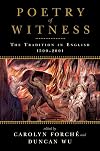
On January 22, I received an electronic review copy of Poetry of Witness from W.W. Norton. Like all of the Norton anthologies this book is huge, so I haven’t begun to work my way completely through it, but I am already at a point where I feel that, even if I used every superlative in my writer’s armamentarium, I wouldn’t be doing this collection justice.
Poetry of Witness, which Forché also calls literature of that-which-happened, has a long history, though I find it less often than show more I’d like in English-language poetry, which seems more preoccupied with relating the complexity of individual emotion—whether joyful of mournful. Forché’s forward, “Reading the Living Archives: The Witness of Literary Lives,” attempts to forge a definition of poetry of witness that captures its meaning for author, reader, and society alike, concluding
"In the poetry of witness, the poems make present to us the experience, rather than a symbolic representation. When we read the poem as witness, we are marked by it and become ourselves witnesses to what it has made present before us. Language incises the page, wounding it with testimonial presence, and the reader is marked by encounter with that presence. Witness begets witness. The text we read becomes a living archive."
Forché reminds us that this living archive is not just figurative, but literal: Anna Akhmatova burned many of her poems after friends had memorized them, keeping them present when their physical presence would have been a very real threat to her life.
Poetry of witness emerges from, not after, experience, since it testifies to experiences that cannot be left behind, cannot become after. Forché argues that the language of poetry of witness is a damaged—and therefore transformed—language. The body of thought, like the body itself can be broken, (partially) rebuilt, mended:
"The witness who writes out of extremity writes his or her wound, as if such writing were making an incision. Consciousness itself is cut open. At the site of the wound, language breaks, becomes tentative, interrogational, kaleidoscopic. The form of this language bears the trance of extremity, and may be composed of fragments: questions, aphorisms, broken passages of lyric prose or poetry, quotations, dialogue, brief and lucid passages that may or may not resemble what previously had been written."
This volume, which is arranged chronologically, is a companion to Forché’s 1993 anthology, Against Forgetting (also published by Norton), which focuses on 20th Century poetry of witness. Poetry of Witness, with its broader focus, offers a powerful lineage of refusal, of questioning, on individuals destroyed upon the altars of states. These poems are part of the flow of literary witness across the last five hundred years of our history: long, damaged, glistening strands, like ropes, like rivers, like the twist of dna. By testifying to the worst in us, they preserve not only horror, but the hope of something better.
I don’t have now, and don’t know if I ever will have, words to capture the fierce, essential nature of this collection. I do know I will read and reread it—and, I hope, use it as a spur to thought, word, and action. show less
Poetry of Witness, which Forché also calls literature of that-which-happened, has a long history, though I find it less often than show more I’d like in English-language poetry, which seems more preoccupied with relating the complexity of individual emotion—whether joyful of mournful. Forché’s forward, “Reading the Living Archives: The Witness of Literary Lives,” attempts to forge a definition of poetry of witness that captures its meaning for author, reader, and society alike, concluding
"In the poetry of witness, the poems make present to us the experience, rather than a symbolic representation. When we read the poem as witness, we are marked by it and become ourselves witnesses to what it has made present before us. Language incises the page, wounding it with testimonial presence, and the reader is marked by encounter with that presence. Witness begets witness. The text we read becomes a living archive."
Forché reminds us that this living archive is not just figurative, but literal: Anna Akhmatova burned many of her poems after friends had memorized them, keeping them present when their physical presence would have been a very real threat to her life.
Poetry of witness emerges from, not after, experience, since it testifies to experiences that cannot be left behind, cannot become after. Forché argues that the language of poetry of witness is a damaged—and therefore transformed—language. The body of thought, like the body itself can be broken, (partially) rebuilt, mended:
"The witness who writes out of extremity writes his or her wound, as if such writing were making an incision. Consciousness itself is cut open. At the site of the wound, language breaks, becomes tentative, interrogational, kaleidoscopic. The form of this language bears the trance of extremity, and may be composed of fragments: questions, aphorisms, broken passages of lyric prose or poetry, quotations, dialogue, brief and lucid passages that may or may not resemble what previously had been written."
This volume, which is arranged chronologically, is a companion to Forché’s 1993 anthology, Against Forgetting (also published by Norton), which focuses on 20th Century poetry of witness. Poetry of Witness, with its broader focus, offers a powerful lineage of refusal, of questioning, on individuals destroyed upon the altars of states. These poems are part of the flow of literary witness across the last five hundred years of our history: long, damaged, glistening strands, like ropes, like rivers, like the twist of dna. By testifying to the worst in us, they preserve not only horror, but the hope of something better.
I don’t have now, and don’t know if I ever will have, words to capture the fierce, essential nature of this collection. I do know I will read and reread it—and, I hope, use it as a spur to thought, word, and action. show less
Actual rating: 2.5
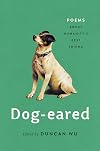
This book has an interesting premise, but fails to fully identity itself for what it is.
Dog-eared is a poetry compilation with the center focus being dogs. That is completely fine and generally, enjoyable. However, this book goes through a few tonal shifts that make it hard to say that it is a must-read or must-have. The introduction spends a lot of time engaging in academic discussion about the poems it will include. It talks about and quotes a couple of the included show more poems in a bit more depth. On some of the poems there is commentary on what the authors may have intended, or tidbits of what they thought about animals. Other times, there isn't anything additional added at all.
This book is organized chronologically, so the first few poems are excerpts from longer works. These poems are often accompanied by a little bit of commentary. Sometimes it is enlightenting and sometimes it feels kind of forced. This was probably my least favorite section, because some of these poems are also the most accessible and are included as excerpts. I am not a fan of excerpts, because I'd rather just read the entire work to see the full context. I understand many people like to just have relevant bits or won't take the time to read the entire thing, but that's my preference. Reading an excerpt with very little context makes me feel like I've been dropped in the middle of nowhere without a map.
Now, as a person who did study English & American Literature academically, as well as poetry (within English and creative writing), I genuinely see what the author was trying to do and I appreciate it. However, I don't feel like the execution was done that well. I like the effort, I like the concept, and I wish that this had been a stronger volume. At times this volume felt like it wanted to be an academic dive into canine poetry. At other times it felt like a poetry survey presentation done by a new undergraduate student, that falls flat. It has all the research, material, and beginning insight to be worth paying attention to, but it fails to really provide a solid thesis statement or consistent product. When I think of poetry and literature anthologies, I think of collections of work that I just HAVE to have, because they combine things I need or love, in an effective way or they are needed in order to complete an assignment for a course. Some anthologies you buy just to have the works, some you buy for the insights they provide, and some you buy because you're basically forced to. I have an anthology of short fiction that just gives quick author bios and then has the story or stories included for them. I also have a Norton anthology of Shakespeare that provides more commentary and historical context before each play. Both anthologies serve different purposes, but are highly effective. This anthology of poetry doesn't feel like either, and doesn't feel necessary. It feels like somebody said "I like dogs! Do you like dogs? Look at all these poems I found that include the word dog or that talk about dogs in them!" It is also too academic in tone at times to really be an anthology that an average person would buy just for fun. It doesn't always feel entertaining and it doesn't always feel informative. It teeters back and forth.
As far as consistency, some of the authors get more bios than others, some works are excerpted and mentioned, but not fully included. The bios and commentary are inconsistent in style and presentation, which is what really bothered me. If there was more attention to this aspect of the book, I think I would have enjoyed it better. Also, there is inclusion of what some poets thoughts were on dogs, dogs they owned, or things that they were against (ex: vivisections). These were really insightful inclusions, but I would really like to know where this information comes from. What are the sources? Some excerpts from letters expressing such details are included, but there is no bibliography showing where these views and stances come from. This is why I say that this book does not appear to know what it wants to be. There is some analysis at times. There is no analysis at others. There is some background info for authors at times. There is no background info at others. There are permission citations provided for necessary works. There are no citations for some of the other information that would appear to need citation. This just reads of inconsistency and I feel like if I produced a work similar to this for an in-class presentation, my professors would have some major critiques for not having been consistent, not providing proper citations, and for failing to polish the end product to make it effectively presentable.
The only other thing that really bothered me, was the intensive discussion of poems within the introduction. This was because once I actually got to some of the poems, the additional paragraph seemed to say the exact same thing as the intro and by included quotes from the poems, I felt like I was re-reading a poem that was already done. It felt repetitious, even though I know that I didn't actually read the full thing to begin with. This made it very hard for me to focus as I was reading and it led me to be confused momentarily and pause. I had to think, "didn't I read this already? Wait, which poem about Tray was discussed? Are there multiple dogs named Tray and it's all bleeding over? Or is it only one and I'm remembering it from the Introduction?" That was rather jarring.
Academic criticism aside, I thought this was a good compilation. I liked the range of poems over time and how thoughts on dogs appeared to largely remain the same, even though the poetry style and diction changed per major era. I liked the chronological progression and I love the subject matter. My only suggestion would be to clean up the inconsistency with a few quick edits, trim up the introduction, and add citations to additional biographical information since an academic tone is taken very early on. This is a great concept with a lack luster execution, that has the potential to be a great volume. I'm not going to run out and buy it, but if I ever decided to do some research on portrayal of animals over time, I might locate a copy to use as a directory of sorts. That's moreso what this book feels like. A directory of canine poetry, or a sampler of sorts. show less
This book has an interesting premise, but fails to fully identity itself for what it is.
Dog-eared is a poetry compilation with the center focus being dogs. That is completely fine and generally, enjoyable. However, this book goes through a few tonal shifts that make it hard to say that it is a must-read or must-have. The introduction spends a lot of time engaging in academic discussion about the poems it will include. It talks about and quotes a couple of the included show more poems in a bit more depth. On some of the poems there is commentary on what the authors may have intended, or tidbits of what they thought about animals. Other times, there isn't anything additional added at all.
This book is organized chronologically, so the first few poems are excerpts from longer works. These poems are often accompanied by a little bit of commentary. Sometimes it is enlightenting and sometimes it feels kind of forced. This was probably my least favorite section, because some of these poems are also the most accessible and are included as excerpts. I am not a fan of excerpts, because I'd rather just read the entire work to see the full context. I understand many people like to just have relevant bits or won't take the time to read the entire thing, but that's my preference. Reading an excerpt with very little context makes me feel like I've been dropped in the middle of nowhere without a map.
Now, as a person who did study English & American Literature academically, as well as poetry (within English and creative writing), I genuinely see what the author was trying to do and I appreciate it. However, I don't feel like the execution was done that well. I like the effort, I like the concept, and I wish that this had been a stronger volume. At times this volume felt like it wanted to be an academic dive into canine poetry. At other times it felt like a poetry survey presentation done by a new undergraduate student, that falls flat. It has all the research, material, and beginning insight to be worth paying attention to, but it fails to really provide a solid thesis statement or consistent product. When I think of poetry and literature anthologies, I think of collections of work that I just HAVE to have, because they combine things I need or love, in an effective way or they are needed in order to complete an assignment for a course. Some anthologies you buy just to have the works, some you buy for the insights they provide, and some you buy because you're basically forced to. I have an anthology of short fiction that just gives quick author bios and then has the story or stories included for them. I also have a Norton anthology of Shakespeare that provides more commentary and historical context before each play. Both anthologies serve different purposes, but are highly effective. This anthology of poetry doesn't feel like either, and doesn't feel necessary. It feels like somebody said "I like dogs! Do you like dogs? Look at all these poems I found that include the word dog or that talk about dogs in them!" It is also too academic in tone at times to really be an anthology that an average person would buy just for fun. It doesn't always feel entertaining and it doesn't always feel informative. It teeters back and forth.
As far as consistency, some of the authors get more bios than others, some works are excerpted and mentioned, but not fully included. The bios and commentary are inconsistent in style and presentation, which is what really bothered me. If there was more attention to this aspect of the book, I think I would have enjoyed it better. Also, there is inclusion of what some poets thoughts were on dogs, dogs they owned, or things that they were against (ex: vivisections). These were really insightful inclusions, but I would really like to know where this information comes from. What are the sources? Some excerpts from letters expressing such details are included, but there is no bibliography showing where these views and stances come from. This is why I say that this book does not appear to know what it wants to be. There is some analysis at times. There is no analysis at others. There is some background info for authors at times. There is no background info at others. There are permission citations provided for necessary works. There are no citations for some of the other information that would appear to need citation. This just reads of inconsistency and I feel like if I produced a work similar to this for an in-class presentation, my professors would have some major critiques for not having been consistent, not providing proper citations, and for failing to polish the end product to make it effectively presentable.
The only other thing that really bothered me, was the intensive discussion of poems within the introduction. This was because once I actually got to some of the poems, the additional paragraph seemed to say the exact same thing as the intro and by included quotes from the poems, I felt like I was re-reading a poem that was already done. It felt repetitious, even though I know that I didn't actually read the full thing to begin with. This made it very hard for me to focus as I was reading and it led me to be confused momentarily and pause. I had to think, "didn't I read this already? Wait, which poem about Tray was discussed? Are there multiple dogs named Tray and it's all bleeding over? Or is it only one and I'm remembering it from the Introduction?" That was rather jarring.
Academic criticism aside, I thought this was a good compilation. I liked the range of poems over time and how thoughts on dogs appeared to largely remain the same, even though the poetry style and diction changed per major era. I liked the chronological progression and I love the subject matter. My only suggestion would be to clean up the inconsistency with a few quick edits, trim up the introduction, and add citations to additional biographical information since an academic tone is taken very early on. This is a great concept with a lack luster execution, that has the potential to be a great volume. I'm not going to run out and buy it, but if I ever decided to do some research on portrayal of animals over time, I might locate a copy to use as a directory of sorts. That's moreso what this book feels like. A directory of canine poetry, or a sampler of sorts. show less
Amazon: Duncan Wu is Professor of English Literature at the University of Glasgow.
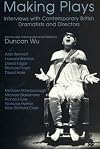
Making Plays explores great drama of the last two decades through the eyes of those who write it and those who direct it. It is at once a masterclass on theatrical technique and a unique insight into the ways in which great dramatists of our time have reacted to a rapidly changing world. Duncan Wu talks to A Bennett, H Brenton, D Edgar, M Frayn, D Hare, M Attenborough, M Blakemore, R Eyre, N Hytner, M show more Stafford-Clark show less
Making Plays explores great drama of the last two decades through the eyes of those who write it and those who direct it. It is at once a masterclass on theatrical technique and a unique insight into the ways in which great dramatists of our time have reacted to a rapidly changing world. Duncan Wu talks to A Bennett, H Brenton, D Edgar, M Frayn, D Hare, M Attenborough, M Blakemore, R Eyre, N Hytner, M show more Stafford-Clark show less
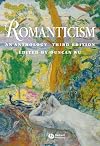
Romanticism: An Anthology (Blackwell Anthologies) (2005)
Lists
Awards

You May Also Like


Associated Authors
Statistics
- Works
- 29
- Also by
- 1
- Members
- 788
- Popularity
- #32,299
- Rating
- 3.6
- Reviews
- 4
- ISBNs
- 66