
Amal El-Mohtar
Author of This Is How You Lose the Time War
About the Author
Amal El-Mohtar won the Locus Awards 2015 award in the Short Story category with her title The Truth About Owls, which is featured in the anthology Kaleidoscope. (Bowker Author Biography)
Works by Amal El-Mohtar
Fantasy Magazine, Issue 60 (December 2016) - People of Colo(u)r Destroy Fantasy! Special Issue (2016) — Editor — 32 copies, 1 review
To Follow The Waves 3 copies
Wing (short story) 2 copies
Hungry Constellations 1 copy
The Lonley Sea in the Sky 1 copy
Peach-Creamed Honey 1 copy
Sparrow and Egg 1 copy
Associated Works
The Thackery T. Lambshead Cabinet of Curiosities: Exhibits, Oddities, Images, and Stories from Top Authors and Artists (2011) — Contributor — 491 copies, 17 reviews
From a Certain Point of View: 40 Stories Celebrating 40 Years of Return of the Jedi (2023) — Contributor — 214 copies, 6 reviews
Lightspeed Magazine, Issue 49 • June 2014 (Women Destroy Science Fiction! special issue) (2014) — Contributor — 174 copies, 11 reviews
The Long List Anthology: More Stories From the Hugo Award Nomination List (2015) — Contributor — 126 copies, 6 reviews
Kaleidoscope: Diverse YA Science Fiction and Fantasy Stories (2014) — Contributor — 123 copies, 6 reviews
Lightspeed Magazine, Issue 61 • June 2015 (Queers Destroy Science Fiction! special issue) (2015) — Contributor — 112 copies, 3 reviews
Chicks Unravel Time: Women Journey Through Every Season of Doctor Who (2012) — Contributor — 103 copies, 3 reviews
Queers Dig Time Lords: A Celebration of Doctor Who by the LGBTQ Fans Who Love It (2013) — Contributor — 81 copies, 2 reviews
The Long List Anthology Volume 2: More Stories from the Hugo Award Nomination List (2016) — Contributor — 76 copies, 1 review
The Best Science Fiction and Fantasy of the Year, Volume 9 (2015) — Contributor — 73 copies, 3 reviews
Sunspot Jungle: The Ever Expanding Universe of Fantasy and Science Fiction (2018) — Contributor — 39 copies, 1 review
Heiresses of Russ 2012: The Year's Best Lesbian Speculative Fiction (2012) — Contributor — 36 copies, 2 reviews
Companion Piece: Women Celebrate the Humans, Aliens and Tin Dogs of Doctor Who (2015) — Contributor — 34 copies, 2 reviews
Imaginarium 3: The Best Canadian Speculative Writing (The Imaginarium Series) (2015) — Contributor — 22 copies
Imaginarium 4: The Best Canadian Speculative Writing (The Imaginarium Series) (2016) — Contributor — 14 copies, 1 review
Here, We Cross: a collection of queer and genderfluid poetry from Stone Telling 1-7 (2012) — Contributor — 8 copies
BSFA Awards 2019: Featuring All the Nominated Short Stories and Non-Fiction for the 2019 BSFA Awards (2020) — Contributor — 2 copies
How to Flirt in Faerieland: & Other Wild Rhymes — Introduction — 1 copy
Tagged
Common Knowledge
- Legal name
- El-Mohtar, Amal
- Birthdate
- 1984-12-13
- Gender
- female
- Awards and honors
- Rhysling (2009)
Rhysling (2011) - Agent
- DongWon Song (HMLA)
- Nationality
- Canada
- Birthplace
- Ottawa, Ontario, Canada
- Associated Place (for map)
- Ontario, Canada
Members
Reviews
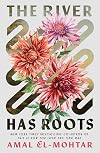
This is a lovely tale of sisterly love and magic and music. I'm quite familiar with the basics of the ballad of the two sisters that was the inspiration for this retelling, and I've seen lots of references to it among fantasy novels, but I don't think I've ever seen an actual retelling of it before. I was so happy to see it here! The way this story ends is generally mixed based on who's talking about the song—or perhaps songs, I'm not sure if there were more than one—but I really show more appreciated the way this one turned out.
I also appreciated the telling of this story. There's a lot of mix between music and language in the prose of this novella, and I loved it. I'm the type of person who reads the acknowledgements, and I was not at all surprised to see in there that El-Mohtar knows how to play the harp. You can see the love of that instrument in the way this story was told.
Though I adored this story, I don't know that all readers will. There is a dual storytelling style, with about half in second-person tense and half in third-person. The second-person sections were in tone a little reminiscent of Seanan McGuire's style in the Wayward Children books, while the third-person parts felt more like a traditional folk tale. The parts flowed well together, but I did get different vibes from the different story elements. (On the other hand, it's short, so if you're unsure if it's your style, why not try it and see?) show less
I also appreciated the telling of this story. There's a lot of mix between music and language in the prose of this novella, and I loved it. I'm the type of person who reads the acknowledgements, and I was not at all surprised to see in there that El-Mohtar knows how to play the harp. You can see the love of that instrument in the way this story was told.
Though I adored this story, I don't know that all readers will. There is a dual storytelling style, with about half in second-person tense and half in third-person. The second-person sections were in tone a little reminiscent of Seanan McGuire's style in the Wayward Children books, while the third-person parts felt more like a traditional folk tale. The parts flowed well together, but I did get different vibes from the different story elements. (On the other hand, it's short, so if you're unsure if it's your style, why not try it and see?) show less

Red and Blue are on opposite sides of a war throughout time. They jump back and forth, in and out of different timelines to engineer the future their side wants, or foil their enemy’s plan to do the same. They start exchanging letters, first to taunt each other, but then they fall in love and must decide what future they would really like to have, and what they’re willing to do to get it.
A very sweet and short novel. I loved the format, which is a few pages about when in time the show more character is on their mission, how they find the latest letter from the other character, and then the text of the letter. The perspective of the first half of the chapter is fairly detached 3rd person and then the text of the letter is so intimate you can feel it in your bones. I don’t think the text supported these two people falling so in love through just a few letters but the letters make you feel it’s true anyway. Because we never see Red or Blue writing the letters, only receiving them, it’s not so much a story about falling deeply in love as it is about being deeply loved. Not a lot happens through most of the book, since Red and Blue eventually jump out of any timeline they’re in, until the end, which is very satisfying. The vibe really reminds me of the Marvel tv show Loki, if you’re into that. show less
A very sweet and short novel. I loved the format, which is a few pages about when in time the show more character is on their mission, how they find the latest letter from the other character, and then the text of the letter. The perspective of the first half of the chapter is fairly detached 3rd person and then the text of the letter is so intimate you can feel it in your bones. I don’t think the text supported these two people falling so in love through just a few letters but the letters make you feel it’s true anyway. Because we never see Red or Blue writing the letters, only receiving them, it’s not so much a story about falling deeply in love as it is about being deeply loved. Not a lot happens through most of the book, since Red and Blue eventually jump out of any timeline they’re in, until the end, which is very satisfying. The vibe really reminds me of the Marvel tv show Loki, if you’re into that. show less
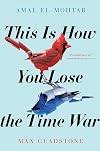
Two agents in the time war encounter each other again and again in different strands of time, upthread and downthread, and go from being enemy rivals to falling in love. But neither Blue's Garden nor Red's Commandant of the Agency will allow their best agents to be compromised - can they find a way to be together? They leave each other ingeniously hidden, coded letters - in tea, in feathers, in entrails - and play a dangerous game of hide and seek through strands of time.
Quotes
Not every show more battle's grand, not every weapon fierce. Even we who fight wars through time forget the value of a word in the right moment, a rattle in the right car engine, a nail in the right horseshoe....It's so easy to crush a planet that you may overlook the value of a whisper to a snowbank. (Red to Blue, 13)
Some days Blue wonders why anyone ever bothered making numbers so small; other days she supposes even infinity needs to start somewhere. (39)
We treat the past as trellis... (Blue to Red, 70)
Thinking builds patterns in the brain, and those patterns can be read by one sufficiently determined.... (Red to Blue, 81)
All good stories travel from the outside in. (Blue to Red, 119)
I want to meet you in every place I have ever loved. (Blue to Red, 142)
It is always too late to say what must be said. I cannot stop you now. I cannot save you. Love is what we have, against time and death, against all the powers ranged to crush us down. (Red to Blue, 165) show less
Quotes
Not every show more battle's grand, not every weapon fierce. Even we who fight wars through time forget the value of a word in the right moment, a rattle in the right car engine, a nail in the right horseshoe....It's so easy to crush a planet that you may overlook the value of a whisper to a snowbank. (Red to Blue, 13)
Some days Blue wonders why anyone ever bothered making numbers so small; other days she supposes even infinity needs to start somewhere. (39)
We treat the past as trellis... (Blue to Red, 70)
Thinking builds patterns in the brain, and those patterns can be read by one sufficiently determined.... (Red to Blue, 81)
All good stories travel from the outside in. (Blue to Red, 119)
I want to meet you in every place I have ever loved. (Blue to Red, 142)
It is always too late to say what must be said. I cannot stop you now. I cannot save you. Love is what we have, against time and death, against all the powers ranged to crush us down. (Red to Blue, 165) show less

This is one of the most original novels I've ever read, and it's definitely the best romance novel I've ever read. I'm not a huge fan of these, but if people write more like this one, I may just change my opinion.
Content warnings:
- self-harm
Representation:
- both protagonists are sapphic
- one of the protagonists is a person of color
Two sides fight a war using time and potential futures, trying to win the best possible future for themselves. What begins as an agent from one side writing a show more mocking letter to another on the opposite side ends with both of them falling in love. But in this war in which winning means losing a love, is it possible to find a happy outcome?
I don't think I've ever read an epistolary novel … it gets a bit tedious, to be honest, but perhaps that's just because I'm not used to it. That said, I fell in love with the writing style(s) at the very first line. And there are some absolutely gorgeous lines, too — my favorite being "I want to meet you in every place I ever loved." The main characters also give us information about things, even about themselves, at a very satisfyingly slow rate. It's a good way to keep the interest up.
Another interesting thing about this book is the lack of any described setting, or not much of it. Another reviewer said it very well (and I can't remember who it was, sorry!): "We never get a setting, because the setting doesn't matter. This is, in essence, a pure romance book." What matters is not the war around them, but the relationship developing between these two agents themselves.
I do wish, however, that the two leads had more distinct voices. I don't doubt that they're two different people, Red being a robot or cyborg who's kind of stiff and not used to being social, and Blue being an organic shape-shifting creature with a sense of humor and a love for pop culture. But very little of this comes through the actual language of the letters themselves. I don't think I could tell their voices apart if I was shown an example (which is funny, because each author wrote a different character — they work really well together!).
Afterthoughts: after sitting on this for a couple months, I think one of the reasons people love this book so much is that apart from 2-3 character traits, the MCs don't really have fully fleshed personalities to distinguish them. In this way, it's easy to project onto them as a sort of wish fulfillment. And this isn't a criticism. Because this book is so unique, I think it works here. show less
Content warnings:
- self-harm
Representation:
- both protagonists are sapphic
- one of the protagonists is a person of color
Two sides fight a war using time and potential futures, trying to win the best possible future for themselves. What begins as an agent from one side writing a show more mocking letter to another on the opposite side ends with both of them falling in love. But in this war in which winning means losing a love, is it possible to find a happy outcome?
I don't think I've ever read an epistolary novel … it gets a bit tedious, to be honest, but perhaps that's just because I'm not used to it. That said, I fell in love with the writing style(s) at the very first line. And there are some absolutely gorgeous lines, too — my favorite being "I want to meet you in every place I ever loved." The main characters also give us information about things, even about themselves, at a very satisfyingly slow rate. It's a good way to keep the interest up.
Another interesting thing about this book is the lack of any described setting, or not much of it. Another reviewer said it very well (and I can't remember who it was, sorry!): "We never get a setting, because the setting doesn't matter. This is, in essence, a pure romance book." What matters is not the war around them, but the relationship developing between these two agents themselves.
I do wish, however, that the two leads had more distinct voices. I don't doubt that they're two different people, Red being a robot or cyborg who's kind of stiff and not used to being social, and Blue being an organic shape-shifting creature with a sense of humor and a love for pop culture. But very little of this comes through the actual language of the letters themselves. I don't think I could tell their voices apart if I was shown an example (which is funny, because each author wrote a different character — they work really well together!).
Afterthoughts: after sitting on this for a couple months, I think one of the reasons people love this book so much is that apart from 2-3 character traits, the MCs don't really have fully fleshed personalities to distinguish them. In this way, it's easy to project onto them as a sort of wish fulfillment. And this isn't a criticism. Because this book is so unique, I think it works here. show less
Lists
At the Library (1)
Female Author (1)
Favourite Books (1)
Sapph-Lit (1)
QLAP (1)
Nebula Award (1)
Overdue Podcast (1)
My Library (1)
Pride Wishlist (1)
Simon & Schuster (1)
Literary SF/F (1)
Books to Read (1)
Awards


You May Also Like


Associated Authors
Statistics
- Works
- 27
- Also by
- 73
- Members
- 8,841
- Popularity
- #2,708
- Rating
- 3.9
- Reviews
- 388
- ISBNs
- 47
- Languages
- 10
- Favorited
- 8
