
Tamsyn Muir
Author of Gideon the Ninth
About the Author
Image credit: Tamsyn Muir at BookExpo By Rhododendrites - Own work, CC BY-SA 4.0, https://commons.wikimedia.org/w/index.php?curid=79475846
Series
Works by Tamsyn Muir
The Locked Tomb Series, Harrow the Ninth, Gideon the Ninth and Nona the Ninth, Set of 3 Books (2023) 12 copies
Go Marching In 5 copies
Chew [short story] 3 copies
The Deepwater Bride & Other Stories 2 copies
The Locked Tomb: Books 1-2 1 copy
Union [short story] 1 copy
Associated Works
Some of the Best from Tor.com: 2020 Edition: A Tor.com Original (2021) — Contributor — 102 copies, 3 reviews
Dreams from the Witch House: Female Voices of Lovecraftian Horror (2015) — Contributor — 102 copies, 2 reviews
The Long List Anthology Volume 2: More Stories from the Hugo Award Nomination List (2016) — Contributor — 76 copies, 1 review
The Best Science Fiction and Fantasy of the Year, Volume 10 (2016) — Contributor — 60 copies, 3 reviews
Tor.com Publishing 2019 Debut Sampler: Some of the Most Exciting New Voices in Science Fiction and Fantasy (2019) — Contributor — 28 copies
Heiresses of Russ 2016: The Year's Best Lesbian Speculative Fiction (2016) — Contributor — 20 copies, 1 review
Monsters in the Garden: An Anthology of Aotearoa New Zealand Science Fiction and Fantasy (2021) — Contributor — 12 copies
Tagged
Common Knowledge
- Birthdate
- 1985-03-14
- Gender
- female
- Occupations
- author
- Agent
- Jennifer Jackson (Donald Maass Literary)
- Nationality
- New Zealand
- Associated Place (for map)
- New Zealand
Members
Reviews
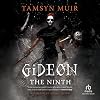
This follows Gideon from her attempted escape from the Ninth House through to her reluctant partnership with Harrowhark on a quest to become a Lyctor. What unfolds is essentially a locked-room murder mystery with lesbian necromancers, as representatives of the Eight Houses find themselves stranded together in pursuit of Lyctorhood - only to begin dying one by one, whether at the hands of a monster or each other.
There’s a lot to enjoy here: Gideon’s rebellious, distinctive personality and show more her hilariously dramatic clashes with Harrowhark; the sheer number of powerful female characters; and the inventive blend of fantasy and science fiction - necromancy and bones alongside starships and distant planets. I particularly enjoyed the D&D-style dynamic between the frail necromancers and their muscle-bound cavaliers, which Muir balances with humour and style.
Two aspects were a little trickier for me, though they’re inherent to the genre. Listening as an audiobook, I found the large cast - each with multiple names, nicknames, titles, and insults - occasionally confusing to track. (The collective “horrible teens” was a welcome shorthand!) And, as one would expect with necromancers, there’s a strong thread of body horror: decay, death, and gruesome imagery are handled matter-of-factly, which isn’t usually my preference.
Despite that, it’s an incredibly clever book - with exceptional world-building, vivid characters, and a plot that ties together beautifully. The ending is both satisfying and complete, which for me means I may leave it there rather than diving into the sequel. Still, it’s a standout example of originality and audacity, and I can see why it’s become such a modern favourite. show less
There’s a lot to enjoy here: Gideon’s rebellious, distinctive personality and show more her hilariously dramatic clashes with Harrowhark; the sheer number of powerful female characters; and the inventive blend of fantasy and science fiction - necromancy and bones alongside starships and distant planets. I particularly enjoyed the D&D-style dynamic between the frail necromancers and their muscle-bound cavaliers, which Muir balances with humour and style.
Two aspects were a little trickier for me, though they’re inherent to the genre. Listening as an audiobook, I found the large cast - each with multiple names, nicknames, titles, and insults - occasionally confusing to track. (The collective “horrible teens” was a welcome shorthand!) And, as one would expect with necromancers, there’s a strong thread of body horror: decay, death, and gruesome imagery are handled matter-of-factly, which isn’t usually my preference.
Despite that, it’s an incredibly clever book - with exceptional world-building, vivid characters, and a plot that ties together beautifully. The ending is both satisfying and complete, which for me means I may leave it there rather than diving into the sequel. Still, it’s a standout example of originality and audacity, and I can see why it’s become such a modern favourite. show less
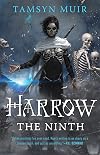
There is basically nothing I can say about 'Harrow the Ninth' without spoiling it. If you haven't read it, this is all you need to know: I found it an entirely satisfying sequel to [b:Gideon the Ninth|42036538|Gideon the Ninth (The Locked Tomb, #1)|Tamsyn Muir|https://i.gr-assets.com/images/S/compressed.photo.goodreads.com/books/1546870952l/42036538._SY75_.jpg|60943229] and an enormously enjoyable novel in its own right. Both books have been particular highlights of my lockdown reading. Give show more them a try, but don't even think about reading this review first.
At first, I didn't think I'd enjoy 'Harrow the Ninth' as much as [b:Gideon the Ninth|42036538|Gideon the Ninth (The Locked Tomb, #1)|Tamsyn Muir|https://i.gr-assets.com/images/S/compressed.photo.goodreads.com/books/1546870952l/42036538._SY75_.jpg|60943229], as it dispensed with two of my favourite things about the latter: Gideon's hilarious point of view and the crumbling castle of skeletons. Instead, the reader finds themself in space with Harrowhark, as she's become a Lyctor and Gideon is dead. With incredible gall, Muir does not even mention Gideon's name for THREE HUNDRED AND EIGHTY PAGES. I am absolutely in awe of this. While the first book revolved around a mystery that characters were involved in, this one places the reader in a double Harrow point of view that makes the narration itself an intriguing mystery. Chapters following her in third and second person alternate, seemingly showing different times and contradictory events that Gideon has been edited out of. My curiosity about this rose to fever pitch, therefore I read the whole book in just over 24 hours. The audacity of the resolution delighted me, especially as it was preceded by several alternate universes delightfully inflected with fanfiction tropes. In order to preserve Gideon's soul, Harrow gave herself brain damage to edit Gideon out of her memories. As you do. When Gideon returns in Harrow's body, her inimitable wit is all the more enjoyable after four hundred pages of anticipation. While Gideon sword-fights monster wasps, Harrow is busy in the afterlife having important discussions with ghosts.
Although Gideon's return is very satisfying, Harrow's prior adventures as a Lyctor (not a doctor, spellcheck) were likewise excellent. While Harrow might not have Gideon's sardonic mien, she's a fantastic character. I also find her general physical flimsiness, which everyone comments on, very relatable. She joins God in his space station and is trained by one of his immortal Saints to be a Lyctor, while another of them repeatedly tries to murder her. Her fellow trainee Ianthe, a third ancient Lyctor, and a corpse round out the dysfunctional household. The dynamics between this lot are amazingly melodramatic and highly entertaining. The first two-thirds of the book include a lot of world-building and character development details that neatly set up the action- and plot-heavy final third. Harrow initially wrestles insanity, bickers with Ianthe, and explores the River, a sort of afterlife where dead souls hang about angrily. It becomes increasingly clear that God (aka the Undying Emperor) and his regime are appallingly evil; perhaps all the necromancy should have been a clue. He sends his Lyctors to destroy all life on various planets, as part of his ongoing conflict with vast implacable ghost monsters. The latter are described in a way that made me laugh out loud:
In fact, I laughed many times during 'Harrow the Ninth', as the intensely gothic, grim, and gory happenings are constantly leavened by sarcastic comments, moments of complete farce, and references to memes ("none Houses, with left grief" and "jail for Mother" stood out). Harrow's recurring primness was a delight, particularly her horror when two Lyctors distracted God by getting him drunk and initiating a threesome. I also loved her assassination soup, displeasure at being given a makeover, and the letters written by her past self. Of course, when I got to the end and realised that Harrow and Gideon did not interact even once throughout the entire book, I emitted a small inarticulate sound. I cannot wait for more glorious necromantic nonsense in [b:Alecto the Ninth|39325106|Alecto the Ninth (The Locked Tomb, #4)|Tamsyn Muir|https://s.gr-assets.com/assets/nophoto/book/50x75-a91bf249278a81aabab721ef782c4a74.png|60943284], when I can only hope they will argue bitterly yet lovingly once more. Tamsyn Muir is a genius for combining black magic, lesbians, comedy, and space opera with just a whole lot of bones.
EDIT 10/09/22
I re-read this and the short story As Yet Unsent in preparation for [b:Nona the Ninth|58662507|Nona the Ninth (The Locked Tomb, #3)|Tamsyn Muir|https://i.gr-assets.com/images/S/compressed.photo.goodreads.com/books/1643298298l/58662507._SY75_.jpg|92285474]. [b:Harrow the Ninth|39325105|Harrow the Ninth (The Locked Tomb, #2)|Tamsyn Muir|https://i.gr-assets.com/images/S/compressed.photo.goodreads.com/books/1602323622l/39325105._SY75_.jpg|60943273] is an absolute joy from beginning to end. I loved it as much if not more the second time around, with knowledge of what was going to happen. It was delightful to spot clues and more of the meme references than I managed before. Absolute brilliance. I await Nona with the following questions:
- Who is in Gideon's body? (Nona?)
- Who is in Harrow's body? (Still Gideon?)
- Is Harrow in Alecto's body?
- What the fuck is Ianthe doing?
- Is Commander Awake alive, a ghost/revenant, or gone?
- Who is Nona?
I'm very excited to not get answers to most of these until the last ten pages of [b:Nona the Ninth|58662507|Nona the Ninth (The Locked Tomb, #3)|Tamsyn Muir|https://i.gr-assets.com/images/S/compressed.photo.goodreads.com/books/1643298298l/58662507._SY75_.jpg|92285474], if then. There's nothing like this series and whatever I read straight afterwards always feels a bit flat by comparison. show less
Although Gideon's return is very satisfying, Harrow's prior adventures as a Lyctor (not a doctor, spellcheck) were likewise excellent. While Harrow might not have Gideon's sardonic mien, she's a fantastic character. I also find her general physical flimsiness, which everyone comments on, very relatable. She joins God in his space station and is trained by one of his immortal Saints to be a Lyctor, while another of them repeatedly tries to murder her. Her fellow trainee Ianthe, a third ancient Lyctor, and a corpse round out the dysfunctional household. The dynamics between this lot are amazingly melodramatic and highly entertaining. The first two-thirds of the book include a lot of world-building and character development details that neatly set up the action- and plot-heavy final third. Harrow initially wrestles insanity, bickers with Ianthe, and explores the River, a sort of afterlife where dead souls hang about angrily. It becomes increasingly clear that God (aka the Undying Emperor) and his regime are appallingly evil; perhaps all the necromancy should have been a clue. He sends his Lyctors to destroy all life on various planets, as part of his ongoing conflict with vast implacable ghost monsters. The latter are described in a way that made me laugh out loud:
"Each Beast is different. I have fought numerous now, and each Beast is quite unlike any other... Number Two spewed quicksilver and remade itself into hundred-foot spikes. Number Six kept sucking us into enormous sphincters and spraying us with worms. I cannot even remember what it looked like. I remember Number Four... it was a humanoid creature with a beautiful face who held me under the water, and it spoke in a lovely voice but it only repeated, die, die - and I recall Number One as a great and incoherent machine... when I saw it I thought it had a great tail, and a thousand pillars on its back, but Cassiopeia saw it as a mechanical monster with swords for wings, and great horns of myelin, tessellated over with graves."
It was the Saint of Duty who said restlessly: "Number Eight was a giant head."
"Finned like a fish," said Augustine, lost in reverie. "Its ribs were bloody bandages, and its teeth protruded through its own skull, tangled about its face like a nest. It was red, and it had a single eye of green that moved all about the body... Look," he said, coming back to himself, perhaps seeing something in your and Ianthe's expressions. "They're not great, is what we're saying."
In fact, I laughed many times during 'Harrow the Ninth', as the intensely gothic, grim, and gory happenings are constantly leavened by sarcastic comments, moments of complete farce, and references to memes ("none Houses, with left grief" and "jail for Mother" stood out). Harrow's recurring primness was a delight, particularly her horror when two Lyctors distracted God by getting him drunk and initiating a threesome. I also loved her assassination soup, displeasure at being given a makeover, and the letters written by her past self. Of course, when I got to the end and realised that Harrow and Gideon did not interact even once throughout the entire book, I emitted a small inarticulate sound. I cannot wait for more glorious necromantic nonsense in [b:Alecto the Ninth|39325106|Alecto the Ninth (The Locked Tomb, #4)|Tamsyn Muir|https://s.gr-assets.com/assets/nophoto/book/50x75-a91bf249278a81aabab721ef782c4a74.png|60943284], when I can only hope they will argue bitterly yet lovingly once more.
EDIT 10/09/22
I re-read this and the short story As Yet Unsent in preparation for [b:Nona the Ninth|58662507|Nona the Ninth (The Locked Tomb, #3)|Tamsyn Muir|https://i.gr-assets.com/images/S/compressed.photo.goodreads.com/books/1643298298l/58662507._SY75_.jpg|92285474]. [b:Harrow the Ninth|39325105|Harrow the Ninth (The Locked Tomb, #2)|Tamsyn Muir|https://i.gr-assets.com/images/S/compressed.photo.goodreads.com/books/1602323622l/39325105._SY75_.jpg|60943273] is an absolute joy from beginning to end. I loved it as much if not more the second time around, with knowledge of what was going to happen. It was delightful to spot clues and more of the meme references than I managed before. Absolute brilliance. I await Nona with the following questions:
- Who is in Gideon's body? (Nona?)
- Who is in Harrow's body? (Still Gideon?)
- Is Harrow in Alecto's body?
- What the fuck is Ianthe doing?
- Is Commander Awake alive, a ghost/revenant, or gone?
- Who is Nona?
I'm very excited to not get answers to most of these until the last ten pages of [b:Nona the Ninth|58662507|Nona the Ninth (The Locked Tomb, #3)|Tamsyn Muir|https://i.gr-assets.com/images/S/compressed.photo.goodreads.com/books/1643298298l/58662507._SY75_.jpg|92285474], if then. There's nothing like this series and whatever I read straight afterwards always feels a bit flat by comparison. show less
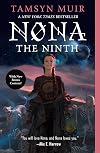
Easily the best of the Locked Tomb series (so far!), mainly because Muir seems to be growing out of some of the adolescent self-indulgence that characterized the firs (especially) and the second (to a lesser extent) novels. Instead of relying on "witty" (ahem) scatalogical banter to stand in for character development, she just gets on with the task of building strong, intriguing characters challenged by a confusing and shifting reality.
I am full of admiration for what she has achieved with show more the character of Nona. There are so many ways this character could have gone wrong, falling into a number of stereotypical portrayals of a child in an adult's body, or even worse stereotypes that portrayed her as disabled in some way. But Muir manages to avoid all of these and instead creates a person that is utterly her own thing. She is as mystified by herself as those around her, some things are hard for her but she has a wide range of skills, wonderful observation skills even if she doesn't always understand what she is seeing, and a basic kindness toward those around her that is a breath of fresh air after the two previous novels centered on a bunch of self-centered jerks. The other characters are also, for the most part, fully developed, and Muir is interested in their growth and change. Rarely are they simply played for laughs. Even some of the minor characters, We Suffer comes to mind, are engaging. And while the novel may center on Nona, Muir also demonstrates that she has always understood that the emotional core of this entire series is not any of the titular characters, or their relationships, but the bond, the love, between Camilla and Palamedes. So rich and human are these character interactions that when Ianthe and Gideon show up later on and resume their eight-year old bickering, it is so obviously juvenile and shallow that it should make the smart reader wonder why Muir chose to center two entire novels around such annoying superficiality.
I'm mightily impressed with Muir's ability to dislocate her readers into completely new worlds in each of these novels, and then allowing them to gradually build the necessary connections themselves. There's a lot to try to figure out in this one (where the characters are, how they got there, what they are doing, whose side they are on, if the question of "sides" is even relevant any more) not to mention that we, along with everyone else, is trying to figure out who and what Nona is.
The world-building and intricate plotting is as effective and engaging as it was in the previous two book, but the cumulative effect is so much more effective because Muir is exercising more restraint here, and resisting the urge to tell us all how witty and clever she is. Instead, she just shows us how clever she is. The interpolated "dream" sequences that fill in the blanks about the earth's destruction are effective and frequently moving. They are nicely tied in with the biblical references to the book of John, and that reference then makes perfect sense of the hilarious (and commendably brief) faux King James Bible epilogue at the end.
After the second book I was just about done with this series, and only stuck with this one because it is a book club read. But I'm glad I did, and I am eagerly looking forward to Alecto. show less
I am full of admiration for what she has achieved with show more the character of Nona. There are so many ways this character could have gone wrong, falling into a number of stereotypical portrayals of a child in an adult's body, or even worse stereotypes that portrayed her as disabled in some way. But Muir manages to avoid all of these and instead creates a person that is utterly her own thing. She is as mystified by herself as those around her, some things are hard for her but she has a wide range of skills, wonderful observation skills even if she doesn't always understand what she is seeing, and a basic kindness toward those around her that is a breath of fresh air after the two previous novels centered on a bunch of self-centered jerks. The other characters are also, for the most part, fully developed, and Muir is interested in their growth and change. Rarely are they simply played for laughs. Even some of the minor characters, We Suffer comes to mind, are engaging. And while the novel may center on Nona, Muir also demonstrates that she has always understood that the emotional core of this entire series is not any of the titular characters, or their relationships, but the bond, the love, between Camilla and Palamedes. So rich and human are these character interactions that when Ianthe and Gideon show up later on and resume their eight-year old bickering, it is so obviously juvenile and shallow that it should make the smart reader wonder why Muir chose to center two entire novels around such annoying superficiality.
I'm mightily impressed with Muir's ability to dislocate her readers into completely new worlds in each of these novels, and then allowing them to gradually build the necessary connections themselves. There's a lot to try to figure out in this one (where the characters are, how they got there, what they are doing, whose side they are on, if the question of "sides" is even relevant any more) not to mention that we, along with everyone else, is trying to figure out who and what Nona is.
The world-building and intricate plotting is as effective and engaging as it was in the previous two book, but the cumulative effect is so much more effective because Muir is exercising more restraint here, and resisting the urge to tell us all how witty and clever she is. Instead, she just shows us how clever she is. The interpolated "dream" sequences that fill in the blanks about the earth's destruction are effective and frequently moving. They are nicely tied in with the biblical references to the book of John, and that reference then makes perfect sense of the hilarious (and commendably brief) faux King James Bible epilogue at the end.
After the second book I was just about done with this series, and only stuck with this one because it is a book club read. But I'm glad I did, and I am eagerly looking forward to Alecto. show less

Gideon the Ninth was a rare five star read (or listen) for me. This is an amazing pulpy genre mash-up of a novel and I loved it but I can see it being a bit of a marmite book (love it or hate it) although I think the things some hate about it will be the same things others love. This has a bit of everything making it very hard to classify: necromancy and space opera, gothic castle and skeletons, locked room murder mystery, swordfights and cavaliers, a lead character who gives zero f*cks, show more high in sarcasm, lesbians (but not really any romance). I listened to the audio book read by Moira Quirk and her voice-acting was so good I would happily listen to anything else she narrates. I loved the book so much that I bought the hardback after finishing the audio (and Tor.com are hosting a reread so I might join in with that). It's the first book in a trilogy and there is a cliffhanger ending but it's worth it. show less
Lists
SFF Down Under (1)
Read in 2023 (1)
2020 (1)
Best First Lines (1)
Best Audiobooks (1)
BookTok Adult (1)
Pride Wishlist (1)
Poly Sci Fi (1)
Overdue Podcast (2)
Sapph-Lit (3)
Literary SF/F (1)
First Novels (1)
High Priority (1)
Awards


You May Also Like


Associated Authors
Statistics
- Works
- 24
- Also by
- 19
- Members
- 13,829
- Popularity
- #1,672
- Rating
- 4.1
- Reviews
- 456
- ISBNs
- 79
- Languages
- 9
- Favorited
- 30