

Allan Vaughn Elston (1887–1976)
Author of Hit the Saddle
About the Author
Works by Allan Vaughn Elston
Saddle up for sunlight 1 copy
"Lost Harbors" [Part 1 of 5] 1 copy
The Marked Men 1 copy
Sagebrush serenade 1 copy
"Passage Home" 1 copy
Associated Works
Argosy, March 19, 1938 — Contributor — 1 copy
Tagged
Common Knowledge
- Canonical name
- Elston, Allan Vaughn
- Birthdate
- 1887
- Date of death
- 1976
- Gender
- male
- Nationality
- USA
- Birthplace
- Kansas City, Missouri, USA
- Places of residence
- South Pass, Wyoming, USA
- Place of death
- Santa Ana, California, USA
- Associated Place (for map)
- USA
Members
Reviews

Four years later, and this book turned out to be surprisingly memorable. I picked it up from the house where I was staying on a complete whim, and when I tweeted about liking it, one of the author’s descendants thanked me for reading and enjoying it! How cool is that?
I think part of my great enjoyment of this was not being familiar with conventions of this genre, but honestly, pulp fiction was meant to be really readable, right? The pacing was perfect, like you could read it slow or put it show more down for a while and not fall out of it at all.
I loved that the dame the main character was into was interesting and not just a pretty face, even if she didn’t do much for herself. I liked that stage-coaches had a bigger presence than trains. I really liked that I didn’t know what would happen, or how large the scope of the adventure would be. Mercenaries, corporate scheming, camping, gambling… all your wild-west staples, and thankfully lacking in racism and aggression against indigenous peoples. Well, they weren’t in the book at all, but that’s a different problem.
I think one of my issues with it though is that it didn't feel like a book set in the 1880s, it felt like the era it was written in. Which is a shame, I suppose. But it had such a neat ending. show less
I think part of my great enjoyment of this was not being familiar with conventions of this genre, but honestly, pulp fiction was meant to be really readable, right? The pacing was perfect, like you could read it slow or put it show more down for a while and not fall out of it at all.
I loved that the dame the main character was into was interesting and not just a pretty face, even if she didn’t do much for herself. I liked that stage-coaches had a bigger presence than trains. I really liked that I didn’t know what would happen, or how large the scope of the adventure would be. Mercenaries, corporate scheming, camping, gambling… all your wild-west staples, and thankfully lacking in racism and aggression against indigenous peoples. Well, they weren’t in the book at all, but that’s a different problem.
I think one of my issues with it though is that it didn't feel like a book set in the 1880s, it felt like the era it was written in. Which is a shame, I suppose. But it had such a neat ending. show less
Four years later, and this book turned out to be surprisingly memorable. I picked it up from the house where I was staying on a complete whim, and when I tweeted about liking it, one of the author’s descendants thanked me for reading and enjoying it! How cool is that?
I think part of my great enjoyment of this was not being familiar with conventions of this genre, but honestly, pulp fiction was meant to be really readable, right? The pacing was perfect, like you could read it slow or put it show more down for a while and not fall out of it at all.
I loved that the dame the main character was into was interesting and not just a pretty face, even if she didn’t do much for herself. I liked that stage-coaches had a bigger presence than trains. I really liked that I didn’t know what would happen, or how large the scope of the adventure would be. Mercenaries, corporate scheming, camping, gambling… all your wild-west staples, and thankfully lacking in racism and aggression against indigenous peoples. Well, they weren’t in the book at all, but that’s a different problem.
I think one of my issues with it though is that it didn't feel like a book set in the 1880s, it felt like the era it was written in. Which is a shame, I suppose. But it had such a neat ending. show less
I think part of my great enjoyment of this was not being familiar with conventions of this genre, but honestly, pulp fiction was meant to be really readable, right? The pacing was perfect, like you could read it slow or put it show more down for a while and not fall out of it at all.
I loved that the dame the main character was into was interesting and not just a pretty face, even if she didn’t do much for herself. I liked that stage-coaches had a bigger presence than trains. I really liked that I didn’t know what would happen, or how large the scope of the adventure would be. Mercenaries, corporate scheming, camping, gambling… all your wild-west staples, and thankfully lacking in racism and aggression against indigenous peoples. Well, they weren’t in the book at all, but that’s a different problem.
I think one of my issues with it though is that it didn't feel like a book set in the 1880s, it felt like the era it was written in. Which is a shame, I suppose. But it had such a neat ending. show less
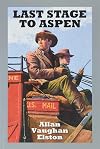
When Wes Brian, a stage coach driver, is nearly killed during a robbery, he decides to invest his savings in a silver mine through broker, Frank Bayard. What he doesn't know is that Bayard is a swindler who will stoop to anything to make money including changing Wes' name on the mine certificate to his. Soon Wes is dodging bullets, dynamite and thugs trying to beat him to death.
Gripping fast moving story that is difficult to put down.
Gripping fast moving story that is difficult to put down.
You May Also Like
Associated Authors
Statistics
- Works
- 32
- Also by
- 8
- Members
- 77
- Popularity
- #231,245
- Rating
- 3.1
- Reviews
- 3
- ISBNs
- 50