
Ed Emberley
Author of Go Away, Big Green Monster!
About the Author
Series
Works by Ed Emberley
Ed Emberley's How to Draw Monsters and More Scary Stuff (Ed Emberley's Drawing Book Of...) (2018) 11 copies
(Picture book of Emberley Drawing uncle) to Let Drawings Simon stamp (2002) ISBN: 4033251405 [Japanese Import] (2002) 3 copies
Ed Emberley's Big Green, Big Red Drawing Book, and Big Orange Drawing Books (Three Books) (1979) 3 copies
Va-t'en grand monstre vert 1 copy
By Ed EmberleyEd Emberley's Picture Pie Two (Drawing Book Series;)[Paperback] October 5, 2005 1 copy
¿Ves lo que veo? 1 copy
Associated Works
Tagged
Common Knowledge
- Canonical name
- Emberley, Ed
- Legal name
- Emberley, Edward Randolph
- Birthdate
- 1931-10-19
- Gender
- male
- Education
- Massachusestts School of Art (B.F.A.)
Rhode Island School of Design - Occupations
- children's book illustrator
- Awards and honors
- Lewis Carroll Shelf Award (1968)
- Relationships
- Emberley, Rebecca (daughter)
Emberley, Michael (son)
Fitzpatrick, Marie-Louise (daughter-in-law) - Nationality
- USA
- Birthplace
- Malden, Massachusetts, USA
- Places of residence
- Ipswich, Massachusetts, USA
- Associated Place (for map)
- Massachusetts, USA
Members
Reviews

Playing croquet one day, a prince accidentally hits a passing witch with his ball in this visually arresting picture-book from 1975, finding himself cursed into the form of a frog as a consequence. Seeking answers first in the library, the prince then hunts down a princess, determined to receive his kiss and be restored to his original form. When this doesn't work, he visits each of the kingdom's wizards, all to no avail. When all else fails, he finally visits the Wizard of Op, whose spells show more all involve optical illusions and art. Will this somewhat bumbling magic-maker's visual tricks do the job, or is the prince doomed to stay in animal form...?
Although quite familiar with the work of author/artist Ed Emberley, both through picture-books like Go Away, Big Green Monster!, and through his many instructional drawing and art-making books for children, The Wizard of Op is only the second of his titles that I have actually read. I sought it out because of my interest in witchy picture-book fare—a perennial pet project of mine—and am glad I did! It is really quite fascinating, from a visual storytelling perspective, alternating between comic-book-style pages in which the story is told through sequential panels, and full two-page spreads devoted to optical art, each of which represents a different spell undertaken by the eponymous Wizard of Op. This book was immense fun to read and peruse, even if some of the optical art made me rather dizzy, and I think young children who enjoy this sort of thing will be likewise entertained. It is to them that I would recommend it, as well as to fans of Ed Emberley. show less
Although quite familiar with the work of author/artist Ed Emberley, both through picture-books like Go Away, Big Green Monster!, and through his many instructional drawing and art-making books for children, The Wizard of Op is only the second of his titles that I have actually read. I sought it out because of my interest in witchy picture-book fare—a perennial pet project of mine—and am glad I did! It is really quite fascinating, from a visual storytelling perspective, alternating between comic-book-style pages in which the story is told through sequential panels, and full two-page spreads devoted to optical art, each of which represents a different spell undertaken by the eponymous Wizard of Op. This book was immense fun to read and peruse, even if some of the optical art made me rather dizzy, and I think young children who enjoy this sort of thing will be likewise entertained. It is to them that I would recommend it, as well as to fans of Ed Emberley. show less

What a trip. Definitely has that 70s vibe, for example the paisley trousers on the elephant. I appreciated that each letter was assembled or drawn across the page spread - showing the child one way to write the letter herself.
Looking closer, one sees a little story being told across the four panels of each spread. Looking even more closely, one sees the hidden alphabet words. F is for Frogs, but the F is being created by... Fireflies! In fact, there's a list of 'hidden objects' in the back - show more I recommend you see how many words for each letter on each spread you can find on your own, then check that list and find the ones you missed.
I think my favorite pages are the Vole building a Village and the Tiger playing with Tinker-Toys.
Overall a clever, almost wordless, artistic book. Don't pay high if it's OOP but do pick it up if it's at your library. show less
Looking closer, one sees a little story being told across the four panels of each spread. Looking even more closely, one sees the hidden alphabet words. F is for Frogs, but the F is being created by... Fireflies! In fact, there's a list of 'hidden objects' in the back - show more I recommend you see how many words for each letter on each spread you can find on your own, then check that list and find the ones you missed.
I think my favorite pages are the Vole building a Village and the Tiger playing with Tinker-Toys.
Overall a clever, almost wordless, artistic book. Don't pay high if it's OOP but do pick it up if it's at your library. show less

Originally published in 1992, and then republished in this revised edition in 2005, author/illustrator Ed Emberley's Go Away, Big Green Monster is a classic reassurance tale for young toddlers. Describing the various features of the eponymous green monster, from his big yellow eyes to his red mouth with its sharp white teeth, the text is paired with vividly colorful artwork, created using bright hues in simple shapes, on a deep black page. There are die-cuts, that allow the monster's face to show more slowly be "built" up, as the pages turn. Midway through the book, the narrator declares that the big green monster doesn't scare him, and slowly he is disassembled again...
With his simple "build up and then take down" narrative, Emberley captures the fear that monsters (and the idea of monsters) can evoke in young children, while empowering those same children to conquer their fear, by giving them the power (at least in the book) to banish said monsters. The artwork and book design are incredibly well done, perfectly matched with the text, and perfectly capturing the build up/take down narrative. It's easy to see why this one has become such a contemporary classic! My only question, after finishing the book, is about the "revisions" mentioned on the colophon. What distinguishes this 2005 edition from the original 1992 one? I'm not sure I feel motivated enough to track down an original edition, but I did wonder. Recommended to anyone looking for children's stories that address fears of monsters in a creative and artistic way. show less
With his simple "build up and then take down" narrative, Emberley captures the fear that monsters (and the idea of monsters) can evoke in young children, while empowering those same children to conquer their fear, by giving them the power (at least in the book) to banish said monsters. The artwork and book design are incredibly well done, perfectly matched with the text, and perfectly capturing the build up/take down narrative. It's easy to see why this one has become such a contemporary classic! My only question, after finishing the book, is about the "revisions" mentioned on the colophon. What distinguishes this 2005 edition from the original 1992 one? I'm not sure I feel motivated enough to track down an original edition, but I did wonder. Recommended to anyone looking for children's stories that address fears of monsters in a creative and artistic way. show less
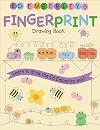
I love this book! My kids love it less than they ought to. It is possible that they are simply spoiled and ungrateful. They also don't like getting their fingers inky and are ridiculously perfectionist, so that could contribute to their lack of enthusiasm. None of this stops me from getting it out once a year or so and animatedly suggesting that some fingerprint art would be a great addition to those thank-you notes they're writing.
Really, I just need to add fingerprint art to the thank-you show more notes I write and leave my kids alone, but I nag them about so little, it seems a pity not to nag them about this. What's that you say? Nagging doesn't often lead to someone enthusiastically embracing something they didn't previously love? To this I respond: Where's your data supporting this claim? Until I have data to the contrary, I'm sticking with the nagging plan. show less
Really, I just need to add fingerprint art to the thank-you show more notes I write and leave my kids alone, but I nag them about so little, it seems a pity not to nag them about this. What's that you say? Nagging doesn't often lead to someone enthusiastically embracing something they didn't previously love? To this I respond: Where's your data supporting this claim? Until I have data to the contrary, I'm sticking with the nagging plan. show less
Lists
Awards


You May Also Like


Associated Authors
Statistics
- Works
- 83
- Also by
- 15
- Members
- 11,330
- Popularity
- #2,071
- Rating
- 4.0
- Reviews
- 293
- ISBNs
- 288
- Languages
- 9
- Favorited
- 3
