
Ernest Lloyd Raboff
Author of Pablo Picasso (Art for Children)
About the Author
Image credit: via SoundCloud
Series
Works by Ernest Lloyd Raboff
Tagged
Common Knowledge
- Gender
- male
Members
Reviews
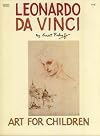
I love Leonardo Da Vinci's work, both as an artist and inventor, which is why I selected this book. The font used was a bold and unique choice, it was definitely designed to draw the eye and as the author himself studied art in France and Italy this is probably no accident.
I enjoyed the depth and detail the author went into for the paintings he selected. I have never taken an art class so I do not have the trained eye necessary to pick up on some of the methods Da Vinci used, like using the show more strong mathematical proportions of the triangle as a tool in many of his paintings.
My only critique is the section on the Mona Lisa. I understand this is a book meant for children, but as a historian, I know that the Mona Lisa did not become "the best-known woman in the history of art" because of his genius. It was once stolen from the Louvre by an Italian immigrant. He thought France obtained the painting by looting during wartime but the painting had actually been gifted to France by Italy. While the painting was missing for over two years, pictures of the Mona Lisa circulated in newspapers around the world for months. People the world over who had never visited the Louvre now knew the Mona Lisa and it is because of that visibility, it became the most famous and recognizable piece.
I'm not saying Da Vinci was not brilliant, I am saying don't tell a half-truth if the whole truth is much more interesting.
Also, for some reason, LibraryThing has this book listed as being published in 1876 but the author wasn't born until 1921. show less
I enjoyed the depth and detail the author went into for the paintings he selected. I have never taken an art class so I do not have the trained eye necessary to pick up on some of the methods Da Vinci used, like using the show more strong mathematical proportions of the triangle as a tool in many of his paintings.
My only critique is the section on the Mona Lisa. I understand this is a book meant for children, but as a historian, I know that the Mona Lisa did not become "the best-known woman in the history of art" because of his genius. It was once stolen from the Louvre by an Italian immigrant. He thought France obtained the painting by looting during wartime but the painting had actually been gifted to France by Italy. While the painting was missing for over two years, pictures of the Mona Lisa circulated in newspapers around the world for months. People the world over who had never visited the Louvre now knew the Mona Lisa and it is because of that visibility, it became the most famous and recognizable piece.
I'm not saying Da Vinci was not brilliant, I am saying don't tell a half-truth if the whole truth is much more interesting.
Also, for some reason, LibraryThing has this book listed as being published in 1876 but the author wasn't born until 1921. show less

I like this book. Although it is written for children, I wonder whether or not children will appreciate it. The book is written to appeal to a young child. It seems to be hand printed and includes colorful words to attract the reader's attention. However, I feel that a middle school child or a high school child will better appreciate the information contained. The art work is divine. I can't imagine anyone who would not visually appreciate DaVinci's masterpieces. However, because of the show more subdued colors and the subject of his paintings, I doubt young children will appreciate this book without guidance. I feel that in an elementary classroom, this book would be best utilized by an art teacher who will educate the students about DaVinci and his work. show less

I don't know enough about art and this series to know how well it is regarded by those who keep track of all the art books published for children. However. I like how the book discusses the works as well as the artist's life. How it compares with other series? I cannot say.
I liked this book, but I don’t think that it will appeal to a young reader. Durer doesn’t use bold, vibrant colors so the children will most likely lose interest quickly. I think that it would be better suited in a middle school or high school setting. Elementary students are less likely to appreciate the fine art contained within the pages. Although there are hidden faces to be found within the work that elementary students may find appealing, there is not enough of such sections to show more hold their interests. I feel that in an elementary classroom, this book would be best utilized by an art teacher who will educate the students about Seurat and his work. show less
Awards

You May Also Like


Statistics
- Works
- 19
- Members
- 3,449
- Popularity
- #7,367
- Rating
- 4.3
- Reviews
- 28
- ISBNs
- 91
- Languages
- 7