
Oliver Green
Author of Underground Art: London Transport Posters 1908 to the Present
About the Author
Oliver Green is Head of Collections at London's Transport Museum.
Image credit: Oliver Green
Works by Oliver Green
London Transport Museum Guide 7 copies
Associated Works
Tagged
Common Knowledge
- Birthdate
- 1951
- Gender
- male
- Occupations
- curator
- Organizations
- London Transport Museum
- Nationality
- UK
- Associated Place (for map)
- UK
Members
Reviews

London's Great Railway Stations by Oliver Green is the type of coffee table book that delivers so much more than just wonderful pictures. The history is fascinating and the historical images are every bit as interesting as the current photographs of the stations.
I came to this book expecting great pictures and some historical context. The photography did not disappoint, and the additional images from the past, including advertisements, programs and drawings, made the visual aspect show more fulfilling. Yet Green's text was far more than just a basic overview, it presented a true history of both the stations and the rail industry in general. I was so engrossed in the text that I had to go back to look at some of the pictures a few times because I just kept reading.
In addition to those who enjoy larger books with great photography I would also recommend this to those interested in history, especially of England's rail system.
Reviewed from a copy made available by the publisher via NetGalley. show less
I came to this book expecting great pictures and some historical context. The photography did not disappoint, and the additional images from the past, including advertisements, programs and drawings, made the visual aspect show more fulfilling. Yet Green's text was far more than just a basic overview, it presented a true history of both the stations and the rail industry in general. I was so engrossed in the text that I had to go back to look at some of the pictures a few times because I just kept reading.
In addition to those who enjoy larger books with great photography I would also recommend this to those interested in history, especially of England's rail system.
Reviewed from a copy made available by the publisher via NetGalley. show less
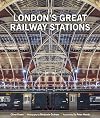
The real star of this book’s show, for me, is the photography. It’s utterly glorious! So many of the images provide birds-eye views one couldn’t get as an everyday pedestrian!
Whether or not the reader has spent any time in London before picking this up, they’ll inevitably find something of interest in it. I’ve been blessed to visit London several times, and used the Tube fairly extensively, so many a station name included is familiar to me. Paddington is, of course, particularly show more loved–not only because I stayed closest to there on my last visit, but because of Paddington Bear! (And he suitably gets a mention in this book, as well–as he should.)
Green does a fantastic job at setting each station in both its historical and present-day contexts; the text does read a tad bit dry for me at times, mostly because I’m not 100% a railway aficionado–I’m 125% a London aficionado. show less
Whether or not the reader has spent any time in London before picking this up, they’ll inevitably find something of interest in it. I’ve been blessed to visit London several times, and used the Tube fairly extensively, so many a station name included is familiar to me. Paddington is, of course, particularly show more loved–not only because I stayed closest to there on my last visit, but because of Paddington Bear! (And he suitably gets a mention in this book, as well–as he should.)
Green does a fantastic job at setting each station in both its historical and present-day contexts; the text does read a tad bit dry for me at times, mostly because I’m not 100% a railway aficionado–I’m 125% a London aficionado. show less
Underground: How the Tube Shaped London is an amazing book about what is probably the best known public transport system in the world, the London Underground (aka the ‘Tube’). It is a fascinating history of the first 150 years of the underground (and some overground) trains that have run through London, day in and day out during both war and peacetime. David Bownes, Oliver Green and Sam Mullins should be commended on making this book a fascinating and interesting read. It’s not just show more for trainspotters or tube buffs, but provides an insight into how London has grown alongside the Tube. I believe it should be recommended reading for all politicians and transport planners – other cities are making fundamental errors when it comes to public transport spending and infrastructure, yet the Underground has made those mistakes (sometimes decades ago) and learned from the problem. Think of extending rail lines into the suburbs – the Underground was expanding train routes before the houses were built. They even had a magazine (Metroland) to tell prospective homebuyers where to go for new housing and where the estates were in relation to the Tube and bus network. Oh, and this was in the 1930s. Public-private partnership? The Tube’s done that and learned.
The book is divided into six chapters, starting from the earliest days when railways were new and privately owned. The Underground railway was built using the ‘cut and cover’ method (cut a deep trench, then build the tunnel and put the soil back over) before tunnelling techniques were developed in the late 1800s. Some of those techniques are still used today in slightly modified format, such as in the development of Crossrail, the latest addition to London’s trains. The story extends up to the early days of Crossrail, but there’s not a lot of detail on it understandably. (I’d recommend Crossrail’s website, where you can see a lot about the tunnelling machines). There is also a lot of detail about the platforms, stations and the different eras – I love how so much effort was put into the design and building of the suburban stations in particular. The book also discusses how Londoners used Tube stations as bomb shelters during World War II (did you know initially access to stations was refused?). It also doesn’t shy away from the decline of the system during the 1970s and 1980s – there are some fascinating photos included not only for this section but all chapters of the book.
What really amazed me about Underground: How the Tube Shaped London is how progressive the railways were. Steam engines being used underground was cause for complaint of fumes, so the trains went electric, starting in 1905. Electronic ticket machines were introduced alongside electronic ticketing barriers in the 1960s. In comparison, the city where I live changed to electric trains in the late 1980s and electronic ticketing in the 1990s! Escalators were another new tool introduced early by the Underground (including the spiral escalator, which was said to induce giddiness and never made it to a second build).
I think this book will appeal to anyone with an interest in London’s history, transport or social history. It’s an excellent book, celebrating many great achievements, but not shying away from the dark events either.
http://samstillreading.wordpress.com show less
The book is divided into six chapters, starting from the earliest days when railways were new and privately owned. The Underground railway was built using the ‘cut and cover’ method (cut a deep trench, then build the tunnel and put the soil back over) before tunnelling techniques were developed in the late 1800s. Some of those techniques are still used today in slightly modified format, such as in the development of Crossrail, the latest addition to London’s trains. The story extends up to the early days of Crossrail, but there’s not a lot of detail on it understandably. (I’d recommend Crossrail’s website, where you can see a lot about the tunnelling machines). There is also a lot of detail about the platforms, stations and the different eras – I love how so much effort was put into the design and building of the suburban stations in particular. The book also discusses how Londoners used Tube stations as bomb shelters during World War II (did you know initially access to stations was refused?). It also doesn’t shy away from the decline of the system during the 1970s and 1980s – there are some fascinating photos included not only for this section but all chapters of the book.
What really amazed me about Underground: How the Tube Shaped London is how progressive the railways were. Steam engines being used underground was cause for complaint of fumes, so the trains went electric, starting in 1905. Electronic ticket machines were introduced alongside electronic ticketing barriers in the 1960s. In comparison, the city where I live changed to electric trains in the late 1980s and electronic ticketing in the 1990s! Escalators were another new tool introduced early by the Underground (including the spiral escalator, which was said to induce giddiness and never made it to a second build).
I think this book will appeal to anyone with an interest in London’s history, transport or social history. It’s an excellent book, celebrating many great achievements, but not shying away from the dark events either.
http://samstillreading.wordpress.com show less

Posters of the London Underground adorn walls worldwide; their inventiveness, colour and breadth of subject spawned massive uptake of the system and many imitators. Oliver Greens book seems to capture much of the style that emanated from these posters and includes many rare and unseen designs. Really cool book for the coffee-table and a must for students of art and design
You May Also Like


Associated Authors
Statistics
- Works
- 25
- Also by
- 1
- Members
- 544
- Popularity
- #45,826
- Rating
- 4.3
- Reviews
- 9
- ISBNs
- 44
