

Mark Ovenden
Author of Transit Maps of the World
About the Author
Image credit: Annie Mole
Series
Works by Mark Ovenden
Transit Maps of the World: Expanded and Updated Edition of the World's First Collection of Every Urban Train Map on Earth (2015) 146 copies, 1 review
Underground Cities: Mapping the tunnels, transits and networks underneath our feet (2020) 47 copies, 2 reviews
London Underground Architecture and Design Map (Public Transport Architecture and Design Maps) (2017) 16 copies
Paris Metro Architecture & Design Map: Bilingual guide map to the architecture, art and design of the Paris Metro (2019) 2 copies
Ovenden:Transit Maps 1 copy
Tagged
Common Knowledge
- Canonical name
- Ovenden, Mark
- Birthdate
- 1963-06-20
- Gender
- male
- Occupations
- journalist
news presenter
radio producer - Nationality
- UK
- Places of residence
- London, England, UK
- Associated Place (for map)
- England, UK
Members
Reviews

Nice big book with lots of visuals showing how the maps of various cities evolved over the years. It seems to me that a lot of cities have sort of “regressed to the mean” in that most are some form of orthogonal schematic like the London Underground, but if those are the design principles that work, who am I to complain? It was really neat to see all the different cities and the history: the most notable example for me was Berlin for how it handled the Wall and how East and West Berlin show more developed their separate systems and reunited. It was also fun to see maps for the places I’ve been (London, Montréal, Toronto, Copenhagen) and dream of places to go next.
The book also contains chapters describing basic design principles for maps and how people can apply them to make future maps, as well as a bibliography that yielded a few new books to discover. (I had already read Straphanger, by Taras Grescoe, so if you liked that book, this one would be worth reading.) show less
The book also contains chapters describing basic design principles for maps and how people can apply them to make future maps, as well as a bibliography that yielded a few new books to discover. (I had already read Straphanger, by Taras Grescoe, so if you liked that book, this one would be worth reading.) show less
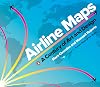
This is a gorgeous collection of maps and other advertising materials from the early days of aviation to the present. It’s a nice oversize book, not too heavy, perfect for spreading out on a table and poring over. The authors accompany all photos with captions that provide details of the artists, trends in the industry and in society at the time, and explain at a very high level the histories of the various airlines. There were many I hadn’t heard of, and a lot of beautiful show more illustrations. My favourites were the Canadian Airlines “pinball machine” poster, with close seconds being the Air Canada and Swissair “wiring diagram” ones.
And while I liked the explanatory text in the photo captions, I found the running commentary had layout issues—this book must have been a challenge to lay out. There wouldn’t be a lot of room on the page for the commentary, so sometimes it would cut off mid-sentence and be continued six pages later. This made it hard to keep the narrative thread. So perhaps my only suggestion for another book of this type would be to provide an essay for each chapter at the beginning, then just present the photos and their captions.
I would recommend this for people who like travel posters and airplanes. show less
And while I liked the explanatory text in the photo captions, I found the running commentary had layout issues—this book must have been a challenge to lay out. There wouldn’t be a lot of room on the page for the commentary, so sometimes it would cut off mid-sentence and be continued six pages later. This made it hard to keep the narrative thread. So perhaps my only suggestion for another book of this type would be to provide an essay for each chapter at the beginning, then just present the photos and their captions.
I would recommend this for people who like travel posters and airplanes. show less
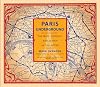
Almost everything a fan of the Paris Metro could want is here. Although a lot of background on the genesis of the subway is presented, along with some of the hurtles of digging the tunnels, the main focus is on the maps, most of which are small illustrations that only give one an overall idea of its presentation and utility. Many of the photos of stations and their entrances are postage-stamp in size, which is a shame, because the art deco/art nouveau detail is often very attractive and show more interesting. Early on in the book there are design and construction details that only whet one's appetite for more (such as the decision to use beveled-edge tile to help reflect light).
The book is most useful for Paris residents with a curiosity about when certain "lignes" were added, or how a particular station design came about. The system is organic, a monster of engineering design that keeps expanding over the decades. A cutaway diagram of one "correspondence", where several lignes come together, shows just how complex the problem is of getting passengers from one to another.
But my eyes started to glaze over at a certain point; one can only stare at hundreds of subway maps rendered in a 3"x4" size for so long.
I had wanted more detail on station design and innovation. I remember taking the Paris subway in the 80's and the use of the magnetic-strip tickets. This is one case of automation with unattended consequences. These little yellow tickets littered the ground of stations, the steps, and the entrance/exits.
By the way, one reviewer listed what they thought were the greatest subway systems in the world. Having used the London tube, the New York subway, and the Paris system over multiple visits, I have to add Berlin to their list. I have made many extended visits to Berlin and lived there for a while (my spouse is a native), and their system is first-rate: the U-Bahn connects to the regional S-Bahn system, and bus stops are present at every station. I don't know about other cities, but I could also take my bike on the train. Many stations have elevators that help folks in wheel chairs as well as those with bikes, cumbersome parcels, or luggage. And the stations and trains are clean. I'd like to see a book like this on the Berlin U-Bahn! show less
The book is most useful for Paris residents with a curiosity about when certain "lignes" were added, or how a particular station design came about. The system is organic, a monster of engineering design that keeps expanding over the decades. A cutaway diagram of one "correspondence", where several lignes come together, shows just how complex the problem is of getting passengers from one to another.
But my eyes started to glaze over at a certain point; one can only stare at hundreds of subway maps rendered in a 3"x4" size for so long.
I had wanted more detail on station design and innovation. I remember taking the Paris subway in the 80's and the use of the magnetic-strip tickets. This is one case of automation with unattended consequences. These little yellow tickets littered the ground of stations, the steps, and the entrance/exits.
By the way, one reviewer listed what they thought were the greatest subway systems in the world. Having used the London tube, the New York subway, and the Paris system over multiple visits, I have to add Berlin to their list. I have made many extended visits to Berlin and lived there for a while (my spouse is a native), and their system is first-rate: the U-Bahn connects to the regional S-Bahn system, and bus stops are present at every station. I don't know about other cities, but I could also take my bike on the train. Many stations have elevators that help folks in wheel chairs as well as those with bikes, cumbersome parcels, or luggage. And the stations and trains are clean. I'd like to see a book like this on the Berlin U-Bahn! show less
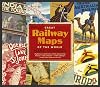
A very attractive book of maps, selected for their cartographic interest and design qualities, rather than being intended for use as an atlas. The examples cover all nations where there are currently passenger rail services operating, and historic maps are shown for comparison in many cases. The author has made a specialism out of railway cartography and design, and he shows interesting examples of maps used for publicity, to encourage colonisation (especially in North America) and for wider show more political ends. The East Berlin commuter rail map that manages to almost completely exclude West Berlin is a particularly notable example.
The maps of North America in particular showed me something I hadn't previously understood, and that was the extent and density of railway penetration across the United States as far west as the Rockies.
Sadly, although the author knows a lot about railway maps, he doesn't know as much about railways, and there are numerous errors in the text that have gone unchecked and uncorrected by the publisher. Moreover, although many of the illustrations are attractive, many are also reproduced at low resolution and some of the maps are almost impossible to read. Even though the book is not intended, as I said, to be used as an atlas, it would be good to be able to read some of the names and some of the text on the illustrations. Also, the text is very fragmentary and the illustration placement and keying is not consistent or always intuitive.
So: an attractive book, but one which can be irritating (because of the design failings) if you attempt to read it all the way through. show less
The maps of North America in particular showed me something I hadn't previously understood, and that was the extent and density of railway penetration across the United States as far west as the Rockies.
Sadly, although the author knows a lot about railway maps, he doesn't know as much about railways, and there are numerous errors in the text that have gone unchecked and uncorrected by the publisher. Moreover, although many of the illustrations are attractive, many are also reproduced at low resolution and some of the maps are almost impossible to read. Even though the book is not intended, as I said, to be used as an atlas, it would be good to be able to read some of the names and some of the text on the illustrations. Also, the text is very fragmentary and the illustration placement and keying is not consistent or always intuitive.
So: an attractive book, but one which can be irritating (because of the design failings) if you attempt to read it all the way through. show less
Lists
Awards

You May Also Like


Associated Authors
Statistics
- Works
- 15
- Members
- 1,483
- Popularity
- #17,315
- Rating
- 4.1
- Reviews
- 27
- ISBNs
- 29
- Languages
- 4