
Tony Campolo (1935–2024)
Author of Adventures in Missing the Point: How the Culture-Controlled Church Neutered the Gospel
About the Author
Tony Campolo is professor emeritus of sociology at Eastern University in St. David's, Pennsylvania. He is the founder of the Evangelical Association for the Promotion of Education (EAPE) and the author of many popular books
Image credit: Wikipedia
Works by Tony Campolo
Adventures in Missing the Point: How the Culture-Controlled Church Neutered the Gospel (2003) — Author — 699 copies, 5 reviews
Speaking My Mind: The Radical Evangelical Prophet Tackles the Tough Issues Christians Are Afraid to Face (2004) 310 copies, 3 reviews
Let Me Tell You A Story Life Lessons From Unexpected Places And Unlikely People (2000) 213 copies, 2 reviews
How to Rescue the Earth Without Worshipping Nature/a Christian's Call to Save Creation (1992) 189 copies, 1 review
The God of Intimacy and Action: Reconnecting Ancient Spiritual Practices, Evangelism, and Justice (2007) 126 copies, 1 review
Ideas for Social Action: A Handbook on Mission and Service for Christian Young People (1985) 112 copies
Survival Guide for Christians on Campus: How to be students and disciples at the same time (2002) 59 copies
101 Ways Your Church Can Change the World: A Guide to Help Christians Express the Love of Christ to a Needy World (1993) 46 copies
The Church and the American Teenager: What Works and Doesn't Work in Youth Ministry (1993) 29 copies
The Gospel With Extra Salt: Friends of Tony Campolo Celebrate His Passions for Ministry (2000) 20 copies
Christianity at the Turn of the Century - The end of the 20th Century and into the 21st Century 2 copies
Tu poți face diferența 2 copies
Todos quieren cambiar el mundo: Ideas practicas para la justicia social (Spanish Edition) (2008) 2 copies
The Power Delusion 1 copy
Party Right 1 copy
7 vernietigende sondes 1 copy
Take the challenge: The kingdom of ticky-tack: Tony Campolo being a live christian in a dead world 1 copy
A Real Fact of Life 1 copy
Curing Affluenza [DVD] 1 copy
Carpe Diem #1 (DVD) 1 copy
Carpe Diem #2 (DVD) 1 copy
Carpe Diem #3 (DVD) 1 copy
Carpe Diem #4 (DVD) 1 copy
Lift Every Voice 1 copy
Grace 1 copy
Carpe Diem--Seize the Day 1 copy
Reasonable Faith, A 1 copy
Associated Works
Christianity and the Social Crisis in the 21st Century: The Classic That Woke Up the Church (1907) — Contributor — 451 copies
Christ at the Checkpoint: Theology in the Service of Justice and Peace (Pentecostals, Peacemaking, and Social Justice) (2012) — Contributor — 5 copies
Tagged
Common Knowledge
- Other names
- Campolo, Anthony
- Birthdate
- 1935-02-25
- Date of death
- 2024-11-19
- Gender
- male
- Education
- Eastern College (B.A., 1956)
University of Pennsylvania (graduate study, 1958-59)
Eastern Baptist Theological Seminary ( Th.M. and B.D., 1960)
Temple University (Ph.D., 1968) - Occupations
- sociologist
cleric - Organizations
- Red Letter Christians
Eastern University - Relationships
- Campolo, Peggy (wife)
Campolo, Bart (son)
Clinton, Bill (former spiritual advisee) - Nationality
- USA
- Places of residence
- Philadelphia, Pennsylvania, USA
Bryn Mawr, Pennsylvania, USA - Associated Place (for map)
- Pennsylvania, USA
Members
Reviews
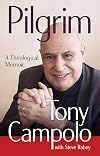
Summary: A memoir of Tony Campolo, popular speaker. social activist, and college professor, tracing his theological development.
This is the second “theological memoir” I’ve read of late. In both cases, the authors have passed on by the time the books were published (in Tony Campolo’s case, he died November 19, 2024). The “pilgrim” in the title has finished his pilgrimage.
The pilgrimage traced in this book is indeed a theological pilgrimage from fundamentalist roots, growing up in show more New Berean Baptist Church and a youth group known as the Bible Buzzards. In addition to regular services, Tony attended weekly Bible studies and preached on street corners as a teen. The first challenge to his theology came from Jewish basketball teammates. He had to wrestle with whether they were going to hell. The next came when he worked for a devout astronomer, Edwin F. Bailey and he was forced to reconcile young earth views with a cosmos billions of years old.
It wasn’t until college at Eastern Baptist College that he learned to think theologically, connecting the bits and pieces of Bible learning into a more coherent whole. It was here that he came to understand the idea of the kingdom of God, and through H. Richard Niebuhr, the idea that God wanted to transform society, and not just individuals. Also, he wrestled with calling, eventually deciding to pursue pastoral ministry. During this time, he met and married Peggy, who would have a major influence on his thinking in many areas. Soon, he was the father of Lisa and Bart. That pastoral journey ended when he confronted racism in his church, resigning when the church refused to accept a Black student into membership.
That led him into the professoriate. Eastern hired him to teach sociology and afforded him opportunities for graduate studies in both theology and sociology, a kind of double vision that enlarged his prospective. Succeeding chapters explore how this helped him address the Sixties search for self, issues of sexuality and abortion, and war. All this led to the launch of the Campolo Center for Ministry, to equip Christian leaders for wholistic ministry.
This, then, resulted in an increasing ministry as a public theologian, including a failed run for Congress. He traces the growth of his speaking and writing ministries. It also led to the first challenge from fellow evangelicals over remarks that some construed to be universalist in character, culminating in a kind of heresy trial at a Chicago O’Hare airport hotel. He became even more suspect as a Clinton confidante, and as part of a pastoral team working with the President and First lady to heal the marriage.
The later part of the book traces further developments, some would say, away from an evangelical faith, which Campolo denied. In his own family, he talks of the pain of children who walked away from faith, and his pride in the integrity of their lives. He addresses the “Red Letter Christian” controversy. Finally, he devotes a chapter to his changing views on homosexuality. He describes the presentations he and his wife gave for many years where they differed, the pain within their marriage this caused, and the reasons that finally led him to joining his wife affirming gay marriage.
The concluding portion of the book discusses his retirement years, following a major stroke. He describes his ministry with other seniors and finishes by summing up his life:
“My earthly pilgrimage has been an amazing journey, and when my life ends, I will be ready to abandon this worn-out body and overtaxed mind and rest in the presence of God for all eternity.”
I heard Campolo speak on one occasion. His impact was electrifying. He never ceased to be an evangelist. This helped me understand his ability to call a generation to give their lives in service to God and humanity. The book reveals an underlying courage through all the development of his thought. He faced challenges on street corners, from racists, and heresy hunters. He also had the courage to change his mind, even when such changes cost him support. Whatever one thinks of Campolo’s views, one must respect the courage that refused to waffle, or kow-tow to financial backers. What is most telling is the voice of this narrative, which seems matter-of-fact, about his times, his ideas, and himself, especially in the account of his children. All this makes for a highly readable and fascinating narrative.
_______________________
Disclosure of Material Connection: I received a complimentary copy of this book from the publisher for review. show less
This is the second “theological memoir” I’ve read of late. In both cases, the authors have passed on by the time the books were published (in Tony Campolo’s case, he died November 19, 2024). The “pilgrim” in the title has finished his pilgrimage.
The pilgrimage traced in this book is indeed a theological pilgrimage from fundamentalist roots, growing up in show more New Berean Baptist Church and a youth group known as the Bible Buzzards. In addition to regular services, Tony attended weekly Bible studies and preached on street corners as a teen. The first challenge to his theology came from Jewish basketball teammates. He had to wrestle with whether they were going to hell. The next came when he worked for a devout astronomer, Edwin F. Bailey and he was forced to reconcile young earth views with a cosmos billions of years old.
It wasn’t until college at Eastern Baptist College that he learned to think theologically, connecting the bits and pieces of Bible learning into a more coherent whole. It was here that he came to understand the idea of the kingdom of God, and through H. Richard Niebuhr, the idea that God wanted to transform society, and not just individuals. Also, he wrestled with calling, eventually deciding to pursue pastoral ministry. During this time, he met and married Peggy, who would have a major influence on his thinking in many areas. Soon, he was the father of Lisa and Bart. That pastoral journey ended when he confronted racism in his church, resigning when the church refused to accept a Black student into membership.
That led him into the professoriate. Eastern hired him to teach sociology and afforded him opportunities for graduate studies in both theology and sociology, a kind of double vision that enlarged his prospective. Succeeding chapters explore how this helped him address the Sixties search for self, issues of sexuality and abortion, and war. All this led to the launch of the Campolo Center for Ministry, to equip Christian leaders for wholistic ministry.
This, then, resulted in an increasing ministry as a public theologian, including a failed run for Congress. He traces the growth of his speaking and writing ministries. It also led to the first challenge from fellow evangelicals over remarks that some construed to be universalist in character, culminating in a kind of heresy trial at a Chicago O’Hare airport hotel. He became even more suspect as a Clinton confidante, and as part of a pastoral team working with the President and First lady to heal the marriage.
The later part of the book traces further developments, some would say, away from an evangelical faith, which Campolo denied. In his own family, he talks of the pain of children who walked away from faith, and his pride in the integrity of their lives. He addresses the “Red Letter Christian” controversy. Finally, he devotes a chapter to his changing views on homosexuality. He describes the presentations he and his wife gave for many years where they differed, the pain within their marriage this caused, and the reasons that finally led him to joining his wife affirming gay marriage.
The concluding portion of the book discusses his retirement years, following a major stroke. He describes his ministry with other seniors and finishes by summing up his life:
“My earthly pilgrimage has been an amazing journey, and when my life ends, I will be ready to abandon this worn-out body and overtaxed mind and rest in the presence of God for all eternity.”
I heard Campolo speak on one occasion. His impact was electrifying. He never ceased to be an evangelist. This helped me understand his ability to call a generation to give their lives in service to God and humanity. The book reveals an underlying courage through all the development of his thought. He faced challenges on street corners, from racists, and heresy hunters. He also had the courage to change his mind, even when such changes cost him support. Whatever one thinks of Campolo’s views, one must respect the courage that refused to waffle, or kow-tow to financial backers. What is most telling is the voice of this narrative, which seems matter-of-fact, about his times, his ideas, and himself, especially in the account of his children. All this makes for a highly readable and fascinating narrative.
_______________________
Disclosure of Material Connection: I received a complimentary copy of this book from the publisher for review. show less
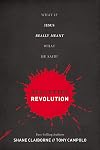
On the surface this looks like a book written by the odd couple. On one side you have Tony Campolo, the wizened elder statesman. On the other side you have the iconoclastic young radical, Shane Claiborne. Fortunately for all of us, their theological similarities outweigh their superficial differences!
This is a book about and for Red Letter Christians. These are Christians who feel the title Evangelical is doing them a disservice. Central among the Red Letter Christian beliefs is a renewed show more emphasis on the teaching of Jesus (thus the Red Letters). The wonderfully sarcastic title sets the tone of the volume: "What if Jesus Really Meant What He Said?"
Throughout the book, Tony and Shane discuss a multitude of topics: Liturgy, Hell, Islam, Pro-Life, Homosexuality, War, and the Resurrection to name just a few. I was slightly surprised at the candor of these two dialogue partners, and heartily agreed with them at many points.
Some of the topics covered in the Red Letter Revolution confused me—not necessarily because I disagreed with the stance but because the Jesus' red letters don't really cover the topic. Take environmentalism for example. Jesus says nothing about the it, despite the out-of-context chapter epigraph of Matthew 6:28-29! Throughout that chapter Tony and Shane talk about Genesis, Corinthians, Psalms, Romans, and Isaiah. Despite making many important points, I can't see how the Red Letter banner covers the topic.
I'm glad I read this book. For a popular Christian work, there's a surprising amount of depth. If you're looking for something to challenge and inspire your faith, give the Red Letter Revolution a try. show less
This is a book about and for Red Letter Christians. These are Christians who feel the title Evangelical is doing them a disservice. Central among the Red Letter Christian beliefs is a renewed show more emphasis on the teaching of Jesus (thus the Red Letters). The wonderfully sarcastic title sets the tone of the volume: "What if Jesus Really Meant What He Said?"
Throughout the book, Tony and Shane discuss a multitude of topics: Liturgy, Hell, Islam, Pro-Life, Homosexuality, War, and the Resurrection to name just a few. I was slightly surprised at the candor of these two dialogue partners, and heartily agreed with them at many points.
Some of the topics covered in the Red Letter Revolution confused me—not necessarily because I disagreed with the stance but because the Jesus' red letters don't really cover the topic. Take environmentalism for example. Jesus says nothing about the it, despite the out-of-context chapter epigraph of Matthew 6:28-29! Throughout that chapter Tony and Shane talk about Genesis, Corinthians, Psalms, Romans, and Isaiah. Despite making many important points, I can't see how the Red Letter banner covers the topic.
I'm glad I read this book. For a popular Christian work, there's a surprising amount of depth. If you're looking for something to challenge and inspire your faith, give the Red Letter Revolution a try. show less

This is the best Christian current-issues book I've read since Blinded By Might (see my review of that) in 2004. (It's about twenty years old, being copyright 1988, but does not focus on 1980s-specific issues, so you will not find it dated. But if the age still concerns you, the author has written a more recent issues book called Speaking My Mind. I'm going to read it too eventually.)
The author, Tony Campolo, is a social liberal but definitely *not* a theological liberal; he says he accepts show more the inerrancy of the Bible, talks about sin and about God's grace, and if I recall, says he is a Baptist and former pastor. (At publication, he taught sociology at Eastern College in St. David's, Pennsylvania.) So reading this book isn't like reading something by John Shelby Spong.
It discusses the following issues:
-What Christians should do about the AIDS epidemic.
-Christian ways of dealing with low self-esteem.
-Whether there should be women preachers.
-Whether the mother of a young child should have a career.
-Christian ways of dealing with sexual frustration.
-How worthwhile is Christian televangelism?
-Should kids, especially Christian kids, go to public schools?
-How Christians need to avoid despising homosexuals, especially within the church.
-Whether rich people can go to heaven, and how Christians should behave with their wealth.
-What the Christian attitude towards modern sports should be.
-Hunting: What kind of hunting is acceptable, and what kind is a sin.
-When it is acceptable to take someone off life support.
-How single women over 30 can deal with loneliness.
-Whether it's right for Christians to kill. (This is the only chapter where I completely disagreed with his opinion.)
-How undertakers often take financial advantage of grieving families when planning funeral services for them.
-When it is or isn't right to put an elderly family member in a care center. (This, unlike the chapter on whether Christians can kill, is *not* black-and-white in its conclusions.)
-When it is or is not right for divorced Christians to remarry.
-What kinds of psychological treatments are a good idea.
-What parents should do when their adult children make bad decisions.
-What Christians' attitude regarding Israel and Palestine should be. show less
The author, Tony Campolo, is a social liberal but definitely *not* a theological liberal; he says he accepts show more the inerrancy of the Bible, talks about sin and about God's grace, and if I recall, says he is a Baptist and former pastor. (At publication, he taught sociology at Eastern College in St. David's, Pennsylvania.) So reading this book isn't like reading something by John Shelby Spong.
It discusses the following issues:
-What Christians should do about the AIDS epidemic.
-Christian ways of dealing with low self-esteem.
-Whether there should be women preachers.
-Whether the mother of a young child should have a career.
-Christian ways of dealing with sexual frustration.
-How worthwhile is Christian televangelism?
-Should kids, especially Christian kids, go to public schools?
-How Christians need to avoid despising homosexuals, especially within the church.
-Whether rich people can go to heaven, and how Christians should behave with their wealth.
-What the Christian attitude towards modern sports should be.
-Hunting: What kind of hunting is acceptable, and what kind is a sin.
-When it is acceptable to take someone off life support.
-How single women over 30 can deal with loneliness.
-Whether it's right for Christians to kill. (This is the only chapter where I completely disagreed with his opinion.)
-How undertakers often take financial advantage of grieving families when planning funeral services for them.
-When it is or isn't right to put an elderly family member in a care center. (This, unlike the chapter on whether Christians can kill, is *not* black-and-white in its conclusions.)
-When it is or is not right for divorced Christians to remarry.
-What kinds of psychological treatments are a good idea.
-What parents should do when their adult children make bad decisions.
-What Christians' attitude regarding Israel and Palestine should be. show less

Nothing like a catchy title to get people to buy your book. Some of these 20 topics certainly aren't hot potatoes in 2022 although in 1988 they would have been controversial. Others remain controversial and Campolo's voice is still a valuable contribution. He's not always right (from my perspective and from 2022) but his opinion is worth listening to.
You May Also Like


Associated Authors
Statistics
- Works
- 108
- Also by
- 5
- Members
- 7,069
- Popularity
- #3,471
- Rating
- 3.6
- Reviews
- 39
- ISBNs
- 190
- Languages
- 6
- Favorited
- 3