

Ronald J. Sider (1939–2022)
Author of Rich Christians in an Age of Hunger: Moving from Affluence to Generosity
About the Author
Ronald J. Sider, PhD, Yale, is senior distinguished professor of theology, holistic ministry and public policy at Palmer Seminary at Eastern Seminary. He is the publisher of PRISM and corresponding editor for Christianity Today, serves as president of Evangelic for Social Action, and has published show more more than thirty books. He and his wife life in Philadelphia. show less
Image credit: Photo from Eastern University
Works by Ronald J. Sider
Rich Christians in an Age of Hunger: Moving from Affluence to Generosity (1990) 1,770 copies, 13 reviews
The Scandal of the Evangelical Conscience, Why Are Christians Living Just Like the Rest of the World? (2005) 442 copies, 3 reviews
Churches That Make a Difference: Reaching Your Community with Good News and Good Works (2002) 209 copies
The Scandal of Evangelical Politics: Why Are Christians Missing the Chance to Really Change the World? (2008) 94 copies
The Early Church on Killing: A Comprehensive Sourcebook on War, Abortion, and Capital Punishment (2012) 68 copies
Toward an Evangelical Public Policy: Political Strategies for the Health of the Nation (2005) — Editor — 65 copies
Nonviolent Action: What Christian Ethics Demands but Most Christians Have Never Really Tried (2015) 55 copies, 1 review
The Spiritual Danger of Donald Trump: 30 Evangelical Christians on Justice, Truth, and Moral Integrity (2020) 50 copies, 1 review
Cup of Water, Bread of Life: Inspiring Stories About Overcoming Lopsided Christianity (1994) 44 copies
Linking Arms, Linking Lives: How Urban-Suburban Partnerships Can Transform Communities (2008) 41 copies
Evangelicals and Development: Toward a Theology of Social Change (Contemporary issues in social ethics) (1981) 34 copies
The Future of Our Faith: An Intergenerational Conversation on Critical Issues Facing the Church (2016) 31 copies, 1 review
Andreas Bodenstein Von Karlstadt: The Development of His Thought 1517-1525 (Studies in Medieval & Reformation Thought) (1974) 8 copies
Catholics and Evangelicals for the Common Good: A Dialogue in an Historic Convergence (2018) 4 copies
Living Like Jesus 3 copies
Prism Magazine 2 copies
al-masih wi al-anf 1 copy
"Christ & Violence" 1 copy
Living More Simply 1 copy
Associated Works
Christians and Politics Beyond the Culture Wars: An Agenda for Engagement (2000) — Contributor — 45 copies
Tagged
Common Knowledge
- Canonical name
- Sider, Ronald J.
- Legal name
- Sider, Ronald James
- Birthdate
- 1939-09-17
- Date of death
- 2022-07-27
- Gender
- male
- Education
- University of Waterloo (BA|European History)
Yale University (MDiv)
Yale University (PhD|History) - Occupations
- professor
theologian - Organizations
- Evangelicals for Social Action
Palmer Theological Seminary - Relationships
- Sider, Theodore (son)
North, Jill (daugher-in-law) - Nationality
- USA
Canada (birth) - Birthplace
- Stevensville, Ontario, Canada
- Places of residence
- Philadelphia, Pennsylvania, USA
- Map Location
- USA
Members
Reviews
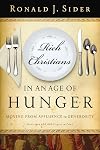
I read the first version of this book shortly after it was published... it had a great influence on my lifestyle. This book is a strong polemic against materialism which is so common in the modern, western world. It is call to not just resist the draw of an affluent lifestyle, but to actively fight for economic justice which requires more than personal choices, but to fight for structural changes. While I didn't always agree with Sider's conclusions, I think this has been an influential book show more that is well worth reading. In the 6th version Sider has recognized how capitalism can be harnessed for good and some of the limitations of classic socialist systems. show less
The Future of Our Faith: An Intergenerational Conversation on Critical Issues Facing the Church by Ronald J. Sider
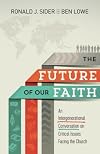
Summary: Two activist evangelical leaders forty years apart pose critical questions for each other about issues facing the church, with responses from the other.
It often seems, as I follow social media, that there are at least two simultaneous conversations going on within generations of the evangelical community. There are those of my age in the boomer generation who are critically concerned about the future of the church--will it carry on in doctrinal, missional, and lifestyle integrity in show more the face of winds of culture. Likewise, younger Christians of my son's generation are asking questions about the legacy of my generation in terms of environmental degradation, seemingly unloving treatment of LGBT people, a different kind of political engagement where the church is not captive to political parties, and more.
It seems rare that we have this conversation across generations, more often just within generational cohorts. And the danger is that we become more divided from "them" rather than learning from, collaborating with, and blessing each other. And so we add to the fault lines of social class, gender, ethnicity, and doctrinal differences that divide the church the fault line of generation.
Ronald J. Sider and Ben Lowe are separated by forty years in age, but share common commitments to social action arising from a deeply rooted evangelical faith. And they set out in this book to have conversations with each other around the issues that often seem to separate generations in the church. After an introduction discussing the importance of the conversation, each writer contributed four chapters raising questions for the other, followed by the other's response. Woven into the chapters were "sidebar" contributions from other evangelical leaders. The contents of the discussion are as follows:
1. Why This Conversation
Part 1: Ron Sider's Chapters (with Ben Lowe's Responses)
2. Will You Remember Evangelism?
3. Will You Reaffirm Truth as You Learn from Postmodernism?
4. Will You Keep Your Marriage Vows Better Than My Generation?
5. Will You Lead the Church to a Better Stance on Homosexuality?
Part 2: Ben Lowe's Chapters (with Ron Sider's Responses)
6. Will We Live More Like Jesus?
7. Will We Renew Our Political Witness?
8. Will We Reconcile Our Divisions Better?
9. Will We Recover Our Responsibility for God's Creation?
Conclusion: Jesus at the Center
What worked about this is that the questions of each do represent some of the issues each generation is concerned with. For example, while concerns for justice and social issues reflect ways millenials are "walking the talk" Sider raises a concern about whether "the talk" is being muted. Lowe raises issues about political witness, acknowledging both the political captivity he sees in elder generations, and the disengagement of his own generation, at times. There is a humility about the questions each asks, acknowledging the failures or struggles of each generation, rather than how one is better than another.
What also works is that these two are both leaders in thoughtful, socially progressive evangelicalism. Ben's organization, Young Evangelicals for Climate Action arose out of Sider's Evangelicals for Social Action, and their environmental wing, the Evangelical Environmental Network. It was clear that both of them deeply respected the other. And that led to a conversation with a high level of agreement between the two, while articulating some generational perspectives.
Some may have wished for more sparks between the two. The willingness, particularly of Sider, to acknowledge generational failures and the sincere hope that Ben's generation get it better tended to defuse whatever sparks there might be. And this may offer a model for similar conversations of the kind of humility that leads to shared understanding and mutual support across generations. At the same time, I found myself wishing for at least one chapter from each where they just didn't see eye to eye and modeled working that through. That would have been valuable.
The questions at the end of each chapter are quite helpful for inter-generational discussions, which I hope this book would provoke. I would say that the sidebars just seemed a distraction and really did not add to what these two leaders, both men of deep spiritual character coupled with strong track records of deeds done in the church and in social advocacy, had to offer. These are conversations every inter-generational church needs to have and these two have given us a great starting place.
________________________________
Disclosure of Material Connection: I received this book free from the publisher via Netgalley. I was not required to write a positive review. The opinions I have expressed are my own. I am disclosing this in accordance with the Federal Trade Commission’s 16 CFR, Part 255 : “Guides Concerning the Use of Endorsements and Testimonials in Advertising.” show less
It often seems, as I follow social media, that there are at least two simultaneous conversations going on within generations of the evangelical community. There are those of my age in the boomer generation who are critically concerned about the future of the church--will it carry on in doctrinal, missional, and lifestyle integrity in show more the face of winds of culture. Likewise, younger Christians of my son's generation are asking questions about the legacy of my generation in terms of environmental degradation, seemingly unloving treatment of LGBT people, a different kind of political engagement where the church is not captive to political parties, and more.
It seems rare that we have this conversation across generations, more often just within generational cohorts. And the danger is that we become more divided from "them" rather than learning from, collaborating with, and blessing each other. And so we add to the fault lines of social class, gender, ethnicity, and doctrinal differences that divide the church the fault line of generation.
Ronald J. Sider and Ben Lowe are separated by forty years in age, but share common commitments to social action arising from a deeply rooted evangelical faith. And they set out in this book to have conversations with each other around the issues that often seem to separate generations in the church. After an introduction discussing the importance of the conversation, each writer contributed four chapters raising questions for the other, followed by the other's response. Woven into the chapters were "sidebar" contributions from other evangelical leaders. The contents of the discussion are as follows:
1. Why This Conversation
Part 1: Ron Sider's Chapters (with Ben Lowe's Responses)
2. Will You Remember Evangelism?
3. Will You Reaffirm Truth as You Learn from Postmodernism?
4. Will You Keep Your Marriage Vows Better Than My Generation?
5. Will You Lead the Church to a Better Stance on Homosexuality?
Part 2: Ben Lowe's Chapters (with Ron Sider's Responses)
6. Will We Live More Like Jesus?
7. Will We Renew Our Political Witness?
8. Will We Reconcile Our Divisions Better?
9. Will We Recover Our Responsibility for God's Creation?
Conclusion: Jesus at the Center
What worked about this is that the questions of each do represent some of the issues each generation is concerned with. For example, while concerns for justice and social issues reflect ways millenials are "walking the talk" Sider raises a concern about whether "the talk" is being muted. Lowe raises issues about political witness, acknowledging both the political captivity he sees in elder generations, and the disengagement of his own generation, at times. There is a humility about the questions each asks, acknowledging the failures or struggles of each generation, rather than how one is better than another.
What also works is that these two are both leaders in thoughtful, socially progressive evangelicalism. Ben's organization, Young Evangelicals for Climate Action arose out of Sider's Evangelicals for Social Action, and their environmental wing, the Evangelical Environmental Network. It was clear that both of them deeply respected the other. And that led to a conversation with a high level of agreement between the two, while articulating some generational perspectives.
Some may have wished for more sparks between the two. The willingness, particularly of Sider, to acknowledge generational failures and the sincere hope that Ben's generation get it better tended to defuse whatever sparks there might be. And this may offer a model for similar conversations of the kind of humility that leads to shared understanding and mutual support across generations. At the same time, I found myself wishing for at least one chapter from each where they just didn't see eye to eye and modeled working that through. That would have been valuable.
The questions at the end of each chapter are quite helpful for inter-generational discussions, which I hope this book would provoke. I would say that the sidebars just seemed a distraction and really did not add to what these two leaders, both men of deep spiritual character coupled with strong track records of deeds done in the church and in social advocacy, had to offer. These are conversations every inter-generational church needs to have and these two have given us a great starting place.
________________________________
Disclosure of Material Connection: I received this book free from the publisher via Netgalley. I was not required to write a positive review. The opinions I have expressed are my own. I am disclosing this in accordance with the Federal Trade Commission’s 16 CFR, Part 255 : “Guides Concerning the Use of Endorsements and Testimonials in Advertising.” show less
This is probably the best Sider book I've read so far. He does a thorough treatment of his theology of social engagement. I'm not always convinced, especially by the Yoderian turns, but this is not some trite attempt to guilt Christians into social justice work. Even his turn to Scripture is improved over Rich Christians, and I am hard to please when it comes to the "obligatory" Biblical exegesis that Evangelical writing seems to demand. Sider is, mostly, careful giving a thoughtful show more examination of his texts. What he doesn't wrestle with is a contextual (social context) reading of his texts, so his insistence on salvation exclusively through the Church seems a bit dismissive. I would introduce a little more new terminology to take up this particular theological task, but there is also value in keeping your writing accessible. I think Sider achieves that without compromising a sense of depth on the topic. I suspect he could add quite a few more layers of depth here - but with the nature of his subject I wonder if he hasn't struck a very appropriate balance to make sure this gets into the hands of those who might act on it - and at the same time not just contributing to the endless fluff that is out there for non-academic Christians to consume. Sider remains a key thinker on evangelical social engagement and I appreciate his contributions to the field. show less
Ronald Sider: Rich Christians in an Age of Hunger
A Review by Joseph Esposito
Tracing the Thesis:
In addressing the responsibility of Christians in response to our neighbors, Sider says:
“The biblical understanding of “economic equality” or equity, demands at least this: God wants every person and family to have the equality of economic opportunity, at least to the point of having access to the resources necessary (land, money, education), so that by working responsibly they can earn a show more decent living and participate as dignified members of their community. ”
This very basic understanding of what the justice of God actively demands for all persons firmly undergirds all of what Sider does throughout the text. Indeed, by perversely subverting this justice, Sider says: “most of the rich countries are at least nominally Christian. What an ironic tragedy that an affluent, “Christian” minority in the world continues to hoard its wealth while hundreds of millions of people hover on the edge of starvation! ” It is plain that there is a radical disconnect between what God’s justice demands, and what is practiced in reality. Recognizing this, Sider goes on to say that “in an age of affluence and poverty, most Christians, regardless of theological labels, are tempted to succumb to the heresy of following society’s materialistic values rather than biblical truth…enjoying our affluence while neglecting billions of poor neighbors. ” In one of the most striking, if short, comments in the whole text, Sider says that in regards to taking seriously the plight of the poor and oppressed, “religion plays no significant role at all! ”
Most obviously, Sider argues that while the state of affairs is such that those who claim to be Christian by and large do not take justice for others seriously, this ought not to be the case. Indeed, as we previously mentioned, this kind of “Christianity” is left wanting by way of its radical disconnection from God’s own justice. Sider solemnly reminds us that with regards to God’s people, YHWH’s “passion for justice was a two-edged sword. When they were oppressed, it led to their freedom. But when they became the oppressors, it led to their destruction. ” Further, “God’s Word teaches a very hard, disturbing truth. Those who neglect to poor and oppressed are really not God’s people at all—no matter how frequently they practice their religious rituals nor how orthodox are their creeds and confessions. ” “Regardless of what we do or say at 11:00 AM on Sunday morning, rich Christians who neglect the poor are not the people of God. ”
Symptomatic of this problem that is inherent in much of popular Christianity, is the adherence to a doctrine of “separate spheres”—understanding that the spiritual world and the material world have no inherent connection, even that the material is itself a hindrance to the spirituality of humanity . This needs to be reinterpreted as fundamentally Gnostic/Manichean and not Judeo Christian and freshly pronounced heresy again. In fact, as we reinterpret all of creation eucharistically, we come to see that all of this material is a gift from God that we are to use not as an end in itself, but instead to return these good gifts as thanksgiving back to God and those God cares about .
Within this truly Christian construct, God is the God of creation and has pronounced it good and very good. Thus, there can be no area of our existence which remains unaffected by our reorientation back into God’s purposes. Indeed, “God requires radically transformed economic relationships among his people because sin has alienated us from God and from each other. The result is personal selfishness, structural injustice, and economic oppression…however…the community of the redeemed is to display a dramatically new set of personal, social, and economic relationships. ” Most fundamental to this affirmation is that YHWH’s “ownership of everything is the presupposition…God, the landowner, permits his people to sojourn on his good earth, cultivate it, eat its produce, and enjoy its beauty. But we are only stewards. ” Only stewards, but given a responsibility to care for not only the earth, but all those within the life giving environment provided by God.
How then shall we live? “Economic activity, like every other area of life, is to be subject to God’s will and revelation. ” What then is God’s will and revelation? Scripture affirms that God wants persons to have sufficient resources of production so that all have the capability to simply live. God also wants those who have been blessed with an abundance to in turn bless others who are not able to work to produce life sustaining goods . Thus, because of poverty, oppression, starvation and disease that overwhelms, “Christians today must lower their standard of living” . Further, the systemic realities of sin and injustice require yet further commitment by Christians to combat injustice, not merely on a personal level, but at whatever level they find it.
In the final sections (3 and 4), Sider visits the causes of poverty in the world, and destroys the idea that the poor are such because they choose to be. We do not live in a meritocracy, where persons are able to work and earn a decent living . Poverty cannot be traced to one cause, but is rather a multi-faceted reality. After discussing these at length, Sider makes some proposals for implementation of these convictions. It is not necessary to discuss these at length here, only to mention that Sider does well to invite critique and conversation about the remedies of poverty and oppression since he recognizes that these realities are not easily changed. Yet, Christians are called to combat poverty wherever it is found, and in whatever form it comes, until the kingdom of God comes in its fullness—and this means adjusting our own affluence radically. We must “live more simply, so that others may simply live”.
Personal Reflection:
This study is a well structured and thought out introduction to the problem of extreme affluence and the contingent problem of extreme poverty. Sider helps us face the danger and reality of affluence squarely and faithfully. While describing the problem and helping us see the poverty and oppression, Sider also helps us move in practical ways toward solutions. One of the things that I appreciate about Sider’s suggestions for moving in ways of generosity, is that he suggests transitioning over a period of time into this way of life. There is a recognition that while God certainly calls us to the sort of generosity that Sider proposes, the movement away from affluence is one that takes time when one is ‘plugged in’ to the system. There is room at the table for those who are even now seceding from the American dream and attempting to discern what that must mean as we begin to live into God’s kingdom. show less
A Review by Joseph Esposito
Tracing the Thesis:
In addressing the responsibility of Christians in response to our neighbors, Sider says:
“The biblical understanding of “economic equality” or equity, demands at least this: God wants every person and family to have the equality of economic opportunity, at least to the point of having access to the resources necessary (land, money, education), so that by working responsibly they can earn a show more decent living and participate as dignified members of their community. ”
This very basic understanding of what the justice of God actively demands for all persons firmly undergirds all of what Sider does throughout the text. Indeed, by perversely subverting this justice, Sider says: “most of the rich countries are at least nominally Christian. What an ironic tragedy that an affluent, “Christian” minority in the world continues to hoard its wealth while hundreds of millions of people hover on the edge of starvation! ” It is plain that there is a radical disconnect between what God’s justice demands, and what is practiced in reality. Recognizing this, Sider goes on to say that “in an age of affluence and poverty, most Christians, regardless of theological labels, are tempted to succumb to the heresy of following society’s materialistic values rather than biblical truth…enjoying our affluence while neglecting billions of poor neighbors. ” In one of the most striking, if short, comments in the whole text, Sider says that in regards to taking seriously the plight of the poor and oppressed, “religion plays no significant role at all! ”
Most obviously, Sider argues that while the state of affairs is such that those who claim to be Christian by and large do not take justice for others seriously, this ought not to be the case. Indeed, as we previously mentioned, this kind of “Christianity” is left wanting by way of its radical disconnection from God’s own justice. Sider solemnly reminds us that with regards to God’s people, YHWH’s “passion for justice was a two-edged sword. When they were oppressed, it led to their freedom. But when they became the oppressors, it led to their destruction. ” Further, “God’s Word teaches a very hard, disturbing truth. Those who neglect to poor and oppressed are really not God’s people at all—no matter how frequently they practice their religious rituals nor how orthodox are their creeds and confessions. ” “Regardless of what we do or say at 11:00 AM on Sunday morning, rich Christians who neglect the poor are not the people of God. ”
Symptomatic of this problem that is inherent in much of popular Christianity, is the adherence to a doctrine of “separate spheres”—understanding that the spiritual world and the material world have no inherent connection, even that the material is itself a hindrance to the spirituality of humanity . This needs to be reinterpreted as fundamentally Gnostic/Manichean and not Judeo Christian and freshly pronounced heresy again. In fact, as we reinterpret all of creation eucharistically, we come to see that all of this material is a gift from God that we are to use not as an end in itself, but instead to return these good gifts as thanksgiving back to God and those God cares about .
Within this truly Christian construct, God is the God of creation and has pronounced it good and very good. Thus, there can be no area of our existence which remains unaffected by our reorientation back into God’s purposes. Indeed, “God requires radically transformed economic relationships among his people because sin has alienated us from God and from each other. The result is personal selfishness, structural injustice, and economic oppression…however…the community of the redeemed is to display a dramatically new set of personal, social, and economic relationships. ” Most fundamental to this affirmation is that YHWH’s “ownership of everything is the presupposition…God, the landowner, permits his people to sojourn on his good earth, cultivate it, eat its produce, and enjoy its beauty. But we are only stewards. ” Only stewards, but given a responsibility to care for not only the earth, but all those within the life giving environment provided by God.
How then shall we live? “Economic activity, like every other area of life, is to be subject to God’s will and revelation. ” What then is God’s will and revelation? Scripture affirms that God wants persons to have sufficient resources of production so that all have the capability to simply live. God also wants those who have been blessed with an abundance to in turn bless others who are not able to work to produce life sustaining goods . Thus, because of poverty, oppression, starvation and disease that overwhelms, “Christians today must lower their standard of living” . Further, the systemic realities of sin and injustice require yet further commitment by Christians to combat injustice, not merely on a personal level, but at whatever level they find it.
In the final sections (3 and 4), Sider visits the causes of poverty in the world, and destroys the idea that the poor are such because they choose to be. We do not live in a meritocracy, where persons are able to work and earn a decent living . Poverty cannot be traced to one cause, but is rather a multi-faceted reality. After discussing these at length, Sider makes some proposals for implementation of these convictions. It is not necessary to discuss these at length here, only to mention that Sider does well to invite critique and conversation about the remedies of poverty and oppression since he recognizes that these realities are not easily changed. Yet, Christians are called to combat poverty wherever it is found, and in whatever form it comes, until the kingdom of God comes in its fullness—and this means adjusting our own affluence radically. We must “live more simply, so that others may simply live”.
Personal Reflection:
This study is a well structured and thought out introduction to the problem of extreme affluence and the contingent problem of extreme poverty. Sider helps us face the danger and reality of affluence squarely and faithfully. While describing the problem and helping us see the poverty and oppression, Sider also helps us move in practical ways toward solutions. One of the things that I appreciate about Sider’s suggestions for moving in ways of generosity, is that he suggests transitioning over a period of time into this way of life. There is a recognition that while God certainly calls us to the sort of generosity that Sider proposes, the movement away from affluence is one that takes time when one is ‘plugged in’ to the system. There is room at the table for those who are even now seceding from the American dream and attempting to discern what that must mean as we begin to live into God’s kingdom. show less
Lists
Awards


You May Also Like


Associated Authors
Statistics
- Works
- 67
- Also by
- 4
- Members
- 4,858
- Popularity
- #5,168
- Rating
- 3.8
- Reviews
- 34
- ISBNs
- 120
- Languages
- 7