
Valerie Miner
Author of Murder in the English Department
About the Author
Valerie Miner teaches in the MFA Program at the University of Minnesota.
Image credit: Photo by John Campbell, found at Boston Globe website
Works by Valerie Miner
Associated Works
Women on Women: An Anthology of American Lesbian Short Fiction (1990) — Contributor — 261 copies, 1 review
A Fictional History of the United States with Huge Chunks Missing (2006) — Contributor — 77 copies, 2 reviews
Tagged
Common Knowledge
- Birthdate
- 1947-08-28
- Gender
- female
- Nationality
- USA
- Associated Place (for map)
- USA
Members
Reviews

The good: Miner is very good at creating moments of dramatic tension, particularly a sense of impending, unseen threat. She also writes very, very poignantly about grief and loss, and the sadness of unmet expectations. There are some very creepy and very moving passages in many of the collection’s stories.
Her characters have warts and failings: unrealistic expectations of themselves, each other, society. A willingness to look the other way on addiction and domestic abuse until it’s too show more late. An inability to enjoy life’s pleasures without feeling anxious they’ll be taken away. Impatience with friends and loved ones. Prickliness. Inconsistent viewpoints. And so on.
The neutral: Miner's stories revisit the same core elements in different trappings. There’s nothing wrong with this; plenty of authors have That Thing that drives them to write. But it’s more noticeable in a collection of Miner’s work that it would be as the stories were first published--singly, in literary magazines alongside other authors' works. Almost all of Miner’s stories feature one or more of the following: children from a previous marriage to a dead or divorced spouse; a new same-sex partner, someone with cancer; an ominous or disappointing male relative or ex-partner; people traveling to bring closure or find a new beginning.
The bad: For a short story writer, Miner can be weirdly inattentive to detail. She bungles a routine exchange at a post office; a character doesn’t know basic facts about the institution that employs her. Dialogue is often an afterthought. A character refers to her friend in the third person—while in conversation with that friend—to facilitate exposition Miner wants to deliver. An eleven-year-old speaks in Miner’s adult voice to accomplish the same. A character "snaps a photo with her android,” even though no one thinks of their phone that way, and it’s the sort of simple misstep that jars readers out of the story’s flow.
There’s a lot to like in these stories, particularly if one doesn’t read them all in the space of a few weeks. Had the execution been fine-tuned they would have been even better. show less
Her characters have warts and failings: unrealistic expectations of themselves, each other, society. A willingness to look the other way on addiction and domestic abuse until it’s too show more late. An inability to enjoy life’s pleasures without feeling anxious they’ll be taken away. Impatience with friends and loved ones. Prickliness. Inconsistent viewpoints. And so on.
The neutral: Miner's stories revisit the same core elements in different trappings. There’s nothing wrong with this; plenty of authors have That Thing that drives them to write. But it’s more noticeable in a collection of Miner’s work that it would be as the stories were first published--singly, in literary magazines alongside other authors' works. Almost all of Miner’s stories feature one or more of the following: children from a previous marriage to a dead or divorced spouse; a new same-sex partner, someone with cancer; an ominous or disappointing male relative or ex-partner; people traveling to bring closure or find a new beginning.
The bad: For a short story writer, Miner can be weirdly inattentive to detail. She bungles a routine exchange at a post office; a character doesn’t know basic facts about the institution that employs her. Dialogue is often an afterthought. A character refers to her friend in the third person—while in conversation with that friend—to facilitate exposition Miner wants to deliver. An eleven-year-old speaks in Miner’s adult voice to accomplish the same. A character "snaps a photo with her android,” even though no one thinks of their phone that way, and it’s the sort of simple misstep that jars readers out of the story’s flow.
There’s a lot to like in these stories, particularly if one doesn’t read them all in the space of a few weeks. Had the execution been fine-tuned they would have been even better. show less
 This review was written for LibraryThing Early Reviewers.
I'm not an avid reader of short stories, but the pandemic has shortened my focus and energy. While I chose Miner's latest collection for story length, it's her characters and quiet attention to detail that kept me reading. Miner proves you don't need page count to tell a story with complexity and intimacy. As a reader, you immediately feel like you've dropped in on a conversation between friends. Instead of a surprising plot twist, there is comfort in knowing what happens next. Often there show more is tension or conflict between characters, but it isn't aggressive. Rather, these moments remind us what makes us each different, and how much we really have in common. show less
This review was written for LibraryThing Early Reviewers.I really liked the stories in this collection. They feel very human, very genuine, and they aren't all happy, which is refreshing. Some were only a couple pages, which was a bit jarring. The title novella was my favorite, seconded by Far Enough. The women in the stories feel very real.
This review was written for LibraryThing Early Reviewers.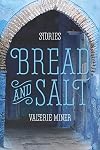
Disclaimer: ARC via Librarything.
Valerie Miner’s short story collection “Blood and Salt” offers up a group of stories that give use glimpses into moments and lives. The majority of the stories are quiet ones, though there a few dark ones in this collection. As in most short story collections some stories stand out more than others.
There were a few stories that one wanted more from. This doesn’t mean that the stories felt unfinished, but that the feeling of there should have been more show more lingers after the story has been finished. This is very true of “Iconoclast”. Yet there are many magnificent stories.
The best stories in the collection focus more on the quiet interior of life as opposed to the darker stories. “Under the Stars,” for instance, is a quiet story that takes place over an evening at a party in India. To say that nothing happens is both at once correct and incorrect. There is no major action but there is plenty of internal action. There is such simple and wonderful beauty in the story.
This is also true of “Far Enough”. Yet that supposedly simple story captures the essence of guilt, of complicated friendship, of desiring company, and desiring solitude so strongly and believably illustrated and described.
Many of the stories have to do reconciling with the past and the ghosts of the past that haunt us. But they are also concerned with what exactly makes a family, aptly illustrated by the first story in the collection “Il Piccolo Tesoro”, which is about family and art.
The darker tales, “Escape Artist” and “Hollow” are perhaps the weakest story. The characters are well drawn but the interior life that sustains that other stories seems weaker and the threat of menace does not quite fit. You can see it coming.
There is humor in the collection as well, best illustrated by the tale of a woman’s layover at an airport in “Coming Though”.
The collection also contains a story that deals with the questions and conflicts that arise around generations and privilege. “The Woman at Coral Villas” details an unlikely friendship that develops between three women, but what it looks at is how misunderstanding and privilege can effect how we see others.
The title story, the novella that closes the volume, “Blood and Salt”, is an excellent combination of the themes of friendship and family that runs though the other stories. The novella concerns Caroline who travels back to Tunisia and relives parts of her youth. The writing in this closing story is particularly good.
The stories, in general, concern friendship in particular friendship among women and predominately feature women who are in their middle or later years. The book also features LGBTQIA+ characters. show less
Valerie Miner’s short story collection “Blood and Salt” offers up a group of stories that give use glimpses into moments and lives. The majority of the stories are quiet ones, though there a few dark ones in this collection. As in most short story collections some stories stand out more than others.
There were a few stories that one wanted more from. This doesn’t mean that the stories felt unfinished, but that the feeling of there should have been more show more lingers after the story has been finished. This is very true of “Iconoclast”. Yet there are many magnificent stories.
The best stories in the collection focus more on the quiet interior of life as opposed to the darker stories. “Under the Stars,” for instance, is a quiet story that takes place over an evening at a party in India. To say that nothing happens is both at once correct and incorrect. There is no major action but there is plenty of internal action. There is such simple and wonderful beauty in the story.
This is also true of “Far Enough”. Yet that supposedly simple story captures the essence of guilt, of complicated friendship, of desiring company, and desiring solitude so strongly and believably illustrated and described.
Many of the stories have to do reconciling with the past and the ghosts of the past that haunt us. But they are also concerned with what exactly makes a family, aptly illustrated by the first story in the collection “Il Piccolo Tesoro”, which is about family and art.
The darker tales, “Escape Artist” and “Hollow” are perhaps the weakest story. The characters are well drawn but the interior life that sustains that other stories seems weaker and the threat of menace does not quite fit. You can see it coming.
There is humor in the collection as well, best illustrated by the tale of a woman’s layover at an airport in “Coming Though”.
The collection also contains a story that deals with the questions and conflicts that arise around generations and privilege. “The Woman at Coral Villas” details an unlikely friendship that develops between three women, but what it looks at is how misunderstanding and privilege can effect how we see others.
The title story, the novella that closes the volume, “Blood and Salt”, is an excellent combination of the themes of friendship and family that runs though the other stories. The novella concerns Caroline who travels back to Tunisia and relives parts of her youth. The writing in this closing story is particularly good.
The stories, in general, concern friendship in particular friendship among women and predominately feature women who are in their middle or later years. The book also features LGBTQIA+ characters. show less
This review was written for LibraryThing Early Reviewers.Awards


You May Also Like


Associated Authors
Statistics
- Works
- 16
- Also by
- 11
- Members
- 532
- Popularity
- #46,803
- Rating
- 3.4
- Reviews
- 12
- ISBNs
- 71
- Languages
- 2
