
Jim Flegg
Author of Birds (Collins Gem)
About the Author
Series
Works by Jim Flegg
Tagged
Common Knowledge
- Legal name
- Flegg, James John Maitland
- Birthdate
- 20 c. CE
- Gender
- male
- Occupations
- birder
ornithologist
naturalist - Organizations
- British Trust for Ornithology (Director)
Kent Ornithological Society (President)
Members
Reviews
THE BASICS:
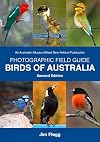
2nd edition; softcover; all but the rarest of vagrants are shown in 820+ very good color photographs on 155 plates; one paragraph of text for each bird focuses primarily on describing the bird with a few notes on song and habitat; generic range maps are provided for each bird
THE REVIEW:
If you prefer a photographic format as your field guide over an illustrated one, then this is the book you should choose for Australia. It is superior to all the other photo-guides I’ve examined. show more All but the rarest of vagrant species in Australian are covered, which accounts for 760 species. The birds are shown in over 820 good color photographs. There are typically 5-6 photos per page.
These photos go a very good job at depicting the bird in good lighting, in sharp colors, and in a decent size. A majority of the birds are shown with only one photo. For some of the species where the plumage varies between genders, a second photo shows the female. Just like other photo guides, this one-photo limitation does not allow you to see and compare the many other plumages of the ages, seasonal variations, and subspecies.
Just as in a typical illustrated field guide, the text and range maps are across from the respective bird. The text is a standard one-paragraph outline that focuses primarily on identification. Although the descriptions do a good job at describing the bird, they do not compare or mention similar species. A few lines of this text are also given on voice, habitat, and status.
The range of each bird is shown on the same all-Australia map. This map is a bit generic and does not contain the boundaries of the various states. This creates a generalized view of the bird’s distribution, especially for those species with limited ranges. For the birds endemic to Tasmania, the map shows only that island which helps to offer a little more detail on the bird’s range.
I found this book to be very useful to familiarize myself with the Australian birds before venturing out. However, for in-the-field use, I left this book in the car as a back-up and carried only one of the other exceptional illustrated guides (e.g., Simpson & Day, Pizzey, Morcombe, Slater). -- (written by Jack at Avian Review with sample pages, July 2008) show less
2nd edition; softcover; all but the rarest of vagrants are shown in 820+ very good color photographs on 155 plates; one paragraph of text for each bird focuses primarily on describing the bird with a few notes on song and habitat; generic range maps are provided for each bird
THE REVIEW:
If you prefer a photographic format as your field guide over an illustrated one, then this is the book you should choose for Australia. It is superior to all the other photo-guides I’ve examined. show more All but the rarest of vagrant species in Australian are covered, which accounts for 760 species. The birds are shown in over 820 good color photographs. There are typically 5-6 photos per page.
These photos go a very good job at depicting the bird in good lighting, in sharp colors, and in a decent size. A majority of the birds are shown with only one photo. For some of the species where the plumage varies between genders, a second photo shows the female. Just like other photo guides, this one-photo limitation does not allow you to see and compare the many other plumages of the ages, seasonal variations, and subspecies.
Just as in a typical illustrated field guide, the text and range maps are across from the respective bird. The text is a standard one-paragraph outline that focuses primarily on identification. Although the descriptions do a good job at describing the bird, they do not compare or mention similar species. A few lines of this text are also given on voice, habitat, and status.
The range of each bird is shown on the same all-Australia map. This map is a bit generic and does not contain the boundaries of the various states. This creates a generalized view of the bird’s distribution, especially for those species with limited ranges. For the birds endemic to Tasmania, the map shows only that island which helps to offer a little more detail on the bird’s range.
I found this book to be very useful to familiarize myself with the Australian birds before venturing out. However, for in-the-field use, I left this book in the car as a back-up and carried only one of the other exceptional illustrated guides (e.g., Simpson & Day, Pizzey, Morcombe, Slater). -- (written by Jack at Avian Review with sample pages, July 2008) show less

An interesting little book of common birds, utilizing paintings from a century or more ago. As an American, I especially enjoyed seeing what birds described in British books actually look like.
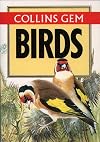
A guide to almost 250 species of birds seen in the British Isles. Each species are illustrated in full colour to aid identification and information is given on the plumage, song, habitat and size of each species.
You May Also Like


Associated Authors
Statistics
- Works
- 49
- Members
- 711
- Popularity
- #35,655
- Rating
- 3.5
- Reviews
- 4
- ISBNs
- 94
- Languages
- 7