
Jeff Long
Author of The Descent
About the Author
Jeff Long is a veteran climber and traveler in The Himalayas. He has worked as a journalist, a historian, and an elections supervisor for Bosnia's first democratic election. He lives in Boulder, Colorado.
Series
Works by Jeff Long
Associated Works
High Exposure: An Enduring Passion for Everest and Unforgiving Places (1999) — Author — 532 copies, 11 reviews
Tagged
Common Knowledge
- Legal name
- Long, Jeffrey Bowen
- Birthdate
- 1951-11-24
- Gender
- male
- Awards and honors
- Texas Literary Award
Western Writers of America Spur Award (Best Novel)
Boardman Tasker Prize for mountain literature
American Alpine Club's Literary Award - Nationality
- USA
- Associated Place (for map)
- USA
Members
Reviews

I might have paid more attention if my Texas History lessons had been more like this book. But then, I suppose such a candid examination of the characters and motivations of the real people who created our history would not have been considered suitable subject matter for junior high school students.
Despite its subtitle (The Mexican and U.S. Fight for the Alamo), Duel of Eagles is really about the Texas revolution, covering a period of history from Andrew Jackson’s inauguration in 1829 to show more Santa Anna’s death in 1876. It could be considered a revisionist history, using original sources that proponents of a heroic Texas origin story may disregard or consider unreliable. Some critics of the book claim the author is pro-Mexican, but it seems to me that he is simply giving equal weight to Mexican sources and doesn’t hesitate to skewer the characters and actions of Mexicans and Tejanos as much as the Anglo-Americans. He notes where there are conflicting accounts of events and provides the reader with 71 pages of footnotes and bibliography to document his sources.
Altogether, it’s an entertaining and horrifying account of the Texas journey from Mexican province to independent republic to annexation into the United States, blowing up myths of heroic deeds and high-minded Texians seeking freedom from oppression along the way. At some point, it got a little wearisome, because, yes, we get it, this was really just a combination of speculative land-grabbing by non-residents and a push to preserve the slave state and part of the precursor to Manifest Destiny, but I started to feel as though we were beating a dead horse by the time Santa Anna surrendered at San Jacinto.
Hardcover, received as a gift from my father in 1994, who was an amateur Texas history buff. And a little surprising that he gifted it to me, as the views of the author don’t seem to fit his. How I wish I had actually read this when he was living, so I could have asked him about it. But history and the Wild West mythos didn’t interest me then, and I forgot I even had this until he passed away in January. Now it’s too late, and I can only read his books and remember him. show less
Despite its subtitle (The Mexican and U.S. Fight for the Alamo), Duel of Eagles is really about the Texas revolution, covering a period of history from Andrew Jackson’s inauguration in 1829 to show more Santa Anna’s death in 1876. It could be considered a revisionist history, using original sources that proponents of a heroic Texas origin story may disregard or consider unreliable. Some critics of the book claim the author is pro-Mexican, but it seems to me that he is simply giving equal weight to Mexican sources and doesn’t hesitate to skewer the characters and actions of Mexicans and Tejanos as much as the Anglo-Americans. He notes where there are conflicting accounts of events and provides the reader with 71 pages of footnotes and bibliography to document his sources.
Altogether, it’s an entertaining and horrifying account of the Texas journey from Mexican province to independent republic to annexation into the United States, blowing up myths of heroic deeds and high-minded Texians seeking freedom from oppression along the way. At some point, it got a little wearisome, because, yes, we get it, this was really just a combination of speculative land-grabbing by non-residents and a push to preserve the slave state and part of the precursor to Manifest Destiny, but I started to feel as though we were beating a dead horse by the time Santa Anna surrendered at San Jacinto.
Hardcover, received as a gift from my father in 1994, who was an amateur Texas history buff. And a little surprising that he gifted it to me, as the views of the author don’t seem to fit his. How I wish I had actually read this when he was living, so I could have asked him about it. But history and the Wild West mythos didn’t interest me then, and I forgot I even had this until he passed away in January. Now it’s too late, and I can only read his books and remember him. show less
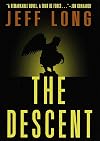
A lot of Science-fiction—even a lot of Golden Age science-fiction—lacks a genuine sense of exploration, and the awe that comes with it. The Descent does not have this problem. An odyssey into the bowels of the Earth that feels at time like a Michael Crichton horror novel, the bleak underground frontier of Jeff Long's infamously polarising story of religious mania, impossible ecosystems, and inner-Earth colonialism scratched an itch for discovery that I've only previously had scratched by show more Blindsight and Rendezvous With Rama.
I could feel the gentle warmth and reptile texture of the cave walls. I could hear the almost imperceptible ambient rumble of tectonic plates crushing into one-another, and the amniotic drip, drip, drip of ancient waters forming stalagmites. I could taste the hot mineral tang of moist cave air.
There is an erotic, suicidal allure to the thought of getting lost in the veins beneath—of losing yourself to the womb of Earth and becoming part of its slow, billion year long ecosystem of flowstone and chemical erosion. The Descent captures this allure with such beauty that it feels almost like it's breaking an ancient, unspoken taboo. show less
I could feel the gentle warmth and reptile texture of the cave walls. I could hear the almost imperceptible ambient rumble of tectonic plates crushing into one-another, and the amniotic drip, drip, drip of ancient waters forming stalagmites. I could taste the hot mineral tang of moist cave air.
There is an erotic, suicidal allure to the thought of getting lost in the veins beneath—of losing yourself to the womb of Earth and becoming part of its slow, billion year long ecosystem of flowstone and chemical erosion. The Descent captures this allure with such beauty that it feels almost like it's breaking an ancient, unspoken taboo. show less

It would be too obvious to say "Dantesque" or Inferno in the same breath as Jeff Long's dizzying The Descent, as so many of the latter's blurbers have, and it would be misleading, anyway. Yes, The Inferno and The Descent both deal with the powers of Perdition, in their varied, and equally horrific, descriptions of what happens down there. But Dante's Hell exists in a poet's vision of the relocation of unregenerate souls into eternal torment after their deaths; while Jeff Long torments his show more characters in the right-here, right-now, pitch darkness underground. Their agony is all too corporeal, whether they've sinned against God or not.
The Descent has far more in common with Jaws than epic medieval poetry. The Descent indeed, is a marriage of Jaws and Journey to the Center of the Earth. Heaven, in effect, stands up Hell at the altar in this wickedly divine Descent not to the center of the earth, but to the very core of humankinds most archetypal, universal fear: the dark, and the demons who swim in it.
There's no great white sharks striking terror from the murky depths in The Descent; no, there's worse, much worse: there's great albino "hadals" disembowelling you alive from the cavernous depths. Once they've disembowelled you alive, they just might make a rope out of your intestines, using your innards to tie you to a stake, so that you, a) won't escape; and, b) can sample your flesh while it's still fresh, like you were human-sushi!
Are you scared? You should be. Because The Descent is so scary it will scare the Hell in to you, not out. Read The Descent and Jaws will seem a guppy by comparison. After all, a great white shark can only bite and eat you, but a great albino hadal can not only bite and eat you, but since they're amphibious and bipedal, they can slyly hide beneath the surface of what appears at first blush a tranquil, phosphorecently lit underworld ocean; but as you wade into that primeval, peaceful ocean ... up thrusts a wooden spear so fast and so fiercely and aimed so precisely it enters your anus unscathed before it impales the back end of your butt hole and punctures your abdominal cavity's wall ramming up past your kidneys and straight for your heart, so that you die instantly, standing up, having become a veritable homo sapien shishkebob, held in the hateful hands of one hungry hadal.
"Hadal" comes from the Latin, "homo hadalis," a team of scientists postulate, an evolutionary offshoot or hybrid of homo erectus and homo sapien. But all you need to know is that hadals come from Hell, the Hell waiting for you inside that cave, that mineshaft, or that archaeological dig. So obey those signs please ... and KEEP OUT!
That Legion of demons that tormented Regan and those two Jesuit priests in The Exorcist, would get their collective, possessive asses kicked by a single hadal.
Just ask the 150 members of the Helios scientific expedition sent to explore the theorized passage underneath the Pacific Ocean's floor that's hoped will connect the Galapagos Islands with New Guinea. Think of the logistic and power-opportunities available for the first-taking should such a passage be found. But what if the tyrannical head of Helios has ulterior motives for the expedition? Well, then maybe the mercenaries and the military and the scientists and the nun (yes! a nun) hired on board, and kept in line by tyrant's son, Shoat, have a secret, underestimated defense weapon hidden up their sleeves themselves: A half-human/half-hadal evolutionary cross breed as their guide? Could it be? And what about Satan? Whole role does the Devil play in all of this? Don't tell me Satan is a sshhhh you be quiet, 'Frique! Don't spoil the surprise! But do insert the mad laughter here.
Will all, uh, Hell inevitably break loose in The Descent? Maybe not all of Hell, but maybe all of Hell-in-the-flesh: Homo hadalis!
Bats belong in caves, Intrepid Reader, not you. So stay out of them! You've been warned. And remember what Dante Alighieri said about Jeff Long's novel (and tremble): "Abandon all hope, ye who read The Descent." show less
The Descent has far more in common with Jaws than epic medieval poetry. The Descent indeed, is a marriage of Jaws and Journey to the Center of the Earth. Heaven, in effect, stands up Hell at the altar in this wickedly divine Descent not to the center of the earth, but to the very core of humankinds most archetypal, universal fear: the dark, and the demons who swim in it.
There's no great white sharks striking terror from the murky depths in The Descent; no, there's worse, much worse: there's great albino "hadals" disembowelling you alive from the cavernous depths. Once they've disembowelled you alive, they just might make a rope out of your intestines, using your innards to tie you to a stake, so that you, a) won't escape; and, b) can sample your flesh while it's still fresh, like you were human-sushi!
Are you scared? You should be. Because The Descent is so scary it will scare the Hell in to you, not out. Read The Descent and Jaws will seem a guppy by comparison. After all, a great white shark can only bite and eat you, but a great albino hadal can not only bite and eat you, but since they're amphibious and bipedal, they can slyly hide beneath the surface of what appears at first blush a tranquil, phosphorecently lit underworld ocean; but as you wade into that primeval, peaceful ocean ... up thrusts a wooden spear so fast and so fiercely and aimed so precisely it enters your anus unscathed before it impales the back end of your butt hole and punctures your abdominal cavity's wall ramming up past your kidneys and straight for your heart, so that you die instantly, standing up, having become a veritable homo sapien shishkebob, held in the hateful hands of one hungry hadal.
"Hadal" comes from the Latin, "homo hadalis," a team of scientists postulate, an evolutionary offshoot or hybrid of homo erectus and homo sapien. But all you need to know is that hadals come from Hell, the Hell waiting for you inside that cave, that mineshaft, or that archaeological dig. So obey those signs please ... and KEEP OUT!
That Legion of demons that tormented Regan and those two Jesuit priests in The Exorcist, would get their collective, possessive asses kicked by a single hadal.
Just ask the 150 members of the Helios scientific expedition sent to explore the theorized passage underneath the Pacific Ocean's floor that's hoped will connect the Galapagos Islands with New Guinea. Think of the logistic and power-opportunities available for the first-taking should such a passage be found. But what if the tyrannical head of Helios has ulterior motives for the expedition? Well, then maybe the mercenaries and the military and the scientists and the nun (yes! a nun) hired on board, and kept in line by tyrant's son, Shoat, have a secret, underestimated defense weapon hidden up their sleeves themselves: A half-human/half-hadal evolutionary cross breed as their guide? Could it be? And what about Satan? Whole role does the Devil play in all of this? Don't tell me Satan is a sshhhh you be quiet, 'Frique! Don't spoil the surprise! But do insert the mad laughter here.
Will all, uh, Hell inevitably break loose in The Descent? Maybe not all of Hell, but maybe all of Hell-in-the-flesh: Homo hadalis!
Bats belong in caves, Intrepid Reader, not you. So stay out of them! You've been warned. And remember what Dante Alighieri said about Jeff Long's novel (and tremble): "Abandon all hope, ye who read The Descent." show less
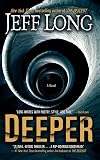
A refutation of The Descent's evolution from horror novel to Crichtonesque sci-fi thriller, Deeper breaks apart the prior novel's science-fiction explanations, revealing them to be little more than post-hoc rationalisations for phenomena both ancient and irreducible.
Where The Descent posits that ecosystems can evolve to fill any niche, Deeper responds by asking why evolution exists in the first place.
No matter how many ways you find to explain a ghost; a ghost is still a ghost. There comes show more a point where you're just rationalising the impossible to stop yourself from going mad. show less
Where The Descent posits that ecosystems can evolve to fill any niche, Deeper responds by asking why evolution exists in the first place.
No matter how many ways you find to explain a ghost; a ghost is still a ghost. There comes show more a point where you're just rationalising the impossible to stop yourself from going mad. show less
Lists
to get (2)
Devilish Books (1)
Awards


You May Also Like


Associated Authors
Statistics
- Works
- 16
- Also by
- 1
- Members
- 3,198
- Popularity
- #7,995
- Rating
- 3.6
- Reviews
- 92
- ISBNs
- 79
- Languages
- 7
- Favorited
- 17
