
Kevin O'Malley
Author of How They Croaked: The Awful Ends of the Awfully Famous
About the Author
Series
Works by Kevin O'Malley
How They Croaked: The Awful Ends of the Awfully Famous (2011) — Illustrator — 945 copies, 110 reviews
Associated Works
Tagged
Common Knowledge
- Gender
- male
Members
Reviews
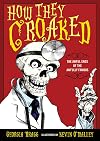
I've been a lifelong fan of books that are able to effectively combine death, gore and humor, and Georgia Bragg's work certainly makes the cut. Witfully written and beautifully illustrated, the book gives us inside info on the final days of twenty of history's more notable figures. It's safe to say that I know a reasonable amount the lives of each person covered in the book, but I knew very little-if anything at all-about how they left this life. The book follows a chronological order (date show more of death) from King Tut to Einstein, and it held my interest the entire way. I admit that initially I picked and chose certain chapters, but one led to another to another to another and before I knew it, I read the entire thing.
What stood out to me in each chapter was Bragg's masterfully witty use of language. Although many of the puns can skip past you during an initial reading, the book's sentences are loaded with lively wordplay. Metaphors, similes, idioms, you name it abound throughout the text. Although the writing may come off as abrasive, over-the-top or in-your-face, it's really quite brilliant in its use of subtleties. At a glance, it seems to be a series of provocative statements, but it's so much more than that. I really like the way the book was organized with a chapter dedicated to one person. None of the chapters are dependent upon others, and everyone has to admit that it's fum now and then to be able to pick up a book and just jump in wherever.
Bragg makes use of a varied sentence structure and vivid language, which lends itself to being a quick, fun read, and the fact that it's written in narrative form only accentuates this. At times, some chapters can seem a bit too 'cute' in their use of humor, but the writing overall has enough deep wordplay for me personally. I also enjoyed the random factual info at the end of each chapter. It's just plan fun, and fum is important, too. I think that death is too often held with so much reverence that we forget its okay to laugh about it and poke fun just like we do everything else. Bragg so elegantly drives this idea home. show less
What stood out to me in each chapter was Bragg's masterfully witty use of language. Although many of the puns can skip past you during an initial reading, the book's sentences are loaded with lively wordplay. Metaphors, similes, idioms, you name it abound throughout the text. Although the writing may come off as abrasive, over-the-top or in-your-face, it's really quite brilliant in its use of subtleties. At a glance, it seems to be a series of provocative statements, but it's so much more than that. I really like the way the book was organized with a chapter dedicated to one person. None of the chapters are dependent upon others, and everyone has to admit that it's fum now and then to be able to pick up a book and just jump in wherever.
Bragg makes use of a varied sentence structure and vivid language, which lends itself to being a quick, fun read, and the fact that it's written in narrative form only accentuates this. At times, some chapters can seem a bit too 'cute' in their use of humor, but the writing overall has enough deep wordplay for me personally. I also enjoyed the random factual info at the end of each chapter. It's just plan fun, and fum is important, too. I think that death is too often held with so much reverence that we forget its okay to laugh about it and poke fun just like we do everything else. Bragg so elegantly drives this idea home. show less
This book literally made me laugh out loud! The authors obscene and hilarious writing style about the gruesome and often ironic and untimely deaths of some of humanity's most notable people is quite an adventure for the reader. I enjoyed the dry, sarcastic, tone of the text. The language level is appropriate for teenage, young adult, and adult readers. When I think of a purpose for this book I imagine it sitting on a coffee table in the house of a person who enjoys all things horror and show more gore. In fact, I'm giving it to my friend who is obsessed with horror movies and Halloween when I'm finished with it, one of her bucket list items is to observe an autopsy, hopefully not her own, no pun intended. The book is organized with a clear and thorough Table of Contents, in that it can be read in piecemeal by section and/or skipped around. This book was very informative and I learned some new interesting material, but I also think it's not meant to be taken too seriously, in spite of the grotesque and grim content, it was surprisingly a fun read for me. show less
I loved this book! My first, and lasting, impression of it is: what a great way to trick students into learning some history! The reader is lured into the stories because s/he thinks they will be gory tales, and they are, but the reader also learns about the lives of important historical figures in the process. The book discusses 19 noteworthy people from British and American History, by using their less-than-desirable causes of death to revolve their life stories around. Students may not show more know or care who Marie Curie is, but they will be interested in the fact that she radiated herself to death. Likewise, they may not have much knowledge of Henry VIII, but the fact that he pretty much ate himself to death with pull students in, and then they will learn about his sad series of wives and the state off medicine in that day, which finished him off. In fact, it is a theme throughout the book that many of these people died because of lack of medical knowledge and wacky "cures" that actually made them worse. So the book teaches some history, both of the people involved, and also that of medical science.
Georgia Bragg does a few things here. She uses humor very effectively ("You Glow Girl" for Marie Curie's chapter heading, and "James Who?" as the chapter title for James Garfield, a president many students would not be familiar with)within the text and Kevin O'Malley also carries it over to the illustrations. Bragg inserts interesting/educational bits of trivia within each story also. For example, on the chapter about Christopher Columbus, she includes a timeline for maps and a text box with the definition of scurvy in it. She also includes a list of famous gout sufferers. In Henry VIII's chapter she gives the reader a food list of what his court would have eaten in a day; a list of things that would have weighed as much as Henry; and a list of his many queens, who almost all came to bad ends, in one way or another. When you combine the gore factor, humor in text and illustrations, and odd trivial tidbits, it makes for a good read, even for me, an adult. But learning will happen here. In the section entitled "One More Thing," Bragg admits to an ulterior motive in the book: she hopes that kids will be more interested in what these people did than how their journeys ended. I think there is hope for that.
In the latter part of the book is a chart connecting many of the people in the book to each other in some way or another. It's a great addition. The list of sources for this book looks good and comprehensive, and there is a long list of "Further Reading and Surfing" that has tons of interesting things to check out for oneself or with students. These items confirm the research that was done for the writing of this book, and give teachers and students alike a place to go from here. I really liked this book, in every way. show less
Georgia Bragg does a few things here. She uses humor very effectively ("You Glow Girl" for Marie Curie's chapter heading, and "James Who?" as the chapter title for James Garfield, a president many students would not be familiar with)within the text and Kevin O'Malley also carries it over to the illustrations. Bragg inserts interesting/educational bits of trivia within each story also. For example, on the chapter about Christopher Columbus, she includes a timeline for maps and a text box with the definition of scurvy in it. She also includes a list of famous gout sufferers. In Henry VIII's chapter she gives the reader a food list of what his court would have eaten in a day; a list of things that would have weighed as much as Henry; and a list of his many queens, who almost all came to bad ends, in one way or another. When you combine the gore factor, humor in text and illustrations, and odd trivial tidbits, it makes for a good read, even for me, an adult. But learning will happen here. In the section entitled "One More Thing," Bragg admits to an ulterior motive in the book: she hopes that kids will be more interested in what these people did than how their journeys ended. I think there is hope for that.
In the latter part of the book is a chart connecting many of the people in the book to each other in some way or another. It's a great addition. The list of sources for this book looks good and comprehensive, and there is a long list of "Further Reading and Surfing" that has tons of interesting things to check out for oneself or with students. These items confirm the research that was done for the writing of this book, and give teachers and students alike a place to go from here. I really liked this book, in every way. show less
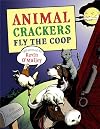
This book is full of the kind of humor that makes my wife groan. I loved it. One liners and terrible puns abound. Fozzie Bear should probably pull material from this book for his next act. Four animal comedians crack a joke on nearly every page. It doesn't get any better. Read. Laugh. Groan. Whatever. This is comedy gold.
Lists
Awards


You May Also Like


Associated Authors
Statistics
- Works
- 59
- Also by
- 10
- Members
- 6,935
- Popularity
- #3,525
- Rating
- 3.9
- Reviews
- 398
- ISBNs
- 253
- Languages
- 1
- Favorited
- 1