

Stephen C. Schlesinger
Author of Bitter Fruit: The Story of the American Coup in Guatemala, Revised and Expanded
About the Author
Stephen C. Schlesinger is Director of the World Policy Institute at the New School University in New York City.
Image credit: Alternative Radio
Works by Stephen C. Schlesinger
Bitter Fruit: The Story of the American Coup in Guatemala, Revised and Expanded (1999) 389 copies, 4 reviews
Associated Works
Tagged
Common Knowledge
- Birthdate
- 1942-08-17
- Gender
- male
- Relationships
- Schlesinger, Arthur M., Jr. (father)
Schlesinger, Marian Cannon (mother)
Schlesinger Sr., Arthur M. (grandfather)
Cannon, Walter B. (grandfather)
Cannon, Cornelia James (grandmother)
Schlesinger, Robert (half-brother) (show all 8)
Kinderman, Katharine S. (sister)
Schlesinger, Andrew (brother)
Members
Reviews
Bitter Fruit: The Story of the American Coup in Guatemala (David Rockefeller Center for Latin American Studies) by Stephen Schlesinger
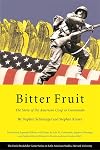
The history of the United States’ involvement in Central American politics is not a happy one, as anyone with a passing knowledge of the area will tell you. This record of the CIA operation to overthrow the democratically-elected government of Jabobo Arbenz in 1954 is an incredibly well-told account of what is, sadly, just another tawdry chapter in the story of US abuses in this part of the world.
Schlesinger’s particular brilliance is to make the history seem, not bigger, but smaller. show more The key protagonists don’t feel like they’re just actors of some impersonal “grand history”, but real people who made stupid real-people mistakes, and did horrible real-people things.
In 2017, Guatemala has an ex-comedian as a President who previously posed in blackface and keeps provoking neighbouring Belize with a decades-old territorial dispute. But, good to be reminded that things have been worse. show less
Schlesinger’s particular brilliance is to make the history seem, not bigger, but smaller. show more The key protagonists don’t feel like they’re just actors of some impersonal “grand history”, but real people who made stupid real-people mistakes, and did horrible real-people things.
In 2017, Guatemala has an ex-comedian as a President who previously posed in blackface and keeps provoking neighbouring Belize with a decades-old territorial dispute. But, good to be reminded that things have been worse. show less
Bitter Fruit: The Story of the American Coup in Guatemala (David Rockefeller Center for Latin American Studies): The Story of the American Coup in ... Expanded (Series on Latin American Studies) by Stephen Schlesinger
Not the kind of history I would typically read, but nonetheless it was very interesting. It’s fascinating that the United States had its own version of the East India Company known as UFCO. The authors are clearly fans of Arbenz and underplay the socialist tendencies that worried the United States so much. The book clearly shows just how terrible US intervention is and how it led to the problems that exist today in Guatemala and the West.
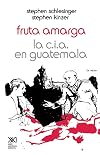
Fruta Amarga es la soprendente historia del afan aventurero de la CIA. Nos relata la Operacion Exito que, con la aprobacion del presidente Eisenhower, el secretario de Estado John Foster Dulles y su hermano Allen; director de la CIA, concibieron y orquestaron para llevar al poder a un gobierno compatible con la United Fruit, derrocando al legitimo gobierno de Guatemala. El plan incluia un embajador empistolado, una campaña de propaganda mkontada en la prensa norteamericana, un andrajoso show more ejercito nacionalista pagado por la CIA, una campaña de desinformacion a traves de estaciones de radio clandestinas, asi como pilotos norteamericnos mercenarios que bombarearon la cidudad de Guatemala.
Es una dramatica version de una traicion cuidadosametne planeada y que puede ser el episodio mas importante en la historia tanto en la CIA como en la actual Centroamerica. show less
Es una dramatica version de una traicion cuidadosametne planeada y que puede ser el episodio mas importante en la historia tanto en la CIA como en la actual Centroamerica. show less
Bitter Fruit: The Story of the American Coup in Guatemala, Revised and Expanded (Series on Latin American Studies) by Stephen Schlesinger
I'm not sure how much I agree or disagree, because this is basically the only book I have read about the topic.
It is one of the few books I could find that dealt with Guatemalan history exclusively. I need to reread it now that I got the basics down, and maybe I'll get more of their particular point of view.
Their main thesis, as I remember it (because I write this 6 years after having read the book) is that the intervention in Guatemala in '55 was more due to the Arbenz government being a show more threat to the personal interests of some relevant officials than about a genuine threat to the US as a whole.
According to Kinzer and Schlesinger, the threat of a communist takeover of Guatemala was used to sell the intervention as vital to the American public interest, and the documented (also accepted by the authors) connections of Arbenz to leftist groups are explained away as simple alliance making in a government that had a strong opposition.
The main point that was unclear to me is how important the UFCO really was to US government officials, which seems to be the core of the argument of the book.
I cannot go into much more detail because I lack it, I read this book a long time ago. show less
It is one of the few books I could find that dealt with Guatemalan history exclusively. I need to reread it now that I got the basics down, and maybe I'll get more of their particular point of view.
Their main thesis, as I remember it (because I write this 6 years after having read the book) is that the intervention in Guatemala in '55 was more due to the Arbenz government being a show more threat to the personal interests of some relevant officials than about a genuine threat to the US as a whole.
According to Kinzer and Schlesinger, the threat of a communist takeover of Guatemala was used to sell the intervention as vital to the American public interest, and the documented (also accepted by the authors) connections of Arbenz to leftist groups are explained away as simple alliance making in a government that had a strong opposition.
The main point that was unclear to me is how important the UFCO really was to US government officials, which seems to be the core of the argument of the book.
I cannot go into much more detail because I lack it, I read this book a long time ago. show less
Lists
Central America (1)
Awards

You May Also Like


Associated Authors
Statistics
- Works
- 5
- Also by
- 2
- Members
- 675
- Popularity
- #37,410
- Rating
- 4.0
- Reviews
- 6
- ISBNs
- 14
- Languages
- 2
- Favorited
- 1